Botox in Korea: Jaw Slimming, Forehead Lines, and Calf Reduction at Korean Clinic Prices
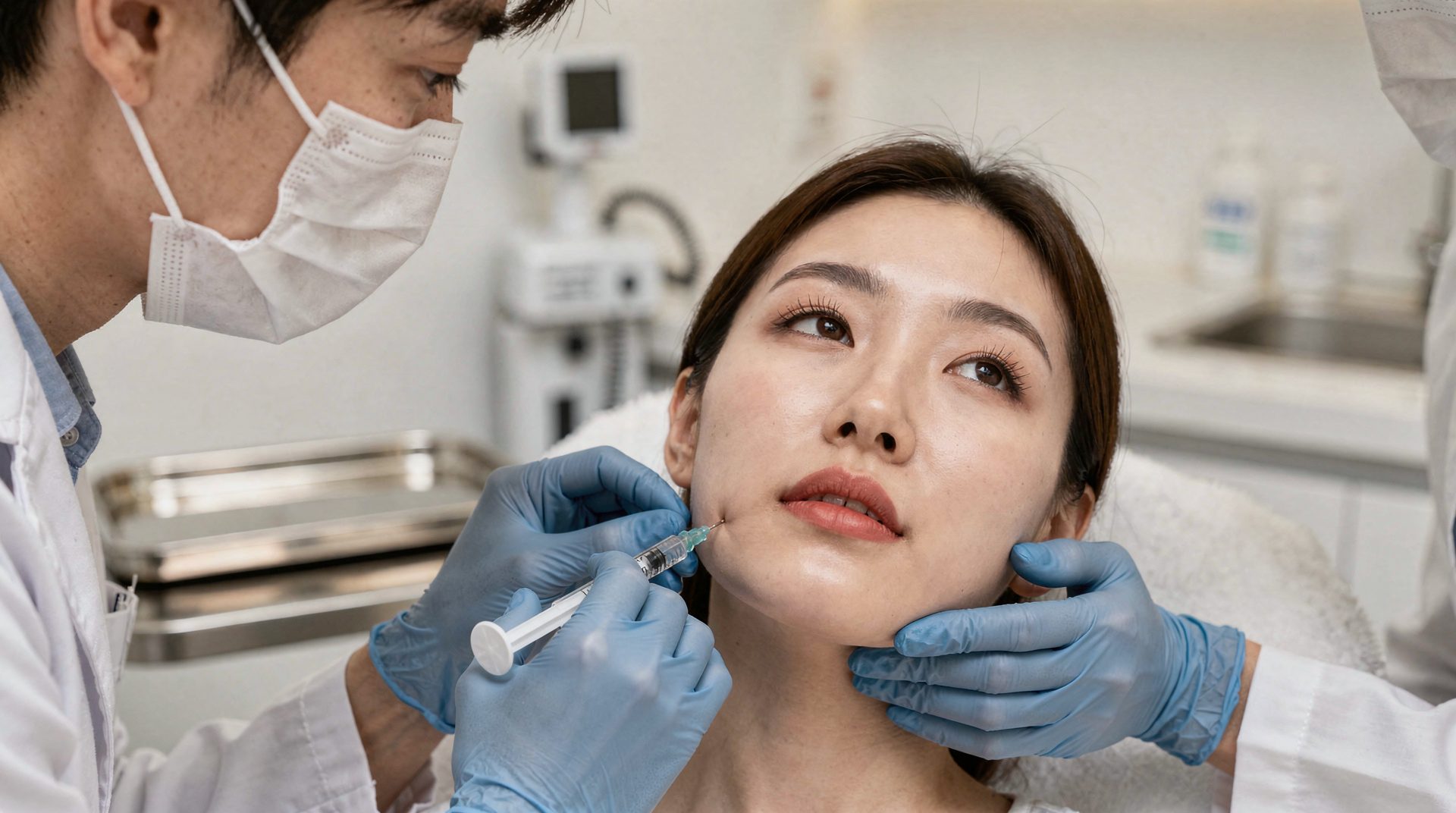
Botox in Korea operates on a different scale than anywhere else in the world. It is not a luxury treatment reserved for special occasions. It is a maintenance procedure that Korean patients schedule with the same regularity as haircuts. The accessibility comes down to price: at Korean clinic rates, a jaw slimming session costs less than a restaurant dinner for two in Manhattan.
This price point has turned Korea into a global destination for Botox treatments, particularly for three applications that Korean clinics have refined far beyond what most Western practices offer: masseter (jaw) slimming for the V-line face shape, forehead and frown line smoothing, and calf muscle reduction. The last one, calf Botox, is a Korean specialty that most patients outside Asia have never encountered.
I work with international patients booking treatments at Korean clinics, and Botox is the single most requested non-surgical procedure. Most patients combine it with at least one other treatment during the same visit. This guide covers what each application involves, what it costs, and what to realistically expect.
Key Takeaways
- Jaw Botox (masseter slimming) is the most popular Botox application among foreign patients in Korea. Cost: $150 to $300.
- Forehead and frown line Botox costs $100 to $200 in Korea versus $300 to $600 in the US.
- Calf Botox is a uniquely Korean specialty that reduces calf muscle bulk for slimmer legs. Cost: $300 to $500.
- Korean clinics use Botox (Allergan), Dysport, and Nabota (a KFDA-approved Korean brand at lower cost).
- Results appear within 1 to 2 weeks and last 3 to 6 months depending on the treatment area.
Korean Botox Culture
Botox occupies a different cultural position in Korea than it does in most Western countries. In the US or Europe, Botox still carries a certain stigma. People get it but do not necessarily talk about it. In Korea, it is openly discussed, casually recommended among friends, and treated as basic aesthetic maintenance rather than a cosmetic intervention.
The term “masstige Botox” describes the Korean market. Premium product, accessible pricing. Korean clinics achieve this through volume. A busy Gangnam clinic may administer 50 to 100 Botox treatments per day. At that volume, the per-unit cost of the toxin drops significantly, and the savings are passed to patients. The injectors also develop a level of precision that comes from performing the same treatment thousands of times per year.
The lunch-break Botox appointment is a real phenomenon. A typical jaw Botox session takes 10 to 15 minutes from the moment you sit in the chair. There is no downtime. Patients walk out and return to work immediately. This convenience factor is a major draw for medical tourism patients who want to fit treatments into a short Seoul itinerary.
Application 1: Jaw / Masseter Slimming
How It Works
The masseter muscle is the primary muscle used for chewing. In some people, it is naturally large or has become enlarged from habits like teeth grinding (bruxism) or gum chewing. A prominent masseter creates a wide, square jawline. Botox injected into the masseter partially relaxes the muscle, causing it to gradually reduce in size over 4 to 8 weeks. The result is a slimmer, more tapered jawline that Korean aesthetics call the V-line.
Units Needed
Typically 25 to 50 units per side (50 to 100 units total). The exact dosage depends on muscle size. Patients with severe bruxism or very prominent masseters may need the higher end of this range. Korean injectors tend to start conservatively and add more at a follow-up if needed.
Results Timeline
- Week 1 to 2: Muscle starts to weaken, chewing feels slightly different
- Week 4 to 6: Visible slimming of the jawline as muscle mass decreases
- Month 2 to 3: Maximum slimming effect visible
- Month 4 to 6: Effect begins to wear off as muscle gradually regains activity
How Long It Lasts
A single session lasts 4 to 6 months. With repeated treatments (every 4 to 6 months for 2 to 3 cycles), the muscle undergoes more permanent atrophy and many patients find they can extend the interval to once per year. Some patients who complete 3 to 4 cycles report lasting results even after discontinuing treatment.
Application 2: Forehead, Frown Lines, and Crow’s Feet
How It Works
Botox relaxes the muscles responsible for dynamic wrinkles: the frontalis (forehead lines), corrugator and procerus (frown lines between the brows), and orbicularis oculi (crow’s feet). The toxin blocks acetylcholine release at the neuromuscular junction, preventing the muscle from contracting fully. Existing wrinkles soften and new ones are prevented from deepening.
Units Needed
- Forehead lines: 10 to 20 units across 4 to 6 injection points
- Frown lines (glabella): 15 to 25 units across 5 injection points
- Crow’s feet: 8 to 15 units per side (16 to 30 units total)
Results Timeline
- Day 3 to 5: Initial muscle relaxation begins
- Day 10 to 14: Full effect visible, wrinkles smoothed
- Month 3 to 4: Effect begins to gradually wear off
Preventive Botox Trend
A growing trend among Korean patients in their mid-twenties to early thirties is preventive Botox. The logic: relaxing the muscles before deep wrinkles form prevents those wrinkles from ever developing. Korean dermatologists generally support this approach with lower doses (sometimes called “baby Botox”) that maintain natural expression while preventing repetitive folding of the skin.
Application 3: Calf Reduction
How It Works
Calf Botox targets the gastrocnemius muscle, the large calf muscle that creates bulk in the lower leg. Botox injected into the medial and lateral heads of the gastrocnemius causes selective muscle atrophy, reducing the circumference of the calf over 4 to 8 weeks. The result is a slimmer lower leg silhouette.
This is a distinctly Korean treatment. While calf Botox exists in other countries, Korean clinics perform it at a volume and with a level of technique refinement that is unmatched. The procedure requires precise injection into specific muscle bellies while avoiding the soleus (the deeper calf muscle responsible for balance and gait). Korean injectors typically use ultrasound guidance to map the muscle anatomy before injection.
Units Needed
100 to 200 units per leg (200 to 400 units total). This is a significantly higher dosage than facial Botox, which is why calf reduction costs more. The units are distributed across 10 to 20 injection points per leg, targeting the most prominent areas of the gastrocnemius.
Results Timeline
- Week 2 to 3: Muscle begins to feel softer, may tire more quickly during exercise
- Week 6 to 8: Visible reduction in calf circumference (typically 1 to 3cm per leg)
- Month 3: Maximum slimming effect
- Month 6 to 8: Gradual return of muscle mass as the effect wears off
Important Considerations
Calf Botox temporarily reduces calf strength. Patients who run, hike, or do high-intensity leg exercises should be aware that their calves will fatigue faster for the first 2 to 3 months. The effect on daily walking is minimal, but athletic performance in calf-dependent activities will be noticeably reduced. Korean clinics advise patients to avoid high-heels for the first week and reduce intense lower-body exercise for 2 weeks after treatment.
Botox vs. Dysport vs. Nabota
Korean clinics offer three main botulinum toxin brands:
| Brand | Manufacturer | Notes |
|---|---|---|
| Botox (onabotulinumtoxinA) | Allergan (US) | The original. Most studied, longest track record. Premium pricing. |
| Dysport (abobotulinumtoxinA) | Galderma (France) | Spreads slightly more than Botox. Some injectors prefer it for larger areas like the forehead. |
| Nabota (prabotulinumtoxinA) | Daewoong (Korea) | KFDA-approved Korean brand. 20-30% cheaper than Botox. FDA-approved in the US as Jeuveau. |
Nabota deserves specific mention because it is the reason Korean Botox prices are so low. Manufactured domestically and KFDA-approved since 2013, it costs clinics significantly less to purchase than imported Botox or Dysport. Clinical studies show equivalent efficacy and duration to Botox for most applications. Many Korean clinics offer patients the choice between Botox and Nabota, with the price difference clearly listed. At Link Plastic Surgery, Botox treatments are part of the clinic’s non-surgical service offerings, and patients can discuss brand preferences during consultation.
Botox Cost: Korea vs. United States
| Treatment Area | Korea (Seoul) | United States |
|---|---|---|
| Jaw / masseter slimming (both sides) | $150 to $300 | $500 to $1,200 |
| Forehead + frown lines | $100 to $200 | $300 to $600 |
| Crow’s feet (both sides) | $80 to $150 | $250 to $500 |
| Calf reduction (both legs) | $300 to $500 | $800 to $1,500 |
| Full face (forehead + frown + crow’s feet + jaw) | $300 to $600 | $800 to $2,000 |
Korean pricing includes the consultation, injection, and any follow-up adjustments within the first 2 weeks. Some clinics offer package pricing for combined areas that reduces the total by 15 to 25%.
What to Expect at a Korean Botox Appointment
| Step | Details |
|---|---|
| Consultation (10 min) | Doctor assesses muscle activity, discusses goals and dosage, chooses toxin brand |
| Numbing (optional, 10 min) | Topical numbing cream or ice applied. Many patients skip this for facial Botox. |
| Injection (5-15 min) | Quick injections at mapped points. Jaw and calf take longer than forehead. |
| Aftercare | No lying down for 4 hours, no heavy exercise for 24 hours, no alcohol for 24 hours |
The entire visit from check-in to walking out rarely exceeds 30 minutes for a single treatment area. If combining areas (for example, jaw + forehead + crow’s feet), expect 30 to 45 minutes total.
Who Should Avoid Botox
- Pregnant or breastfeeding women
- Patients with neuromuscular disorders (myasthenia gravis, Lambert-Eaton syndrome)
- Anyone taking aminoglycoside antibiotics or blood thinners (discuss with your doctor)
- Patients with active skin infections at the injection site
- Anyone with a known allergy to botulinum toxin or albumin
Recommended for Post-Treatment Care
Products commonly used after Botox treatments.
- Arnica Montana Tablets — reduces bruising at injection sites, particularly useful for jaw and calf Botox where multiple injection points are used. Check price on Amazon
- COSRX Snail Mucin Essence — soothing hydration for facial skin after Botox injection points heal. Check price on Amazon
- Silicone Scar Sheets — helpful for calf Botox patients if injection point marks linger. Check price on Amazon
- Beauty of Joseon Relief Sun SPF 50+ — daily UV protection that pairs well with post-Botox skincare to prevent hyperpigmentation at injection sites. Check price on Amazon
As an Amazon Associate, GlobalBeautySpot earns from qualifying purchases.
Ready to Book Botox in Korea?
Get a free remote consultation with the treatment team at Link Plastic Surgery. Discuss your goals, get a personalized dosage recommendation, and receive a cost estimate through WhatsApp or KakaoTalk.
Related Articles
- Korean Skin Laser Treatments: Pico, HIFU, and Thermage Explained for First-Timers
- Lip Filler in Korea: Why Korean Injectors Get Different Results
- Nose Tip Surgery in Korea: What Tip Plasty Looks Like Without a Full Rhinoplasty
- Planning Plastic Surgery in Korea: The Complete Medical Tourism Guide
Content is for informational purposes only and does not constitute medical advice. Consult a qualified medical professional before undergoing any treatment. Results may vary.