Walk into a top Seoul rhinoplasty consultation in 2026 and you will likely be shown a screen before you are shown a scalpel. Three-dimensional simulation, and increasingly AI-assisted planning that checks symmetry and even predicts how a change might affect your breathing, has become a standard part of how the best clinics plan a nose. Used well, it is one of the most useful things to happen to rhinoplasty consultations in years: it turns a vague wish into a concrete, shared plan. Used badly, it becomes a sales tool that shows you a flattering preview no surgeon can actually promise. The technology is genuinely helpful, but only if you understand exactly what it can and cannot do, which is the difference between planning your surgery and being sold it. A clinic like Link Plastic Surgery treats a simulation as a planning conversation, not a guaranteed result.
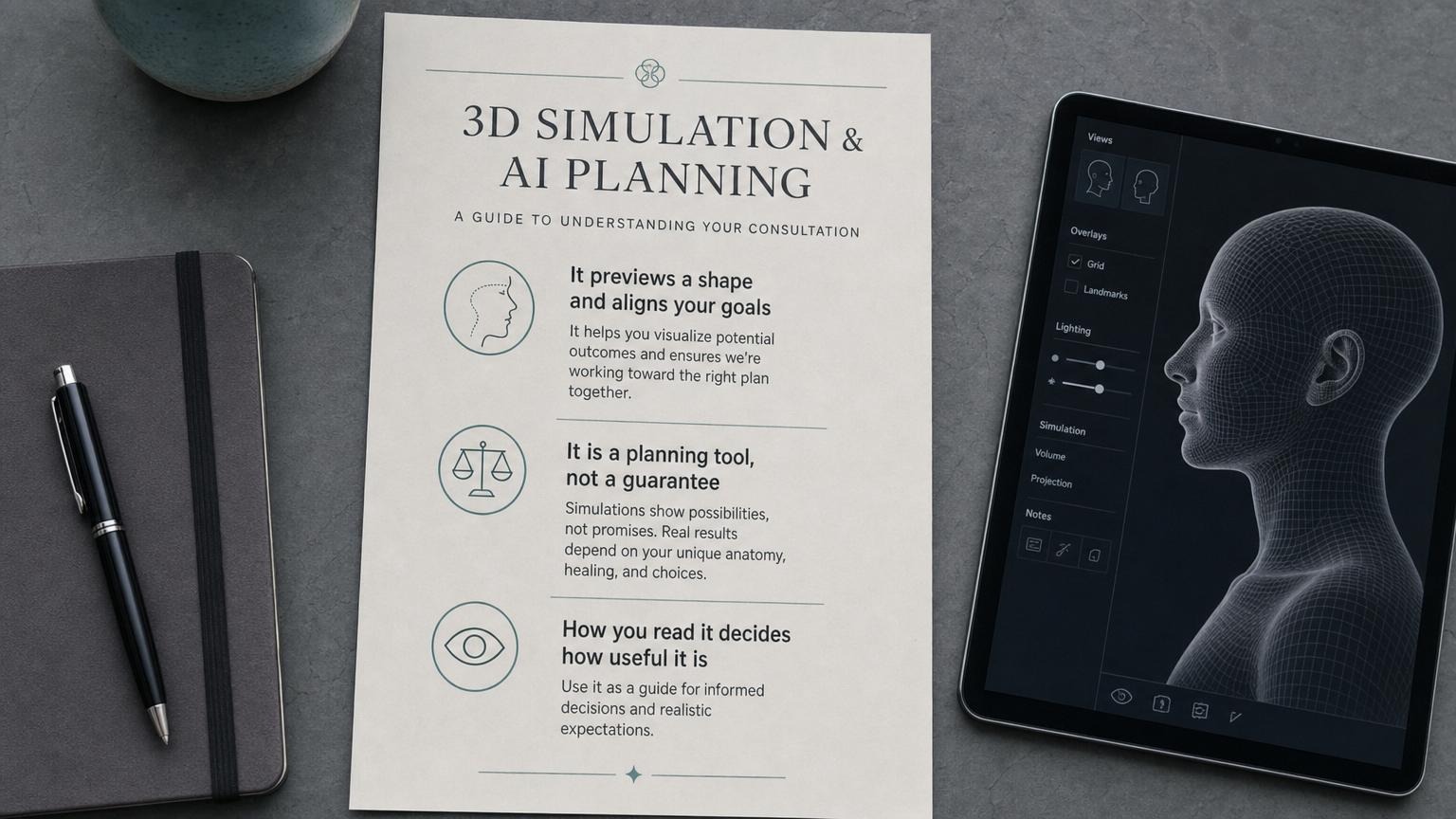
3D simulation and AI planning are now common in top Seoul rhinoplasty consultations. They preview a possible nose shape, give you and the surgeon a shared language, and help plan grafts, projection, and the airway. What they cannot do is guarantee the outcome: living tissue heals in its own way, skin thickness changes the result, and the final nose settles over many months. Read the preview as an intention, not a promise, and it becomes genuinely useful.
What 3D Simulation Shows
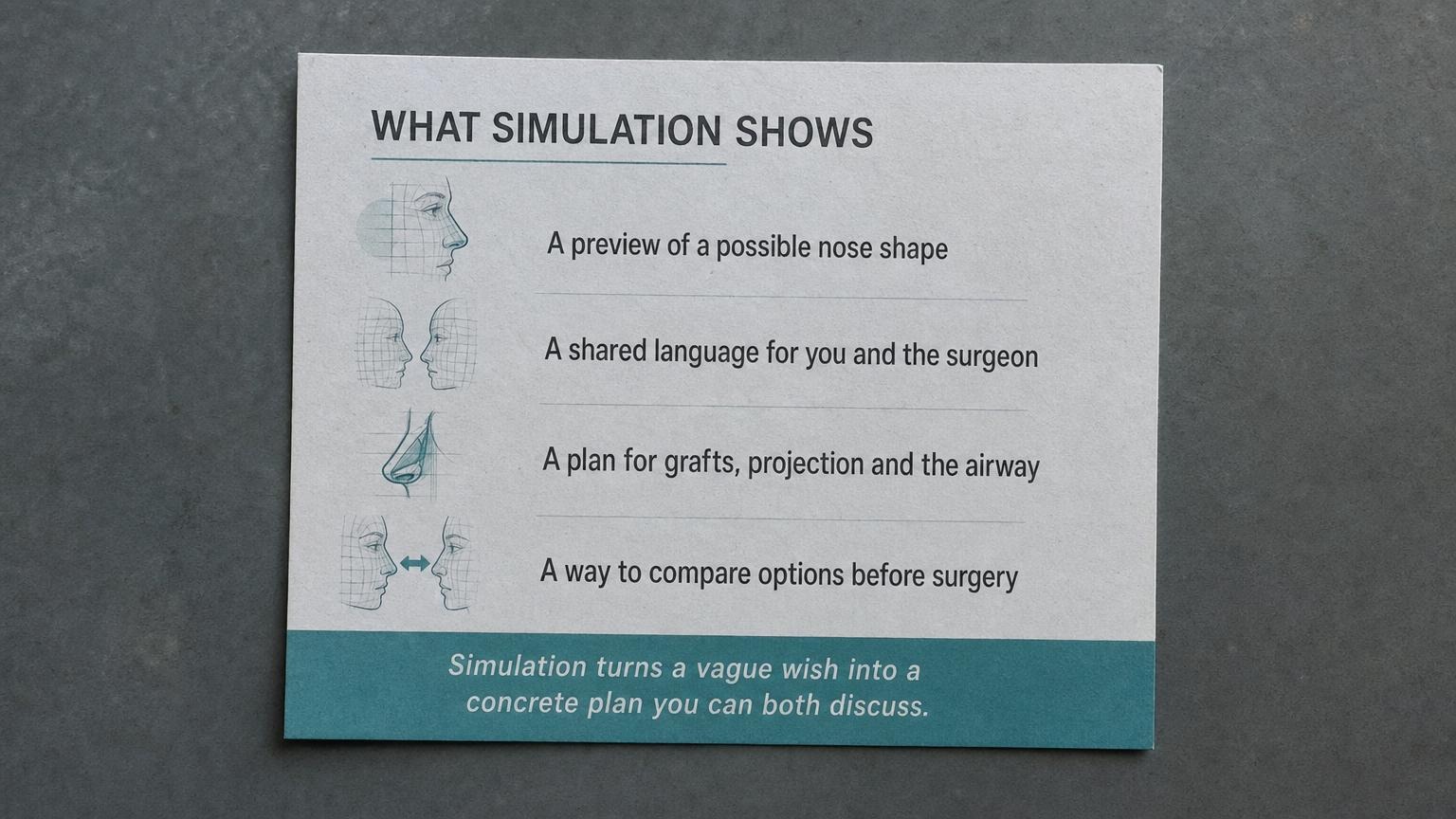
The most valuable thing a simulation does is create a shared language. It is very hard to describe in words the exact nose you want, and it is just as hard for a surgeon to be sure they have understood you. A 3D preview closes that gap: you can look at a possible shape together, adjust the bridge or the tip, and agree on a direction before anything is decided. For a foreign patient especially, working across a language barrier, that visual common ground removes a huge amount of the guesswork that used to sit at the heart of a rhinoplasty consultation.
Beyond communication, simulation supports the actual surgical plan. It helps the surgeon think through projection, the angle of the tip, and how much support the structure will need, which in turn informs decisions about grafts, often taken from your own septal, ear, or rib cartilage. Some clinics now pair this with AI tools that flag subtle asymmetries or model how a structural change might affect airflow, so that a nose is planned to breathe as well as to look balanced. At its best, the screen is where a careful surgical plan takes shape, not where a fantasy is sold.
What It Cannot Promise
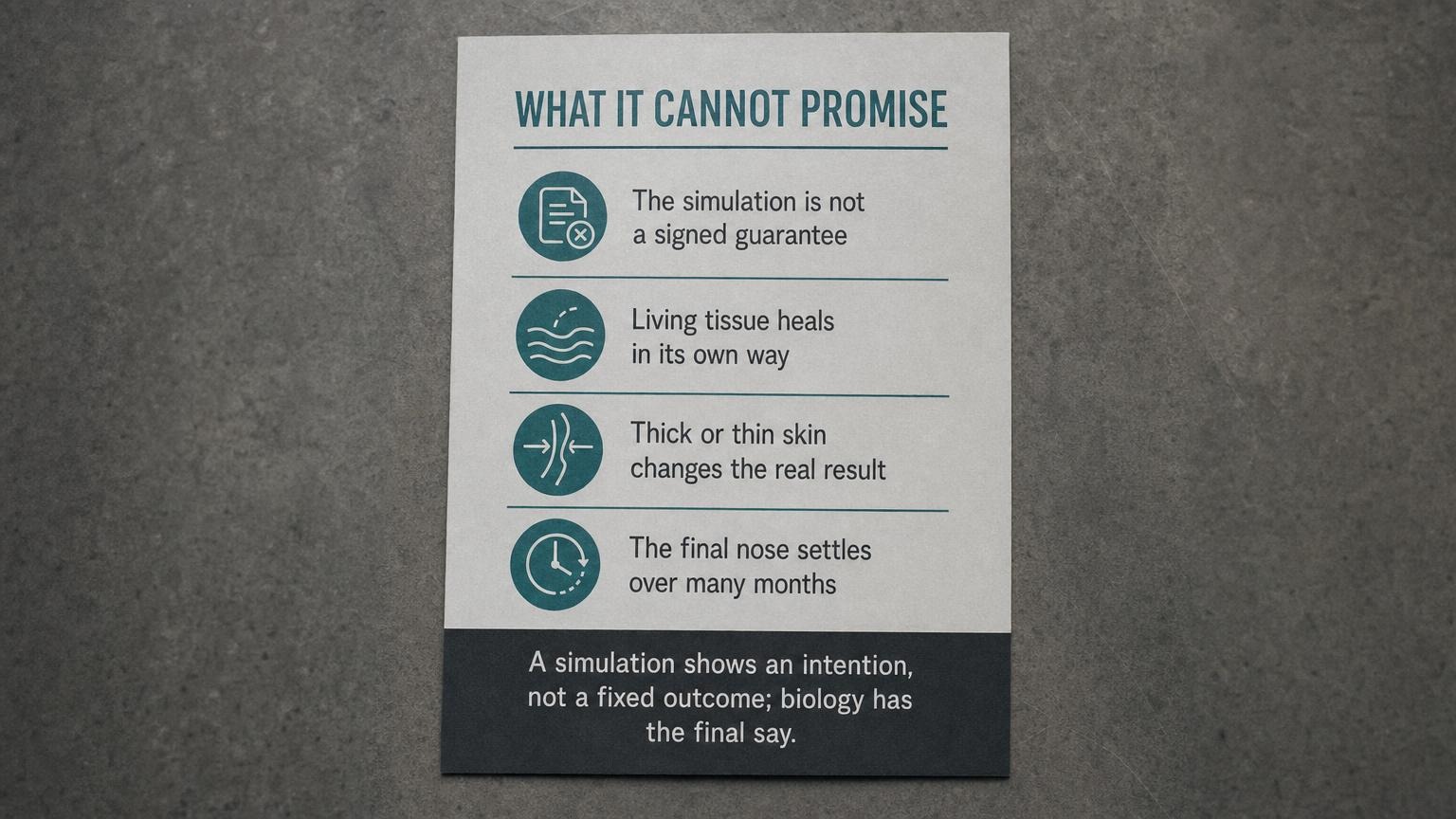
Here is the part that clinics selling hard will not emphasize: a simulation is an intention, not a guarantee. The image on the screen is a digital prediction of a goal, and your nose is living tissue that heals according to its own biology. The single biggest variable is your skin. Thick skin drapes differently over a refined structure than thin skin does, and it can soften or obscure fine changes that look crisp on a screen. No simulation can fully account for how your particular skin will settle, which is why an honest surgeon treats the preview as a target to aim at, not a contract.
Time is the other reality the screen leaves out. A rhinoplasty result is not final on the day the cast comes off; swelling, especially at the tip, resolves slowly, and the true shape can take many months to a year or more to settle. A simulation shows an endpoint without that journey. This is exactly why the natural, undetectable result that Korean surgeons increasingly aim for, which we cover in our guide to getting a natural, undetectable result, depends far more on the surgeon’s judgment and your healing than on a perfect preview image. Treat any simulation that is presented as a precise, guaranteed outcome as a warning sign, not a selling point.
How to Use It in Your Consultation
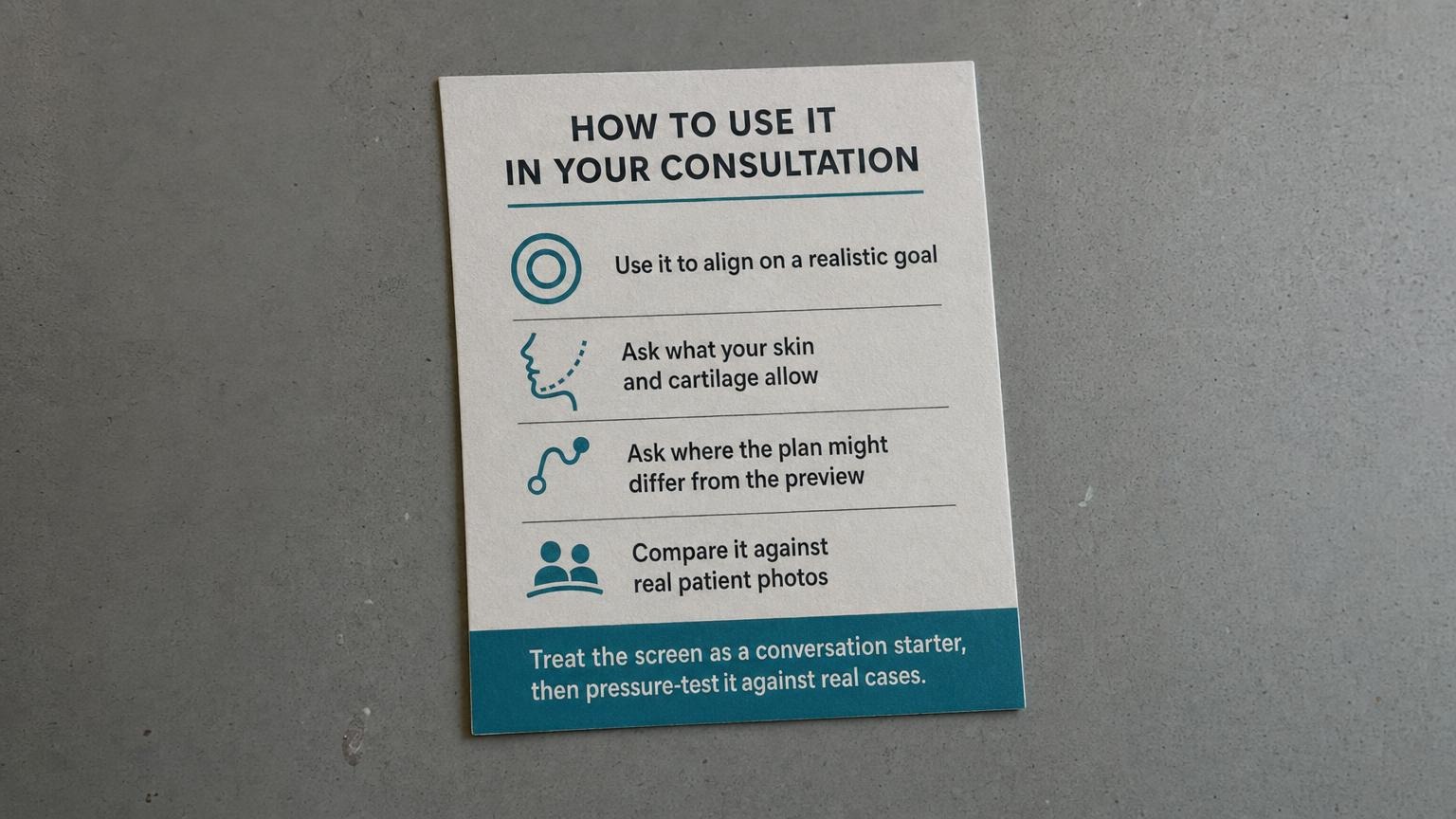
The way to get value from a simulation is to use it as a conversation starter, then pressure-test it. Start by using it to align on a realistic goal, adjusting the preview until it reflects the direction you actually want rather than an exaggerated version. Then turn the questions on it: ask the surgeon what your particular skin and cartilage will actually allow, and where the real result is most likely to differ from the image. A surgeon who answers those questions candidly is giving you far more than one who simply nods at a flattering render.
The most important test is to compare the simulation against reality. Ask to see real before-and-after photos of the surgeon’s actual patients, ideally people with a starting nose and skin type similar to yours, and check whether their real results resemble the kind of preview you are being shown. If the polished simulations are consistently prettier than the real outcomes, that gap is telling you something. Our broader guidance on Link Plastic Surgery’s rhinoplasty approach reflects the same principle: the plan on the screen only matters if it is grounded in what the surgery can realistically deliver.
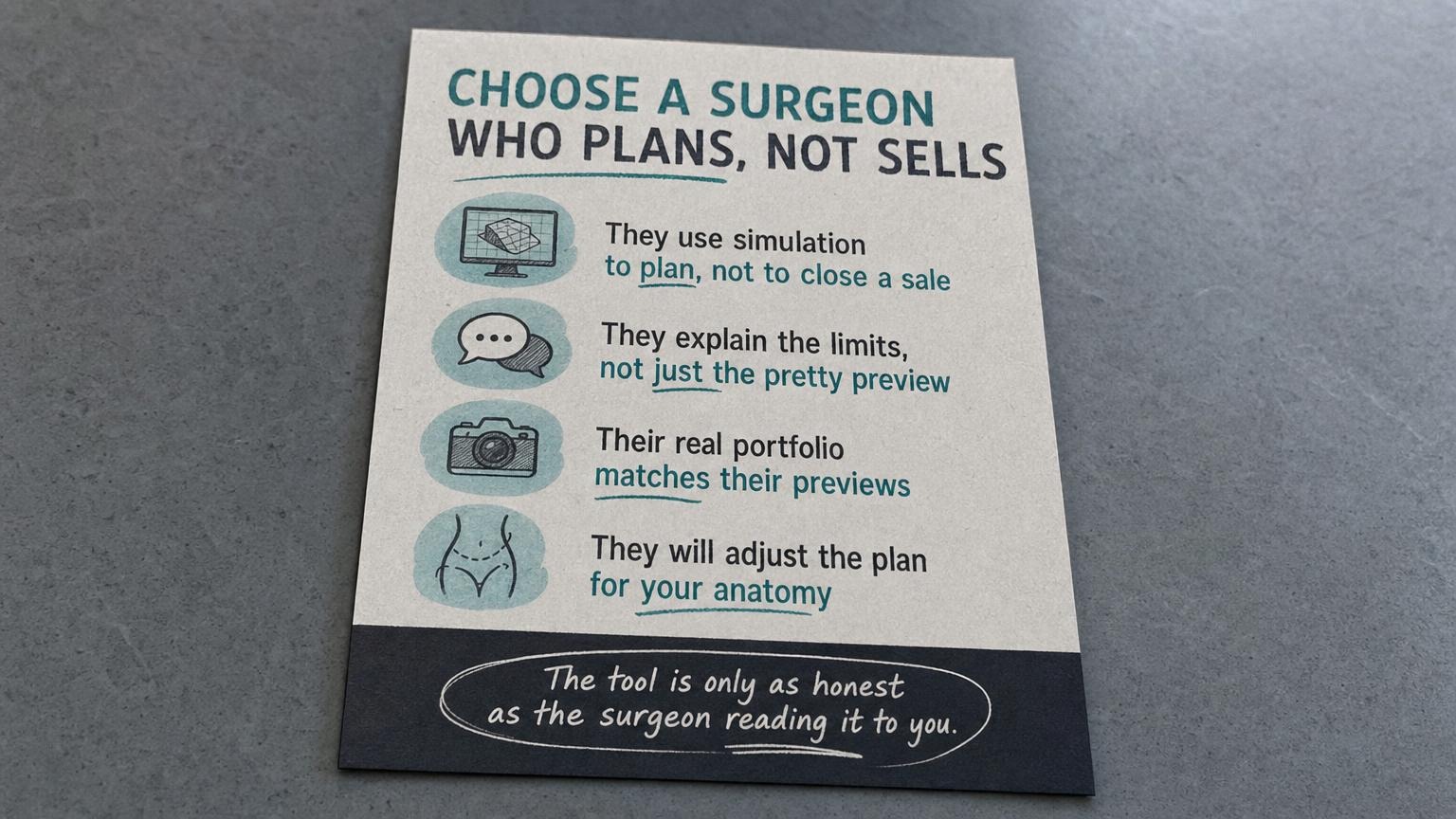
Choose a Surgeon Who Plans, Not Sells
In the end, a simulation is only as honest as the surgeon operating it. The same tool can be used to plan carefully or to close a sale, and the difference shows in how it is presented. A surgeon planning your surgery will use the preview to explain trade-offs, point out the limits, and set expectations that account for your anatomy. A surgeon selling you surgery will use it to dazzle, glossing over what your skin allows and what healing will change. The tool has not removed the need to judge the person holding it, it has made that judgment easier.
So watch how the simulation is used, not just how good it looks. Does the surgeon explain the limits, or only the appeal? Does their real portfolio match the previews they show, or outshine them on screen only? Are they willing to adjust the plan for your particular anatomy rather than pushing a single template nose? The clinics worth trusting in 2026 are the ones that use this technology to plan more precisely and communicate more honestly, treating the screen as the start of a careful surgical conversation rather than the end of a sales pitch.
The Result Still Settles Over Months
Whatever the screen showed, the honest timeline is the same one rhinoplasty has always had. The cast comes off after about a week, but that is the beginning of the result, not the end of it. Swelling recedes gradually, the tip is the slowest area to settle, and the final, refined shape can take many months to a year or more to emerge, particularly for thicker skin. A good consultation sets that expectation alongside the simulation, so you are not alarmed when your week-two nose does not match the preview. On cost, factor in that from 2026 the foreigner VAT refund on cosmetic procedures in Korea has ended, so budget for roughly ten percent more than older guides suggest, and always work from a genuine surgical quote.

Before you let a beautiful preview decide your surgery, five questions keep it honest. Is the surgeon using the simulation to plan and explain, or mainly to impress me? Have they told me what my own skin and cartilage will realistically allow? Do their real patient photos match the kind of preview I am being shown? Am I reading the image as a target to aim at, not a guaranteed outcome? And have I accepted that the real result settles over many months, and budgeted from a genuine quote with the VAT refund gone? A consultation that welcomes those questions is using the technology the right way. To plan a rhinoplasty grounded in what surgery can truly deliver, visit Link Plastic Surgery’s official website.
Frequently Asked Questions
1. What is 3D simulation in Korean rhinoplasty?
It is a digital preview of a possible nose shape, generated from photos or a scan, that you and the surgeon can adjust together during the consultation. In 2026 it is standard at top Seoul clinics, sometimes paired with AI tools that check symmetry or model how a structural change might affect breathing. Its main value is communication and planning: it turns a vague description of the nose you want into a concrete, shared target before any surgery is decided.
2. Is the 3D simulation an accurate preview of my result?
Treat it as an intention, not a guarantee. It is a useful prediction of a goal, but your nose is living tissue that heals in its own way, and factors like skin thickness can make the real result differ from the screen. Thick skin in particular can soften fine changes that look sharp in a simulation. The image is a target to aim at and a plan to discuss, not a contract for the exact outcome.
3. Why does skin thickness matter so much?
Skin is what drapes over the new structure, so it largely determines how visible the surgical changes will be. Thin skin shows fine refinements crisply; thick skin softens them and can obscure detail that looks precise on a screen. A simulation cannot fully model how your particular skin will settle, which is why an honest surgeon will tell you what your skin allows rather than promising the exact shape in the preview. It is one of the biggest reasons real results and simulations can differ.
4. Does AI make rhinoplasty planning better?
It can help. Some clinics use AI to flag subtle asymmetries or to model how a change to the structure might affect airflow, so a nose can be planned to breathe well as well as look balanced. Used this way, it supports the surgeon’s judgment and makes planning more precise. It does not replace the surgeon or guarantee an outcome, and a good result still depends on skill, technique, and how you heal, not on the software alone.
5. How do I stop a simulation from being just a sales tool?
Pressure-test it. Ask the surgeon what your skin and cartilage realistically allow, and where the real result is likely to differ from the preview. Then ask to see real before-and-after photos of their actual patients, ideally with a similar starting nose, and check whether those results resemble the simulation. If the polished previews are consistently prettier than the real outcomes, that gap is a warning. A surgeon who explains limits is planning; one who only dazzles is selling.
6. Should the simulated result look dramatic?
Usually not. Korean surgeons in 2026 increasingly aim for a natural, undetectable result rather than a dramatic, obvious change, so a good simulation should look like a refined, balanced version of your own nose, not a completely different one. If a preview shows a dramatic transformation that ignores your existing features, be cautious: an exaggerated simulation can set an expectation that surgery cannot safely or naturally deliver.
7. Can the simulation predict my breathing after surgery?
Some AI-assisted tools attempt to model how a structural change might affect airflow, which is useful for planning a nose that functions as well as it looks, especially in cases involving the septum or the nasal airway. But this is a planning aid, not a precise forecast of your post-surgical breathing. Functional outcomes still depend on your anatomy, the surgical technique, and healing. Raise any breathing concerns directly so they are built into the plan, not left to the software.
8. How long until my nose matches the plan?
Longer than most people expect. The cast typically comes off after about a week, but that is the start of the result, not the end. Swelling recedes gradually, the tip settles slowest, and the final refined shape can take many months to a year or more, particularly with thicker skin. A simulation shows an endpoint without that timeline, so a good consultation sets the recovery expectation alongside the preview.
9. Is a clinic without 3D simulation worse?
Not necessarily. Simulation is a helpful communication and planning tool, but it is not a substitute for surgical skill, and an excellent surgeon without it can still deliver an outstanding result. What matters more is the surgeon’s real portfolio, their honesty about limits, and how well they understand your goals. Use the presence of simulation as a convenience, not as the deciding factor; judge the surgeon, not the software.
10. How do I plan a rhinoplasty around a simulation safely?
Use the preview to align on a realistic, natural goal; ask what your skin and cartilage actually allow; compare the simulation against the surgeon’s real patient photos; read the image as a target rather than a guarantee; and accept that the true result settles over many months, budgeting from a genuine quote now that the VAT refund has ended. A consultation that welcomes those checks is using the technology to plan, not to sell. To plan a rhinoplasty grounded in what surgery can truly deliver, visit Link Plastic Surgery’s official website.
Information on 3D simulation, AI-assisted rhinoplasty planning, and the 2026 end of the foreigner VAT refund is based on industry and clinic reporting (Kowon, Gangnam Plastic Surgery, Jivaka Beauty and others), 2026. A simulation is a planning aid, not a guarantee of results; individual outcomes vary and depend on healing. Consult a licensed surgeon.