Start researching surgery in Korea and within days your inbox and social media fill with agencies offering to arrange everything: the clinic, the translator, the airport pickup, the aftercare. Around 60 percent of medical tourists use one, and a good agency genuinely helps. But agencies are also a business, and some are paid a commission by the very clinics they recommend, which quietly shapes the advice you receive. The honest question is not “agency or not” but “which route, and how do I stay in control of the decision either way?” Whether you book directly or through a facilitator, the clinic and surgeon are what you must verify, and a transparent clinic like Link Plastic Surgery will deal with you directly regardless of how you found them.
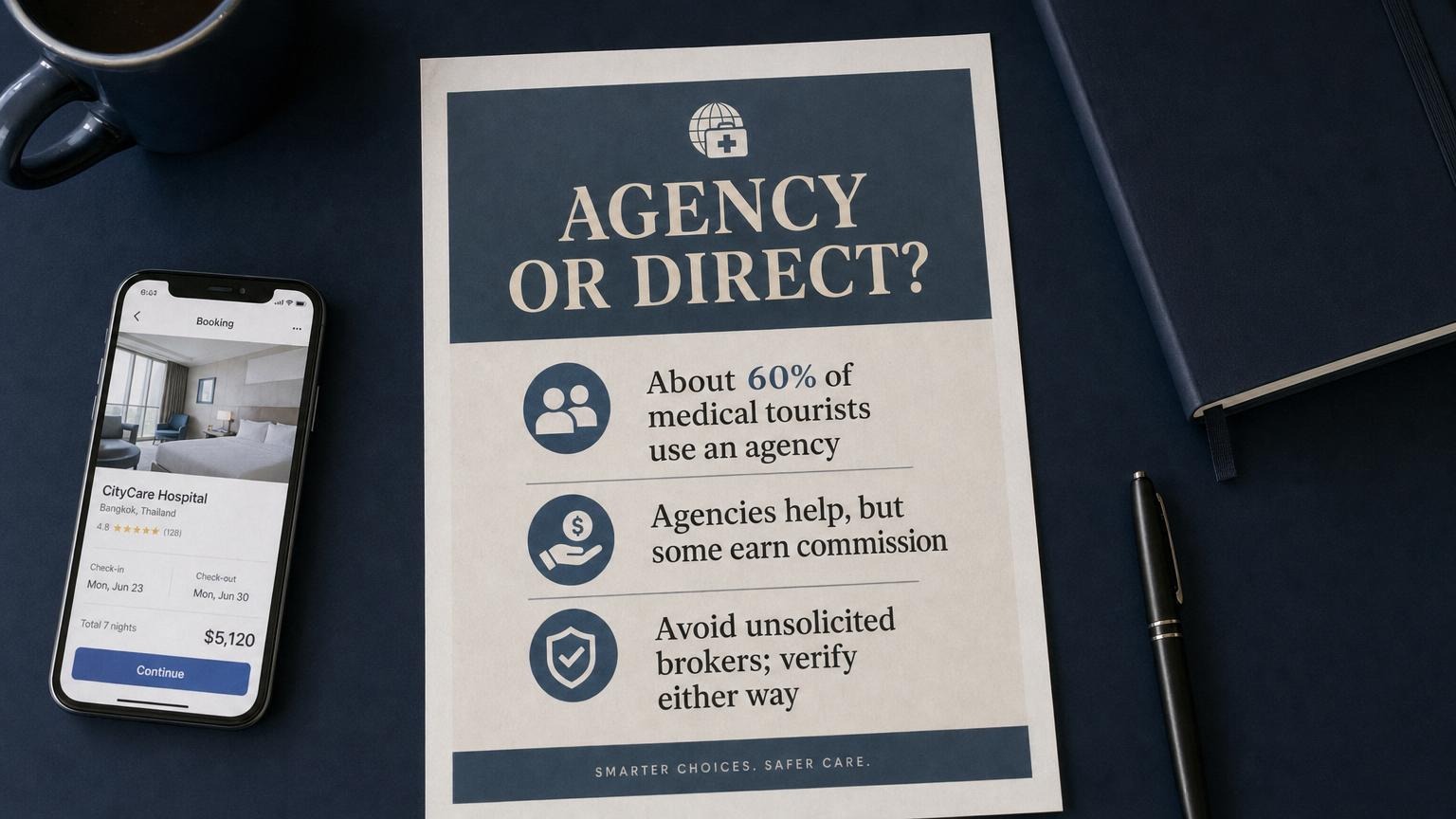
Roughly 60 percent of foreign patients use a medical tourism agency in Korea, and a good one helps with language, vetting, and logistics. But some agencies earn commission from clinics, which can bias their recommendations, and illegal brokers are a real risk. Understanding how booking works, when an agency genuinely helps, what risks to watch, and how to decide safely is what keeps you in control of the choice.
How Booking Works
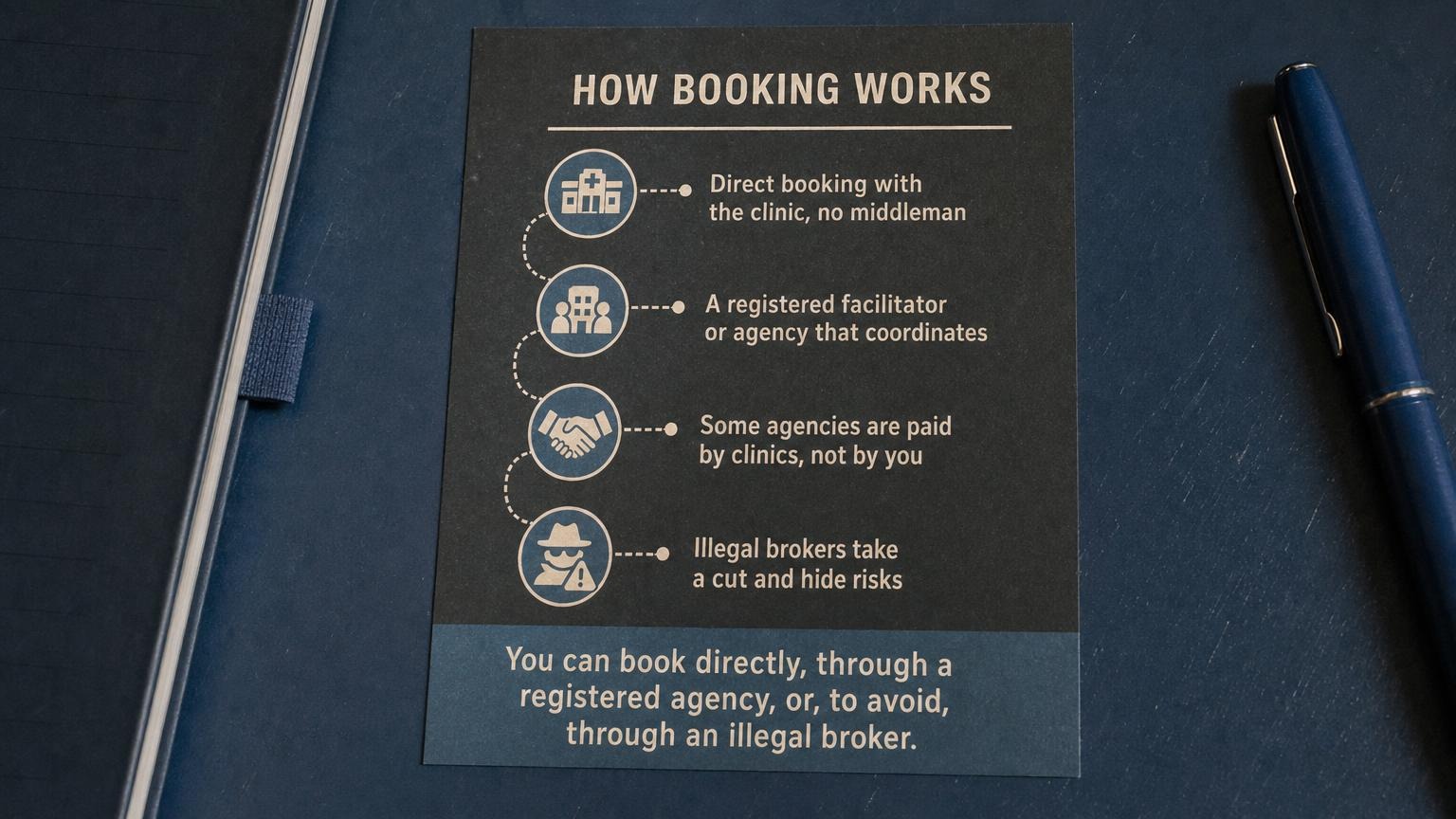
There are a few distinct routes, and they are not equal. You can book directly with a clinic, with no middleman. You can go through a registered facilitator or agency that coordinates your trip. Some agencies are paid by the clinics rather than by you, which they may present as cost-free to you but which still shapes which clinics they push. And at the bottom, illegal brokers take a cut and tend to hide the risks, steering you wherever pays them best. Knowing which route you are on matters.
The takeaway is that you can book directly, through a registered agency, or, to be avoided, through an illegal broker. The route affects both cost and the neutrality of the advice you get. Booking directly with an accredited clinic, or through a verified facilitator, eliminates broker fees, while an illegal broker adds cost and risk. The same trip-planning fundamentals apply whichever route you choose, and our broader medical tourism and trip-planning guidance covers the logistics regardless of how you book.
When an Agency Helps
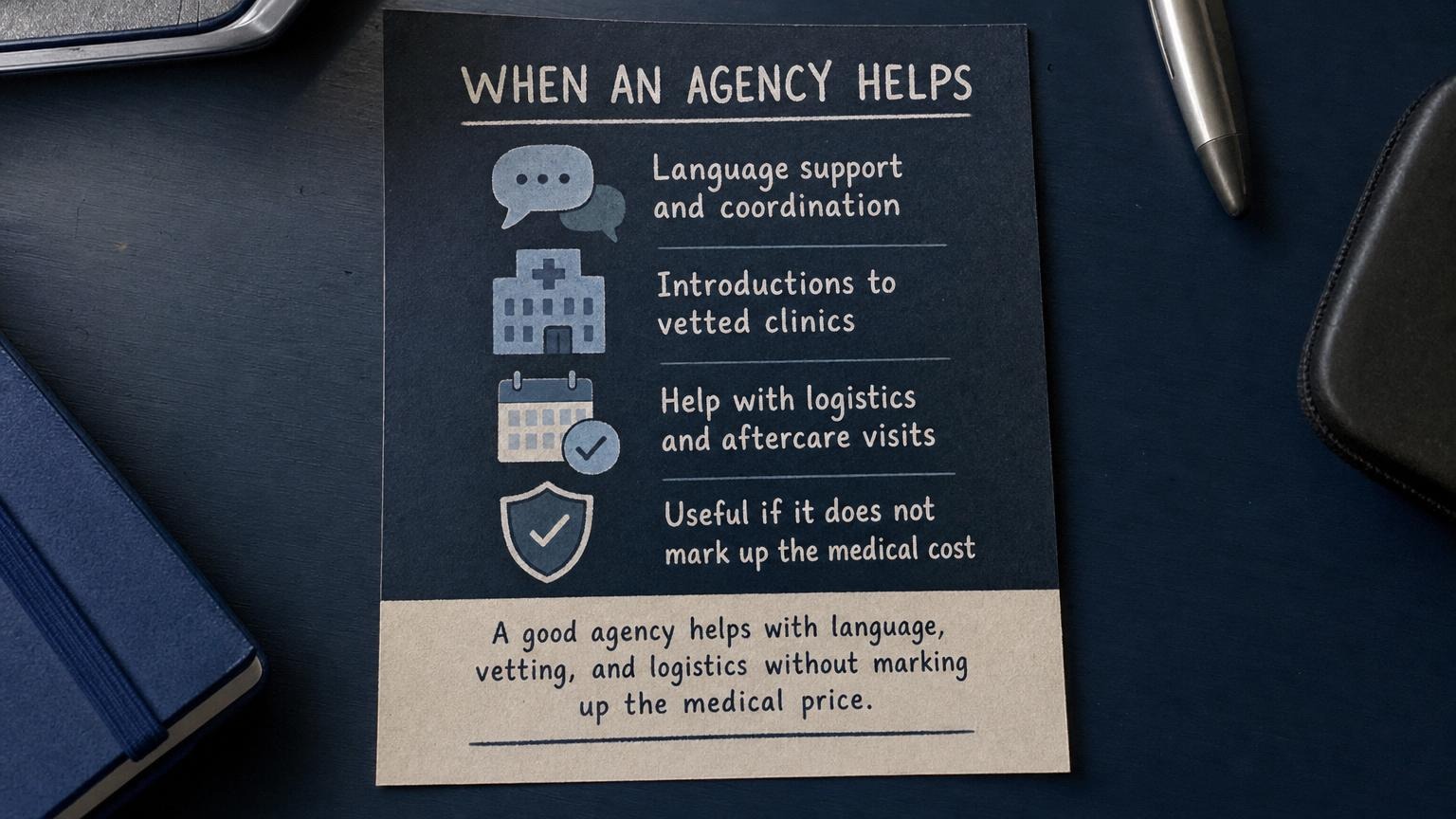
A good agency earns its place through genuine service, not markup. It provides language support and coordination, which matters a great deal when you are navigating a foreign medical system. It can introduce you to vetted clinics, saving you some of the legwork. It helps with logistics and aftercare visits, smoothing the practical side of the trip. And it is most valuable when it does not mark up the medical cost, so you pay the same as, or less than, you would directly while gaining support.
The honest framing is that a good agency helps with language, vetting, and logistics without marking up the medical price. For a first-time visitor, especially one facing a language barrier, that coordination can be worth a lot. The key is transparency about how the agency is paid: an agency compensated by negotiated clinic rates, rather than by inflating your bill, can be a genuine convenience. The problem is not agencies as a category, but agencies whose incentives quietly work against you.
Watch the Risks
The risks are mostly about hidden incentives. Be skeptical of unsolicited referrals and pushy recommendations, which often signal someone earning a fee. Watch for hidden commission steering you toward one particular clinic regardless of fit. Avoid illegal brokers, who skip the risks and prioritize their cut. And remember that much of the English-language content about Korean surgery is written by clinics or commission-earning agencies, so it tends to show positive outcomes while quietly skipping the downsides.
The core caution is to be skeptical of unsolicited referrals, hidden commissions, and illegal brokers who hide the risks. A recommendation is only as trustworthy as the incentive behind it, so ask directly how any agency or referrer is compensated. This is the same instinct that protects you when reading glowing reviews or before-and-after galleries, covered in our guide to verifying a clinic and surgeon. Treat an enthusiastic referral as a starting point for your own checks, never a substitute for them.

How to Decide Safely
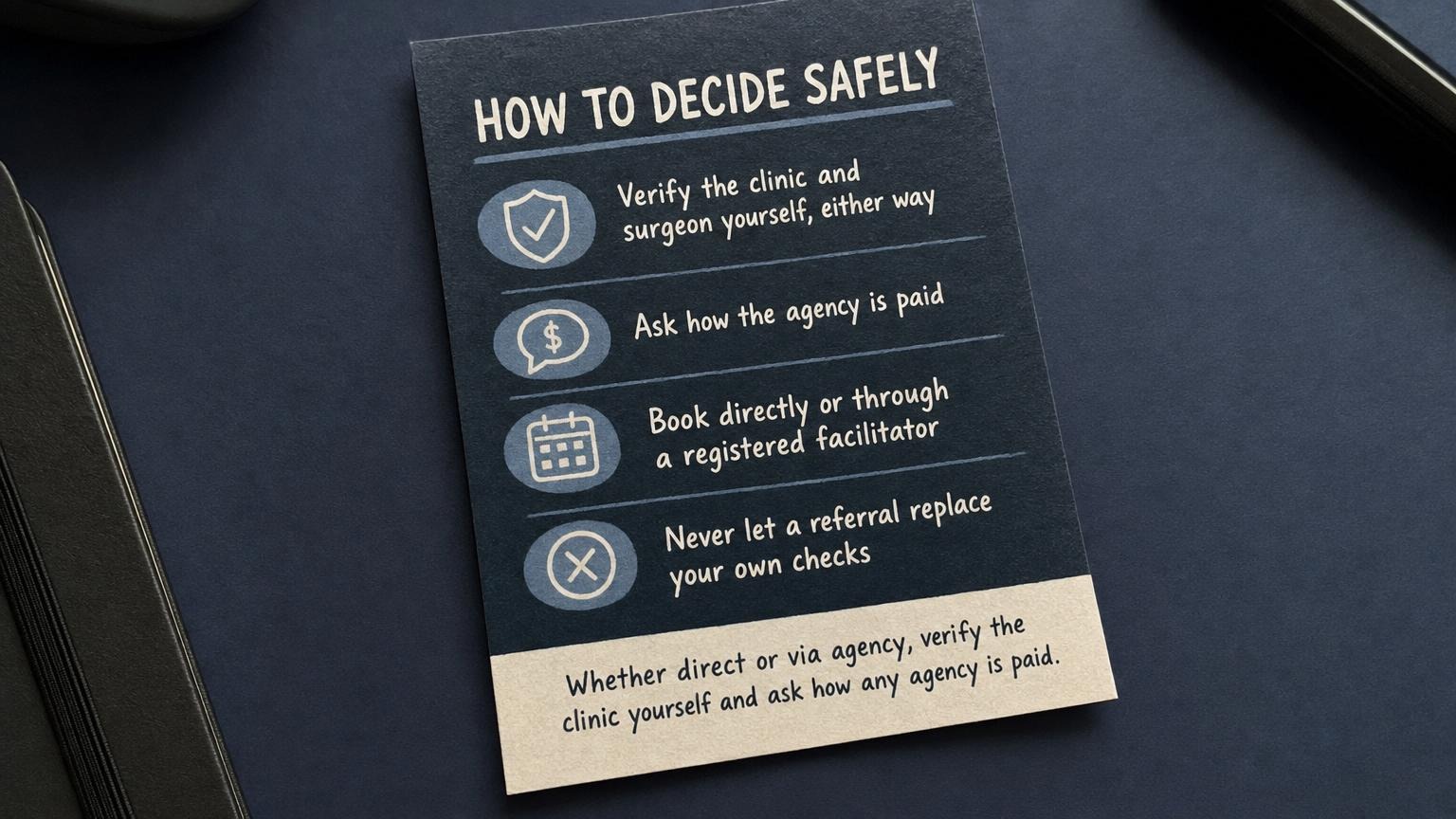
The safe approach works whichever route you choose. Verify the clinic and surgeon yourself, regardless of who introduced you, because that responsibility never transfers to an agency. Ask how the agency is paid, so you understand the incentive behind its recommendations. Book directly or through a registered facilitator rather than an unverified broker. And never let a referral replace your own checks on credentials, reviews, and pricing.
The bottom line is that whether direct or via an agency, you verify the clinic yourself and ask how any agency is paid. An agency can save you time and stress, but it cannot outsource your due diligence. The patients who do best are the ones who use an agency for what it is genuinely good at, coordination and logistics, while keeping the medical decision, verifying the surgeon, the clinic, and the honest pricing, firmly in their own hands. That combination gives you the convenience without surrendering control of the choice that matters most.
Cost and How to Plan It
On cost, the key question is whether an agency marks up your medical bill or is paid separately by the clinic. Booking directly or through a verified facilitator eliminates broker fees, while a transparent agency paid via negotiated rates may cost you nothing extra. Factor in that, from 2026, the foreigner VAT refund on cosmetic procedures has ended, so expect to pay roughly 10 percent more than older guides suggest, regardless of how you book. Budget around a genuine clinic quote, and treat any route that inflates the medical price as a reason to reconsider.

Before committing, five questions keep your booking safe. Am I booking directly, through a registered facilitator, or through an unverified broker I should avoid? If I use an agency, how exactly is it paid, and does it mark up the medical cost? Have I verified the clinic and surgeon myself rather than trusting the referral? Am I treating enthusiastic recommendations as a starting point, not proof? And have I budgeted from a genuine clinic quote, accounting for the ended VAT refund? A route that is transparent on all five is the one to trust. For trip-planning details, visit Link Plastic Surgery’s official website.
Frequently Asked Questions
1. Should I use a medical tourism agency in Korea?
It depends. Around 60 percent of foreign patients do, and a good agency genuinely helps with language, vetting, and logistics. But some agencies earn commission from clinics, which can bias their advice, and illegal brokers are a risk. An agency is worth using for coordination if it is transparent about how it is paid and does not mark up your medical cost, but never let it replace your own verification.
2. Do agencies make surgery more expensive?
Not always. Some agencies are paid by clinics via negotiated rates rather than by marking up your bill, so you may pay the same or less while gaining support. Others, and especially illegal brokers, add cost. The key is to ask directly how the agency is compensated. Booking directly with an accredited clinic or a verified facilitator eliminates broker fees entirely.
3. What is the difference between an agency and an illegal broker?
A registered facilitator or reputable agency coordinates your trip transparently and works with accredited clinics. An illegal broker operates outside that framework, takes a cut, steers you toward whatever pays best, and tends to hide the risks. Skip illegal brokers entirely, and book directly or through a registered facilitator. Treat unsolicited referrals with particular caution, as they often come from brokers.
4. Is booking directly with a clinic better?
Booking directly eliminates broker fees and removes any middleman’s incentive from the advice, which is a real advantage. The trade-off is that you handle coordination and language yourself. For a confident, well-researched patient, direct booking is often ideal; for a first-timer facing a language barrier, a transparent agency’s coordination may be worth it. Either way, you must still verify the clinic and surgeon yourself.
5. How do I know if an agency’s recommendation is biased?
Ask how the agency is paid. If it earns a commission from the clinics it recommends, its advice carries an incentive to steer you toward those clinics regardless of fit. That does not make it useless, but it means you should verify the recommended clinic independently. Be especially skeptical of an agency that only ever recommends one clinic, or that resists explaining how it is compensated.
6. Why are so many Korea surgery reviews positive?
Because much of the English-language content about Korean cosmetic surgery is written by clinics or commission-earning agencies, so it tends to show positive outcomes while quietly skipping the risks. That does not mean the information is false, but it is not neutral. Cross-check recommendations against independent reviews and your own verification, and treat glowing, one-sided content as marketing rather than objective advice.
7. Can an agency handle the verification for me?
An agency can introduce you to vetted clinics and help with logistics, but it cannot outsource your due diligence, especially if it earns a fee from the referral. You should still confirm the surgeon’s credentials, read independent reviews, and understand the pricing yourself. Use the agency for coordination, but keep the medical decision, and the verification behind it, firmly in your own hands.
8. What should I ask an agency before using it?
Ask how it is paid and whether it marks up the medical cost, how many clinics it works with and why it recommends a particular one, whether it is a registered facilitator, and what exactly its service includes. Transparent, specific answers are a good sign; vagueness or a single-clinic focus is a warning. How an agency answers these questions tells you a lot about whether its incentives align with yours.
9. Does the 2026 VAT change affect agency bookings?
Yes, but not because of the agency. From 2026, the foreigner VAT refund on cosmetic procedures has ended, so you should expect to pay roughly 10 percent more than older guides suggest, regardless of whether you book directly or through an agency. Budget from a current clinic quote, and do not assume an agency can restore a refund that no longer exists.
10. How do I book safely as an international patient?
Decide between direct booking, a registered facilitator, or an agency, avoiding unverified brokers; ask how any agency is paid; verify the clinic and surgeon yourself; treat enthusiastic referrals as a starting point, not proof; and budget from a genuine quote accounting for the ended VAT refund. For trip-planning details, visit Link Plastic Surgery’s official website.
Information on medical tourism agency structures, commissions, and booking routes is based on industry reporting (Seoulz, Jivaka Beauty and others), 2026. Verify any clinic and agency independently before booking.