Alar Reduction in Korea: What Nostril Narrowing Surgery Actually Looks Like (Real Photos)
Alar reduction is one of the most misunderstood procedures in cosmetic surgery. People confuse it with rhinoplasty. They assume it requires general anesthesia and weeks of downtime. They think the scars will be visible. Almost none of that is true.
Alar reduction, also called nostril narrowing or alarplasty, is a standalone minor procedure that reshapes the nostrils by removing a small wedge of tissue from the alar base. It takes 30 to 45 minutes, is performed under local anesthesia, and the stitches come out at day 5 to 7. That is it.
It can also be combined with full rhinoplasty, and frequently is. But what most patients searching online do not realize is that you do not need a nose job to narrow your nostrils. You can do alarplasty alone, and it changes the lower third of the face more than most people expect.
Three patients who had alar reduction at clinics in Seoul shared their recovery photos. Two of them are at 7 days post-op, one shows a fully healed result.
Key Takeaways
- Alar reduction is a standalone 30 to 45 minute procedure under local anesthesia. It does not require a full rhinoplasty.
- Scars are placed in the natural crease where the nostril meets the cheek, making them nearly invisible once healed.
- Cost in Korea: $800 to $1,500. US equivalent: $2,000 to $4,000.
- Recovery is 5 to 7 days until suture removal. Most patients return to work within a week.
- Can be combined with rhinoplasty or tip plasty for a comprehensive nose reshaping.
Case 1: Tip Plasty + Alar Reduction Combo, 7 Days Post-Op
This patient had both nasal tip refinement and alar reduction performed together by Dr. Sung Ha-min. The photos show her results at 7 days, the day of suture removal.

Before Surgery
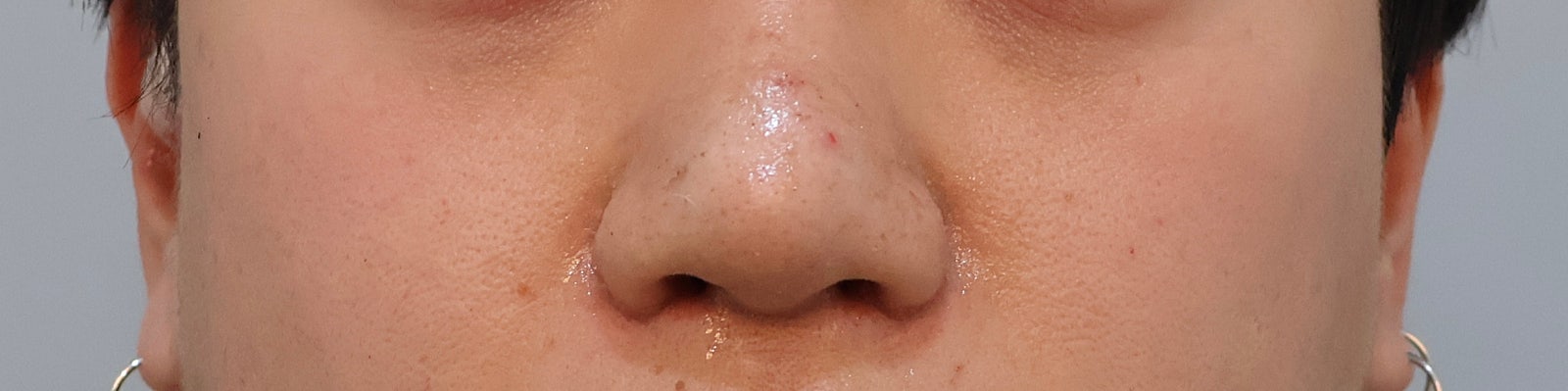
7 Days Post-Op
“Day 7 after tip plasty and alar reduction. The nostrils are narrower and the tip has more definition. Still some swelling but the shape is already visible.” — Patient review #1022 (Dr. Sung Ha-min), translated from Korean
This case is a good example of how alar reduction and tip plasty complement each other. The alar reduction narrowed the nostril width while the tip plasty lifted and refined the nasal tip, creating a balanced result from both the front and bottom view.
Case 2: Standalone Alar Reduction, 7 Days Post-Op
This patient had alar reduction as a standalone procedure without any bridge or tip work. The goal was simply to reduce nostril flare.

Before Surgery

7 Days Post-Op
“Seven days after nostril reduction. The swelling is almost gone and the nostrils are narrowed without looking overdone. Very natural result.” — Patient review #1004, translated from Korean
Case 3: Healed Alar Reduction Result
This patient shows a fully healed result after standalone alar reduction. The scars have matured and are no longer visible.

Before Surgery

After Surgery (Healed)
“Very happy with my nostril reduction. The scars are completely hidden and the shape looks natural.” — Patient review #995, translated from Korean
Alar Reduction vs. Rhinoplasty: Understanding the Difference
This is the most common point of confusion. Rhinoplasty reshapes the entire nose: bridge height, tip projection, overall profile. Alar reduction only addresses the nostrils. They are completely different procedures, even though they both involve the nose.
| Factor | Alar Reduction | Rhinoplasty |
|---|---|---|
| Duration | 30 to 45 minutes | 1.5 to 3 hours |
| Anesthesia | Local | General or sedation |
| Recovery | 5 to 7 days | 2 to 4 weeks (cast 1 week) |
| What it changes | Nostril width and flare | Bridge, tip, profile, overall shape |
| Cost (Korea) | $800 to $1,500 | $3,000 to $6,000 |
Many patients who come to Korea for rhinoplasty have alar reduction added to their procedure. But equally many patients only need the alar reduction. If your bridge and tip shape are fine and the only issue is wide nostrils or nostril flare, alarplasty alone solves the problem at a fraction of the cost and recovery time.
Internal vs. External Approach
There are two main techniques for alar reduction, and which one the surgeon uses depends on the patient’s anatomy and the degree of narrowing needed.
External Alar Base Excision
This is the most common technique. The surgeon removes a small wedge of tissue from the outer base of the nostril, where the alar meets the cheek. The scar sits in the natural crease of the alar-facial junction, which is why it becomes nearly invisible once healed. This approach works best for patients with wide alar bases.
Internal (Nostril Sill) Excision
For patients who have nostril flare without a wide alar base, the surgeon may remove tissue from inside the nostril sill (the floor of the nostril). This hides the scar completely inside the nose but provides less narrowing than the external approach.
Some surgeons at clinics like Link Plastic Surgery use a combination of both techniques for patients who need significant narrowing while maintaining a natural nostril shape.
Scar Placement and Visibility
Scarring is the biggest concern for patients considering alar reduction. The reality is more reassuring than most people expect.
The external incision is placed precisely in the alar-facial groove, the natural crease where the nostril base meets the cheek. This crease exists on every nose, and the scar blends into it. At 3 to 6 months, most patients cannot find the scar themselves without a mirror and close inspection. By 1 year, it is functionally invisible.
Patients with darker skin tones should discuss scar management with their surgeon before the procedure, as hyperpigmentation can occur. Silicone scar sheets and sun protection are standard post-op recommendations.
Alar Reduction Cost: Korea vs. United States
| Procedure | Korea (Seoul) | United States |
|---|---|---|
| Alar reduction (standalone) | $800 to $1,500 | $2,000 to $4,000 |
| Alar reduction + tip plasty | $2,500 to $4,000 | $5,000 to $8,000 |
| Alar reduction + full rhinoplasty | $3,500 to $7,000 | $9,000 to $16,000 |
When alar reduction is combined with rhinoplasty, the additional cost is typically $500 to $800 in Korea. It is often included in comprehensive rhinoplasty packages at higher-volume clinics.
Recovery: What to Expect Day by Day
| Timeline | What Happens |
|---|---|
| Day 1 | Mild swelling around nostrils, small bandages or steri-strips in place |
| Day 2 to 3 | Swelling peaks then begins to subside, minimal pain |
| Day 5 to 7 | Suture removal, most swelling resolved, can return to work |
| Week 2 to 3 | Residual swelling gone, scars still pink but fading |
| Month 3 to 6 | Scars mature to skin color, final result visible |
Most patients describe the pain as mild, around a 2 to 3 out of 10. Over-the-counter pain medication is sufficient. The main inconvenience is avoiding anything that stretches the nostril area for the first week: no wide yawning, no pulling shirts over the head, no blowing the nose forcefully.
Recommended for Alar Reduction Recovery
Products that patients commonly use during nostril surgery recovery.
- Arnica Montana Tablets — reduces bruising and swelling around the nose. Check price on Amazon
- COSRX Snail Mucin Essence — gentle hydration that supports skin recovery around incision sites. Check price on Amazon
- Silicone Scar Sheets — apply to alar base scars after suture removal to flatten and fade scars faster. Check price on Amazon
- Beauty of Joseon Relief Sun SPF 50+ — essential for preventing scar hyperpigmentation from sun exposure. Check price on Amazon
As an Amazon Associate, GlobalBeautySpot earns from qualifying purchases.
Considering Nostril Reduction in Korea?
Get a free remote consultation with a board-certified surgeon at Link Plastic Surgery. Send your photos through WhatsApp or KakaoTalk for a preliminary assessment and cost estimate.
Related Articles
- Korean Rhinoplasty Results at 1 Month: What Your Nose Actually Looks Like During Recovery
- Belly Button Surgery in Korea: Real Before-and-After Photos From 3 Patients
- Full Face Fat Grafting in Korea: Real Cases With Recovery Photos
- Planning Plastic Surgery in Korea: The Complete Medical Tourism Guide
Patient photos from verified reviews at Korean plastic surgery clinics. Published with patient consent. Results may vary.