The phrase “Korean plastic surgery” is so famous it hides what is actually happening in Seoul’s clinics. In 2025, dermatology, not surgery, accounted for roughly 63 percent of all foreign patient visits, growing about 86 percent year on year, while plastic surgery made up only about 11 percent. In other words, most foreigners now come to Korea for their skin, not for the knife. That shift matters if you are planning your first trip, because the honest question is often not “which surgery” but “do I need surgery at all, or would a skin treatment get me most of the way there?” A consultation at a clinic like Link Plastic Surgery can help you answer that honestly rather than defaulting to surgery.
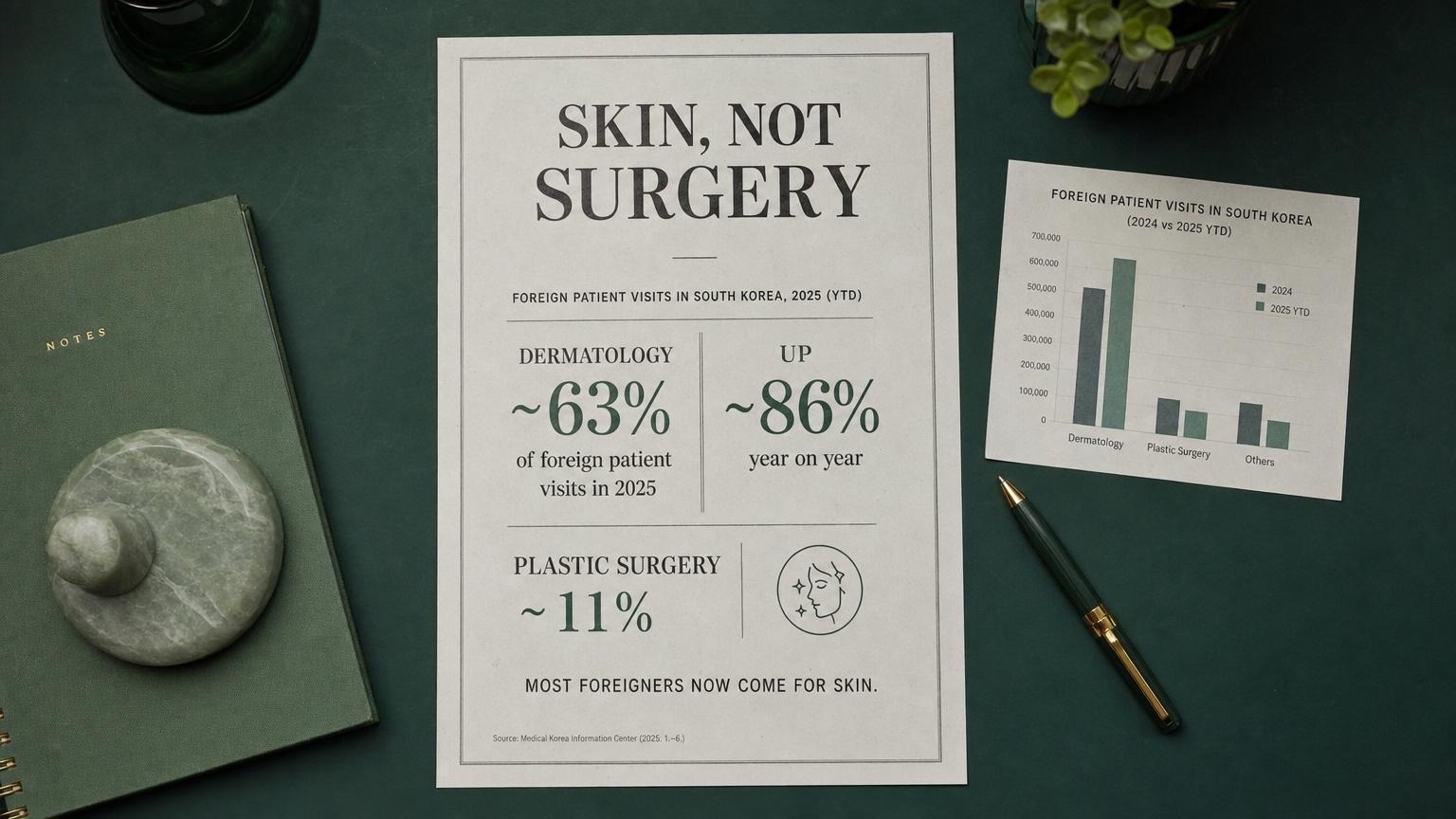
The headline story of Korea’s 2025 medical tourism boom is a quiet shift: most foreign patients now come for dermatology and skin quality, not surgery. Skin boosters, lasers, and glass-skin programs lead, offering lower cost and less downtime than an operation. Understanding what changed, how to decide between skin and surgery, what a first-timer should do, and why verification still matters is what makes the decision a good one.
What Changed
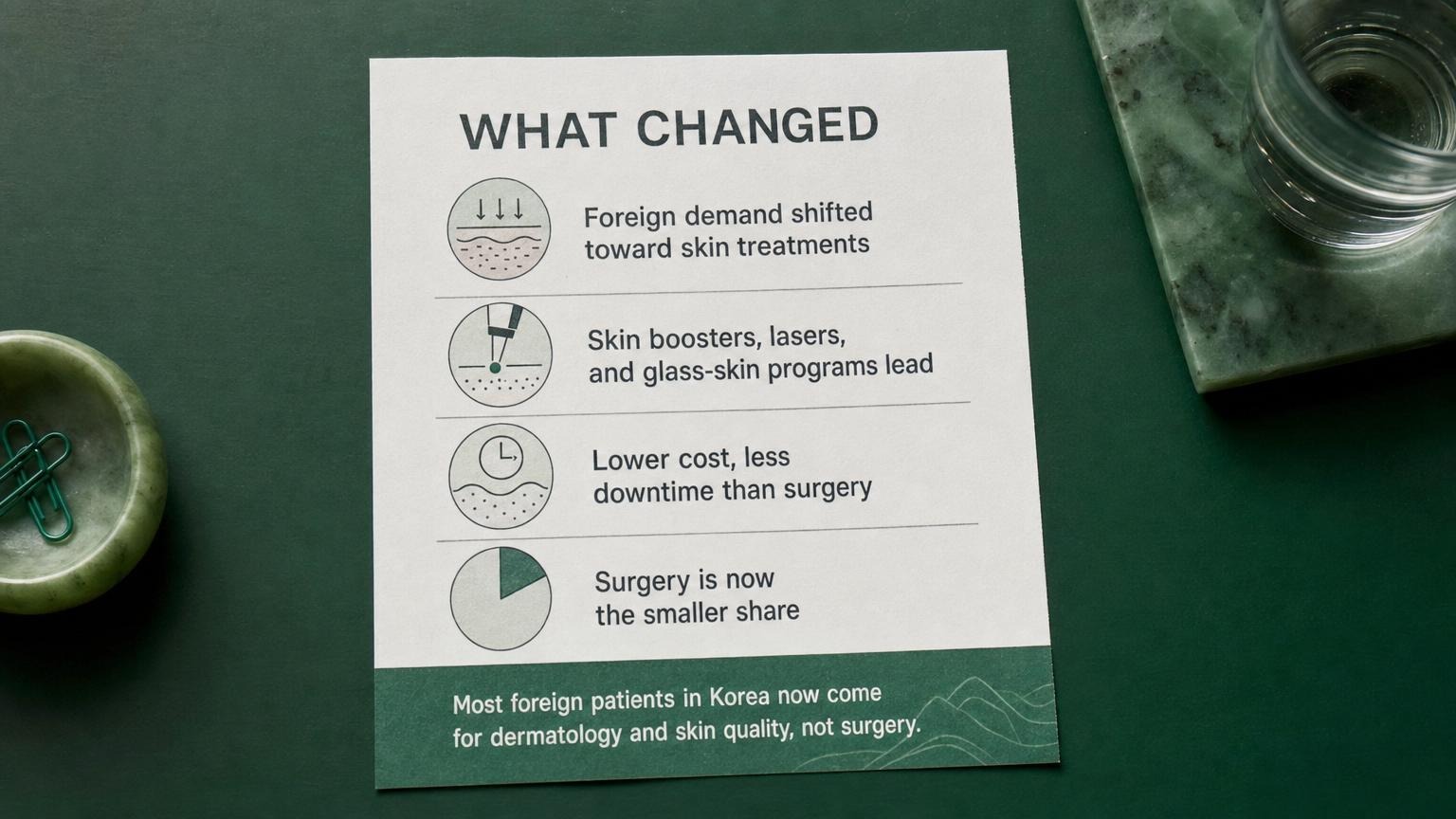
The composition of Korea’s foreign patients has shifted decisively. Demand has moved toward skin treatments, with dermatology now the large majority of visits and surgery the smaller share. Skin boosters, precision lasers, and glass-skin programs lead the way, offering visible improvement in tone, texture, and quality with lower cost and far less downtime than surgery. The famous “plastic surgery” destination is now, in volume terms, mostly a skincare destination.
The takeaway is that most foreign patients in Korea now come for dermatology and skin quality, not surgery. This reflects a broader change in what people want: not a dramatic structural change, but better-looking, healthier skin, achieved gradually and repeatably. That preventive, quality-first mindset connects to the range of gentle, non-surgical treatments in non-surgical (petit) procedures, which are designed to support skin rather than reshape structure.
Skin or Surgery?
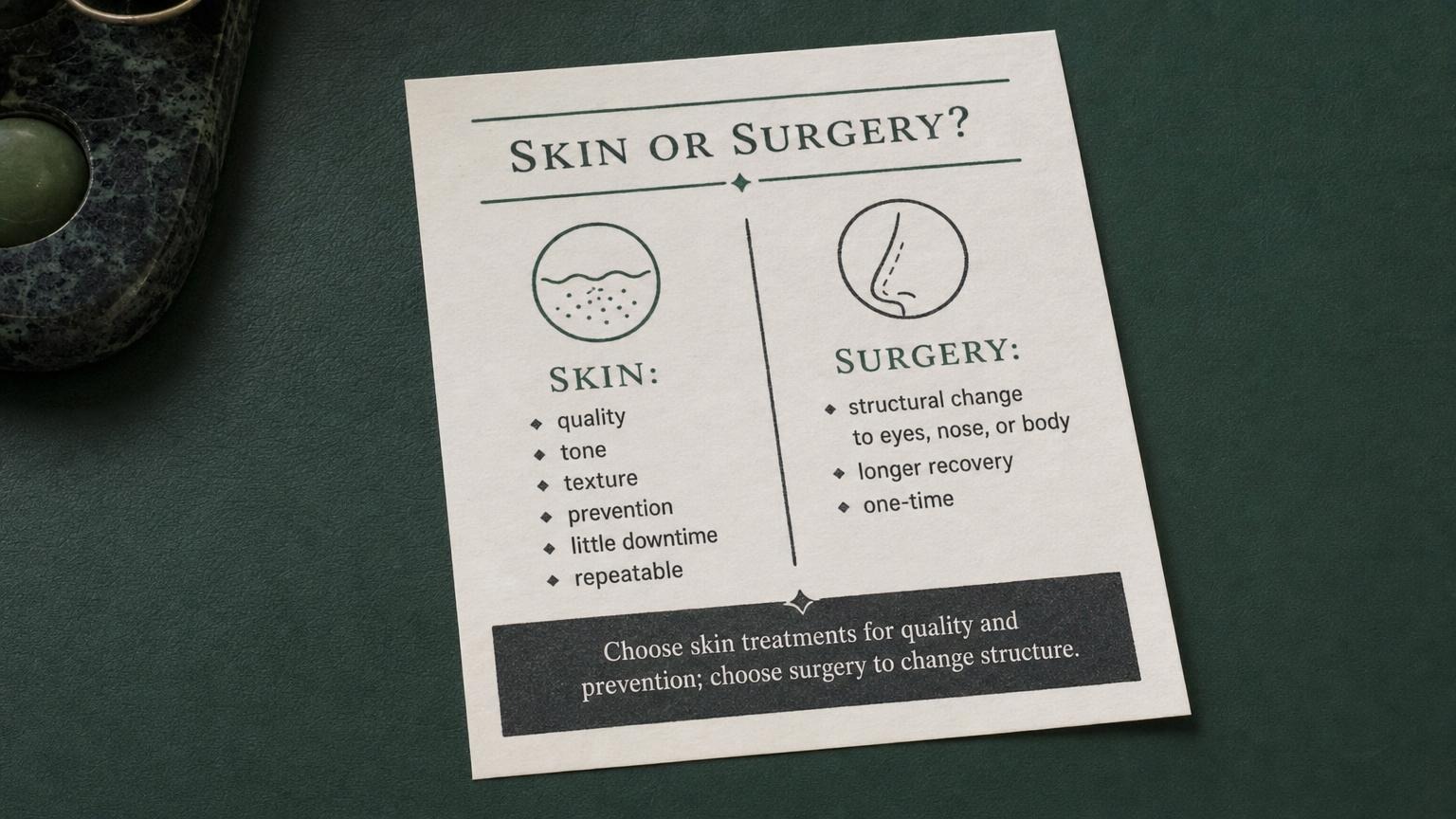
The two paths serve genuinely different goals. Skin treatments, boosters, lasers, and quality-focused programs, improve tone, texture, hydration, and prevention, with little downtime and results you maintain over time. Surgery makes a structural change to the eyes, nose, or body, with a longer recovery and a one-time, lasting result. Neither is universally better; each answers a different question. The mistake is assuming you need surgery when a skin treatment would address what actually bothers you, or expecting a skin treatment to do a surgeon’s job.
The honest framing is to choose skin treatments for quality and prevention, and surgery to change structure. If your concern is dullness, texture, early aging, or maintaining good skin, dermatology is likely the right and gentler path. If your concern is the shape of a feature, a fold, or contour, that is surgical territory. A good clinic tells you which category your goal falls into rather than steering you toward whichever is more profitable, and the growing dominance of dermatology suggests many foreign patients’ goals are, in fact, skin-quality ones.
If It’s Your First Trip
For a first-time visitor, the shift toward skin treatments offers a gentler way in. Start with what actually bothers you, rather than a procedure you saw online. A skin treatment is often a lower-commitment first step, with less downtime and cost, that addresses many common concerns. Get a proper consultation before committing to surgery, so the decision is informed. And do not let a trend, in either direction, decide for you; the fact that skin treatments are now the majority does not mean surgery is wrong for your specific goal.
The principle is to let your actual goal, not the trend, decide between a skin treatment and surgery. It is easy to be swept along by whatever is popular, but the right choice is personal and specific. For many first-timers, beginning with a skin treatment and a consultation, rather than booking surgery straight away, is the sensible path, precisely because it is reversible in a way surgery is not. The 63 percent who now choose dermatology are, in many cases, people who found that skin quality was really what they were after.

Still Verify the Clinic
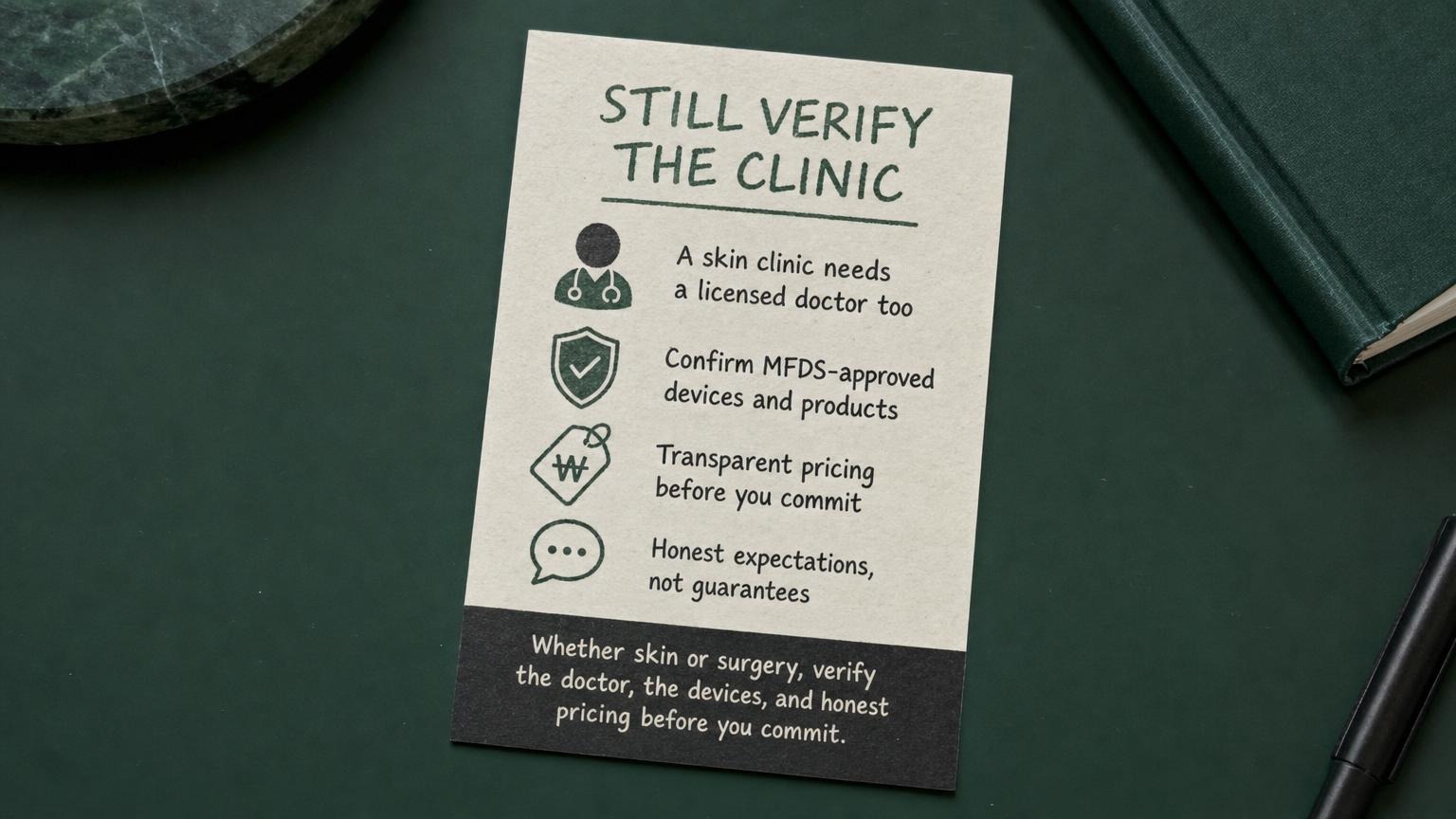
The shift to skin treatments does not lower the bar for choosing a clinic. A skin clinic still needs a licensed doctor, not just an aesthetician, for medical-grade lasers and injectables. It should use MFDS-approved devices and products it is happy to name. It should give transparent pricing before you commit, and set honest expectations rather than promising perfect or permanent results. The same due diligence you would apply to surgery applies to dermatology, because a laser or an injectable is still a medical procedure.
The honest bottom line is that whether you choose skin or surgery, you verify the doctor, the devices, and honest pricing before you commit. The popularity of skin treatments can make them feel casual, but a medical-grade treatment carries real risk if done badly or with counterfeit product. Our guides to choosing a skin clinic and verifying a clinic and doctor apply just as much to a booster or a laser as to an operation.
Cost and How to Plan It
Part of what drives the shift toward dermatology is cost and downtime: skin treatments are generally far cheaper per session than surgery and require little to no recovery, which suits a short trip. A budget for skin treatments is best thought of as a plan, since many are done as a short series, while surgery is a larger one-time cost plus meaningful recovery time. For a first trip, a skin-focused plan is often the more affordable and lower-risk way to start, with surgery a considered decision for later if your goal genuinely calls for it.

Before committing, five questions keep the decision sound. Is my goal about skin quality (better handled by dermatology) or about structure (surgical)? Have I had a consultation rather than defaulting to a procedure I saw online? For a first trip, would a skin treatment be a gentler, lower-commitment first step? Have I verified the clinic’s doctor, devices, and pricing, whichever path I choose? And am I deciding on my actual goal rather than the trend? A clinic that helps you answer these honestly is the one to trust. For trip-planning details, visit Link Plastic Surgery’s official website.
Frequently Asked Questions
1. Do most foreigners really go to Korea for skin, not surgery?
Yes. In 2025, dermatology accounted for roughly 63 percent of foreign patient visits, growing about 86 percent year on year, while plastic surgery was only around 11 percent. Despite the “plastic surgery” reputation, most foreign patients now come to Korea for skin treatments, boosters, lasers, and glass-skin programs, rather than for surgery.
2. Why has demand shifted toward dermatology?
Because many patients want better skin quality rather than a structural change, and skin treatments deliver visible improvement in tone and texture with lower cost and far less downtime than surgery. Korea’s advanced dermatology, from skin boosters to precision lasers, meets that demand well. The shift reflects a broader preference for gradual, repeatable skin improvement over one-time surgical change.
3. Should I get a skin treatment or surgery?
It depends on your goal. Choose skin treatments for quality, tone, texture, and prevention, with little downtime; choose surgery to change the structure of a feature like the eyes, nose, or body. Neither is universally better. The mistake is defaulting to surgery when a skin treatment would address what bothers you, or expecting a skin treatment to do a surgeon’s job.
4. Is a skin treatment a good first step for a first trip?
Often, yes. A skin treatment is typically lower-commitment than surgery, with less cost and downtime, and it addresses many common concerns like dullness, texture, and early aging. Starting with a consultation and a skin treatment, rather than booking surgery straight away, is a sensible path for many first-timers, precisely because it is reversible in a way surgery is not.
5. What are the popular Korean skin treatments?
Skin boosters, precision lasers, and glass-skin programs lead the current demand, improving hydration, tone, texture, and overall skin quality. These non-surgical treatments are what most foreign patients now come to Korea for. The right one depends on your skin and goals, which a consultation determines; the key point is that they target skin quality rather than changing facial or body structure.
6. Are skin treatments cheaper than surgery?
Generally, yes, per session, and they require little to no recovery time, which suits a short trip. Many skin treatments are done as a short series, so budget for the plan rather than a single visit. Surgery is a larger one-time cost plus meaningful recovery. For a first trip, a skin-focused plan is often the more affordable and lower-risk way to start.
7. Does the shift mean surgery is a bad choice?
No. The popularity of skin treatments does not make surgery wrong; it means many patients’ goals are actually about skin quality. If your goal genuinely requires a structural change, surgery is the right path. Let your specific goal decide, not the trend. The point is to choose deliberately rather than defaulting to surgery, or dismissing it, because of what is currently popular.
8. Do I still need to verify a skin clinic carefully?
Absolutely. A skin clinic offering medical-grade lasers and injectables needs a licensed doctor, MFDS-approved devices and products, transparent pricing, and honest expectations, just like a surgical clinic. The casual popularity of skin treatments does not lower the risk of a procedure done badly or with counterfeit product. Apply the same due diligence to a booster or laser as you would to an operation.
9. Can I combine skin treatments and surgery on one trip?
Sometimes, depending on the treatments, recovery, and your schedule, which a consultation determines. Some patients pair a surgical procedure with skin treatments, while others focus on one. The important thing is that each is planned properly, with adequate recovery, rather than crammed in. A good clinic advises what can safely be combined and what is better done separately, based on your specific plan.
10. How do I decide between skin and surgery in Korea?
Start from your actual goal, is it skin quality or structure, and have a consultation rather than defaulting to a procedure you saw online. For a first trip, consider a skin treatment as a gentler first step. Verify the clinic’s doctor, devices, and pricing whichever you choose. For scheduling and trip-planning details, visit Link Plastic Surgery’s official website.
Statistics on the dermatology share of foreign patient visits are from South Korea’s 2025 medical tourism data as reported by Seoulz and other industry sources, 2026. Individual suitability for skin treatments versus surgery varies; consult a qualified clinic.