When people picture who flies to Seoul for cosmetic work, they still tend to imagine East Asian or, more recently, Western patients. The 2025 numbers point somewhere else entirely. Arrivals from Indonesia jumped roughly 105 percent year on year, and Malaysia rose about 107 percent, making Southeast Asia one of the fastest-growing sources of foreign patients in Korea. Many of these patients are Muslim, and their needs, halal meals during recovery, a female care team, a place to pray, are practical, reasonable, and increasingly well accommodated by Korean clinics. Yet very little English-language guidance addresses them directly. Understanding what to ask for, and consulting a clinic experienced with international patients like Link Plastic Surgery, makes the trip far smoother.
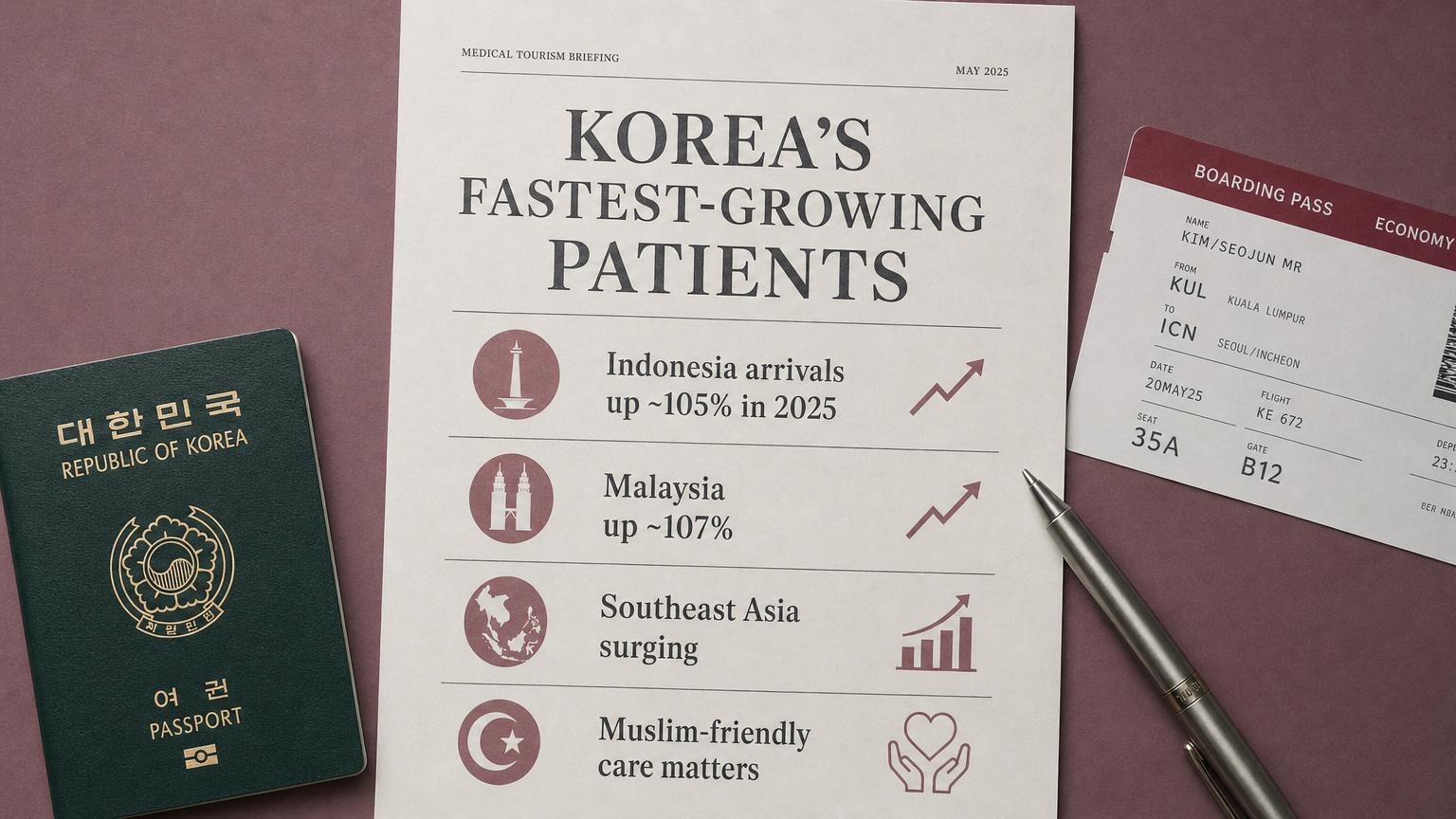
One of the clearest shifts in Korea’s 2025 medical tourism boom is the surge of Southeast Asian patients, with Indonesia and Malaysia among the fastest-rising sources, and many of them Muslim. Their needs are practical: halal food, a female care team where preferred, a prayer space, and clear communication. Understanding why they are coming, what to ask a clinic for, and how to plan the trip is what makes Korea work for a Southeast Asian or Muslim patient.
Why They Are Coming
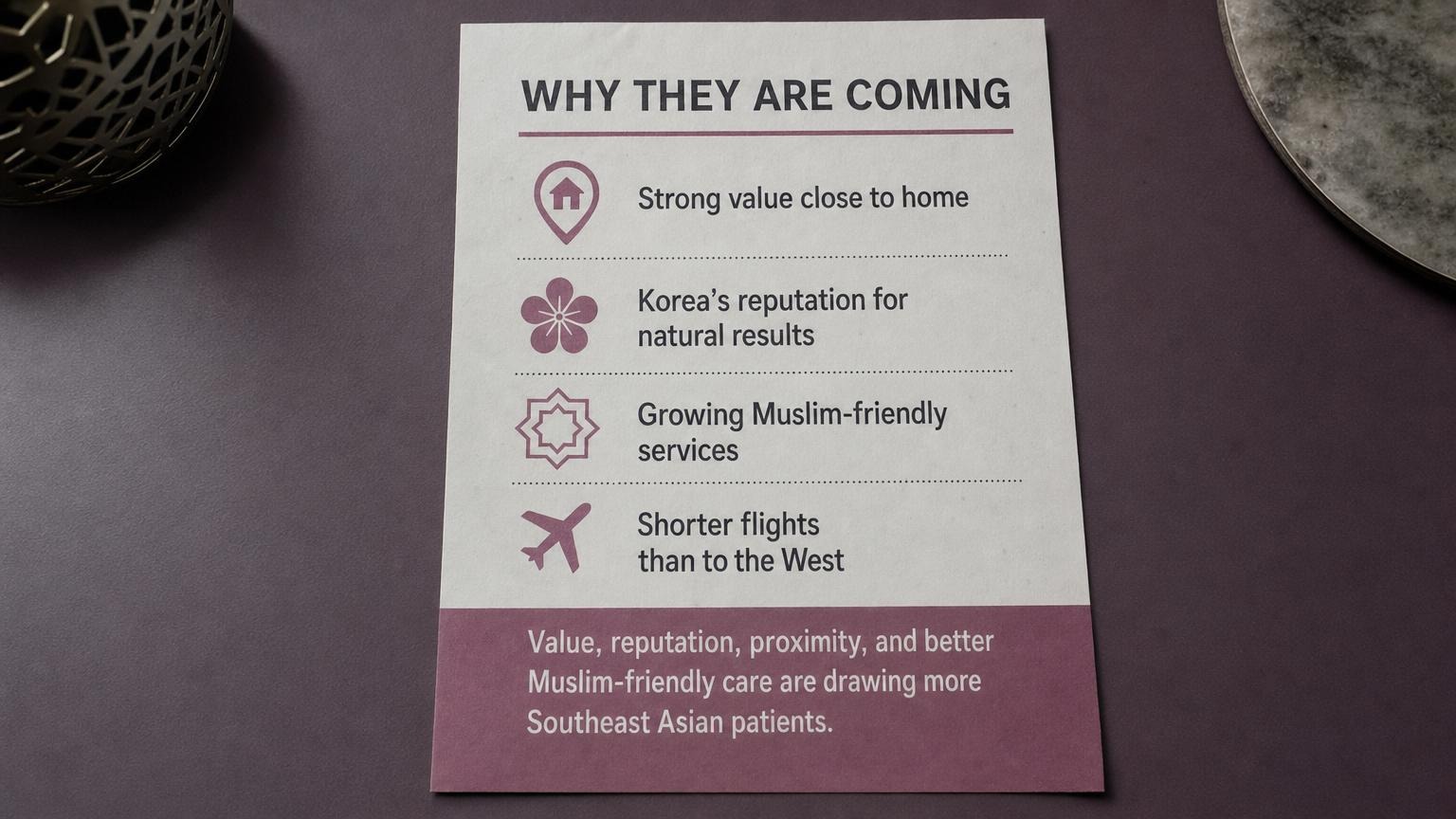
The surge is driven by a combination of very practical advantages. Korea offers strong value relatively close to home, with shorter flights than to Western destinations. It has a global reputation for natural, refined results rather than dramatic work. And Korean clinics increasingly offer Muslim-friendly services, from halal meal options to gender-specific care, that make the trip more comfortable for observant patients. Together these turn Korea from a distant option into a genuinely accessible one for Southeast Asian patients.
So value, reputation, proximity, and better Muslim-friendly care are drawing more Southeast Asian patients to Korea. This is a different story from the well-covered rise of Western patients: the appeal here is partly geographic and partly cultural accommodation. The same trip-planning fundamentals apply to everyone, and our broader medical tourism and trip-planning guidance covers the logistics, but Muslim and Southeast Asian patients have a few specific things worth confirming in advance.
What to Ask a Clinic For
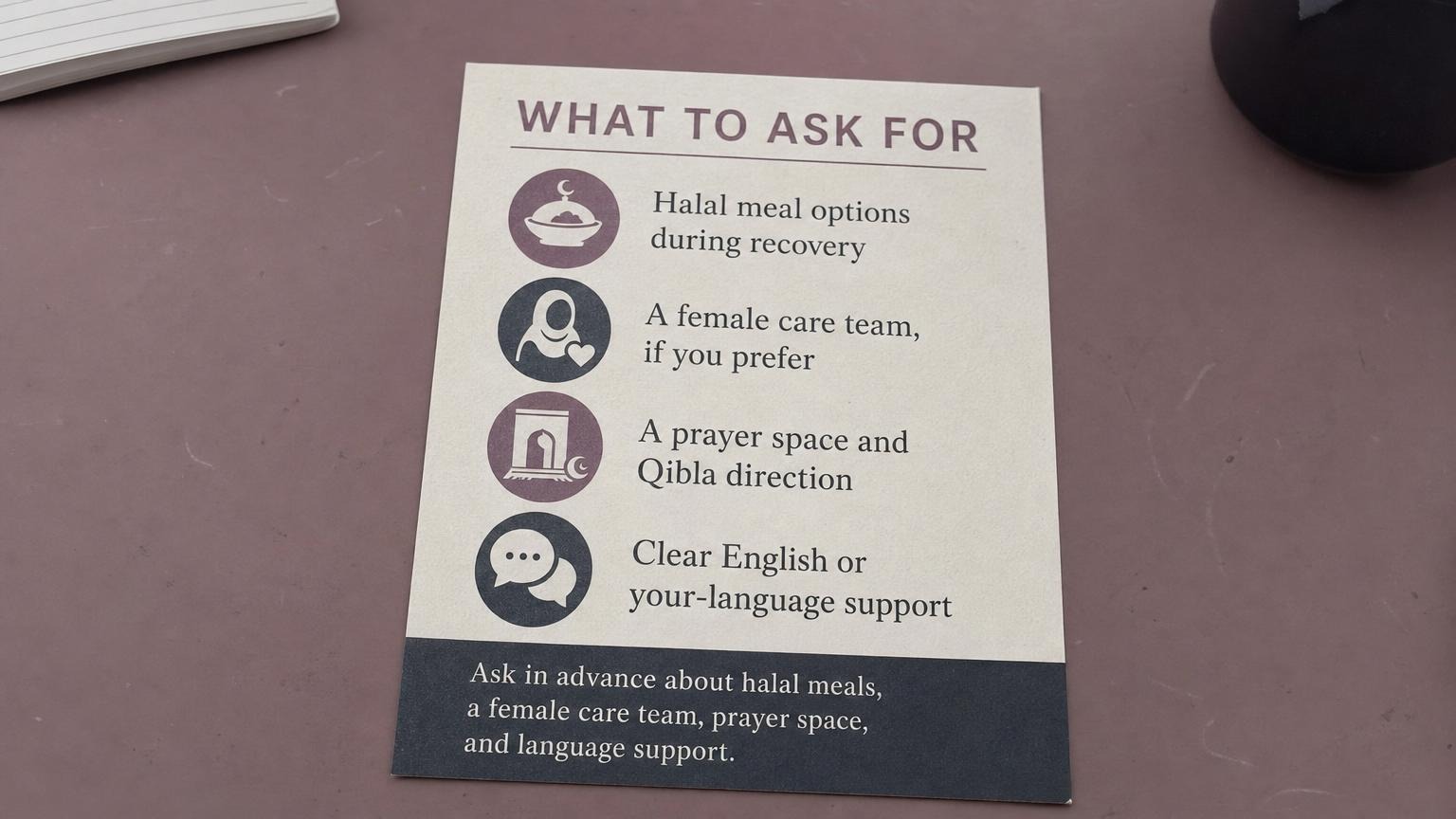
A short list of questions makes a real difference to how comfortable your trip is. Ask about halal meal options during your recovery, since you may be resting near the clinic for several days. Ask whether a female care team is available if you would prefer one. Ask about a prayer space and the Qibla direction, which good facilities increasingly provide. And confirm clear communication in English or your own language so you can fully discuss your plan and concerns.
The practical guidance is to ask in advance about halal meals, a female care team, prayer space, and language support. None of these requests is unusual; Korean hospitals and clinics serving international patients increasingly provide halal meals, gender-specific caregivers, and prayer facilities precisely because of this growing demand. Asking before you book, rather than hoping once you arrive, ensures your needs are met and tells you quickly whether a clinic is genuinely set up for patients like you. A clinic that answers these questions easily is one worth shortlisting.
How to Plan the Trip
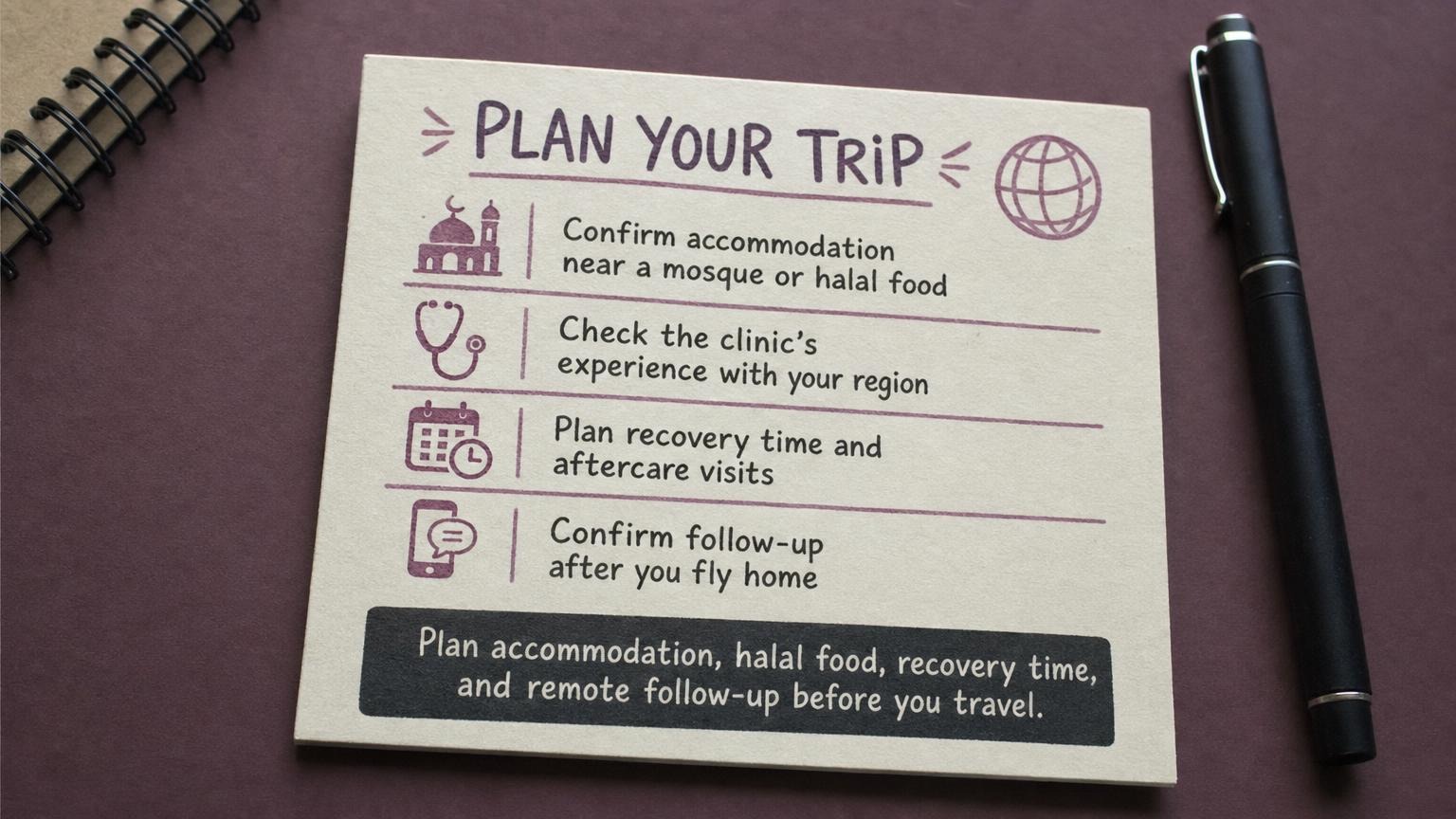
Beyond the clinic itself, a little planning around your stay goes a long way. Confirm accommodation near a mosque or reliable halal food, so daily life during recovery is easy. Check the clinic’s experience with patients from your region, which helps with both communication and expectations. Plan enough recovery time and aftercare visits before you fly home. And confirm how follow-up will work remotely once you are back, since distance makes this important.
The principle is to plan accommodation, halal food, recovery time, and remote follow-up before you travel. This is the same sound preparation any international patient should do, with the added layer of confirming halal food and prayer logistics around your stay. Sorting these out in advance, rather than improvising while recovering in an unfamiliar city, is the difference between a smooth trip and a stressful one. A clinic experienced with international patients can often help you plan the practical side as well.
Choose a Clinic That Fits
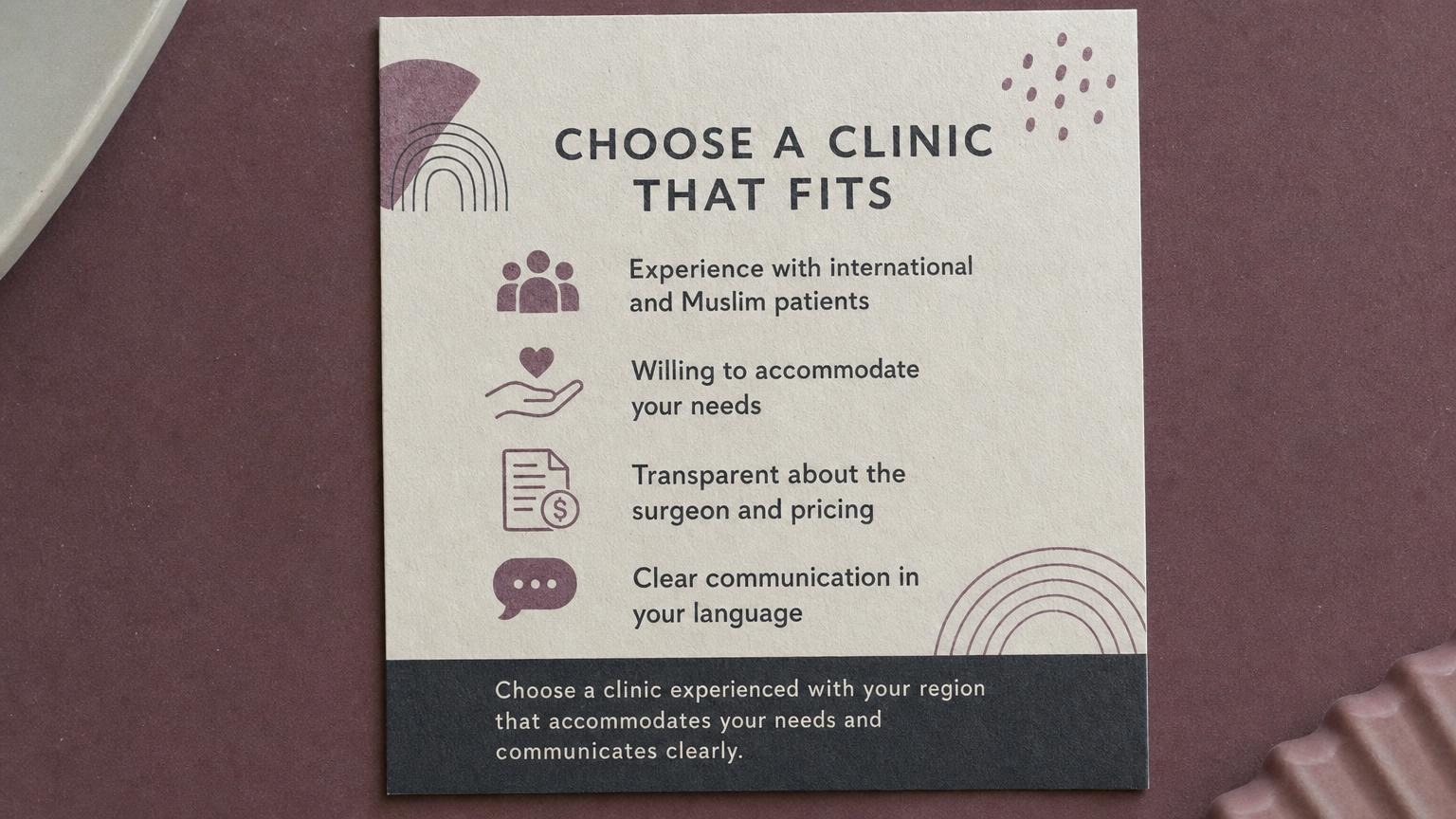
The right clinic for a Southeast Asian or Muslim patient combines surgical quality with genuine accommodation. Look for experience with international and Muslim patients, a willingness to accommodate your specific needs, transparency about the surgeon and pricing, and clear communication in your language. Surgical skill still comes first; the accommodations matter, but they do not replace the fundamentals of a good, safe clinic. The best choice does both well.
The honest framing is to choose a clinic experienced with your region that accommodates your needs and communicates clearly. A clinic that welcomes questions about halal food, a female care team, and prayer facilities, and answers them without hesitation, is showing you the same transparency you want on the medical side. That combination, real surgical quality plus genuine cultural accommodation, is what makes a Korea trip work for a Muslim or Southeast Asian patient, and it is worth choosing carefully rather than assuming every clinic is equally prepared.
Cost and How to Plan It
For Southeast Asian patients, Korea’s value proposition is strong, with procedure costs generally below Western prices and shorter, often cheaper flights than a trip to Europe or North America. The realistic budget includes flights, accommodation near halal food and prayer facilities, recovery time, and the procedure itself. For many patients from Indonesia, Malaysia, and neighboring countries, the total compares favorably, which is part of what is driving the surge, but the saving should never come at the cost of verifying the clinic and surgeon.
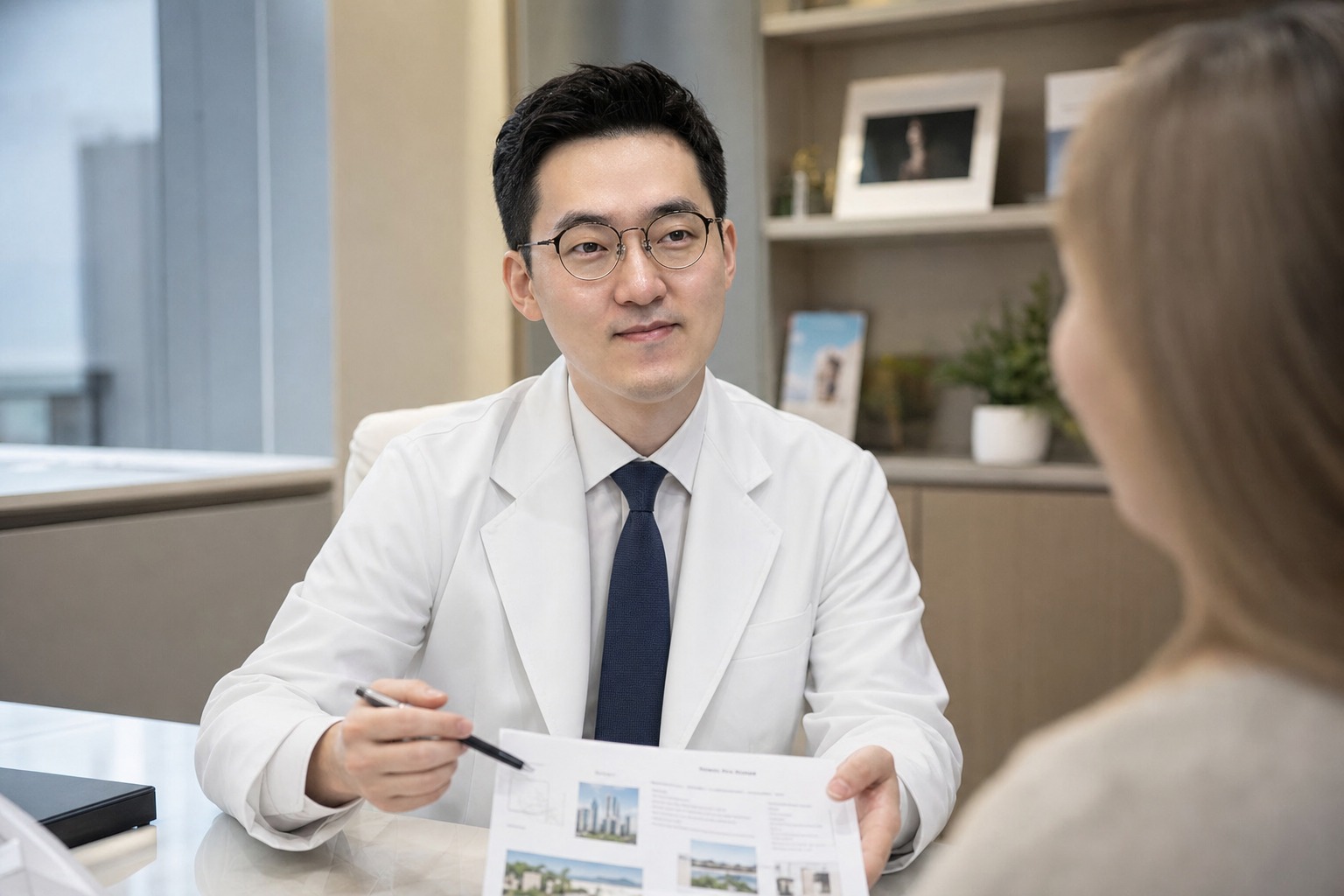
Before committing, five questions help a Southeast Asian or Muslim patient plan well. Does the clinic offer or arrange halal meal options and, if I prefer, a female care team? Is there a prayer space, and clear communication in my language? Is the clinic experienced with patients from my region? Have I planned accommodation, recovery time, and remote follow-up? And have I verified the surgeon’s credentials and honest pricing, not just the accommodations? A clinic that meets your needs and is transparent about the medicine is the one to trust. For trip-planning details, visit Link Plastic Surgery’s official website.
Frequently Asked Questions
1. Are many Southeast Asian patients really going to Korea now?
Yes, in rapidly growing numbers. In 2025, arrivals from Indonesia rose roughly 105 percent year on year and Malaysia about 107 percent, making Southeast Asia one of the fastest-growing sources of foreign patients in Korea. Many are Muslim. The appeal is a mix of strong value, natural results, shorter flights than to the West, and increasingly Muslim-friendly clinic services.
2. Do Korean clinics accommodate Muslim patients?
Increasingly, yes. Korean hospitals and clinics serving international patients offer halal meal options, gender-specific care teams, and prayer facilities to accommodate Muslim patients’ needs, driven partly by rising Southeast Asian demand. It varies by clinic, so confirm the specific accommodations you need before booking rather than assuming, but the services are more available than many patients expect.
3. Can I get halal food during my recovery in Korea?
Often yes. Many clinics serving international patients offer or can arrange halal meal options, and staying near a mosque or a district with reliable halal food makes daily life during recovery easy. Confirm halal meal arrangements with the clinic in advance, and factor halal food access into your choice of accommodation, so this is settled before you travel rather than improvised afterward.
4. Can I request a female care team?
Many clinics can accommodate a preference for a female care team, gender-specific caregivers being one of the Muslim-friendly services Korean facilities increasingly provide. Ask about this specifically when you enquire, since availability varies by clinic. A clinic experienced with Muslim and international patients will understand the request and tell you clearly what it can offer, which is itself a useful sign of how prepared it is.
5. Is there somewhere to pray at Korean clinics?
A growing number of facilities serving international patients provide a prayer space and the Qibla direction, part of the Muslim-friendly services expanding with Southeast Asian demand. This varies by clinic, so ask in advance. If a clinic itself does not have a prayer space, choosing accommodation near a mosque or with prayer facilities covers the rest of your stay, so plan both together.
6. Why choose Korea over Malaysia or a closer option?
Korea offers a particular combination: a strong reputation for natural, refined results, advanced technique, and value, with flights still shorter than to the West. Some patients weigh this against closer destinations with established Muslim-friendly infrastructure. The right choice depends on your priorities, but Korea’s growing Muslim-friendly services plus its results-driven reputation are exactly why Southeast Asian arrivals are rising so fast.
7. Will the language barrier be a problem?
Less than you might fear, but worth confirming. Clinics serving international patients increasingly offer English or interpreter support, and some accommodate specific languages. Confirm clear communication in English or your language before booking, so you can fully discuss your plan and concerns. Good communication is essential for a result you are happy with, especially when traveling far, so treat it as a requirement, not a bonus.
8. How do I know a clinic is genuinely prepared for Muslim patients?
Ask directly about halal meals, a female care team, and prayer facilities, and note how the clinic responds. A clinic genuinely experienced with Muslim and Southeast Asian patients answers these questions easily and specifically, while a vague or dismissive answer suggests it is not truly set up for you. How readily a clinic accommodates these needs is a reliable signal of its experience with patients like you.
9. Does accommodating my needs mean compromising on the medicine?
No, and it should not. Cultural accommodation and surgical quality are separate things; the best clinic offers both. Surgical skill, verified credentials, and honest pricing still come first, with halal food, a female care team, and prayer facilities as important additions, not replacements. Choose a clinic that is strong on the medicine and genuinely accommodating, rather than trading one for the other.
10. How do I plan a Korea trip as a Southeast Asian or Muslim patient?
Confirm the clinic’s halal meals, female care team, and prayer facilities, check its experience with your region, verify the surgeon’s credentials and pricing, and plan accommodation near halal food, recovery time, and remote follow-up. Weigh the procedure savings against travel costs. For scheduling and trip-planning details, visit Link Plastic Surgery’s official website.
Growth figures for Southeast Asian arrivals are from South Korea’s Ministry of Health and Welfare 2025 medical tourism data as reported by industry sources; Muslim-friendly accommodation practices are documented in medical tourism research (Journal of Religion and Health and others), 2026. Confirm specific services directly with your clinic.