If you have been reading about Seoul skin clinics lately, you have probably seen a treatment that sounds like a contradiction: botox that is not for wrinkles. It goes by several names, skin botox, dermotoxin, micro-botox, or mesotox, and in 2026 it has become one of the most requested add-ons at Korean aesthetic clinics for people chasing a poreless, low-shine, glass-skin finish. The idea is simple but easy to misunderstand. Instead of relaxing a muscle to smooth a wrinkle, tiny doses of diluted botulinum are placed into the surface of the skin to calm oil, tighten the look of pores, and soften texture, while leaving your expressions completely intact. It is a genuinely different treatment from the botox most people know, and understanding the difference is the first step to using it well. A transparent clinic like Link Plastic Surgery will explain where it fits into a skin plan and, just as importantly, where it does not.
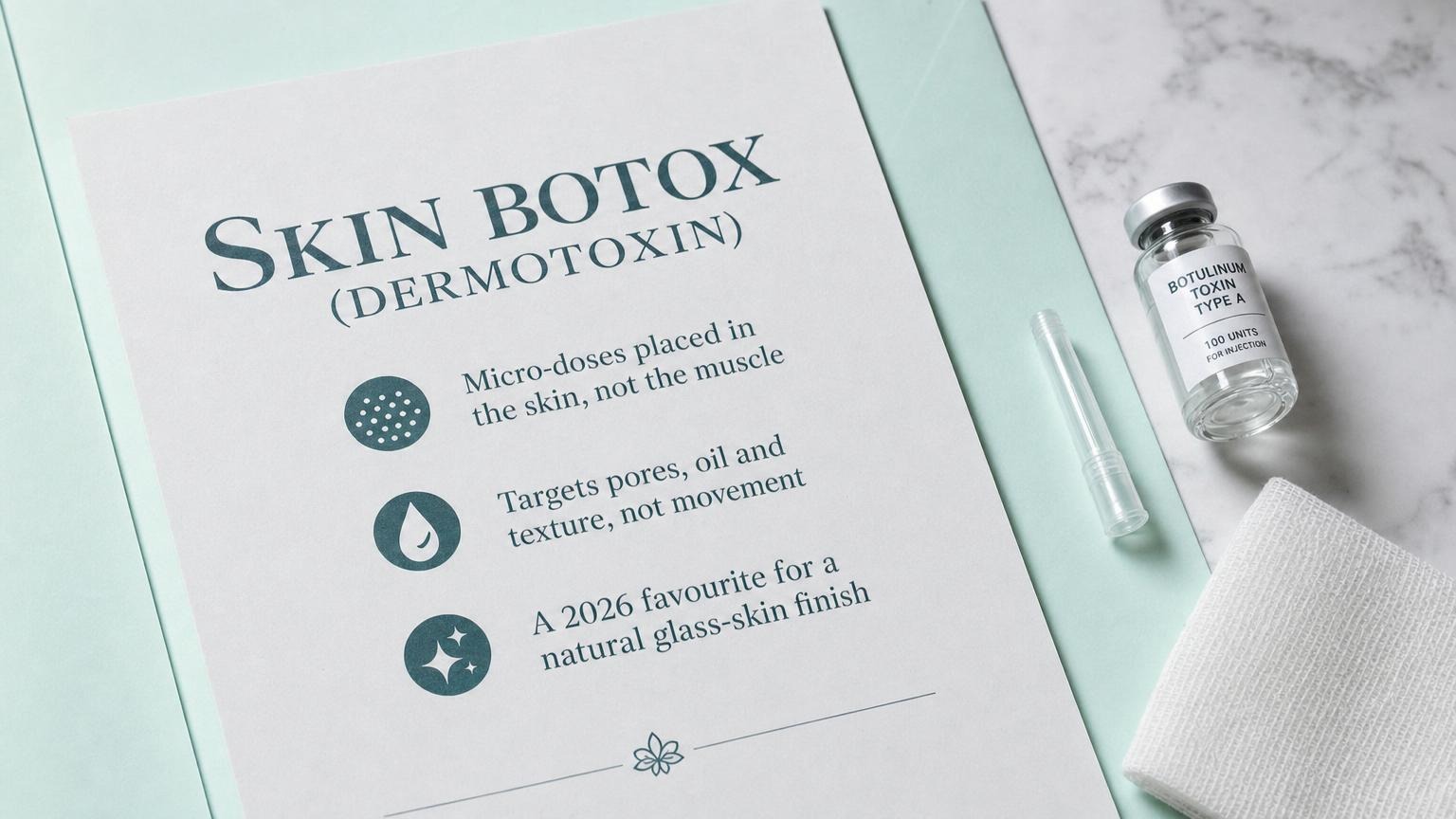
Skin botox places micro-doses of diluted botulinum in the superficial layer of the skin rather than in the muscle. That shallow placement changes what it does: it softens oil and the appearance of pores, calms fine surface texture, and in some people reduces flushing, all without freezing movement. It is best understood as a skin-quality treatment, not a wrinkle treatment, and it works best as part of a plan rather than as a one-off miracle.
What Skin Botox Actually Is
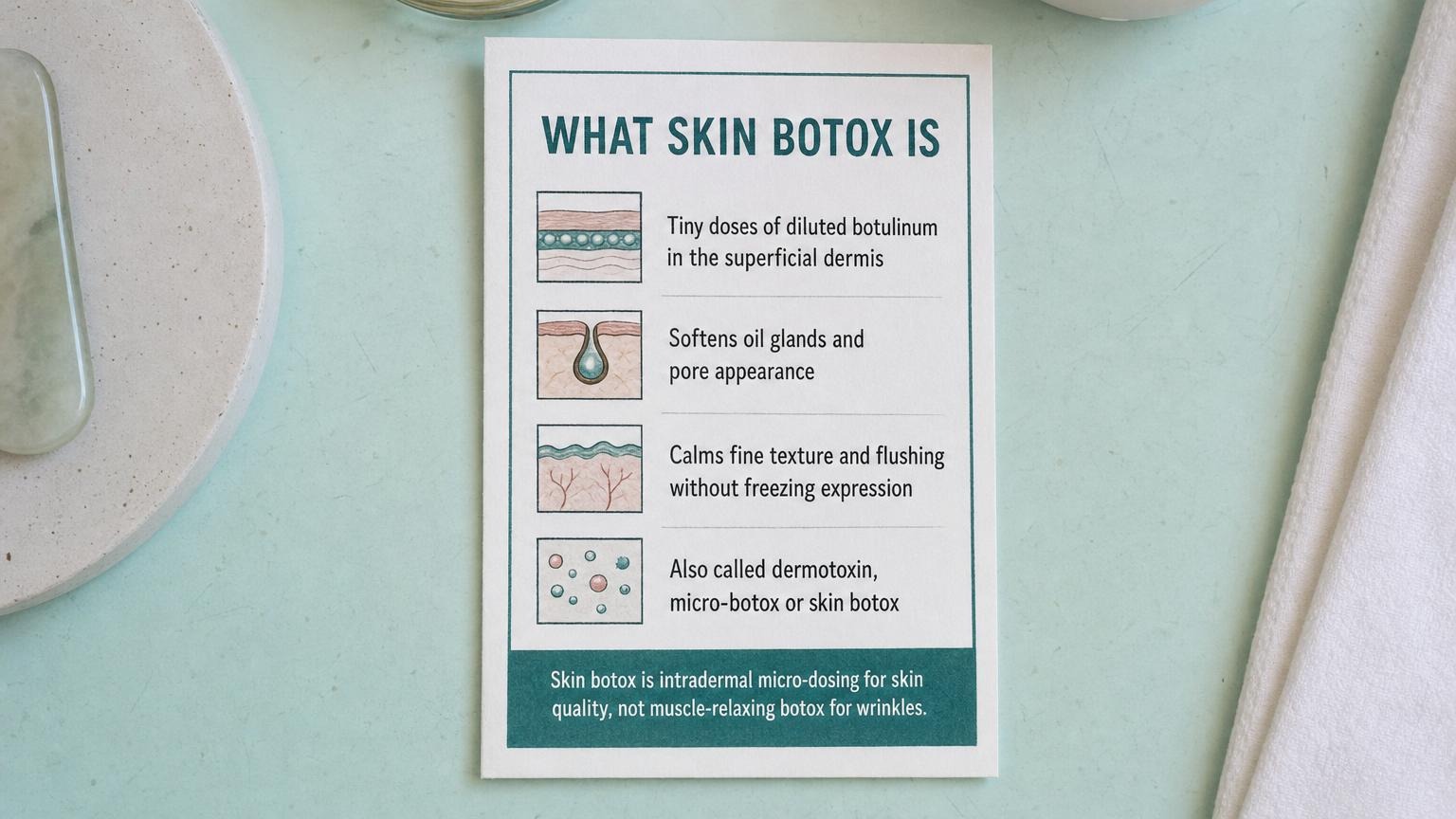
The active ingredient is the same botulinum toxin used in conventional botox, but almost everything else is different. The dose is much smaller, the toxin is more diluted, and it is delivered in many tiny injections spread across an area like the cheeks, nose, or forehead, sitting in the superficial dermis rather than reaching the muscles beneath. At that depth and dilution, it does not meaningfully relax the muscles that create expression. Instead it acts on the small oil glands and other structures near the skin surface, which is why the visible effect is on shine, pore appearance, and texture rather than on movement.
Because the doses are so small and shallow, the effect is deliberately subtle and builds gradually. Most people see the skin start to look calmer and less oily over one to two weeks, with the refinement peaking after that. It also does not last as long as muscle-relaxing botox: superficial micro-dosing typically fades over a couple of months, which is why Korean clinics usually treat it as a series or a maintenance routine rather than a single visit. That is not a drawback so much as a design feature, since it keeps the effect light and reversible.
Skin Botox vs Regular Botox
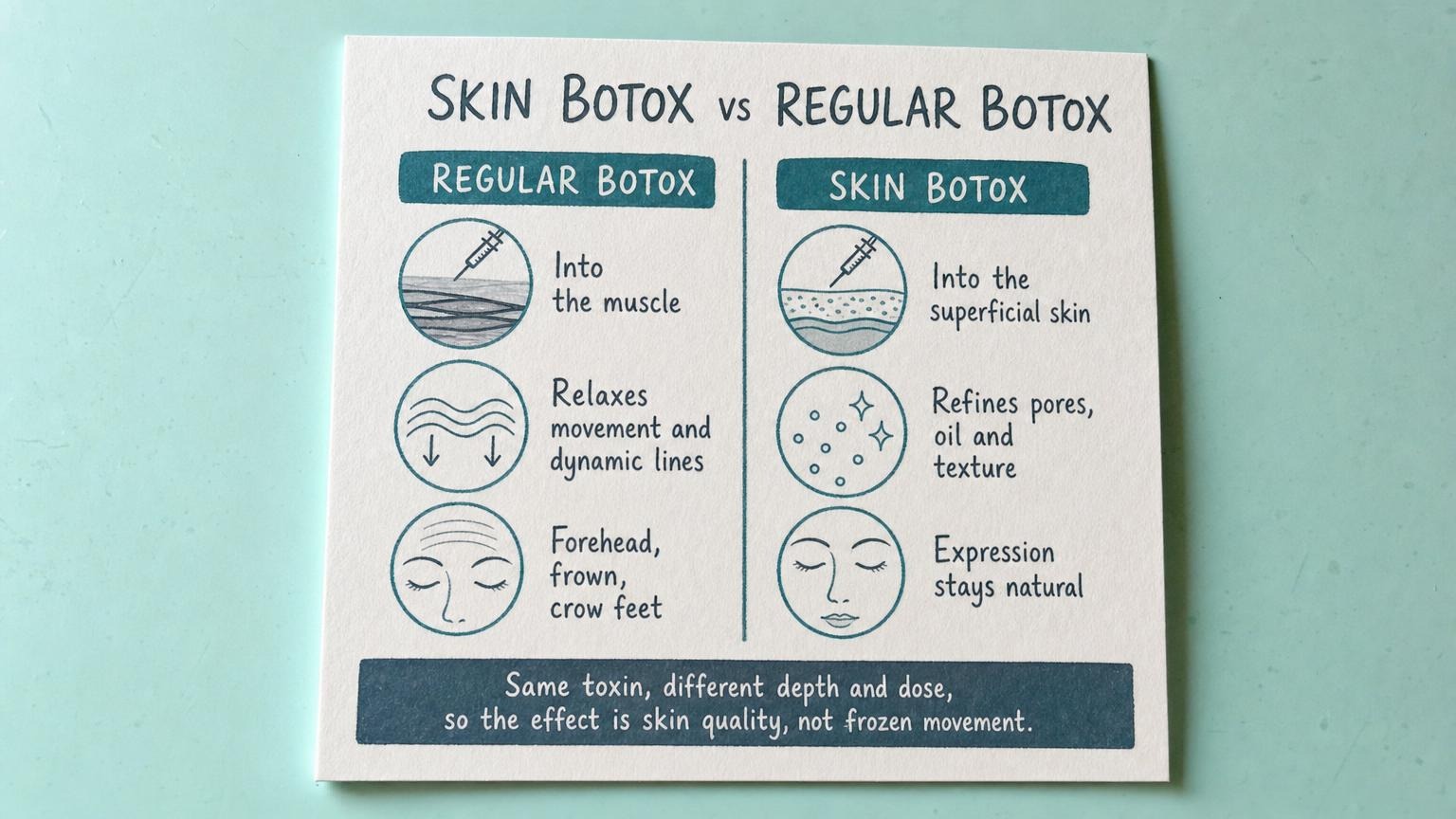
The clearest way to understand skin botox is to put it next to the botox most people already know. Conventional botox goes into a muscle to relax movement, which is what softens dynamic lines on the forehead, between the brows, or at the corners of the eyes. Skin botox goes into the skin itself, in far smaller doses, so its job is to refine oil, pores, and texture while your expressions stay natural. Same toxin, very different depth, dose, and purpose.
This distinction matters because the two are sometimes marketed as interchangeable, and they are not. If your concern is a deep frown line or a heavy crease, that is a job for muscle-targeted botox or another approach entirely, and our guide to the many uses of botox beyond wrinkles covers those muscle-level treatments. Skin botox is the answer to a different question: how do I make my skin itself look smoother and less shiny without changing how my face moves? Knowing which question you are actually asking keeps you from paying for the wrong treatment.
What It Treats
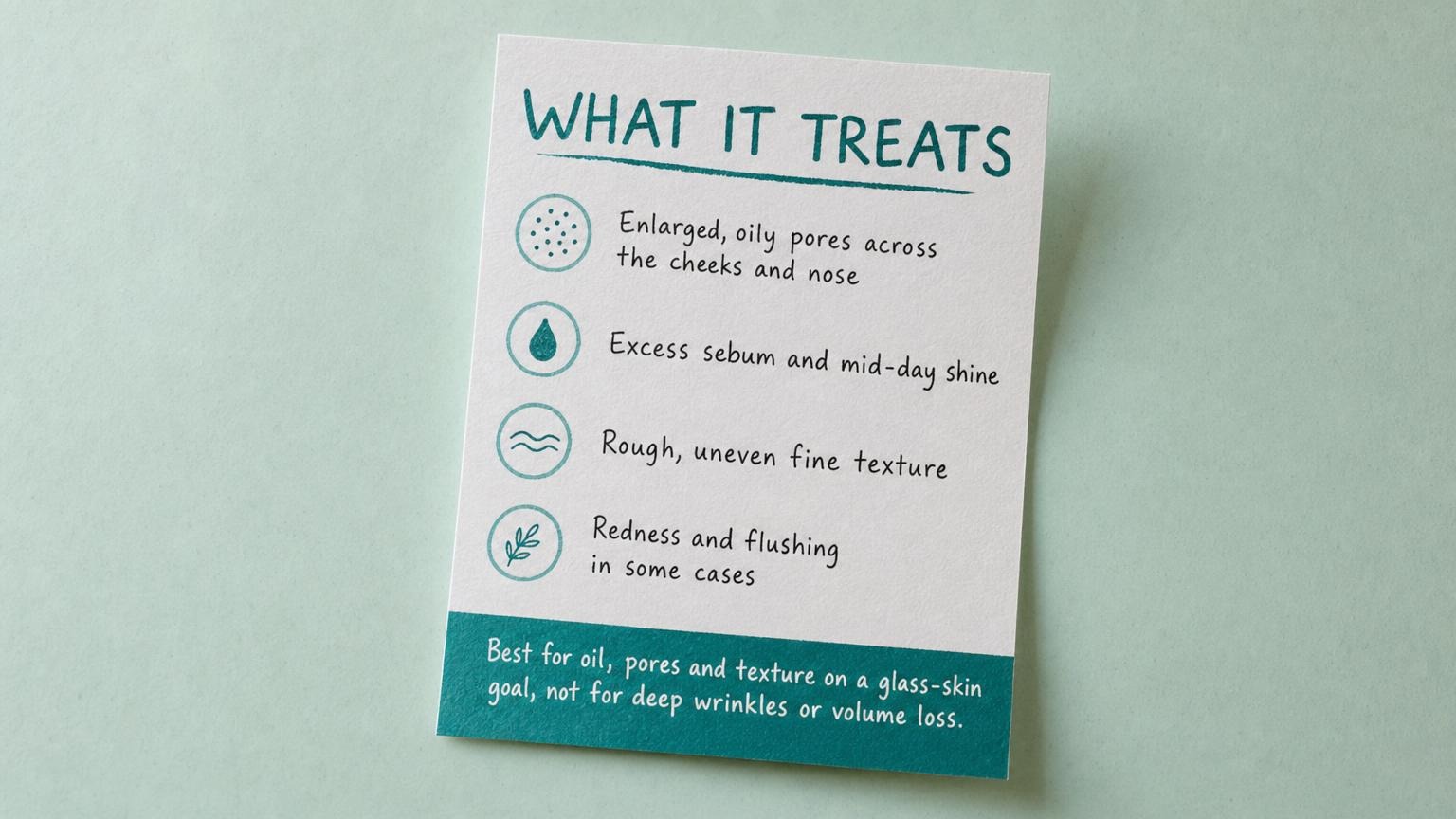
Skin botox is aimed at a specific cluster of concerns. It is most popular for enlarged, oily pores across the cheeks and nose, and for the mid-day shine that comes with overactive oil glands. Many people also notice rough or uneven fine texture looking smoother, and in some cases persistent facial redness or flushing becomes less pronounced. The overall goal is the tight, matte, refined surface that gets described as glass skin, achieved by calming the skin rather than resurfacing it.
It is equally important to be clear about what skin botox does not do. It will not fill volume loss, lift sagging, erase deep wrinkles, or remove pigmentation and acne scars. Those need different tools, from lasers to fillers to resurfacing. Skin botox is a refinement layer, not a foundation, which is exactly why Korean clinics rarely offer it in isolation. It is most often layered with skin boosters, and a consultation for Link Plastic Surgery’s skin-booster and regenerative treatments can show you how it fits alongside hydration and repair rather than replacing them.
How to Get It Safely
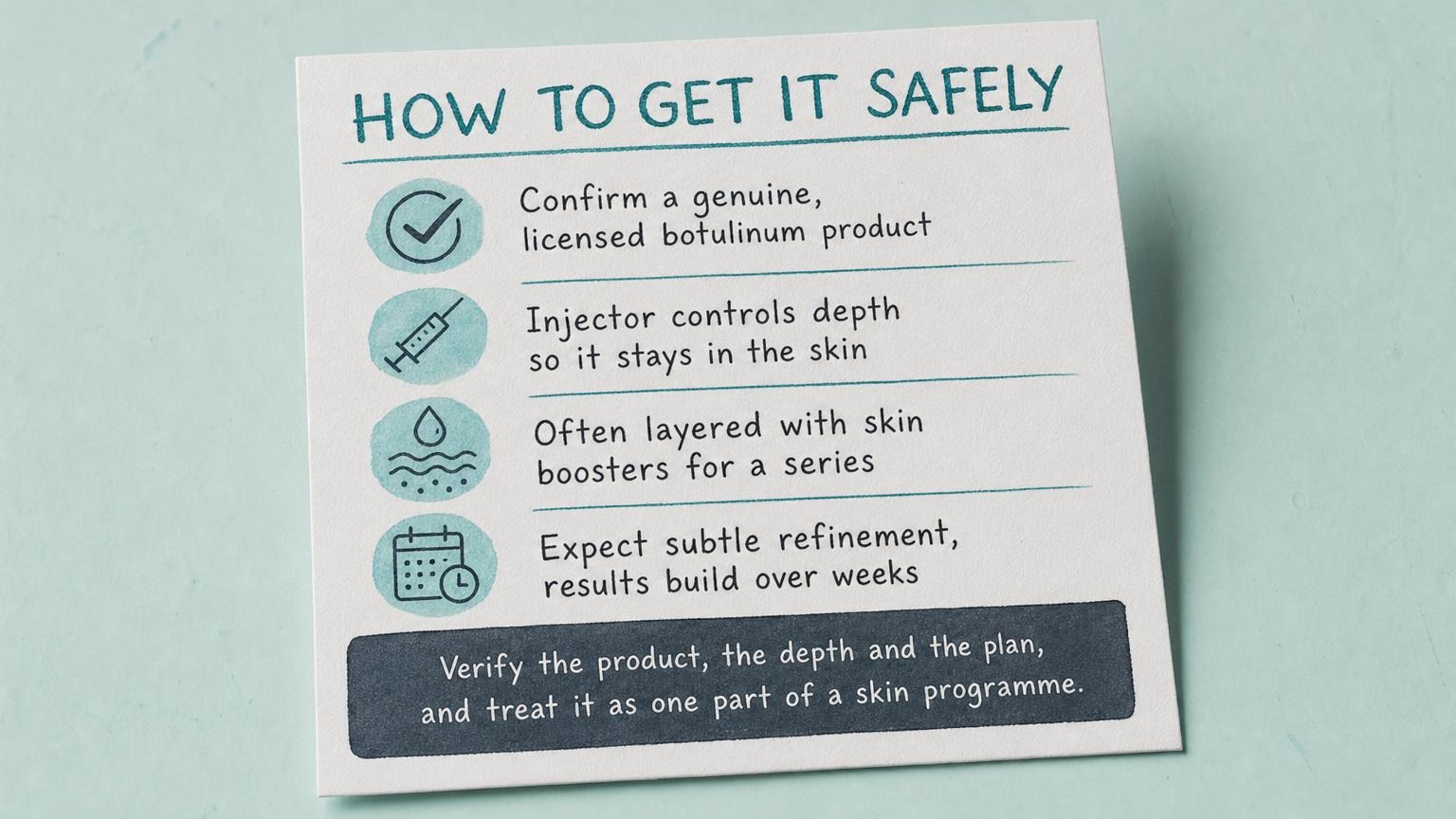
The safety of skin botox comes down to three things: the product, the depth, and the plan. Because it uses a real prescription toxin, you want to confirm the clinic is using a genuine, licensed botulinum product rather than an unverified or counterfeit one, which is the same caution that applies to fillers and other injectables. The counterfeiting risk is real enough that we cover it in detail in our guide to verifying that an injectable is genuine, and the same instinct, ask what product it is and see the packaging, applies here.
Depth is the second factor, and it is where skill shows. Skin botox only works, and only stays safe, when it is placed in the superficial skin; injected too deep, it can start to affect the muscles it was meant to avoid, which can flatten expression in a way you did not ask for. That is a technique-dependent treatment, so an experienced injector matters more than a low price. The third factor is the plan: treat skin botox as one part of a skin programme, expect subtle results that build over weeks, and be wary of anyone promising a dramatic overnight transformation from it.
What to Expect and How to Plan It
Practically, skin botox is a quick, low-downtime treatment: a session of many tiny injections, usually with only minor, short-lived redness or small bumps that settle within hours to a day. There is no dramatic recovery to plan around, which is part of its appeal for travellers. Because the effect is subtle and temporary, most people plan it as a repeated or maintenance treatment rather than a single event, and often combine it with skin boosters or lasers in the same visit. On cost, remember that from 2026 the foreigner VAT refund on cosmetic procedures in Korea has ended, so budget for roughly ten percent more than older guides suggest, and always work from a genuine clinic quote rather than an advertised teaser price.

Before you book, five questions keep skin botox useful rather than a wasted add-on. Is my real concern oil, pores, and texture, which skin botox targets, rather than wrinkles or volume, which it does not? Has the clinic confirmed which genuine botulinum product it uses? Does the injector have the experience to keep it in the superficial skin? Am I treating it as one layer of a skin plan, alongside boosters and good skincare, rather than a standalone fix? And have I budgeted from a genuine quote, accounting for the ended VAT refund? If the answers line up, it can be a light, worthwhile refinement. For a plan built around your skin, visit Link Plastic Surgery’s official website.
Frequently Asked Questions
1. What is skin botox or dermotoxin?
Skin botox, also called dermotoxin, micro-botox, or mesotox, is a treatment that places tiny, diluted doses of botulinum toxin into the superficial layer of the skin rather than into the muscle. At that shallow depth it softens oil, refines the look of pores, and smooths fine texture, without relaxing the muscles that create expression. It is a skin-quality treatment, not a wrinkle treatment, and it has become a popular add-on in Korea for a glass-skin finish.
2. How is skin botox different from regular botox?
Both use the same botulinum toxin, but the depth, dose, and purpose differ. Regular botox is injected into a muscle in a larger dose to relax movement and soften dynamic wrinkles like frown lines. Skin botox is injected into the skin itself in much smaller, more diluted doses, so it refines oil, pores, and texture while your expressions stay natural. Same ingredient, very different placement and effect.
3. Will skin botox freeze my expression?
When done correctly, no. The doses are small and placed in the superficial skin, so they act on oil glands and surface structures rather than the expression muscles. Preserving natural movement is one of the main reasons people choose it. The caveat is technique: if it is injected too deep, it can start to affect muscle and flatten expression, which is why an experienced injector who controls the depth matters.
4. What does skin botox actually treat?
It is best for enlarged, oily pores, mid-day shine from overactive oil glands, rough or uneven fine texture, and in some cases facial redness or flushing. The goal is a tighter, more matte, refined skin surface, the look often called glass skin. It does not fill volume, lift sagging, erase deep wrinkles, or remove pigmentation and scars, which need different treatments.
5. How long does skin botox last?
Because the doses are small and superficial, skin botox does not last as long as muscle-targeted botox. Most people see the effect build over one to two weeks and last roughly a couple of months before it gradually fades. For that reason Korean clinics usually offer it as a series or a maintenance routine rather than a single treatment, timing repeat sessions to keep the refinement going.
6. Is skin botox safe?
It is generally well tolerated when performed by an experienced injector using a genuine, licensed product at the correct depth. The main risks come from a counterfeit product or from injections placed too deep, which can affect expression. Minor, short-lived redness or small bumps at the injection points are normal and settle quickly. As with any injectable, verify the product and choose an experienced clinic rather than the cheapest option.
7. Can I combine skin botox with other treatments?
Yes, and it is usually recommended. Skin botox is a refinement layer, so Korean clinics commonly combine it with skin boosters for hydration and repair, or with lasers for texture and tone, often in the same visit. It works best as one part of a broader skin plan rather than in isolation. A consultation can map which combination suits your skin and your goals.
8. Is skin botox good for oily skin?
Oily, large-pored skin is one of its best-suited concerns. By calming the small oil glands near the skin surface, it can reduce shine and make pores look tighter, which is a big part of the glass-skin effect people seek. It does not cure the underlying oiliness permanently, so the benefit is maintained with repeat sessions and supported by a good skincare routine.
9. How much does skin botox cost in Korea in 2026?
Cost varies with the area treated, the number of injections, and the clinic, so the honest answer is to work from a genuine quote at consultation rather than an advertised teaser. One thing to factor in: from 2026, the foreigner VAT refund on cosmetic procedures in Korea has ended, so expect to pay roughly ten percent more than older guides suggest, regardless of the treatment. Ask what a full session and any maintenance plan would cost before booking.
10. Is skin botox worth it for travellers?
It can be, because it is quick and has almost no downtime, which suits a short trip. The key is expectation: it delivers a subtle, refined finish that builds over weeks, not a dramatic overnight change, and its effect is temporary. If your concern is genuinely oil, pores, and texture, and you treat it as one part of a skin plan rather than a standalone fix, it is a light and worthwhile add-on. For a plan built around your skin, visit Link Plastic Surgery’s official website.
Information on skin botox (dermotoxin) trends, technique, and the 2026 end of the foreigner VAT refund is based on industry and clinic reporting (Jivaka Beauty, Hannaeve, Beautystone and others), 2026. Individual results vary; consult a licensed clinic and verify any product before treatment.