📌 Key Takeaways
- Rejuran (PDRN) is best for skin repair, scar reduction, and long-term collagen rebuilding — ideal for texture transformation.
- Skin Boosters (HA) deliver the fastest, most visible glow-up — great for first-timers and pre-event prep.
- Exosome therapy is the newest frontier: stem cell-derived nanovesicles for anti-aging and regeneration.
- All three are 50–70% cheaper in Korea than in the US, UK, or Australia.
- No referral needed; most Seoul clinics accept walk-in foreign patients with English support.
- None are permanent — maintenance every 3–12 months.
- A good Korean dermatologist will often suggest combining treatments for optimal results.

Why These Three Treatments Are Having a Major Moment
If you’ve spent any time on K-beauty TikTok or r/SkincareAddiction lately, you’ve probably seen the terms floating around: Rejuran, skin booster, exosome facial. These aren’t just buzzwords — they represent a genuine revolution in how Korean dermatologists approach skin health.
Unlike the West, where skincare has long been dominated by topical products, Korean aesthetic medicine took a different path decades ago: inject the good stuff directly where it counts. The result? A clinic culture that’s as normalized as getting a haircut, with millions of locals and international visitors booking skin injection appointments as part of their regular beauty routine.
In 2026, these three treatments have emerged as the holy trinity of Korean injectable skincare:
- Rejuran Healer — the collagen-rebuilder
- Skin Booster — the hydration hero
- Exosome Therapy — the regeneration newcomer
So what’s the actual difference? Which one is right for you? And what does it actually cost in a Gangnam clinic? Let’s break it all down.
Deep Dive: Each Treatment Explained
Rejuran Healer (PDRN Therapy)
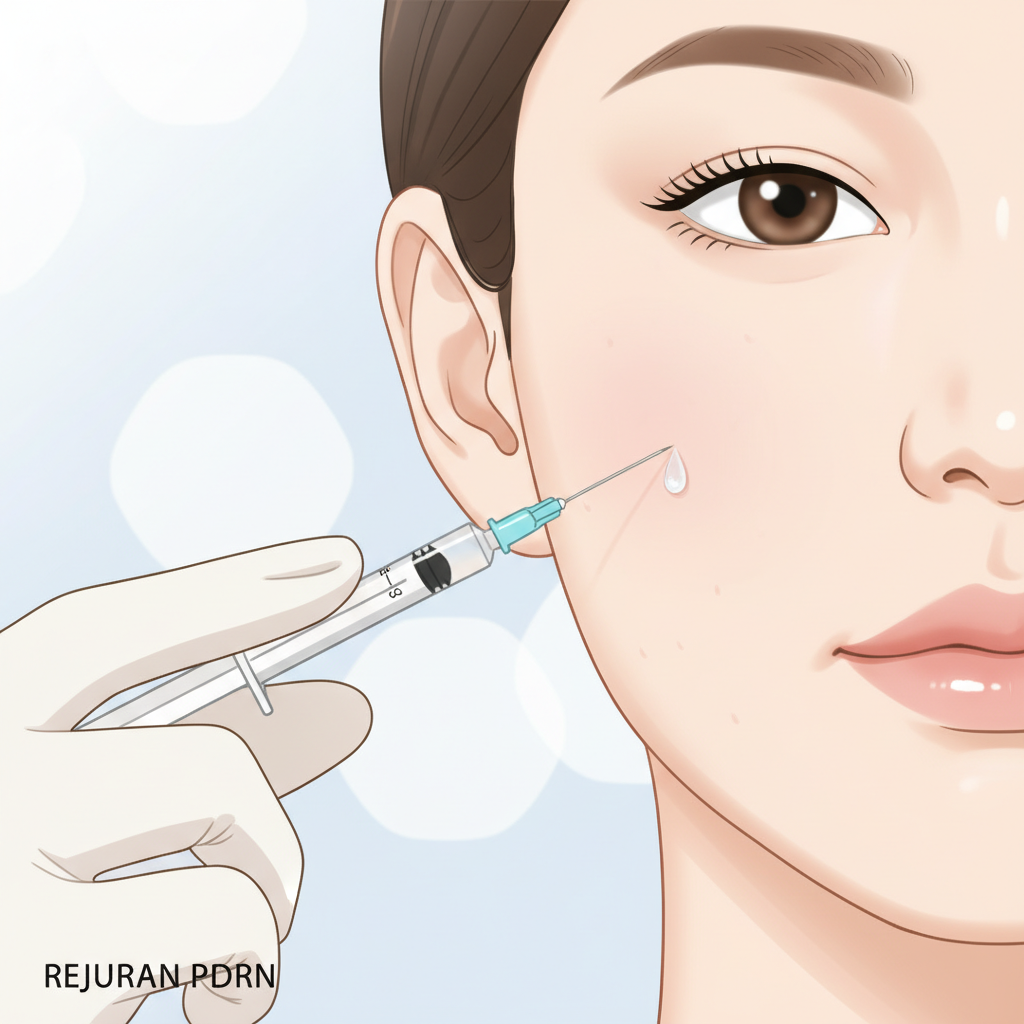
What Is It and How Does It Work?
Rejuran is a brand name that’s become so ubiquitous that Koreans use it generically, like Americans say “Kleenex.” The active ingredient is PDRN (Polydeoxyribonucleotide), a long-chain DNA fragment extracted from salmon. Before you back away — salmon DNA is remarkably compatible with human DNA, and this has been clinically validated.
Once injected into the dermis, PDRN binds to A2A adenosine receptors on skin cells, triggering regenerative signals: increased collagen and elastin synthesis, reduced inflammation, improved cell turnover, and accelerated wound healing. Think of it as giving your skin a detailed repair manual and the tools to execute it.
A 2025 study in Applied Sciences (MDPI) involving 218 Asian subjects found Rejuran led to a 61.4% reduction in periorbital wrinkles after 12 weeks. A 2024 study in the Journal of Dermatological Treatment confirmed efficacy for facial scars.
Variants:
- Rejuran Healer — full-face treatment
- Rejuran i — specially formulated for the delicate under-eye area
- Rejuran S — higher viscosity, targets acne scars and deeper texture issues
Cost in Korea (USD, 2026)
| Variant | Price per Session |
|---|---|
| Rejuran Healer (Full Face) | $190–$380 |
| Rejuran i (Under-Eye) | $150–$310 |
| Rejuran S (Scars) | $190–$380 |
Procedure Time & Downtime
- Procedure: 30–45 minutes (including numbing cream)
- Downtime: Tiny raised papules that flatten within 12–24 hours. Mild redness fades by the next day.
- Sessions: 3–4 sessions, spaced 2–4 weeks apart; maintenance every 3–6 months
Best For
✅ Fine lines and wrinkles
✅ Acne scars and enlarged pores
✅ Dull, damaged, or post-procedure skin
✅ Under-eye crepiness
✅ Anyone wanting structural improvement rather than just hydration
Skin Booster (Hyaluronic Acid Injections)
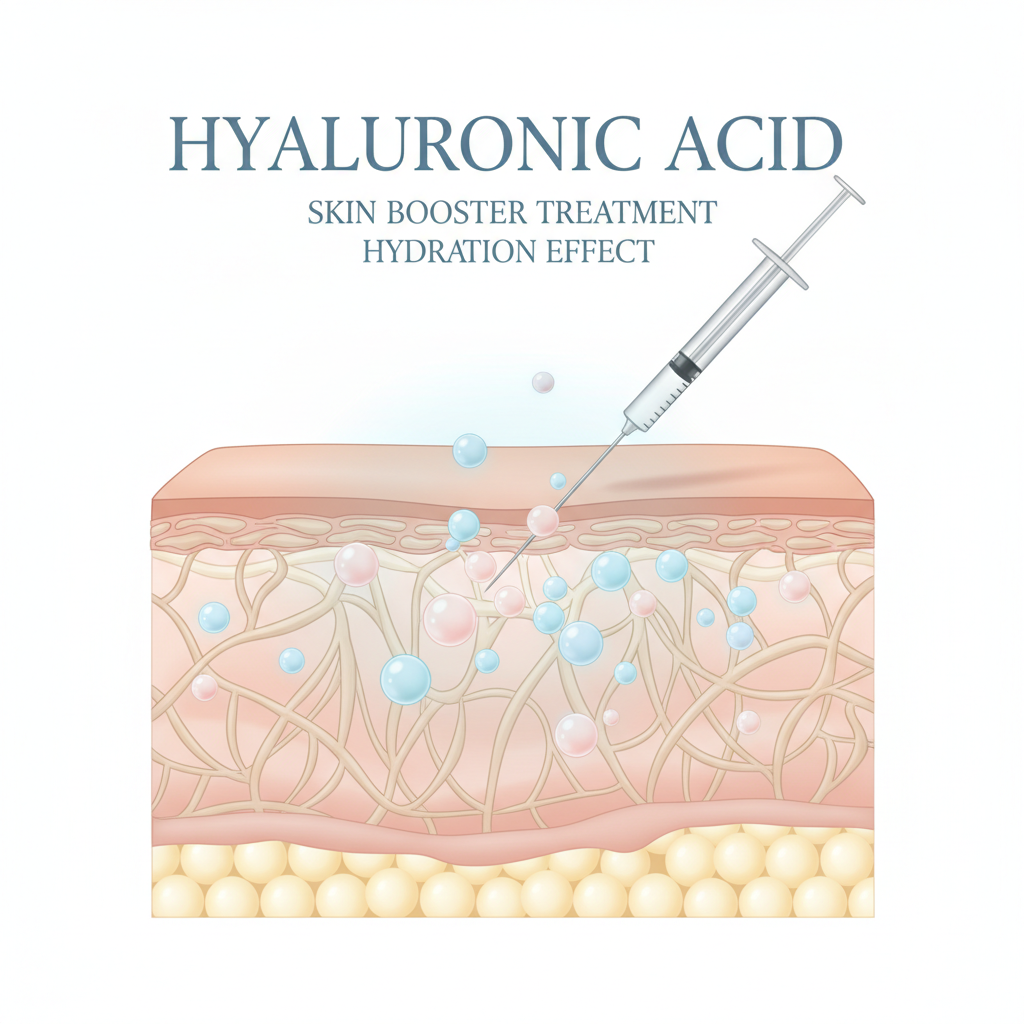
What Is It and How Does It Work?
“Skin booster” is a category, not a single product. The common thread: micro-injections of hyaluronic acid (HA) into the superficial dermis for deep hydration. Unlike filler (which adds volume to specific areas), skin boosters diffuse throughout the skin for a uniform, radiant effect.
HA can hold up to 1,000 times its weight in water. As we age, natural HA production drops, which is why skin starts looking dull and crepe-y. Skin boosters top it back up where it counts: in the dermis itself.
Popular brands in Korean clinics:
- Restylane Skinboosters (Galderma, Sweden) — long-established, cross-linked HA
- Juvederm Volite (Allergan) — smoother, more fluid formulation
- Juvelook — Korean-made PDRN + PDLLA + HA hybrid (hugely popular since 2023)
- Profhilo — bio-remodeling agent with high HA concentration
Cost in Korea (USD, 2026)
| Product | Price per Session |
|---|---|
| Restylane Skinboosters | $150–$400 |
| Juvederm Volite | $200–$450 |
| Juvelook | $380–$1,150 |
| Profhilo | $250–$500 |
Procedure Time & Downtime
- Procedure: 20–30 minutes
- Downtime: Minimal — small bumps or mild redness for a few hours
- Sessions: 2–3 sessions (spaced 3–4 weeks apart); maintenance every 6–12 months
Best For
✅ Dry or dehydrated skin
✅ Pre-event “glass skin” prep
✅ First-time skin injection visitors
✅ Immediate visible results
✅ Pairs well with Rejuran or laser
Exosome Therapy
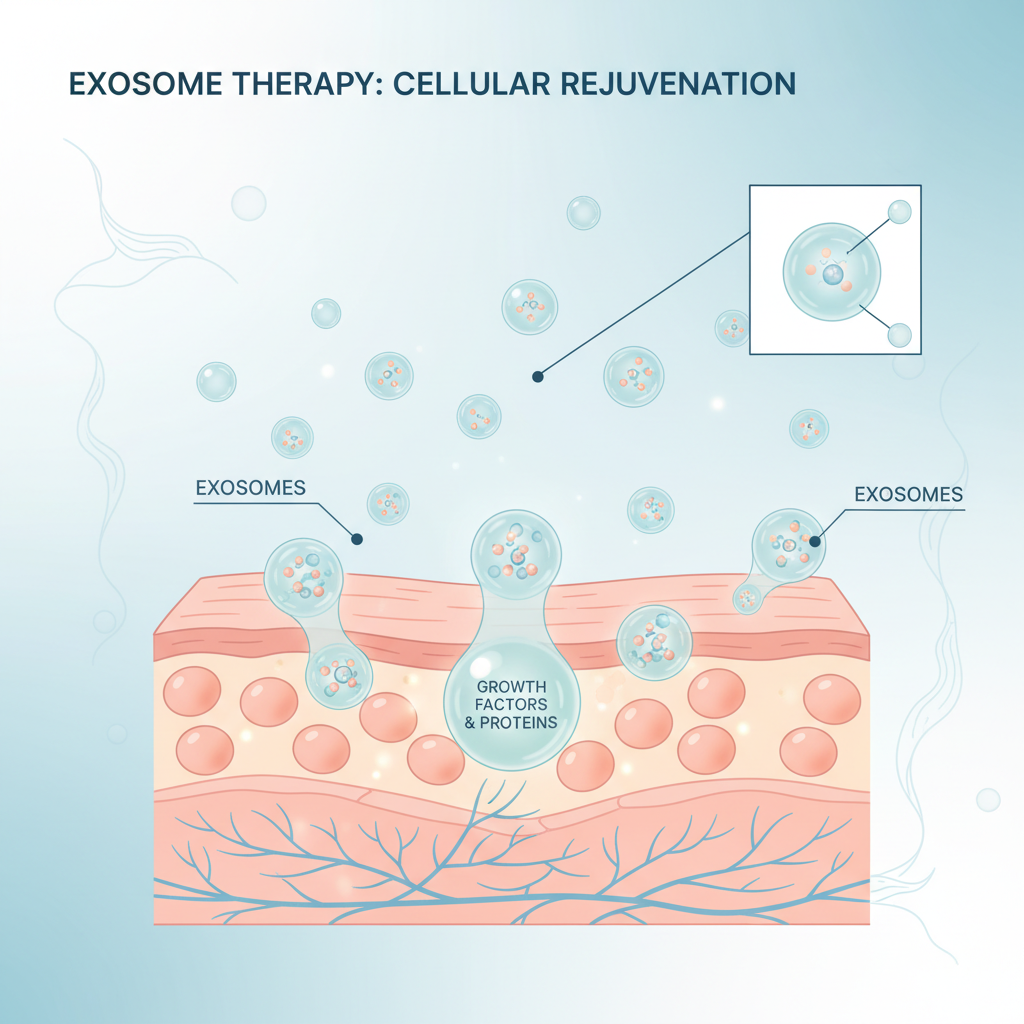
What Is It and How Does It Work?
This is the newest — and most exciting — of the three. Exosomes are nano-sized vesicles secreted by cells, typically derived from human adipose-derived mesenchymal stem cells (ADSCs). These microscopic packets carry growth factors (EGF, VEGF, TGF-β), mRNA, and microRNA.
When delivered into the skin, they broadcast cellular “regeneration signals”: decreased expression of collagen-destroying enzymes (MMPs), increased collagen/elastin production, reduced inflammation, and improved skin tone.
What makes Korea specifically interesting: exosome therapy can be injected in Korean clinics, whereas in the US, exosomes can currently only be applied topically (as of 2025).
Cost in Korea (USD, 2026)
| Method | Price per Session |
|---|---|
| Topical (post-microneedling) | $230–$500 |
| Injectable Exosome | $500–$920 |
| Combined (MTS + injection) | $400–$800 |
Procedure Time & Downtime
- Procedure: 30–60 minutes
- Downtime: 1–3 days for combined treatments; minimal for topical-only
- Sessions: 1–3 sessions
Best For
✅ Signs of aging (fine lines, loss of firmness)
✅ Post-acne or post-procedure recovery
✅ Hyperpigmentation and uneven tone
✅ Sensitive or reactive skin
✅ Those wanting the most advanced option available
The Side-by-Side Comparison Table
| Feature | Rejuran (PDRN) | Skin Booster (HA) | Exosome |
|---|---|---|---|
| Active Ingredient | Salmon-derived PDRN | Hyaluronic Acid | Stem cell-derived nanovesicles |
| Primary Goal | Repair & regeneration | Hydration & plumping | Regeneration & anti-aging |
| Price/Session (Korea) | $190–$380 | $150–$1,150 | $230–$920 |
| Procedure Time | 30–45 min | 20–30 min | 30–60 min |
| Downtime | 12–24 hrs | Minimal (hrs) | 1–3 days (combined) |
| Results Visible | 2–4 weeks | 1–2 weeks | 2–4 weeks |
| Duration | 3–6 months | 6–12 months | 6–12+ months |
| Sessions Needed | 3–4 (initial) | 2–3 (initial) | 1–3 |
| Evidence Base | Strong (clinical trials) | Strong (long established) | Growing (promising) |
| Best For | Texture, scars, repair | Hydration, glow, first-timers | Anti-aging, sensitive skin |
Which Treatment Should You Choose?
“My skin is dull and dehydrated. I want that glass-skin glow ASAP.”
→ Start with Skin Booster. Results visible within days, minimal recovery.
“I have acne scars and uneven texture. I want real improvement.”
→ Go with Rejuran (or Rejuran S for deeper scars). Takes a few weeks and 3+ sessions, but the structural improvement is clinically documented.
“I’m concerned about aging — sagging, fine lines, loss of firmness.”
→ Exosome therapy addresses the root causes of skin aging.
“I’m a first-timer and slightly nervous about injections.”
→ Skin Booster is your friendliest entry point.
“I want the most comprehensive treatment in one trip.”
→ Many Korean clinics offer combination packages: Rejuran + Skin Booster, or Exosome + laser.
What Foreigners Need to Know Before Getting Treated in Korea
- No referral needed — all three are cosmetic, walk-ins welcome
- English support widely available — especially in Myeongdong, Gangnam, Hongdae
- Book a consultation first — avoid clinics that skip assessment and push packages
- Time your visit — Skin Booster: safe 2–3 days before events; Rejuran: allow 3–5 days; Exosome (with MN): plan a rest day
- Ask about package deals — 3-session bundles often 15–20% cheaper
- VAT refund possible — ask if the clinic is registered for medical tourism tax refund
- Aftercare: No direct sun 3–5 days, no sauna/hot yoga 24–48 hrs
Frequently Asked Questions
Q: Is Rejuran painful?
Numbing cream is applied 20–30 minutes before, so most describe mild pinching rather than pain. Post-treatment papules dissolve overnight.
Q: Can I combine Rejuran and a Skin Booster in one visit?
Yes — this is one of the most popular combo treatments in Korean clinics. Many dermatologists recommend doing both in the same session for synergistic results.
Q: Are exosomes safe?
Current clinical data is promising, with no major adverse events reported. However, exosome therapy is newer than Rejuran or HA boosters, so the long-term evidence base is still growing. Choose clinics using regulated, high-concentration formulations.
Q: How soon before my flight home can I get treated?
Skin Booster: same day is fine. Rejuran: ideally 24–48 hours before flying. Exosome with microneedling: allow 2–3 days.
Q: Can tourists get these on a short trip?
Absolutely — thousands do every year. Skin Booster is the most practical for short trips (minimal downtime, immediate results). A single session of Rejuran or Exosome still provides noticeable benefit.
Q: What’s the difference between Rejuran and regular filler?
Traditional HA fillers add volume to specific areas (cheeks, lips). Rejuran doesn’t add volume — it repairs and regenerates skin from within. Different purposes, often used together.
Q: Is Juvelook the same as a skin booster?
Juvelook is a hybrid — it combines HA with PDRN and PDLLA (a collagen biostimulator). It costs more than standard HA boosters but delivers more comprehensive results.
Q: Do I need to stop medications before treatment?
Avoid blood-thinning medications and supplements (aspirin, ibuprofen, fish oil, vitamin E) for 1 week before treatment. Always disclose all medications during consultation.
Maximize Your Results: Skincare to Use Between Sessions
These products complement skin booster treatments and help maintain results between sessions.
- COSRX Advanced Snail 96 Mucin Essence — hydration and skin barrier repair, perfect post-treatment. Check price on Amazon
- Beauty of Joseon Glow Serum (Propolis + Niacinamide) — brightening and anti-inflammatory, Korean cult favorite. Check price on Amazon
- SKIN1004 Madagascar Centella Ampoule — calming serum for sensitive post-treatment skin. Check price on Amazon
- Isntree Hyaluronic Acid Watery Sun Gel SPF 50+ — lightweight Korean sunscreen, essential after any skin treatment. Check price on Amazon
As an Amazon Associate, GlobalBeautySpot earns from qualifying purchases.
The Bottom Line
Korean injectable skin treatments aren’t hype — they’re backed by clinical research, millions of satisfied patients, and a dermatology culture that’s years ahead of most markets.
The real question isn’t whether to try one of these in Seoul — it’s which one fits your skin goals, timeline, and budget.
- On a quick trip and want a glow? → Skin Booster
- Dealing with scars or texture issues? → Rejuran
- Want the most advanced option? → Exosome therapy
- Want it all? → Ask your Korean dermatologist about a combination protocol
Whatever you choose, do your research, book a proper consultation, and don’t let the needle fear stop you. Your skin will thank you.
Sources: MDPI Applied Sciences (2025), Taylor & Francis Journal of Dermatological Treatment (2024), PubMed Central / NCBI (2024), Nature — Signal Transduction and Targeted Therapy (2024), ScienceDirect (2024), Korea Clinic Guide (2025–2026), MJS Medicals (2025)
Disclaimer: This article is for informational purposes only and does not constitute medical advice. Always consult a licensed medical professional before undergoing any cosmetic treatment.
Exosome vs Rejuran: Which Is Better?
“Exosome vs Rejuran” is one of the most common questions foreign patients ask, and neither is simply “better,” because they do different jobs. Rejuran (polynucleotide) is a regeneration platform that rebuilds skin quality and texture over a series of sessions. Exosome therapy is a cell-signaling accelerator that is usually layered with microneedling or laser rather than used alone. In practice, Korean clinics often combine them rather than choose one, using exosome to accelerate healing and Rejuran to rebuild skin quality. The “better” choice depends on whether you want standalone skin-quality regeneration (Rejuran) or an accelerator paired with another treatment (exosome).