Korean Rejuran Skin Booster for Foreigners: Why Seoul Clinics Treat This as a Series, Not a Single Shot
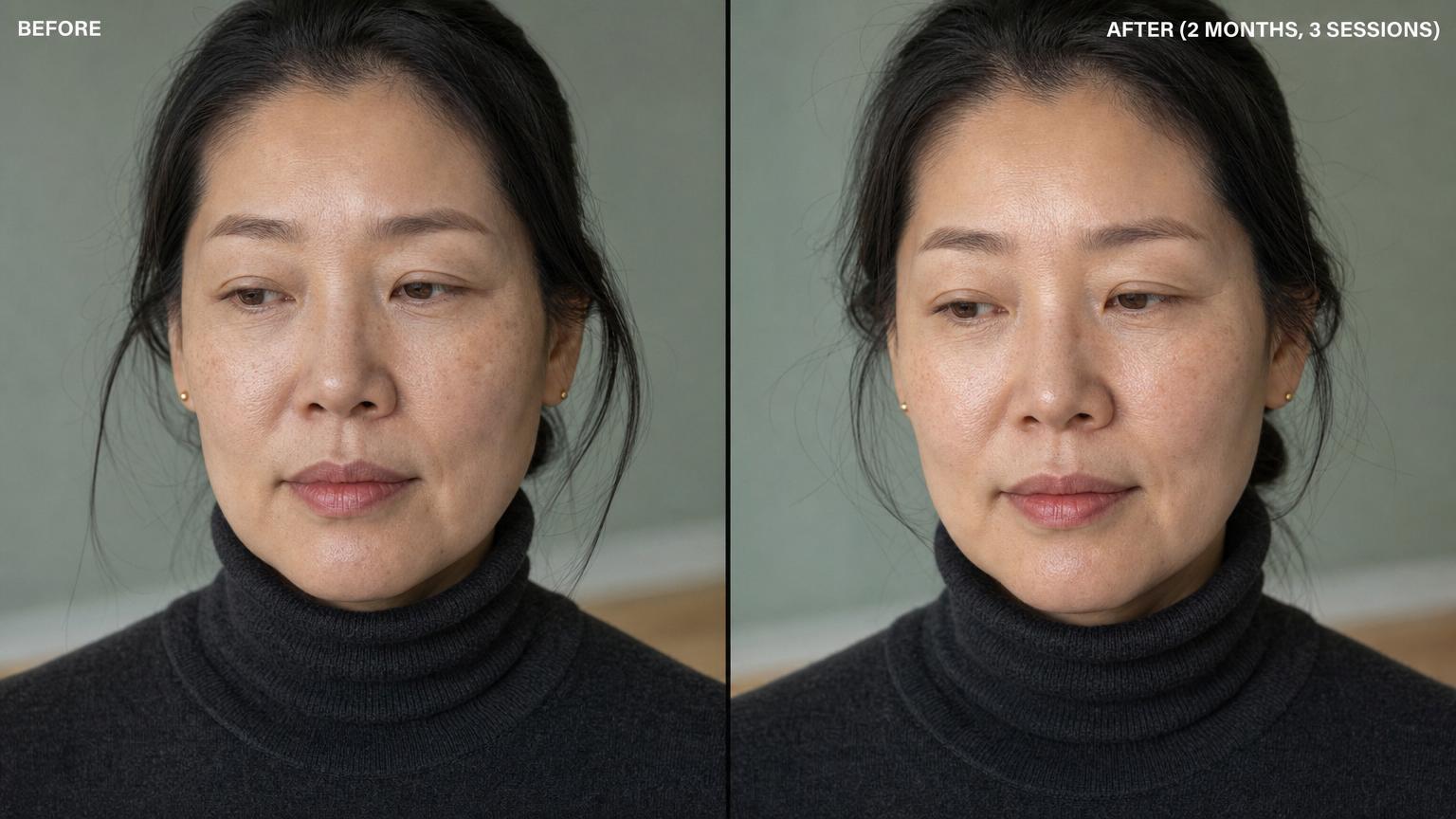
Almost every foreign patient who books a Korean Rejuran appointment for the first time makes the same mistake: they book a single session, fly into Seoul for one weekend, get the treatment, fly home expecting visible results within a week, and feel disappointed when their skin looks essentially the same at day fourteen. This is not because Rejuran does not work — it does, and it is one of the most consistently performing skin treatments in the entire Korean dermatology playbook. The disappointment comes from a fundamental misunderstanding about what the treatment actually is. Rejuran is not a single-shot quick fix. It is a treatment series. Korean clinics universally treat it as 3–4 sessions spaced 4 weeks apart, because the underlying mechanism — fibroblast activation and collagen synthesis — requires repeated stimulation to produce visible results.
This guide is for the foreign patient who has heard of Rejuran (probably from K-beauty TikTok, a Korean skincare YouTuber, or a friend who flew to Seoul for treatments), is considering booking it on their next Korea trip, and wants to understand what it actually is before committing — including the realistic outcome timeline, the cost relative to Western alternatives, and the protocol that Korean clinics use that does not exist in most US/UK skin clinics.
It draws on the treatment protocol that Korean dermatology clinics — including Link Plastic Surgery‘s skin booster program — apply consistently across foreign and domestic patients, and on the actual outcome timeline that produces the natural “Korean glass skin” look that most foreigners associate with the K-beauty aesthetic.
What Rejuran Actually Is (and Isn’t)
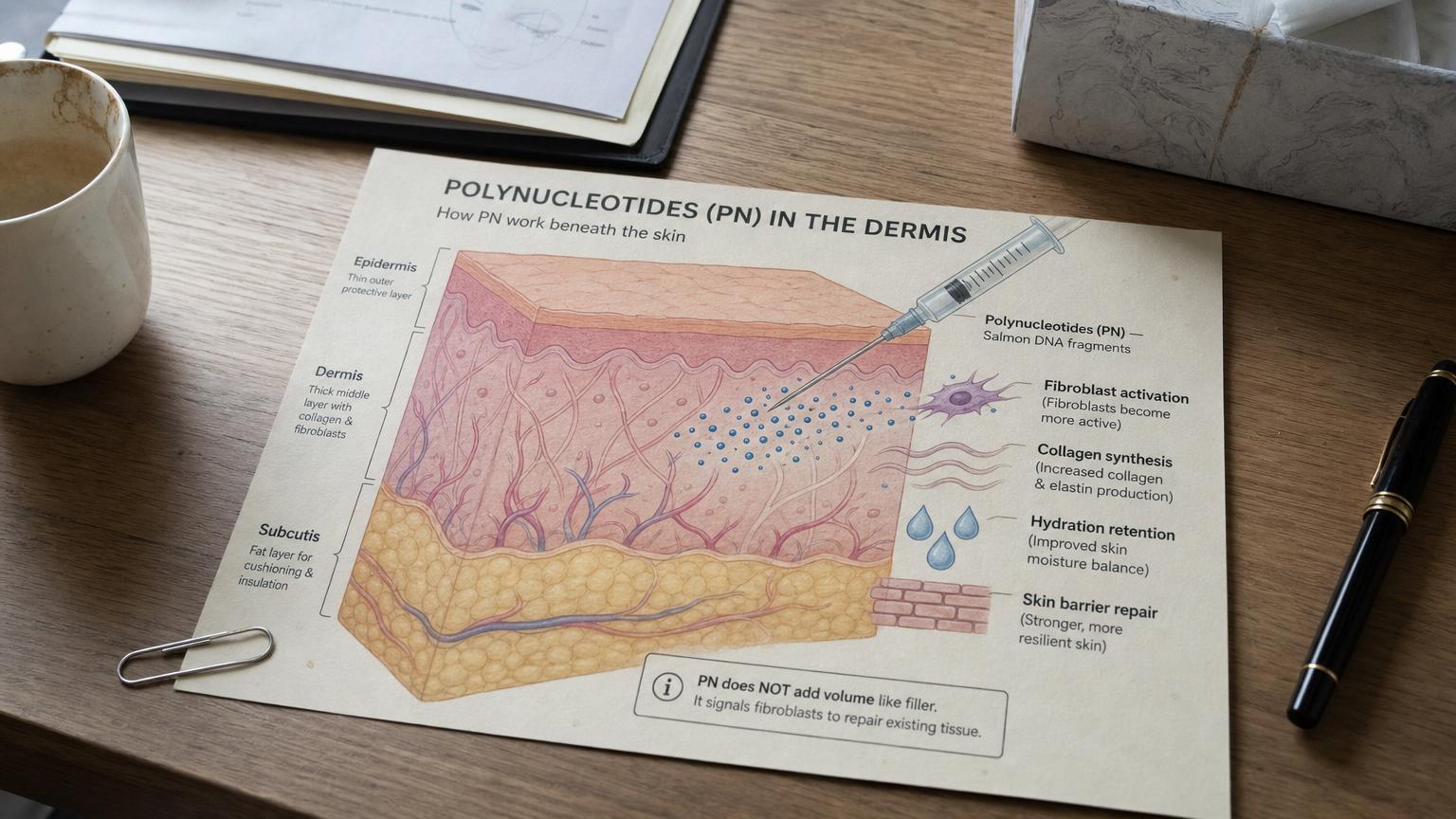
Rejuran is a polynucleotide (PN) injection treatment derived from salmon DNA fragments. The technical name is polynucleotide HPT (Polynucleotide High Purification Technology), and the active substance is purified DNA strand fragments that, when injected into the dermis, signal the patient’s own fibroblast cells to increase collagen synthesis, restore skin hydration, and repair the skin barrier. It is manufactured in Korea by Pharma Research and is one of the rare cosmetic injectables that was developed in Korea (rather than imported from European or American pharma).
The most important framing for a foreign patient is this: Rejuran does not add volume. It is not filler. It does not freeze muscles. It is not botox. It works at the cellular level, signaling the patient’s own skin to regenerate over weeks. This means:
- The results are subtle and cumulative. One session produces almost no visible change. By the third session, friends start noticing your skin looks healthier without being able to identify what changed.
- There is no immediate “filled-in” look. Patients who expect the immediate plumpness of HA filler are disappointed because Rejuran works on totally different biology.
- The improvement targets skin QUALITY, not facial CONTOUR. Skin texture, hydration, fine line softening, and barrier repair — yes. Cheek volume restoration, lip plumping, jawline contouring — no.
What It Treats Well
- Dehydrated, lackluster skin — the textbook indication. Patients with dull, dry, slightly rough skin in their thirties through fifties typically see the biggest improvement.
- Early fine lines. Crow’s feet, fine forehead lines, fine lines around the mouth. Not deep wrinkles (those need a different approach).
- Acne scar texture improvement. Rolling and boxcar acne scars can soften over a 4–6 session series, though aggressive scarring still benefits from being combined with laser treatments.
- Compromised skin barrier. Patients who have over-treated their skin with aggressive actives (high-percentage retinols, frequent peels) often see dramatic barrier recovery.
- Pre- and post-laser skin healing. Korean clinics often add Rejuran in the same session as a fractional laser to accelerate healing and improve outcome.
What It Doesn’t Do
- Deep wrinkles caused by repeated muscle movement → those need botox.
- Volume loss in the cheeks, temples, or under-eye → those need filler or fat grafting.
- Pigmentation issues like melasma → those need targeted lasers or topical depigmentation.
- Severe acne scarring with ice-pick scars → those need subcision plus CO2 laser, not Rejuran alone.
- Immediate one-session “transformation” — does not happen. The treatment is fundamentally cumulative.
The Session Protocol — Why “One Session” Does Not Work
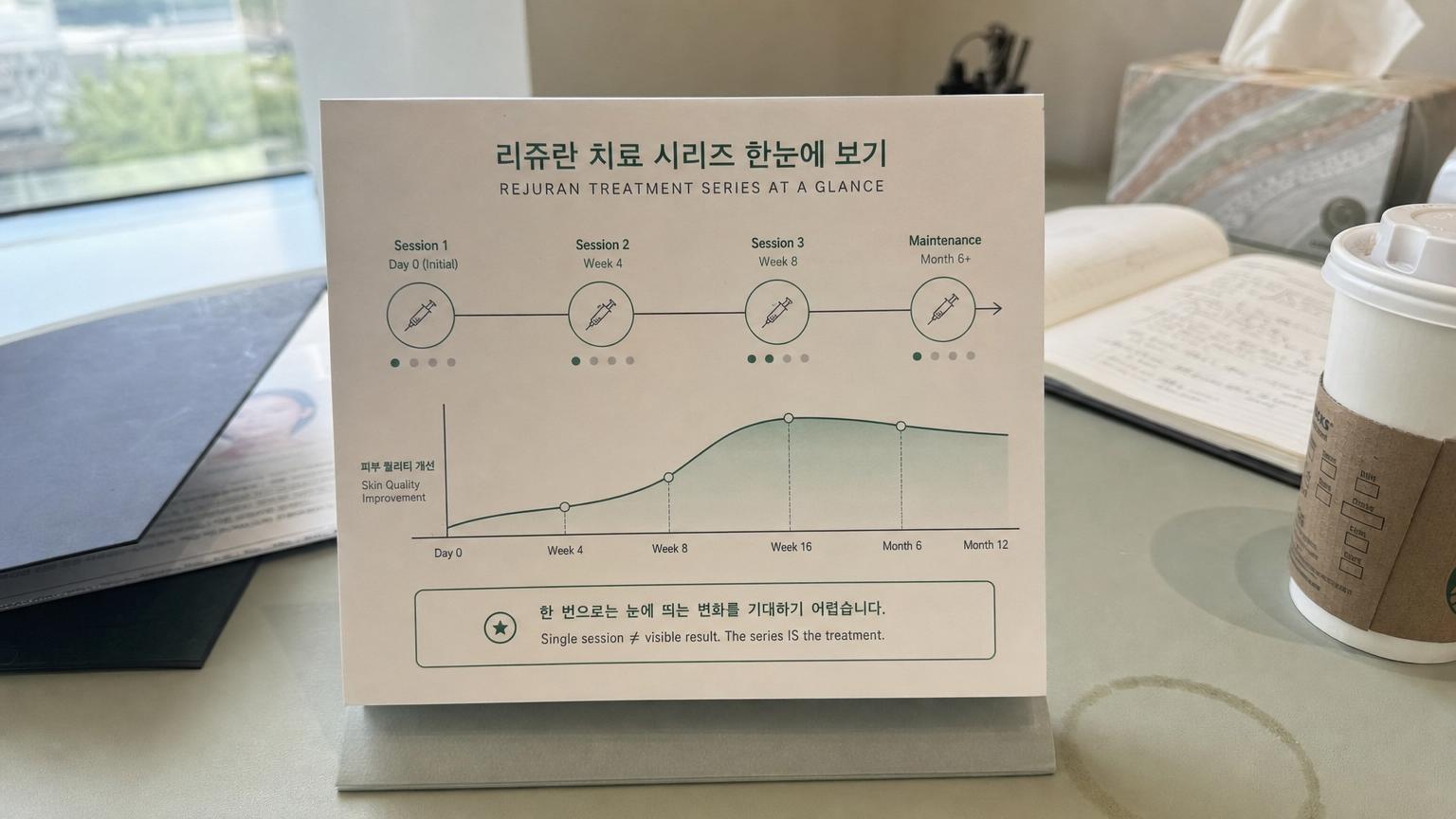
This is the single most important section of this guide. The Korean clinical protocol for Rejuran is almost always:
- Session 1 (Day 0) — Initial treatment. Skin shows subtle hydration response within 7–10 days, but no dramatic visible change.
- Session 2 (Week 4) — Cumulative effect begins. Patients often notice their skin “feels different” — softer to touch, more responsive to skincare products, slightly less reactive.
- Session 3 (Week 8) — The visible inflection point. By weeks 8–12 most patients see the change that brought them to the treatment in the first place: clearly improved hydration, finer texture, softer fine lines, restored healthy glow.
- Session 4 (Week 12 — optional) — Some patients with thicker skin or more severe baseline issues benefit from a fourth session. Many do not need it.
- Maintenance (Month 6+) — A single maintenance session every 6–12 months keeps the result stable. The collagen and barrier improvements gradually decline without periodic stimulation.
Foreign patients who book a single session expecting a single-session result are misunderstanding the entire treatment philosophy. Korean clinics treat the series as the actual treatment — not 3 separate treatments. A single Rejuran session is conceptually the equivalent of taking a single dose of a 3-dose vaccine series and being surprised that you do not have full immunity.
The Practical Implication for Foreign Patients
If you live in your home country and fly to Korea for cosmetic treatments, you have two viable options for Rejuran:
Option A — Compressed Series. Some Korean clinics will perform sessions 1 and 2 in a single trip, spaced 4–7 days apart, then session 3 on a follow-up trip 4 weeks later. This compresses your travel but adds two trips. The clinical outcome is comparable to the standard 4-week-apart series, though some clinicians argue the standard spacing produces marginally better results.
Option B — Coordinated With Other Procedures. If you are flying to Korea for a surgical procedure (rhinoplasty, eyelid surgery, etc.) and recovering in Korea for 1–2 weeks, you can have session 1 in the same trip and then return for sessions 2 and 3 on follow-up trips. This works especially well for patients who already plan to return for post-surgical follow-ups at month 1 and month 3.
The non-viable option is the “single dose and done” approach. Booking one Rejuran session, flying home, and expecting visible improvement at week 2 will produce disappointment regardless of the clinic’s skill. This is not the clinic’s fault; it is the biology of the treatment.
The Two-Month Result — What Most Patients Actually See
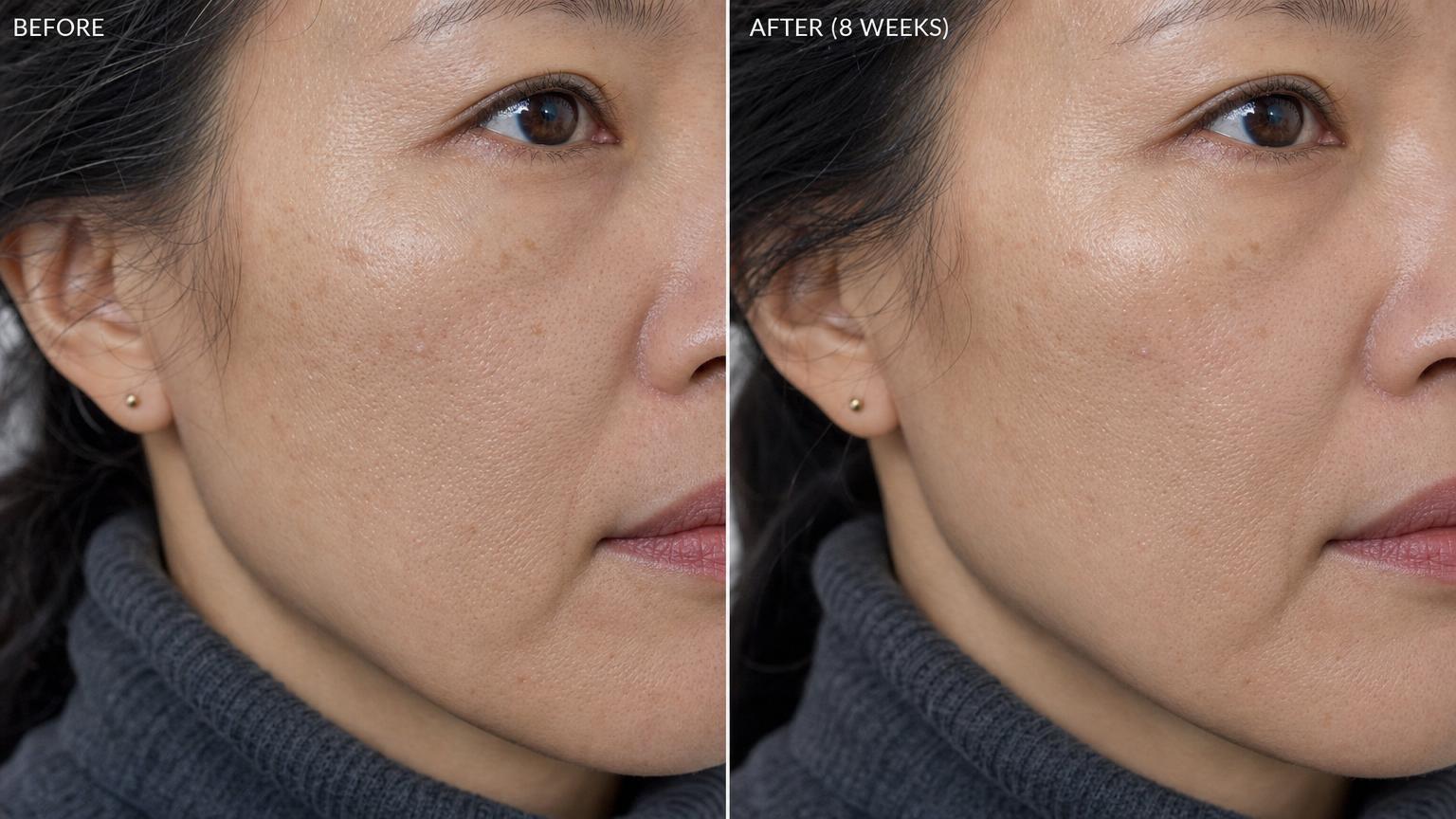
By the end of session 3 (week 8) most patients can locate the change clearly when comparing their skin to pre-treatment photos. Here is what realistically happens.
Recommended for Your Recovery
Products commonly used before and after Korean rejuran skin booster — same items routinely recommended in the recovery instructions Seoul clinics hand out at discharge.
- COSRX Advanced Snail 96 Mucin Power Essence — Korean barrier essence to support skin between injection sessions and reduce post-procedure dryness. Check price on Amazon
- Beauty of Joseon Relief Sun SPF 50+ — lightweight Korean SPF 50+ — UV protection is critical after any injectable to prevent pigment irregularities. Check price on Amazon
- Gel Eye Mask (Cold Compress) — cold compress for periorbital or perioral micro-swelling in the 24 hours after a session. Check price on Amazon
- Arnica Montana Tablets — optional 1 to 2 day course around injection day to minimize bruising at injection points. Check price on Amazon
As an Amazon Associate, GlobalBeautySpot earns from qualifying purchases at no extra cost to you.
Skin Texture and Hydration
This is the most consistent improvement. Skin looks and feels less dry, with a subtle natural sheen that is hydration-based (not oil-based). Foundation sits better. Powder doesn’t cake. The “puff up some water and pat it in” daily skincare actually produces visible plumpness rather than absorbing into a dehydrated barrier.
Fine Lines
Softened, not erased. The lines that disappear in repose but reappear when you smile or frown will become less prominent over the series, but they will still be there in motion. This is realistic and natural — Rejuran is not botox and does not paralyze the muscle producing the line.
Skin Tone
More even, with reduced subtle pinkness or sallowness. Mild post-inflammatory marks from previous acne or irritation often fade noticeably. This is not pigmentation treatment per se, but improved barrier function reduces the inflammatory background that drives many subtle tone issues.
What You Will Notice First
Most patients report two specific signals before they notice any visible change in the mirror. First, their skin “feels different” to the touch — softer, more elastic, less rough. Second, their skincare products absorb differently — actives feel like they are penetrating rather than sitting on the surface. These two signals usually arrive around week 4–6, before the visible improvement at week 8–12.
What You Should NOT Expect
Dramatic before-and-after transformation. Magazine-perfect smoothness. Visible volume restoration. Total disappearance of all fine lines. Korean clinics show Rejuran results in marketing materials that are honest but not dramatic — and this is actually the realistic representation of what the treatment does. If a clinic shows you Rejuran before-and-afters that look like Photoshop filters, they are either misrepresenting Rejuran results or actually showing a different treatment.
Day-of and Day-After Experience

Each individual injection session is short and well-tolerated. The full visit takes about 30–45 minutes total, of which the injection itself is approximately 10 minutes.
The Injection Session
A topical anesthetic cream is applied for 20–30 minutes before the injections begin. The dermatologist then uses a fine needle (or sometimes a meso-gun that performs multiple micro-injections rapidly) to deliver Rejuran throughout the treatment area — typically full face, sometimes neck and décolleté, sometimes targeted hand treatment for patients addressing hand aging. The injection sensation is minor — usually described as small pinpricks with mild stinging — and the topical anesthetic significantly reduces discomfort.
Immediate Post-Session
Visible small injection point marks (8–15 tiny red dots per cheek, more on areas with denser injection like around the eyes or mouth) immediately after. Mild swelling and pinkness for 24–48 hours. Patients often describe a “rough day-of” appearance — not dramatically swollen, but obviously freshly treated. Most clinics recommend planning treatment on a day with no immediate social commitments.
Days 1–3
The injection point marks fade rapidly. By day 2 most are pinpoint red dots only visible up close; by day 3 most are essentially gone. Mild bruising in 10–15% of patients (more common in those on aspirin, fish oil, or other blood-thinning supplements). Makeup is permitted from day 2 onward, though heavy foundation should wait until day 3.
Days 4–14
Quiet phase. Skin gradually shows subtle hydration improvement. No dramatic change. By day 10–14 most patients are at the “feels different to the touch” stage but still see essentially their baseline skin in the mirror.
The 4-Week Mark
Session 2 day. Most patients arriving for session 2 say their skin “felt better” but are not entirely sure if anything actually changed. This is the typical and correct experience at the 4-week mark.
Cost and Why Korea Is the Practical Destination
Rejuran is now available in some Western clinics, but the cost difference between Korea and the West is substantial, and the volume of clinical experience is much higher in Korea where the product was developed.
| Region | Per Session (Full Face) | 3-Session Series Total | Notes |
|---|---|---|---|
| Korea (Seoul) | KRW 250,000–450,000 (USD 185–335) | KRW 700,000–1,200,000 (USD 520–890) | Series pricing common; some clinics include free follow-up consultation |
| USA | USD 600–1,000 | USD 1,800–3,000 | Often only available in specialty derm clinics; series rarely discounted |
| UK / EU | GBP 350–550 | GBP 1,000–1,650 | Available but variable; clinics may use different PN brands |
| Australia | AUD 550–800 | AUD 1,650–2,400 | Limited availability; often premium pricing |
The price advantage is real, but the more meaningful Korean advantage is protocol fluency. Korean dermatology clinics have used Rejuran since its 2014 launch and have settled into specific session spacing, depth-of-injection, and combination protocols (with HIFU, laser, exosome stack) that are difficult to source outside Korea simply because Western clinicians have less cumulative experience with the product.
If you are considering combining Rejuran with other Korean cosmetic procedures, this guide pairs naturally with Korean exosome therapy (commonly stacked with Rejuran in the same session for accelerated effect), with Juvelook (PLLA-based collagen booster used for slightly different indications), and with the broader petit cosmetic treatment menu at Link Plastic Surgery’s English consultation page.
Five Questions to Ask Any Clinic
- Do you sell Rejuran as a series, or as individual sessions? Clinics that aggressively push single sessions to maximize revenue are sometimes happy to take your money for a treatment that will not produce visible results. Clinics that explain the series-based protocol upfront are aligned with the actual biology.
- Which Rejuran product line do you use? The standard product is Rejuran S (for face). There is also Rejuran HB (with hyaluronic acid, for deeper hydration in dry skin), Rejuran I (for eye area, with adjusted concentration), and Rejuran Healer (the original line). A clinic that uses the right variant for your specific indication is more sophisticated than one that defaults everyone to one product.
- Do you combine Rejuran with other treatments in the same session? Common Korean combinations: Rejuran + microneedling, Rejuran + fractional laser (immediately post-laser to accelerate healing), Rejuran + exosome stack. These combinations require clinical judgment about which patient benefits and when — not blanket upselling.
- What is your protocol for patients flying in from abroad? Korean clinics with foreign-patient experience will offer compressed series scheduling (sessions 1 and 2 in one trip), pre- and post-treatment instructions in English, and follow-up consultation by messenger or video.
- Do you require a consultation before booking the first session? A clinic that books Rejuran with zero pre-consultation is treating it as a commodity service. A clinic that requires brief consultation (in-person or video) to assess your skin and indication is treating it as a clinical intervention. The latter produces better outcomes.
Frequently Asked Questions
How is Rejuran different from filler?
Filler adds volume by occupying physical space under the skin. Rejuran does not add volume — it signals your own skin cells to repair and regenerate over weeks. Filler shows results immediately; Rejuran shows results gradually over a series. They are completely different treatments addressing different problems, and they can be combined in the same patient (different sessions, different areas) when indicated.
Will I see results after one session?
No, and any clinic that promises you will is being dishonest. One session produces subtle hydration response over 7–10 days but no dramatic visible change. The series is the treatment.
Is Rejuran safe?
Rejuran has been used clinically in Korea since 2014 with an excellent safety profile. The salmon DNA polynucleotides are highly purified and biocompatible. Minor side effects (injection point marks, mild swelling, occasional bruising) resolve within days. Patients with allergies to seafood should disclose this, though true cross-reactivity to purified PN is rare.
Can men get Rejuran?
Yes, and Korean clinics treat male patients commonly. Male skin tends to be thicker and more textured, which means men sometimes need 4 sessions instead of 3 for optimal result, but the underlying protocol is the same.
What age range is appropriate?
Late twenties through sixties is the typical age range. Younger patients (early twenties) generally do not need Rejuran unless they have specific texture or barrier issues. Older patients (seventies+) still benefit but the visible improvement is more subtle because the baseline skin has less regenerative capacity to activate.
What about Rejuran for eye area or hands?
Rejuran I (formulated for eye area) is increasingly used for under-eye texture and crepiness. Rejuran for hands addresses the same hydration and texture issues that show up on aging hands. Both follow the same series protocol as facial Rejuran.
Can I exercise after Rejuran?
Light activity yes, immediately. Vigorous exercise (heavy sweating, hot yoga, sauna) should wait 24–48 hours to avoid additional swelling and to let the injection sites close. Swimming should wait 48 hours for the same reason.
What if I have a single trip and can’t do the full series?
You will receive limited benefit and should be honest with yourself about that before paying. Some patients still feel one session is worthwhile as a “trial” before committing to the full series on a future trip. Others would be better off allocating that budget to a treatment that produces meaningful single-session results (a fractional laser, for example). The clinic should help you make this decision honestly.
Does Rejuran replace my daily skincare?
No — it complements it. Patients who continue good daily skincare (gentle cleanser, hyaluronic acid, niacinamide, retinol if tolerated, daily SPF) see substantially better and longer-lasting Rejuran results than patients who rely on the treatment alone. Korean clinics typically reinforce daily skincare alongside the injection series.
How do I know if the treatment “worked”?
Take honest before photos in identical lighting before session 1. Take comparison photos at week 4, week 8, and week 12 in the same lighting and angle. The subtle improvement is much more visible in side-by-side photos than in daily mirror checks. If you can clearly identify hydration, texture, or fine-line softening in the week-8 vs week-0 comparison, the treatment is working as expected.
Closing
Korean Rejuran is one of the most accessible and consistently performing skin treatments in the entire K-beauty menu — but only for patients who approach it with the correct mental model. It is not a quick fix. It is not magic. It is a treatment series that works gradually with your own skin biology to produce real, restrained, natural results over 8–12 weeks. Foreign patients who fly to Seoul expecting a single-session transformation are misunderstanding the product; foreign patients who commit to the series (or coordinate it with other Korean procedures they are already booking) consistently report the natural healthy-skin improvement that they came for.
If you are planning a Korea trip and want to add Rejuran to your itinerary, plan for the series — either compressed in one trip, or distributed across multiple visits. Choose a clinic that explains the series-based protocol upfront. Have realistic expectations about subtle cumulative improvement, not dramatic transformation. Clinics that have built reputations in Korean skin treatment — including Link Plastic Surgery’s Rejuran page — will be honest about what the treatment actually does and what it does not. That honesty, combined with the protocol fluency that comes from a decade of cumulative Korean clinical experience with this specific product, is what makes Seoul the practical destination for this particular treatment.
The final mental model worth holding: think of Rejuran less as a cosmetic procedure and more as a skin training program — a repeated stimulus that gradually teaches your own skin to behave better. That framing matches the actual biology, manages expectations correctly, and produces the consistent natural improvement that Korean dermatology has built its reputation on.
Rejuran vs Exosome vs Juvelook: Which Skin Booster Do You Need?
Foreign patients almost always end up comparing Rejuran with the two other most popular Korean skin boosters, exosome and Juvelook, and the most common mistake is treating them as competitors when they actually do different jobs. The honest answer is that they are frequently layered rather than chosen against each other, because each targets a different aspect of skin quality.
- Rejuran (polynucleotide, PN): a wound-healing and regeneration platform derived from salmon DNA. It is best for rebuilding skin barrier, improving texture and fine lines, and overall skin quality from the inside. It is the right choice when the concern is the condition of the skin itself, not volume.
- Exosome: a cell-signaling and healing accelerator, usually combined with microneedling or laser rather than used alone, to speed regeneration and calm the skin. If you are comparing the two head to head, our Korean exosome therapy guide explains where exosome fits and why it is rarely a standalone treatment.
- Juvelook (PLLA + HA): a collagen-stimulating injectable that adds gradual, natural volume, suited to restoring lost fullness rather than treating skin texture. Our Korean Juvelook guide covers how its two-phase mechanism differs from Rejuran.
So the short version: Rejuran is for skin quality and texture, exosome is a regeneration accelerator usually layered with other treatments, and Juvelook is for volume. Many Korean plans combine Rejuran with one of the others rather than picking a single product. For a full side-by-side, see our Korean skin boosters comparison (Rejuran vs Juvelook vs exosome).