Buccal fat removal is one of those procedures that looks irresistible on social media and quite different in a surgeon’s honest assessment. Take out the buccal fat pad, the deep cushion of fat in the lower cheek, and you get the hollowed, sculpted, snatched look that has driven so much of its recent popularity. The catch is that the change is permanent, and the same hollowing that looks sharp at thirty can read as gaunt and prematurely aged at forty-five, once your face has naturally lost volume on its own. That is why the most experienced Seoul clinics in 2026 have become noticeably more cautious about it, removing less, or declining outright, far more often than the trend would suggest. Understanding who it genuinely suits, and who it quietly ages, is the whole decision. A clinic that puts your long-term face first, like Link Plastic Surgery, will assess that honestly rather than simply sell you the trend.
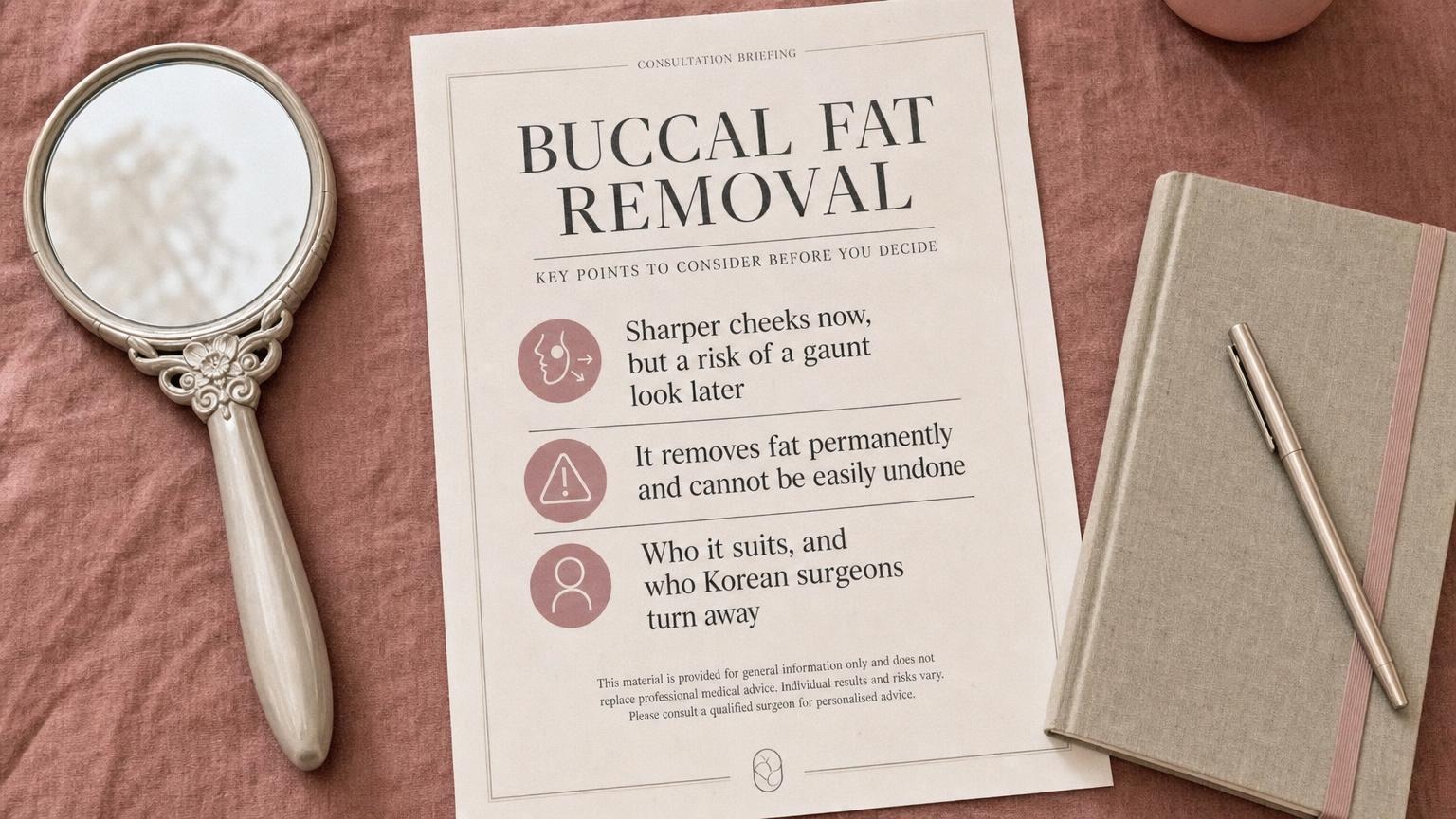
Buccal fat removal permanently takes out a fat pad in the lower cheek to slim a round or full face. Because it cannot be easily reversed, the decision has to account for how your face will age. It suits a genuinely round cheek on strong bone structure, but is usually advised against for thin, narrow, or sagging faces, and for very young patients. Korean surgeons in 2026 increasingly remove conservatively, or decline, to protect the older face.
What It Actually Is
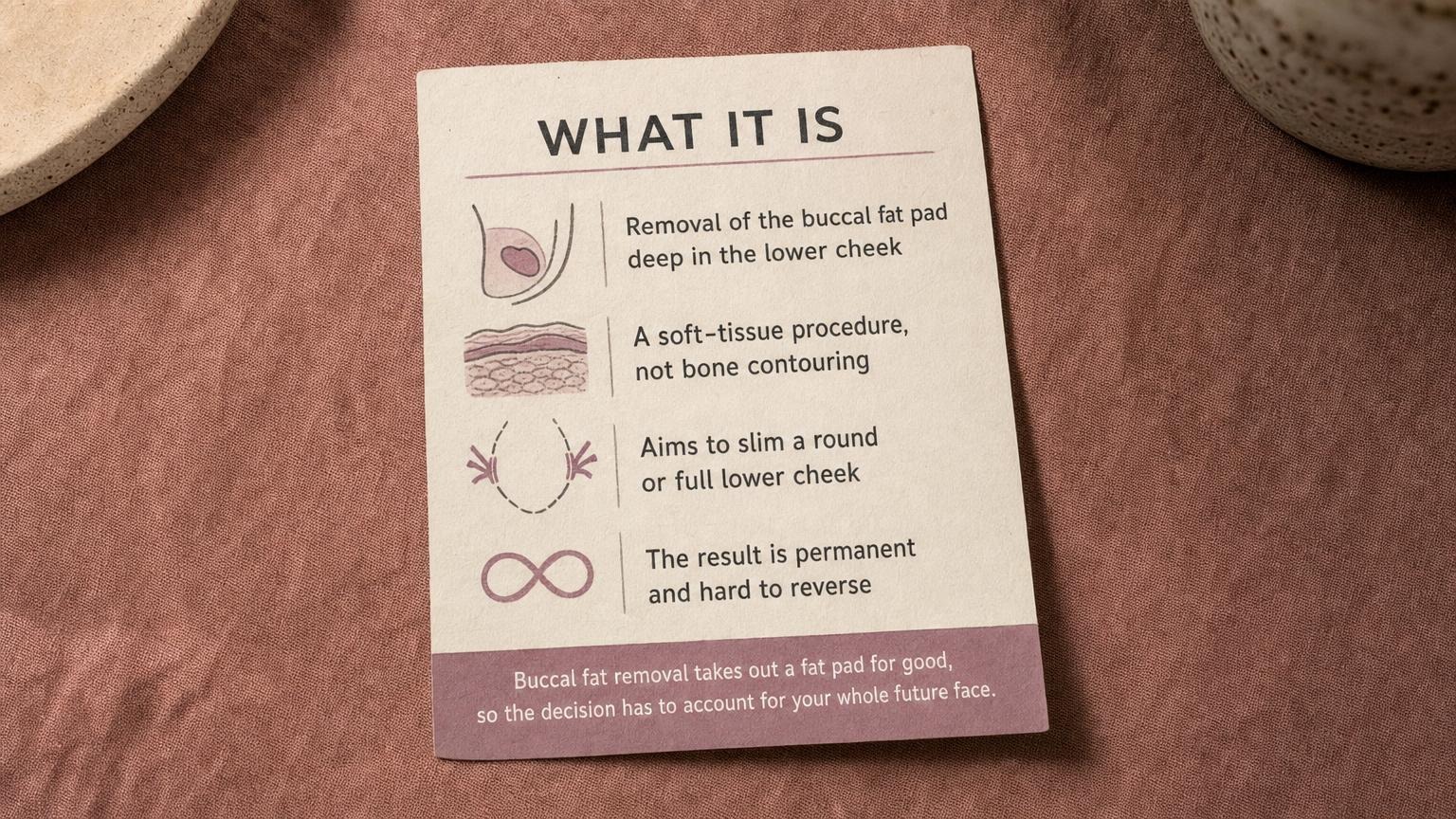
The buccal fat pad is a discrete cushion of fat that sits deep in the lower cheek, separate from the fat just under the skin. Buccal fat removal is a small procedure, usually done through a tiny incision inside the mouth, that extracts part or all of that pad to reduce fullness in the lower cheek and create a more sculpted, tapered look. It is a soft-tissue procedure, not bone contouring, so it changes the cushion of the cheek rather than the underlying facial structure.
The single most important fact about it is permanence. Once the pad is removed, it does not grow back, and there is no simple way to put it back. That is very different from a reversible or temporary treatment, and it is the reason this procedure deserves more caution than its casual, trend-driven reputation suggests. You are not trying on a look; you are making a permanent change to a part of the face that also changes on its own over time.
The Aging Risk Nobody Advertises
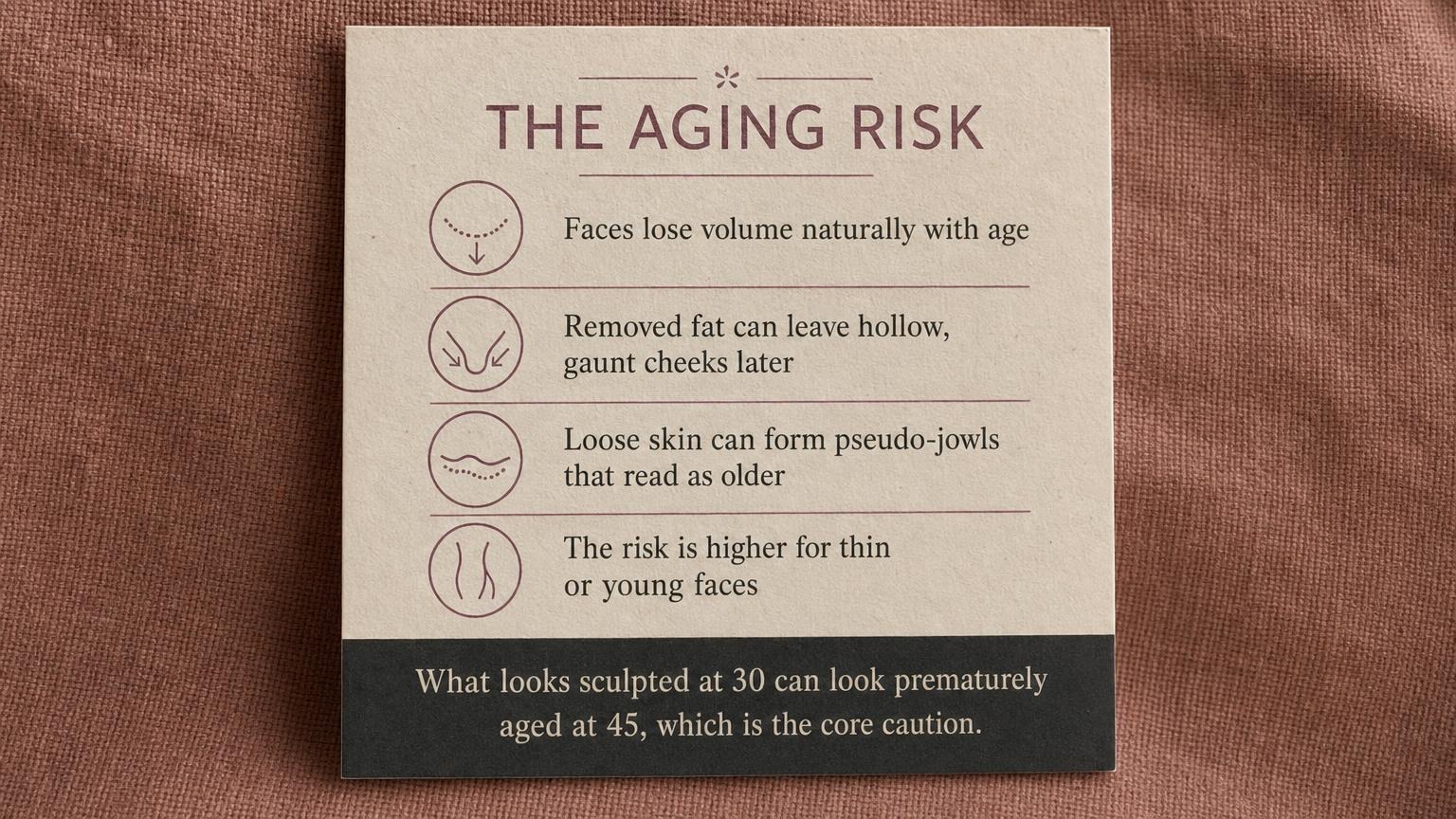
Here is the part the before-and-after photos rarely show. Faces lose volume naturally as they age, especially in the mid and lower cheek. If you have already removed the buccal fat pad, that natural, age-related hollowing starts from an emptier baseline, and the sculpted look can tip over into a gaunt, drawn appearance sooner than it otherwise would. Worse, when the cheek loses support, the skin can drape and settle into what surgeons call pseudo-jowls, folds that ironically make you look older than your age rather than sharper.
This is not a fringe concern. Reporting on longer-term outcomes suggests a meaningful share of patients, some estimates around forty percent at three or more years out, come to regret the procedure as natural aging turns their sculpted cheeks hollow. The risk is highest for people who were thin-faced or young to begin with, precisely the group most drawn to the sharp, snatched aesthetic. The same natural, undetectable-aging goal that Korean surgeons increasingly favour, which we discuss in our guide to a natural, undetectable result, argues for keeping volume, not removing it, in most faces.
Who Is, and Is Not, a Good Candidate
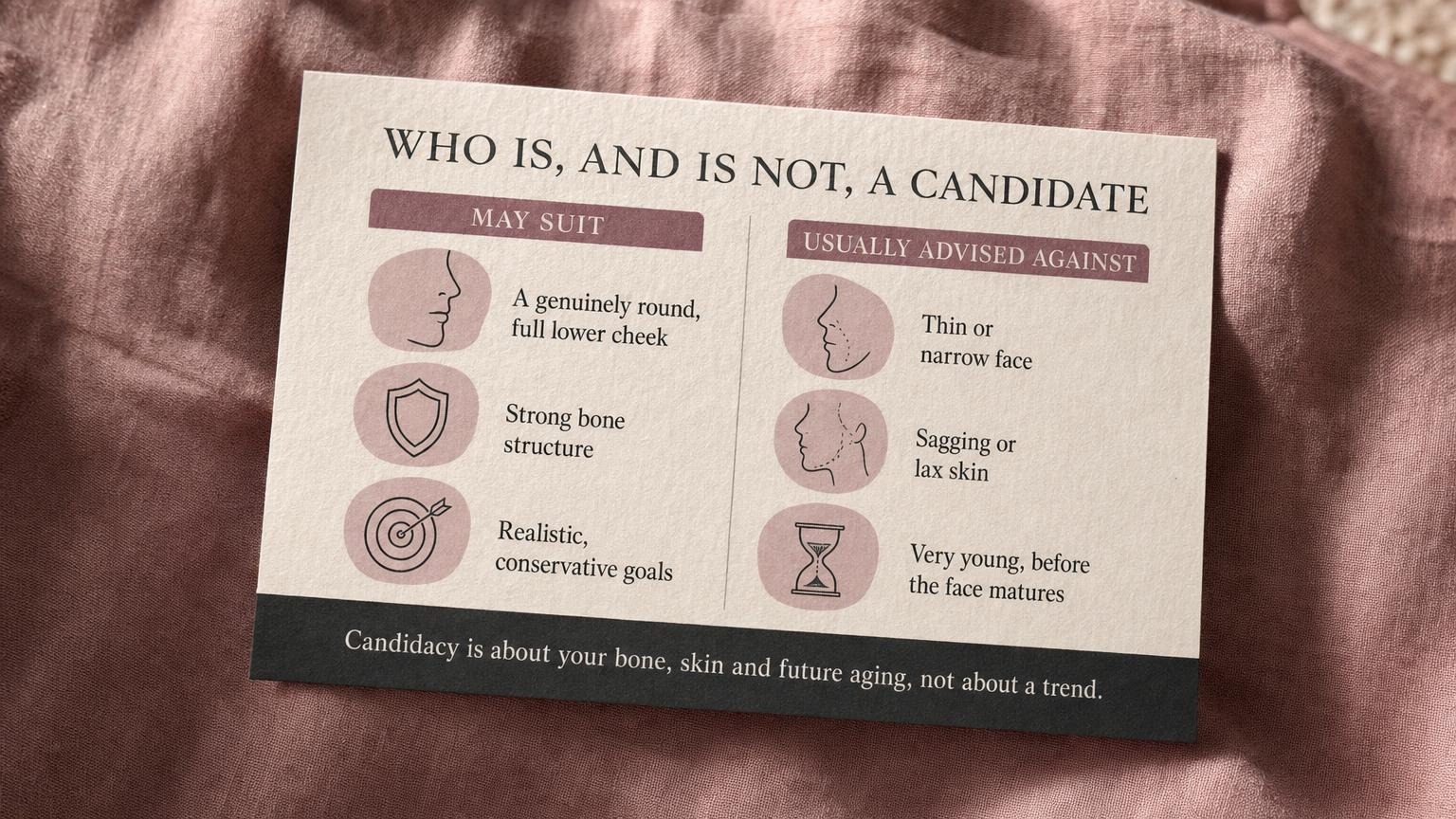
Good candidacy is narrow and specific. Buccal fat removal can genuinely help someone with a truly round, full lower cheek from a large buccal pad, on strong underlying bone structure, who has realistic and conservative goals. For that person, removing some of the pad can bring the lower face into better balance without hollowing it out. The key word is genuine fullness from the pad itself, confirmed on assessment, rather than a general wish for a thinner face.
The people usually advised against it are just as important to name. If your face is already thin or narrow, if your skin is lax or beginning to sag, or if you are very young and your face has not yet matured, removing buccal fat is far more likely to age you than to flatter you. Fullness in a young round face very often softens naturally into an attractive adult contour on its own. A careful Link Plastic Surgery face-contouring assessment is designed to separate a true candidate from someone chasing a trend that will not age well, and a good surgeon is as willing to say no as yes.
The Korean Conservative Approach in 2026
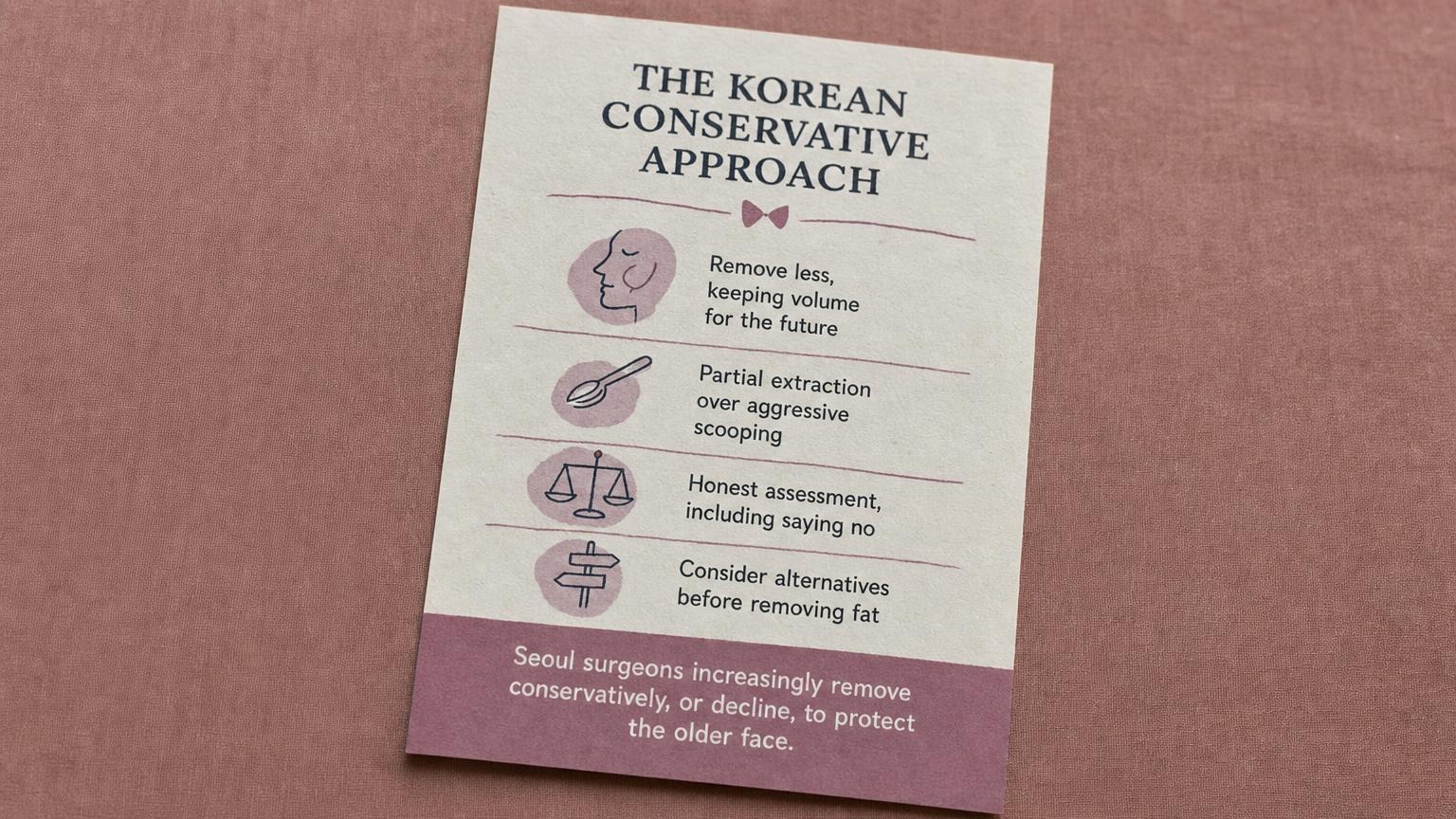
The clearest shift in Seoul in 2026 is toward restraint. Rather than aggressively scooping out the whole pad for maximum immediate contour, experienced surgeons increasingly remove only a conservative amount, deliberately leaving volume in reserve for the face you will have in later decades. Some assess a patient and decline the procedure entirely, recommending non-permanent alternatives for slimming, such as targeted energy-based lifting or, where the issue is really the jaw muscle, masseter treatment, none of which burn a bridge you cannot rebuild.
This restraint matters because of the one-way nature of the procedure. If too much fat is removed and the cheek later looks hollow, the correction is not simple: it usually means adding volume back with fat grafting or filler, essentially undoing the surgery from the other direction. Our overview of face slimming without bone surgery lays out the gentler, reversible options that a conservative surgeon will often steer you toward first. Choosing conservative removal, or a non-permanent alternative, is not a lack of ambition; it is the choice that protects your face at every age.
What to Expect, and How to Plan It
Practically, buccal fat removal is a short procedure through a small incision inside the cheek, with modest swelling for a week or two and no external scar. The immediate result can look fuller than the final one because of swelling, and the true contour settles over a few months. The harder planning is not the recovery but the reversal risk: if the result later looks hollow, correcting it means adding volume back, often with facial fat grafting, so it pays to be conservative from the start. On cost, note that from 2026 the foreigner VAT refund on cosmetic procedures in Korea has ended, so budget for roughly ten percent more than older guides suggest, and always work from a genuine clinic quote after a proper assessment.

Before you commit to something permanent, five questions keep the decision honest. Do I have genuine fullness from the buccal fat pad itself, confirmed on assessment, rather than just a wish for a thinner face? Is my face structure strong enough that removing fat will not hollow it as I age? Am I old enough that my face has matured, and is my skin still firm? Has the surgeon discussed conservative removal, or a non-permanent alternative, rather than an aggressive scoop? And have I accepted that this is largely irreversible, and budgeted from a genuine quote with the VAT refund gone? If those answers do not all line up, the safest move is often to wait or choose a reversible option. For an honest face-contouring assessment, visit Link Plastic Surgery’s official website.
Frequently Asked Questions
1. What is buccal fat removal?
It is a procedure that permanently removes part or all of the buccal fat pad, a cushion of fat deep in the lower cheek, usually through a small incision inside the mouth. The goal is to slim a round or full lower cheek for a more sculpted, tapered look. It is a soft-tissue procedure, not bone contouring, and because the fat does not grow back, the result is essentially permanent and cannot be easily reversed.
2. Does buccal fat removal age you?
It can. Faces naturally lose volume with age, so removing the buccal fat pad means age-related hollowing starts from an emptier baseline, which can make the cheeks look gaunt and drawn sooner. The loss of support can also let skin settle into pseudo-jowls that read as older. This aging risk is the single biggest reason to be cautious, and it is highest for people who are thin-faced or young to begin with.
3. Is buccal fat removal permanent?
Effectively yes. Once the fat pad is removed it does not grow back, and there is no simple way to restore it. If a cheek later looks too hollow, correction usually means adding volume back with fat grafting or filler, which is essentially reversing the surgery from the other direction. Because it is so hard to undo, the sensible approach is to remove conservatively, or not at all, rather than aggressively.
4. Who is a good candidate for buccal fat removal?
The best candidate has a genuinely round, full lower cheek caused by a large buccal fat pad, confirmed on assessment, together with strong underlying bone structure and realistic, conservative goals. For that person, removing some of the pad can improve lower-face balance without hollowing it. General dissatisfaction with a thinner-face wish, without true buccal fullness, is not a good reason on its own.
5. Who should avoid buccal fat removal?
People with an already thin or narrow face, lax or sagging skin, or a very young face that has not yet matured are usually advised against it, because removal is more likely to age them than to flatter them. Youthful roundness often softens into an attractive adult contour on its own. If you fall into these groups, a conservative surgeon will typically recommend against the procedure or suggest reversible alternatives.
6. What are pseudo-jowls?
Pseudo-jowls are folds that form when the cheek loses support and the skin drapes and settles lower on the face. After buccal fat removal, the loss of the deep fat cushion can contribute to this, so instead of looking sharper, the lower face can look heavier and older. It is one of the counterintuitive outcomes of over-removal, and part of why surgeons increasingly favour conservative extraction.
7. Why are Korean surgeons cautious about it in 2026?
Because the long-term outcomes have become clearer. With reports that a meaningful share of patients regret the procedure years later as their faces hollow, experienced Seoul surgeons increasingly remove only a conservative amount, or decline the procedure and suggest alternatives. The 2026 emphasis is on facial balance and how a face will age, rather than on delivering a dramatic, trend-driven contour that may not last well.
8. Can buccal fat removal be reversed?
Not directly. The removed fat cannot be put back as it was. If the result later looks too hollow, the usual correction is to add volume with facial fat grafting or filler, which rebuilds fullness but is a separate procedure rather than a true reversal. This one-way nature is exactly why a conservative amount, or a non-permanent alternative, is often the wiser first choice.
9. What are the alternatives to buccal fat removal?
For many people the better options are reversible or non-permanent: energy-based lifting and tightening for a firmer contour, masseter treatment when the fullness is really from the jaw muscle, or simply allowing a young round face to mature. These do not burn a bridge you cannot rebuild. A good consultation will walk through these gentler options before recommending a permanent removal of fat.
10. How much does buccal fat removal cost in Korea in 2026?
Cost varies with the clinic and the assessment, so the honest figure comes from a genuine quote after a proper evaluation rather than an advertised price. One thing to factor in: from 2026, the foreigner VAT refund on cosmetic procedures in Korea has ended, so expect to pay roughly ten percent more than older guides suggest. More importantly, weigh the permanent nature and aging risk before the price. For an honest face-contouring assessment, visit Link Plastic Surgery’s official website.
Information on buccal fat removal trends, long-term aging and regret rates, the conservative 2026 approach, and the ended foreigner VAT refund is based on industry and clinic reporting (View Plastic Surgery, Korea Clinic Guide and others), 2026. Figures are approximate and individual outcomes vary; consult a licensed surgeon for a personal assessment.