“Korean Belly Button” Is Not One Look. It’s Four Different Surgeries.
Search for “Korean belly button surgery” and almost every result shows the same final photo — a small, vertical, slit-shaped navel with a slightly hooded upper rim. That photo is real. It is also misleading. The reason every patient ends up with a similar-looking final result is not because Korean surgeons do one signature procedure. It is because they do four very different procedures depending on what your starting belly button actually looks like.
If you walk into a Seoul consultation asking for “the Korean belly button look,” the surgeon will almost certainly disagree with the framing. They will ask you what is wrong with the one you have, examine four specific markers, then propose a procedure tailored to the structural problem. This guide walks through each of those four starting conditions and what surgery the Korean playbook actually applies.
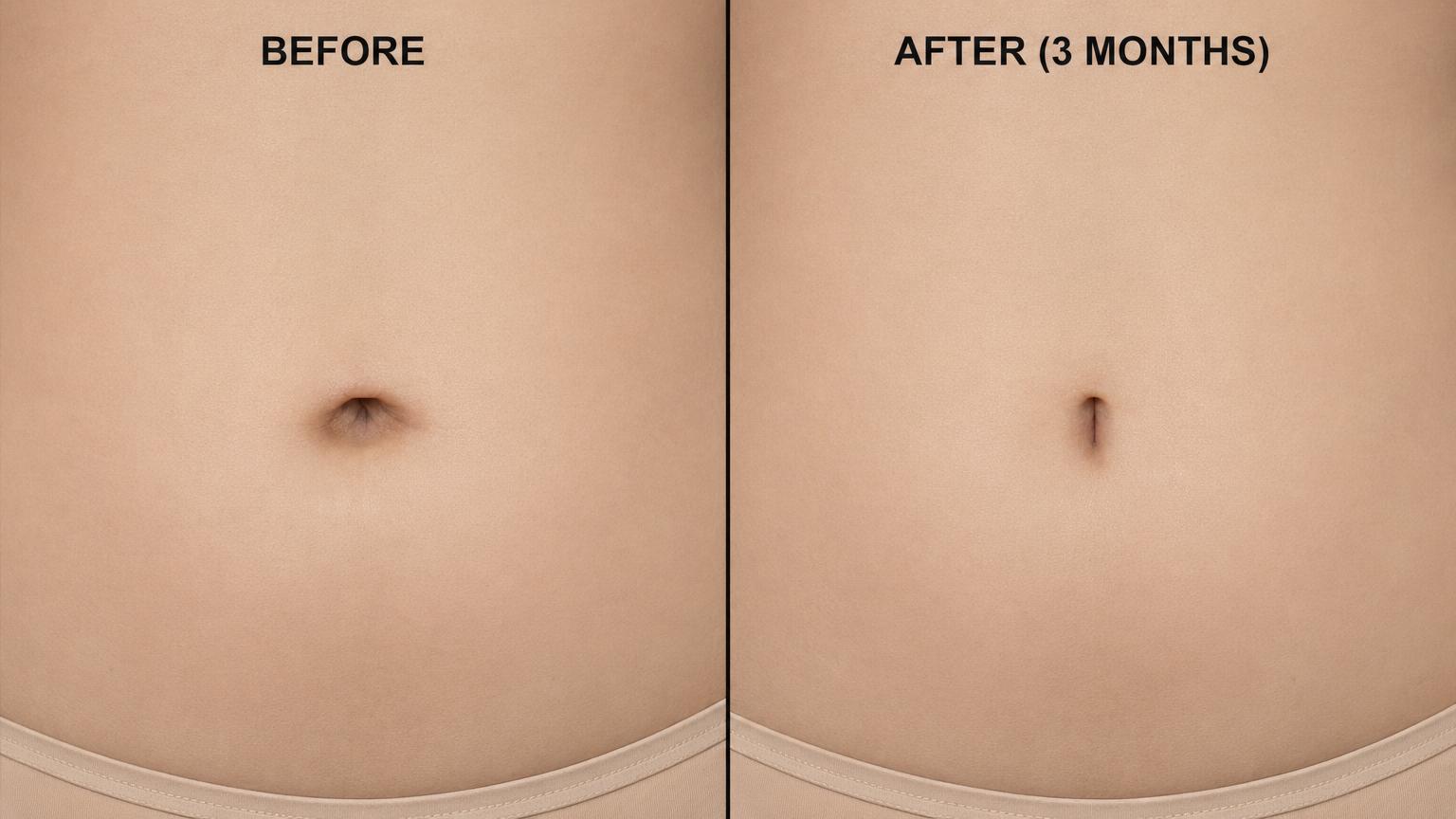
- There is no single “Korean belly button” procedure. Korean surgeons run four distinct techniques depending on the starting anatomy.
- Outie (protruding navel from umbilical hernia or scar) → hernia repair plus structural reshaping.
- Wide hooded belly button → skin trim and depth reconstruction. The most common foreign request.
- Horizontal slit (low-set, distorted) → lift-and-rotate to vertical orientation.
- Post-pregnancy distortion → combined umbilicoplasty plus mini abdominoplasty if there is rectus diastasis.
- Recovery: stitches out at day 7, compression tape for 2–3 weeks, final shape settles by month 1 to month 3.
- Korean prices: KRW 2.5M–4M for isolated umbilicoplasty (USD 1,800–3,000), more if combined with hernia repair or abdominoplasty.
The Four Starting Conditions Korean Surgeons Actually See
Every Seoul consultation for the navel begins with the same examination. The surgeon asks you to lie flat, then to stand, then to flex your abdomen. That sequence reveals which of the four problems you have.
Type 1 — Outie (protruding navel)
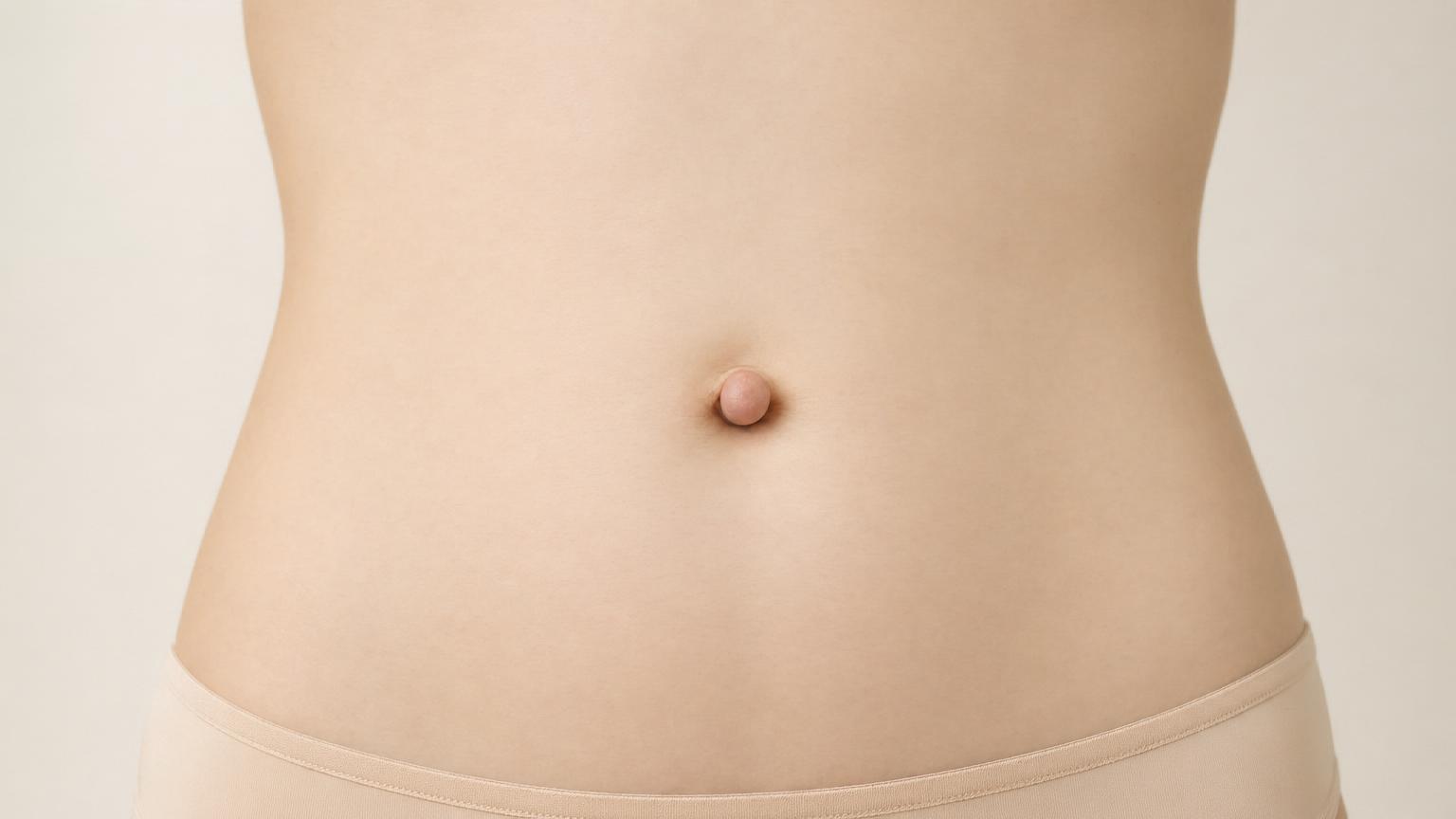
The outie sits on a surprising number of patients. It usually points to one of two underlying issues. The first is a small umbilical hernia — a defect in the abdominal wall where a small amount of tissue or peritoneum is pushing through. The second is a thickened scar from how the umbilical cord originally healed, with no actual hernia underneath.
The two look identical from the outside. The Korean surgeon distinguishes them on the exam table — pressing into the navel, asking you to cough or strain, watching whether the protrusion enlarges or stays static. Hernia changes with strain. Pure scar tissue does not.
The fix differs by cause. A genuine hernia gets a layered repair of the abdominal wall plus reshaping of the overlying skin. Pure scar tissue gets local excision and reconstruction without going deep. Cost difference is meaningful — hernia repair adds roughly KRW 1.5M to the base umbilicoplasty fee.
Type 2 — Wide hooded belly button
This is the condition most foreign patients show up asking about, even if they cannot name it. The belly button is too wide horizontally, often with extra skin folding over the upper rim — what surgeons call a “hooded” or “redundant skin” navel. The depth tends to be shallow.
Genetic in most cases. Pregnancy can make it worse, but a meaningful number of patients in their twenties have it from birth.
The Korean technique here is the one most associated with the “K-belly button” look online. The surgeon trims the redundant skin, anchors the dermis to the deeper rectus fascia at a specific depth, and reorients the long axis vertically. The result is the small, vertical, slightly hooded shape you see in every clinic gallery photo.
One Korean cafe review at the one-month mark described the change as “looking completely different — the wide opening is gone and the shape is finally vertical and tidy.” That is the textbook outcome.
Type 3 — Horizontal or low-set slit
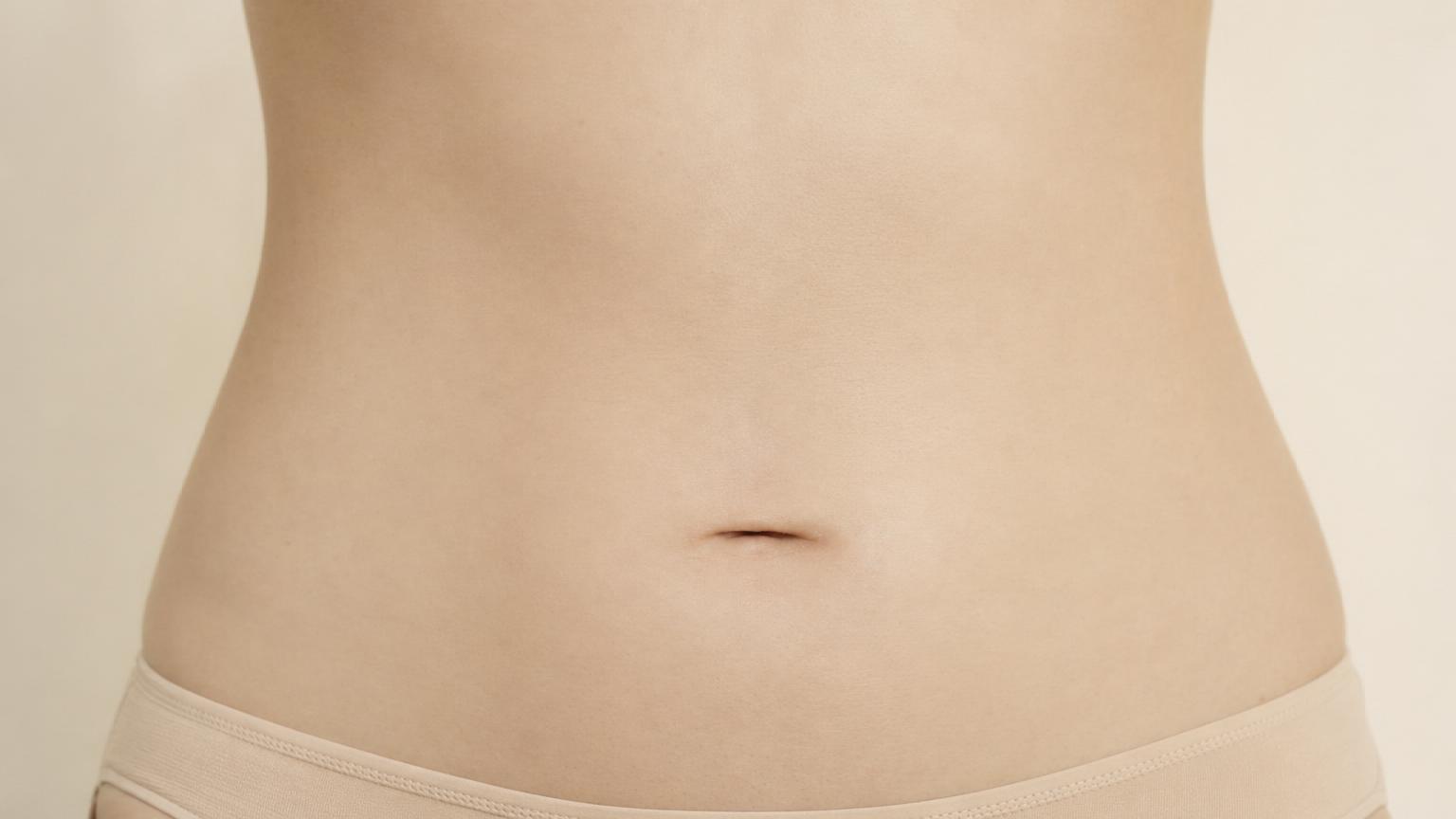
Less common but visually obvious once you know what to look for. The belly button is oriented horizontally rather than vertically, often sitting lower than the natural midpoint of the upper-to-mid abdomen. Patients describe it as looking “off” or “stretched” without being able to name why.
This often comes from significant weight gain followed by loss, from prior abdominal surgery that distorted the surrounding tissue, or simply from genetics. The fix is technically harder than Type 2. The surgeon has to lift the entire navel structure, rotate it ninety degrees, and re-anchor it slightly higher on the midline.
Patients with this presentation are usually counseled that the result is more dramatic but the recovery is slightly longer — three weeks of compression tape instead of two, and the surrounding skin takes longer to settle.
Type 4 — Post-pregnancy distortion
The fourth condition is its own category because it almost always involves more than just the navel. After pregnancy, the abdominal wall stretches, the rectus muscles can separate (a condition called rectus diastasis), and the belly button itself often takes on a stretched, asymmetric, or crater-like appearance.
The Korean surgeon evaluates this with a specific maneuver — having the patient lie flat and lift the head and shoulders against gravity. If the abdominal wall bulges along the midline above and below the navel, there is rectus diastasis. Doing umbilicoplasty alone in this situation produces an unsatisfying result because the underlying muscle separation is still there.
The standard Korean approach is a combined procedure — umbilicoplasty plus mini abdominoplasty (which addresses the rectus separation and removes a small amount of lower abdominal skin). This is significantly more involved than isolated umbilicoplasty, with one to two weeks of more pronounced recovery, but the result is structurally complete.
One cafe review from a post-pregnancy patient at one month described the transformation as “more than just the belly button — the whole lower abdomen looks tighter and more defined, which is what I wanted but didn’t know how to ask for.” That is the typical experience when the surgeon catches the rectus diastasis during the consultation.
Which Procedure Each Type Actually Gets
This is where the diagnosis becomes a treatment plan. The four conditions map to four distinct technical approaches.
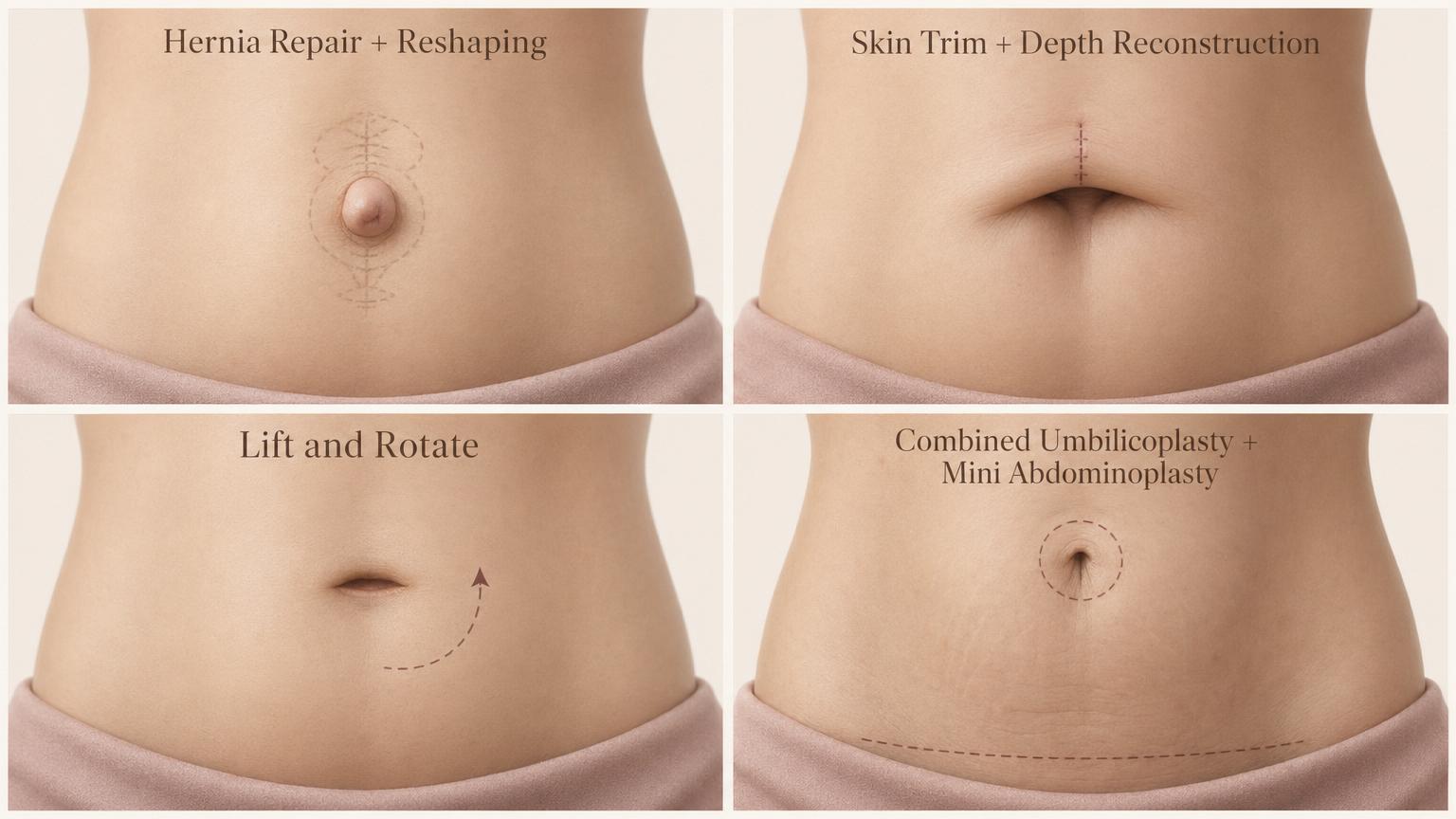
| Type | Procedure | Korea (KRW) | USD | Recovery |
|---|---|---|---|---|
| Type 1 — Outie | Hernia repair + reshaping | 3.5M – 5M | $2,600 – $3,700 | 2–3 weeks |
| Type 2 — Wide hooded | Skin trim + depth reconstruction | 2.5M – 4M | $1,800 – $3,000 | 2 weeks |
| Type 3 — Horizontal slit | Lift and rotate | 3M – 4.5M | $2,200 – $3,300 | 3 weeks |
| Type 4 — Post-pregnancy | Umbilicoplasty + mini abdominoplasty | 8M – 12M | $5,900 – $8,900 | 4–6 weeks |
Established Gangnam clinics that publish prices openly — including Link Plastic Surgery’s belly button surgery page — sit in the middle of these ranges. The cheaper quotes you see on app-based platforms typically exclude the design consultation, the post-op tape changes, or assume a junior surgeon rather than the senior one in the photos.
For Type 4 specifically, ask whether the consult evaluates rectus diastasis. If the surgeon does not check, that tells you which kind of clinic it is. A proper post-pregnancy plan often involves mini abdominoplasty alongside the navel work, and getting both at once costs less than two separate surgeries six months apart.
Recovery — What the One-Month Cafe Reviews Actually Show
Belly button surgery sits in an unusual recovery category. The procedure is short — usually one to two hours under sedation. But the area is under constant tension from posture, breathing, and clothing, which means the early recovery has more rules than patients expect.
Day 0 to Day 7 — the compression window
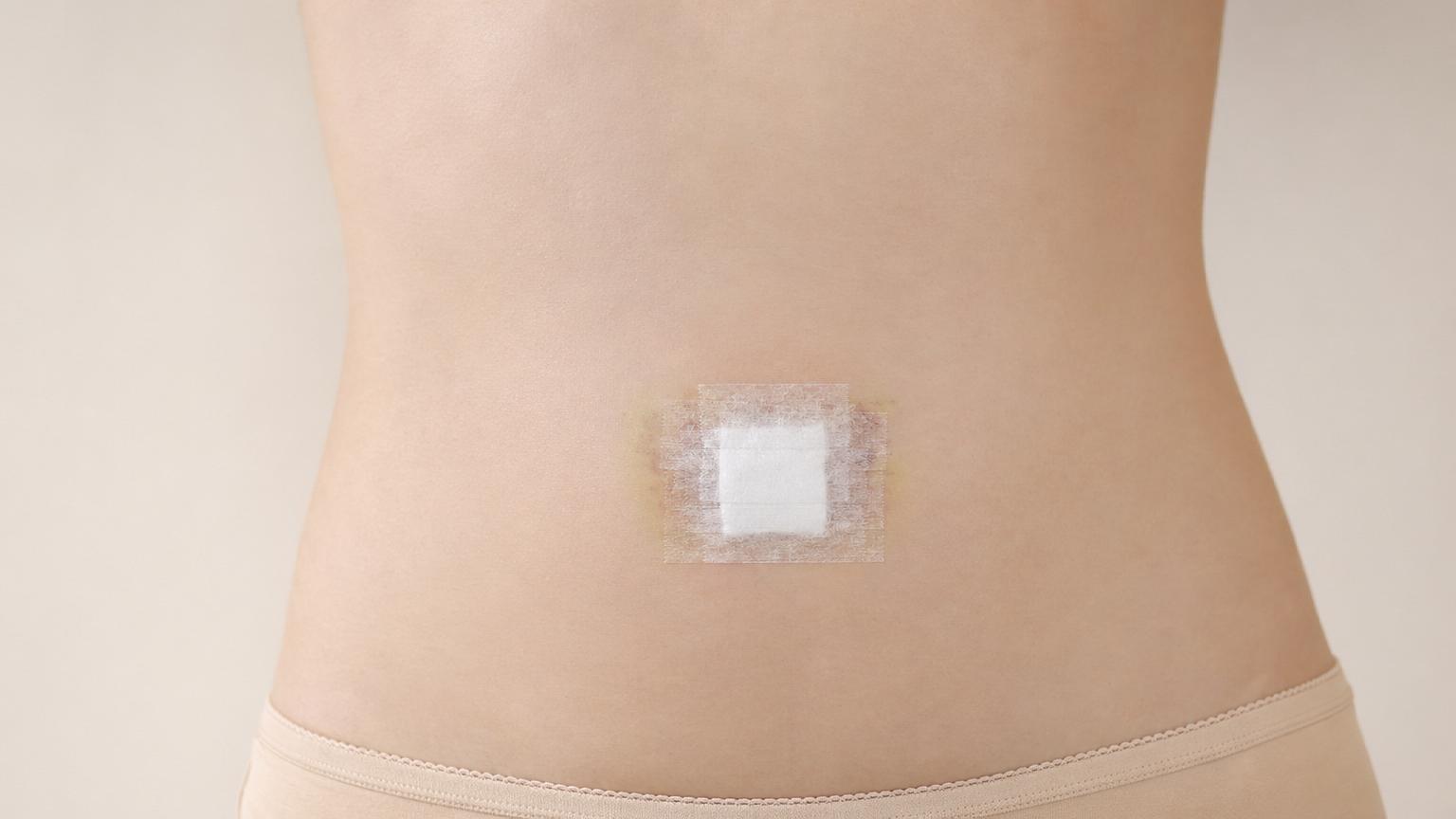
You leave the clinic with a small dressing over the navel and a soft compression band around the lower abdomen. The dressing stays in place for the first 48 hours, then gets changed at the clinic on day two or three. Most foreign patients schedule their follow-up tape change before flying out.
Stitches come out around day five to seven. By that point the bruising has faded from purple to yellow, the swelling around the navel has dropped noticeably, and the new shape is starting to be visible — though still under tape.
The catch with this stretch is sleeping. You cannot sleep on your stomach. Side-sleeping with a pillow between the knees is fine. Most patients find back-sleeping with a pillow under the knees most comfortable for the first week.
Day 8 to Day 21 — surgical tape and slow normalization
From day eight onward you wear surgical tape over the navel almost continuously, replacing it every two to three days. The tape does two things — it protects the new shape from clothing friction and it keeps gentle compression on the deeper sutures so they hold while they heal.
You can shower normally, but bathing in a tub, swimming, or any submerged-water activity is off-limits until week three. Light walking is encouraged from day one. Real exercise that engages the core (running, weights, yoga) waits until week four.
Multiple cafe reviews from Korean patients at the one-month mark describe roughly the same experience — by week three the tape is no longer mandatory, the shape looks settled, and friends can see the difference immediately. One reviewer noted that “by day 30, the belly button looks completely different — vertical, smaller, and the way I always wanted it to look in clothes.”
Month 1 to Month 3 — settling and final shape
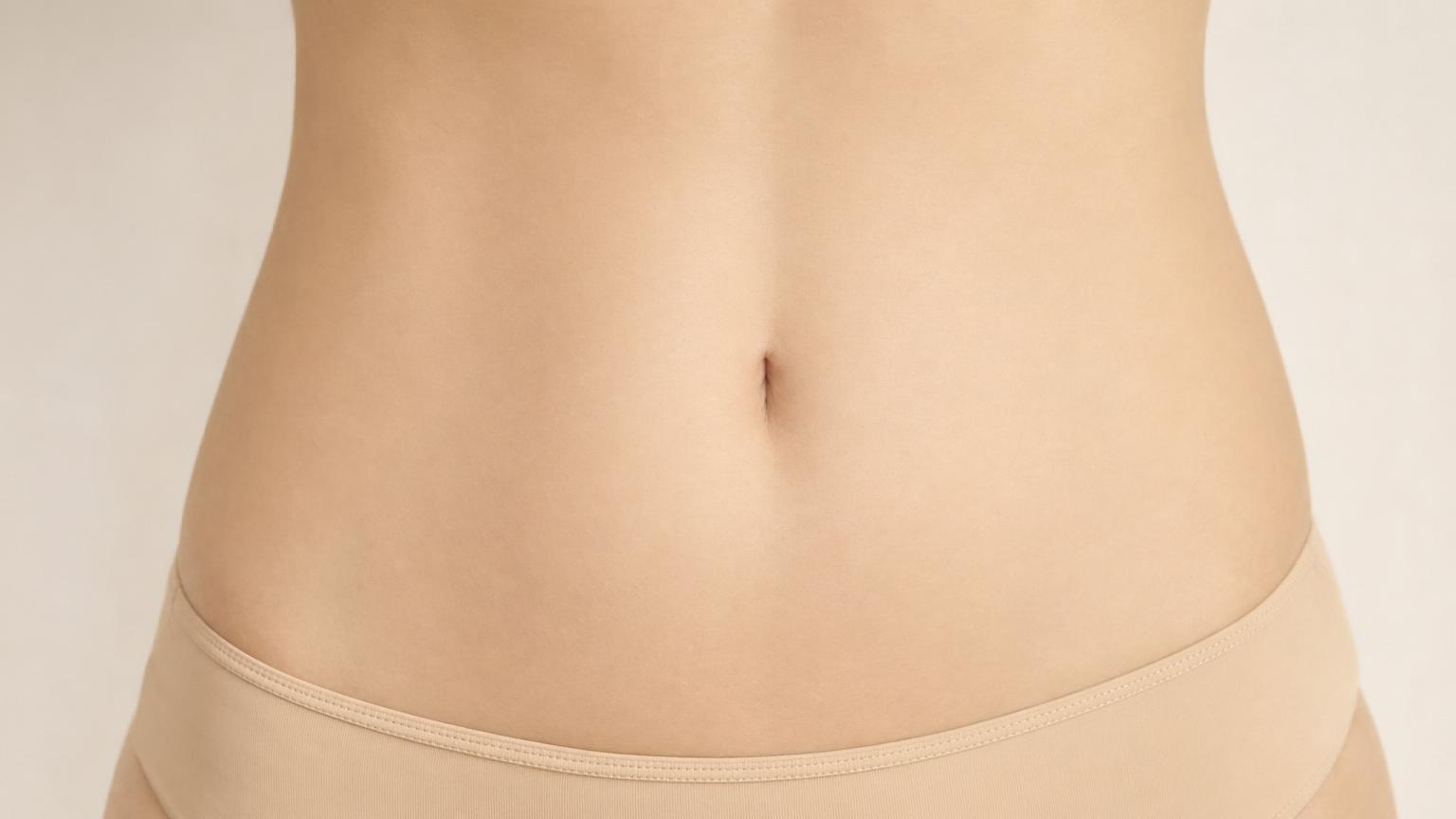
By the one-month mark the shape is roughly 90% settled. The remaining changes over months two and three are subtle — final scar fading, minor depth adjustments as the deeper sutures fully integrate, and the surrounding skin tone evening out. By month three the navel looks unequivocally different in clothing, swimwear, and any close-up photo.
The scar itself sits inside the navel rim and is invisible from any normal viewing distance. Patients in tight clothing or swimwear at month three consistently describe the result as looking like the natural belly button they wished they had been born with — which is exactly what good umbilicoplasty does.
Frequently Asked Questions
How do I know if I have an umbilical hernia or just a thick scar?
You usually cannot tell from looking. The Korean surgeon distinguishes them on the exam table by asking you to cough or strain — a hernia changes size with strain, scar tissue does not. If you have an outie, plan for a consultation that includes this physical exam before assuming it is purely cosmetic.
Will I have a visible scar?
The incision is hidden inside the new belly button rim. From any normal viewing distance there is nothing visible. Up close you can see a thin pale line along the inner edge of the navel after about three months. Most patients describe it as “you have to know exactly where to look.”
Can I combine belly button surgery with liposuction?
Yes, and Korean surgeons do this combination frequently for patients in their thirties and forties. Lower abdominal liposuction sharpens the contour and the belly button reshape gives the focal point. Recovery is slightly longer (three to four weeks instead of two) but it is one anesthesia and one healing period.
Is this safe after C-section?
Yes, but the timing matters. Most surgeons recommend waiting at least one year after a C-section before umbilicoplasty, longer if you are still breastfeeding. The C-section scar itself does not interfere with the navel surgery, but the abdominal tissue needs full settling time before reshaping.
How long until I can fly home?
Day seven is the realistic earliest comfortable flight day. The compression band and surgical tape stay in place for the flight, which is fine for security and clothing. Stay an extra two days if you can — the day-five tape change is genuinely useful and gives the surgeon a chance to confirm everything is healing correctly before you are 5,000 miles away.
Will it look natural?
If the surgeon designs an appropriately sized navel for your body proportion, yes. The “obviously surgical” results you see online almost always come from over-narrowing — a navel that is too small for the torso. A good Korean surgeon picks a width and depth that suits your specific body, not a one-size-fits-all template.
How do I find the right Korean surgeon for this?

Look for a board-certified plastic surgeon (성형외과 전문의) who lists belly button surgery as a focused specialty rather than a side offering. Ask to see their personal before-and-after gallery — not the clinic’s general portfolio — and pay attention to whether the gallery includes all four belly button types or just the wide-hooded type. A surgeon who only shows Type 2 results probably only does Type 2 surgeries, which is fine if that is what you have but limiting if you have anything else. Several Gangnam clinics — including Link Plastic Surgery — publish individual surgeon galleries that span all four conditions, which is a reasonable filter.
If a clinic shows you the price before they have examined your specific belly button on the table, walk out. The four types need four different conversations.
Recommended for Your Recovery
Products patients commonly use during the surgical-tape recovery window — same items routinely included in the post-op kits Seoul clinics hand out at discharge.
- Arnica Montana Tablets — start 3 days before surgery to reduce bruising around the navel area and lower abdomen. Check price on Amazon
- Silicone Scar Sheets — cut to size and apply over the inner navel rim from week 3 onward to optimize how the internal scar matures. Check price on Amazon
- Bromelain Supplement (500mg) — natural anti-inflammatory commonly recommended by Korean clinics for lower-abdominal procedures to speed swelling resolution. Check price on Amazon
- Beauty of Joseon Relief Sun SPF 50+ — lightweight Korean sunscreen for the healing scar line once tape is no longer needed (week 4 onward) to prevent post-inflammatory pigmentation. Check price on Amazon
As an Amazon Associate, GlobalBeautySpot earns from qualifying purchases at no extra cost to you.