The Implant Choice You Make in Seoul Is Probably Already Decided Before You Walk In
Most foreign patients flying to Seoul for breast augmentation arrive with a preformed comparison in their head — Motiva versus Mentor versus Sebbin versus Allergan, plus whatever specific brand their home-country surgeon mentioned. They expect a long discussion in the consultation room about which brand to use.
That discussion rarely happens. At most established Gangnam clinics with focused breast augmentation practices, a single brand has become the default for international patients — and once you understand why, the comparison-shopping mindset starts feeling like the wrong frame for the decision.
This guide explains what that default Korean choice actually is, why Korean surgeons standardized on it for foreign patients, what the surgical approach looks like, and what recovery actually feels like at day one, day fourteen, day thirty, and day ninety.
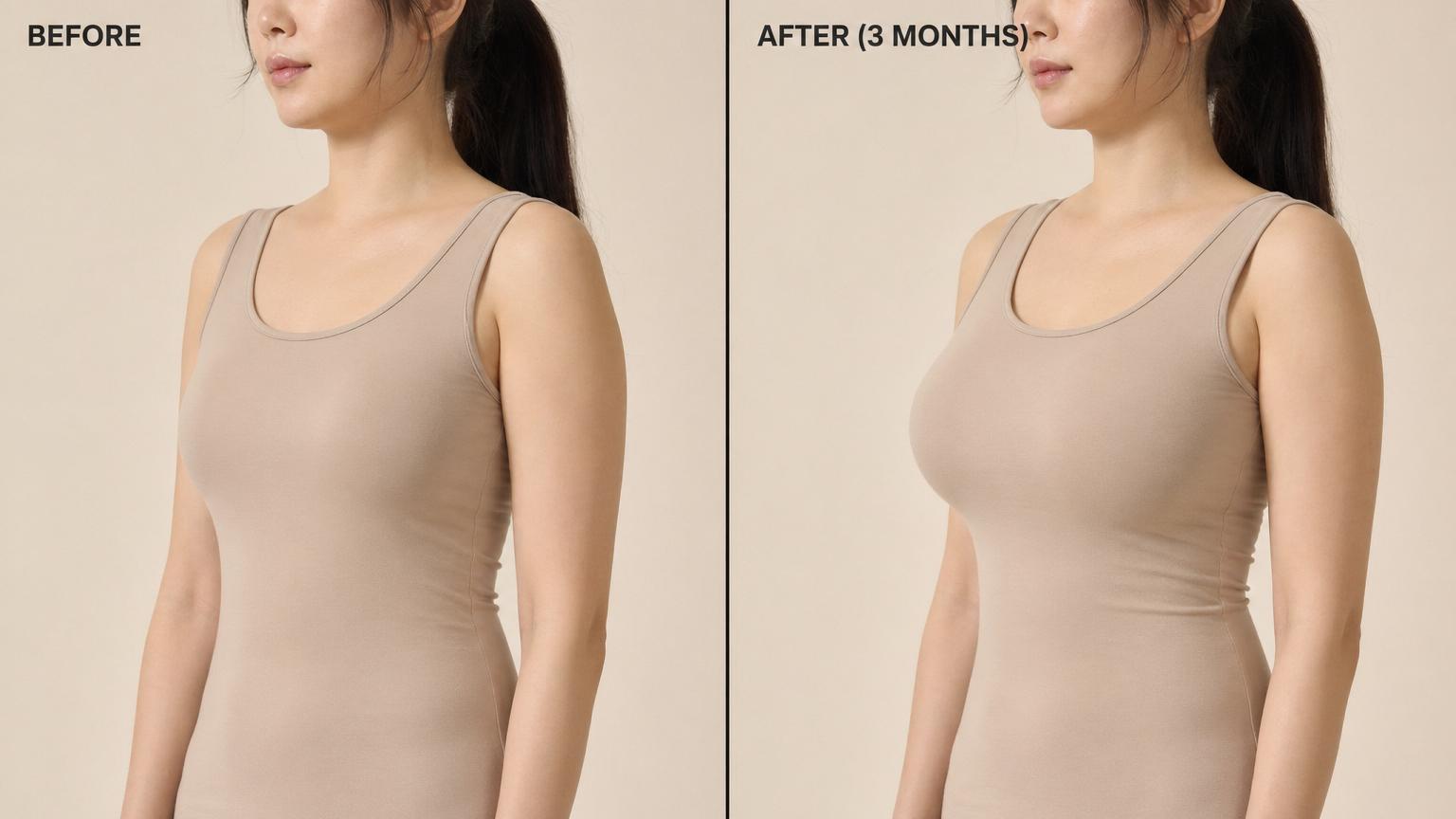
- Most established Gangnam clinics with focused breast augmentation practices default to Mentor MemoryGel Xtra implants for international patients.
- The choice is not random — it is driven by FDA approval status, long-term safety data, the gel cohesivity profile most Korean surgeons prefer, and a recovery timeline that holds up well across foreign body types.
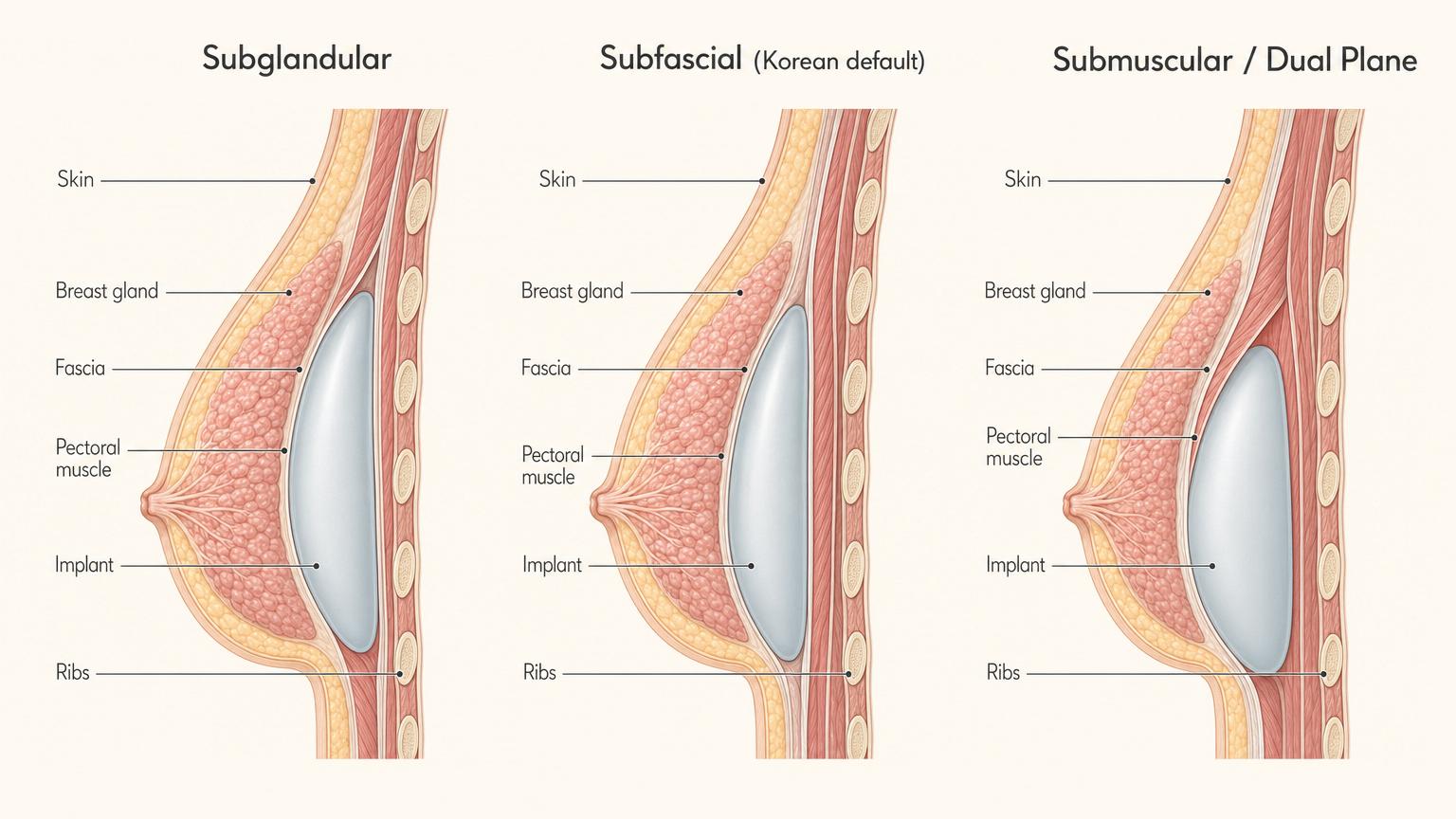
- The standard Korean surgical approach is an IMF (inframammary fold) incision with a subfascial or dual-plane pocket — both of which Mentor’s gel cohesivity is well-suited for.
- Sizing in Korea is typically 200–350cc for foreign patients, calibrated to the existing breast width and rib cage rather than to a fixed cup-size goal.
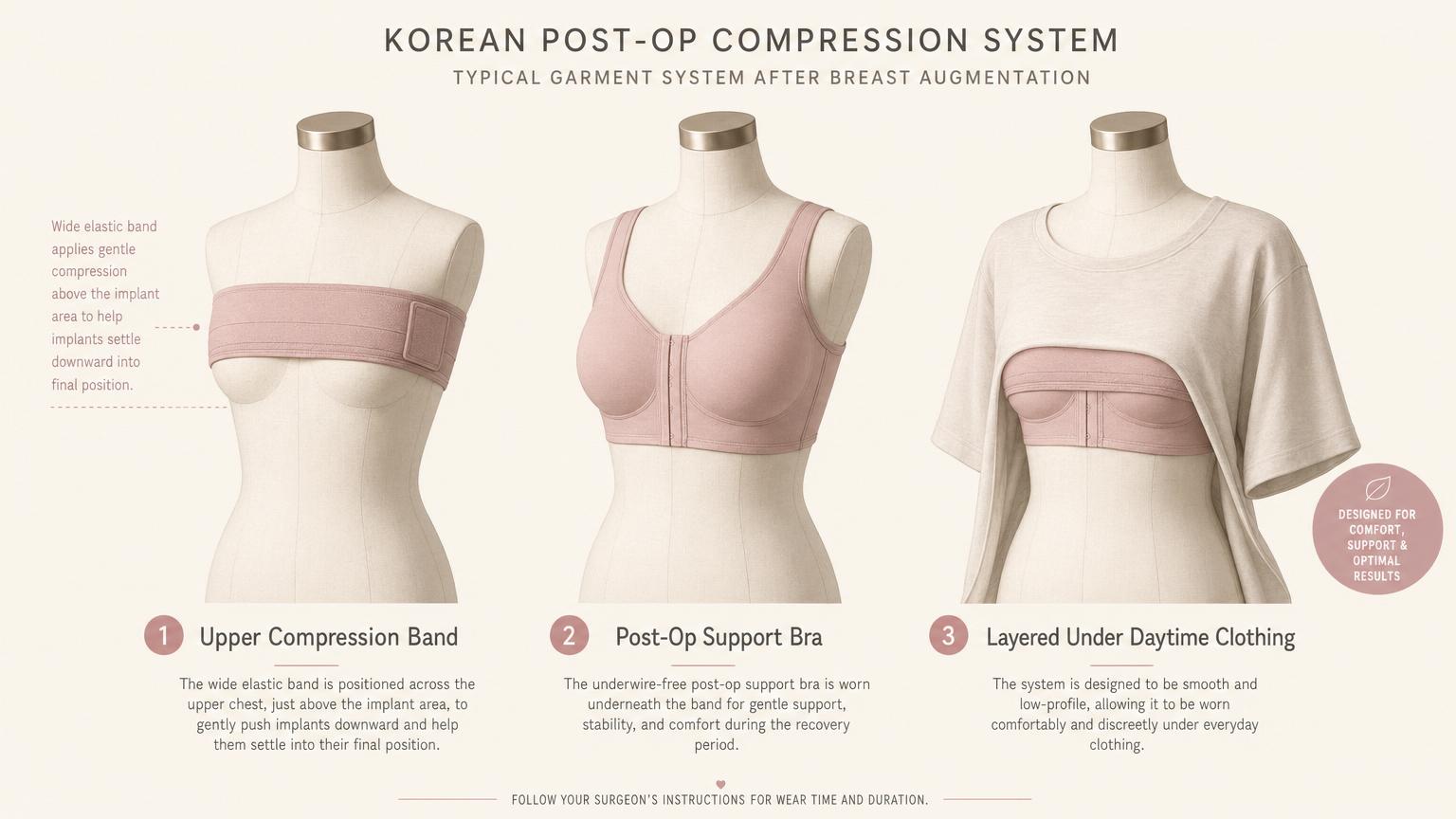
- Recovery: compression band for the first 3–4 weeks, capsular contracture medication for the first month, gentle massage from day 14 onward, return to office work at day 7–10, return to full exercise at week 6.
- Korean prices: KRW 7M–11M for primary breast augmentation with Mentor (USD 5,200–8,200), versus USD 8,000–14,000 in the U.S. and AUD 12,000–18,000 in Australia.
- 13 Korean cafe reviews from one Gangnam clinic community describe the same surgeon, the same Mentor MemoryGel Xtra implant, and the same IMF subfascial approach — including two reviews written in English by non-Korean patients.
Why Mentor Became the Korean Default for International Patients
Korean breast augmentation as a market is more competitive than most foreign patients realize. There are dozens of established clinics within walking distance in Gangnam, all running similar volumes of cases. The implant brand a clinic uses is one of the few decisions that gets standardized across an entire surgical practice rather than left to per-case discussion.
Most established clinics with a focused breast augmentation practice have settled on Mentor — specifically the MemoryGel Xtra series — as the international-patient default. The reasoning shows up consistently when surgeons explain it.
FDA approval and long-term data
Mentor’s silicone gel implants have been continuously FDA-approved in the U.S. market since 2006, with the longest published peer-reviewed long-term safety data of the major implant lines. Korean surgeons treating international patients want a brand the patient can verify independently in their home market — and Mentor is the brand most likely to be FDA-listed in any country the patient might fly back to.
This matters more than it sounds. A patient flying home to the U.S., Australia, the UK, or any European country can walk into a local plastic surgeon for follow-up care and have the implant brand recognized immediately. Less common brands sometimes require additional documentation or coordination with the original Korean clinic. Mentor avoids that friction.
The gel cohesivity profile
Mentor MemoryGel Xtra uses a more cohesive silicone gel than the standard MemoryGel line — meaning the gel holds its shape under pressure with less rippling and less risk of gel migration if the shell were ever damaged. This profile suits the Korean surgical preference for tighter pocket dissection and slightly more projection-forward results.
It also handles the IMF (inframammary fold) incision approach particularly well, because the gel maintains its shape during insertion through a smaller incision than older-generation implants required.
Recovery profile that holds up across body types
The third reason is more practical than technical. International patients flying to Seoul have wider variation in body types, rib cage proportions, and skin elasticity than the Korean patient population. Mentor MemoryGel Xtra has the most consistent recovery profile across that variation — meaning the surgeon can predict the recovery timeline and capsular contracture risk roughly the same way for a Korean patient and an Australian patient.
Two cafe reviews from non-Korean patients at one Gangnam clinic community describe almost identical experiences three months and two months post-op — both noting the staff and surgeon were “very nice and gentle” and describing standard recovery curves. Both used the same Mentor MemoryGel Xtra implant via the same IMF subfascial approach. The fact that the surgeon could reproduce that experience across patients from different body types is part of why the brand became the default.
The Surgical Approach — IMF, Subfascial, and Why Korean Surgeons Prefer This Combo
Choosing the implant is half the surgical plan. The other half is the incision location and the pocket placement. Korean clinics with focused breast augmentation practices have largely standardized on a specific combination — and it is not the same as the U.S. default.
The IMF (inframammary fold) incision
The incision sits in the natural skin crease where the breast meets the chest wall. After healing it disappears into the crease and is invisible from any standing angle. The patient can see it only when lifting the breast manually in good light. Most patients describe it as “I have to know exactly where to look.”
The IMF approach is preferred over the periareolar (around the nipple) incision in Korea for two reasons. First, it does not interfere with milk ducts or nipple sensation, which matters for younger patients who may breastfeed in the future. Second, it gives the surgeon the cleanest direct visualization of the pocket dissection, which translates into more consistent pocket precision.
Trans-axillary (through the armpit) incisions are technically possible but rarely chosen at established Korean clinics for primary cases because the visualization compromises pocket precision and the scar is visible whenever the patient raises her arms.
The subfascial pocket — the Korean compromise
Most Korean clinics default to a subfascial pocket — the implant sits below the thin fascia layer over the pectoralis major muscle, but not behind the muscle itself. This is a deliberate compromise.
The subglandular pocket (above the muscle, below the gland) gives a fuller, more projected look but is associated with higher rippling and capsular contracture rates over a 10-year window. The fully submuscular pocket (behind the muscle) gives the most natural-looking result but causes longer recovery, more visible animation deformity (the implant moving with chest contractions), and tighter early constraint on upper body exercise.
Subfascial sits between these — the fascia layer provides additional soft-tissue coverage that reduces rippling visibility, while keeping the implant out from behind the muscle so animation deformity is minimal and recovery is faster than fully submuscular cases.
For patients with thin soft-tissue coverage, some Korean surgeons switch to dual plane (the upper third of the implant behind the muscle, the lower two-thirds in the subfascial layer). This is a per-patient adjustment, not a clinic-wide default.
What the cafe reviews show consistently
13 Korean cafe reviews at one Gangnam clinic community describe almost identical surgical plans:
- Mentor MemoryGel Xtra implants (referred to in Korean as “멘토엑스트라” or “Mentor Extra”)
- IMF incision (referred to as “밑선절개”)
- Subfascial pocket (referred to as “근막하” — literally “below fascia”)
- Sizing range: 200–350 cc, with most cases falling in the 215–265 cc range
- Same surgeon (a senior surgeon at one specific clinic) across all 13 cases
The consistency is striking. It tells you the clinic has a default plan and applies it across foreign and Korean patients alike, with size calibrated to the individual but the structural decisions standardized.
What Recovery Actually Looks Like — Day 1 to Month 3
The recovery curve is what separates breast augmentation from most other plastic surgery procedures. The first week is more uncomfortable than rhinoplasty or eyelid surgery, and the full settling takes longer. Knowing what each phase actually feels like prevents the panic that typically hits at week two when the implants still feel “wrong” — which is the universal experience.
Day 0 to Day 7 — the compression band phase
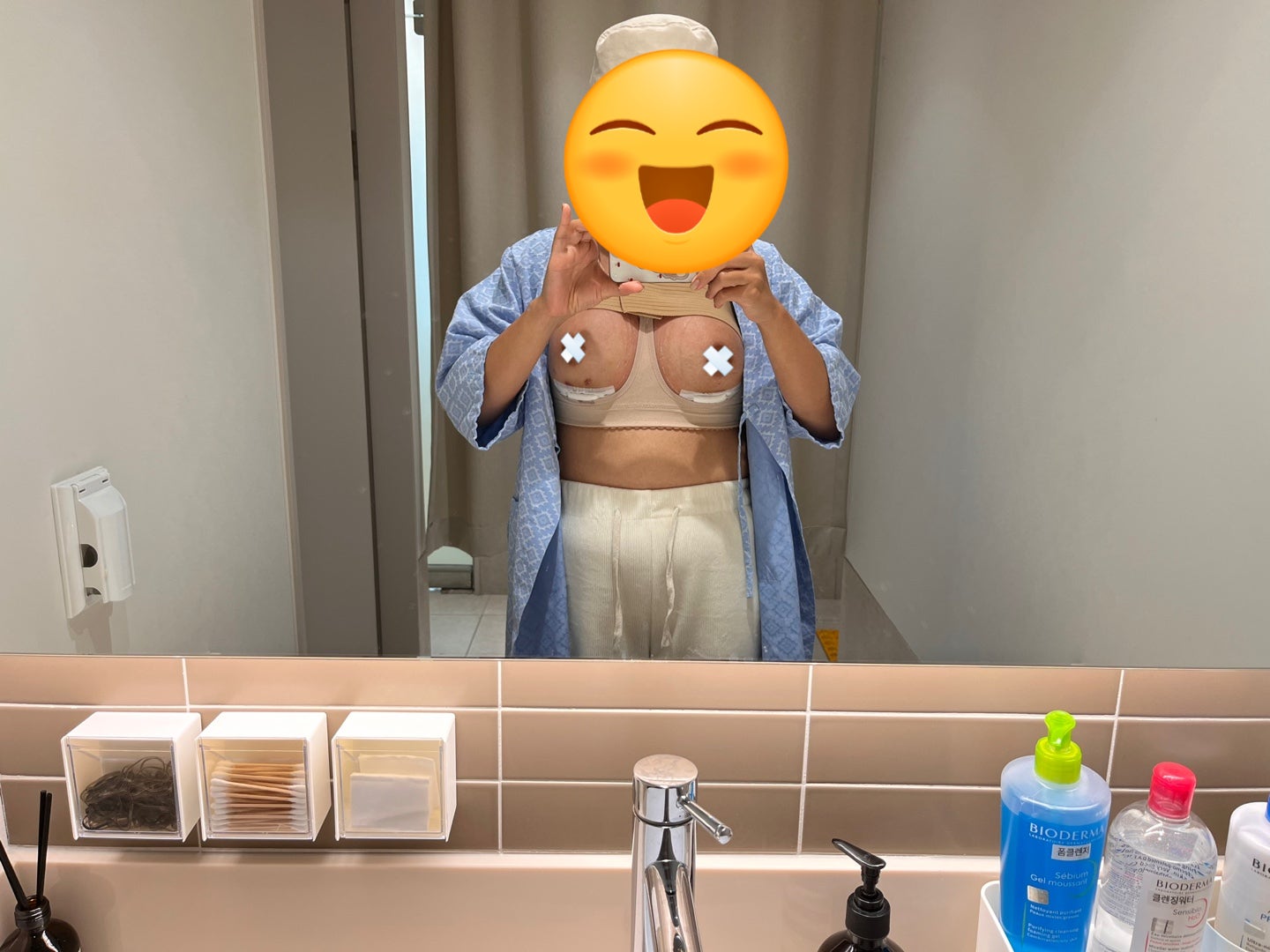
You leave the clinic with a snug compression band wrapped above the breasts to push the implants down toward their final settled position, plus a bra stabilizer band underneath. These stay on continuously for the first 3–4 weeks except during showers (after day 3).
The first 48 hours are the most uncomfortable — chest tightness, mild burning sensation along the IMF incision, difficulty raising arms above shoulder level. Pain medication is mandatory for the first 3 days, optional from day 4 onward. Sleeping on the back with a pillow under the knees is the only realistic position for week one.
Most cafe reviews describe day 7 as “the day I started feeling human again.” The compression band stays on, the incisions are still tender, but the bone-deep chest tightness has eased meaningfully. International patients flying home around day 7–10 do so with the compression band visible under loose clothing.
Day 8 to Day 30 — the awkward middle
This is the period that catches new patients off guard. The implants feel “high” and “tight” — sitting higher on the chest than they will ultimately settle. Patients describe it as “they look like they belong to someone else.” The breasts can feel cold to the touch (reduced blood flow to the overlying skin while everything heals) and the upper pole feels firm.
None of this is wrong. All of it is the universal recovery curve for sub-fascial implants. The implants drop into their final position over weeks 3–6 — what surgeons call “drop and fluff” — as the muscle and fascia relax around them and the natural breast tissue redrapes over the new structure.
Cafe reviews at the day-14 mark consistently describe the same observation — “still firm, still feels high, but starting to soften and feels less foreign every day.” Reviews at the day-30 mark describe the breasts as “much softer, the right side a bit ahead of the left, sleeping on the side now possible with a pillow.”
Day 90 — settled and softer
By the three-month mark the implants have largely dropped into their final position. The breasts feel much softer, the IMF incision has matured into a thin pale line that is difficult to see without lifting the breast in good light, and the patient has been back to full exercise for several weeks.
One cafe review at day 90 noted the standard observations — bruising fully resolved, swelling gone, breast tissue settled, IMF scar fading, and “the bone tightness from week one is genuinely gone.” That matches the textbook three-month settled state.
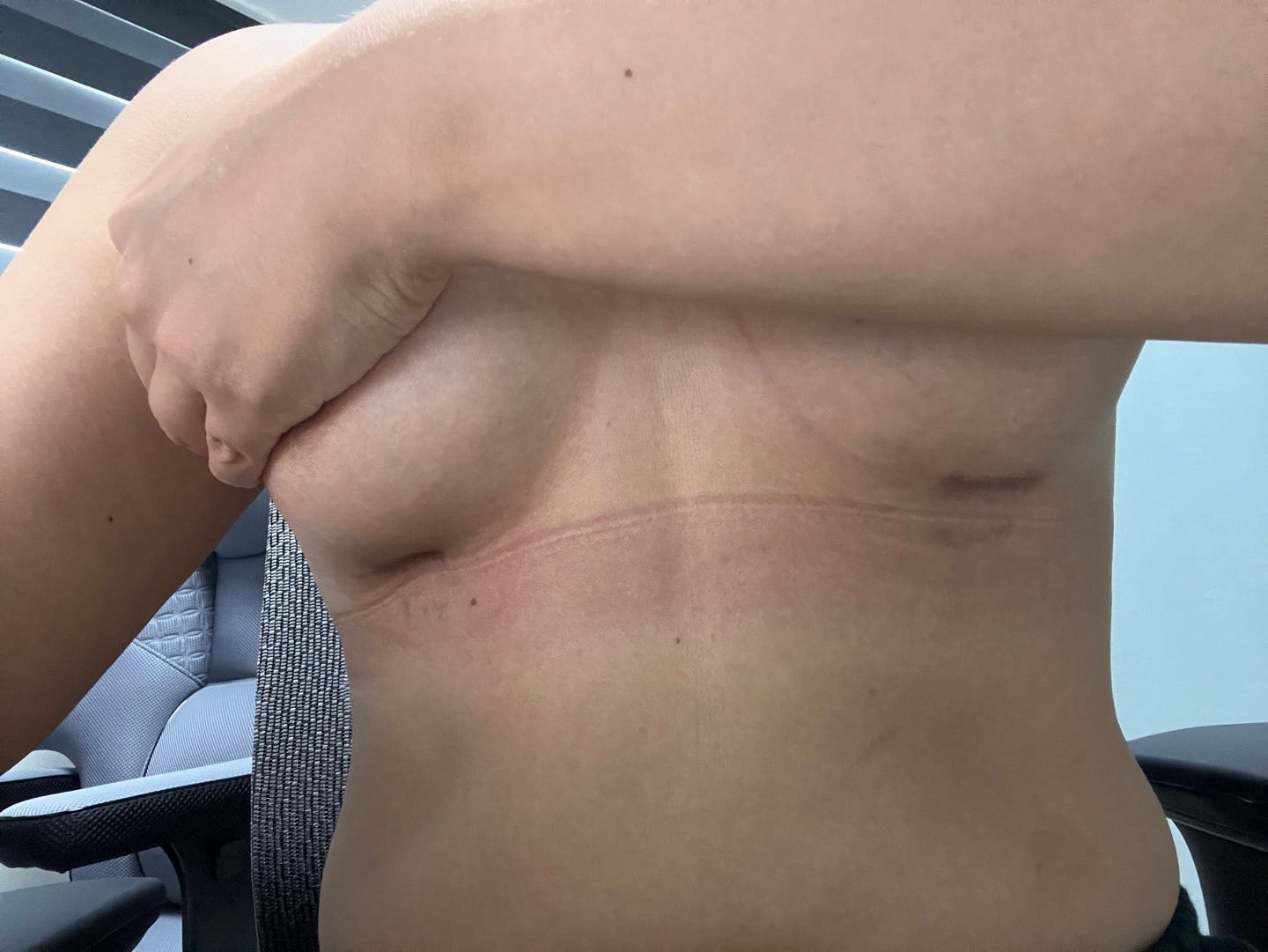
Final settled appearance and texture continue improving subtly through months 4–6, with the very last refinements (soft tissue redraping, scar maturation to its final pale color) happening between months 6 and 12.
What It Costs and How to Find the Right Korean Clinic
Korean breast augmentation pricing is comparatively transparent — unlike rhinoplasty where pricing varies dramatically by surgeon seniority, breast augmentation prices at established clinics fall into a relatively narrow band.
| Procedure | Korea (KRW) | USD | U.S. comparable | Australia comparable |
|---|---|---|---|---|
| Primary aug, Mentor MemoryGel Xtra | 7M – 11M | $5,200 – $8,200 | $8,000 – $14,000 | AUD 12,000 – 18,000 |
| Revision (capsular contracture, replacement) | 9M – 14M | $6,700 – $10,400 | $10,000 – $20,000 | AUD 15,000 – 25,000 |
| Augmentation + Mastopexy (lift) | 10M – 15M | $7,400 – $11,200 | $12,000 – $20,000 | AUD 18,000 – 25,000 |
| Removal-only (en-bloc capsulectomy) | 5M – 9M | $3,700 – $6,700 | $6,000 – $12,000 | AUD 9,000 – 15,000 |
Established Gangnam clinics that publish surgeon-specific galleries — including Link Plastic Surgery’s breast surgery page — sit in the middle of these ranges. Cheaper quotes from app-based platforms typically exclude the design consultation, the 3-month follow-up sessions, the compression garment kit, or assume a junior surgeon rather than a senior breast augmentation specialist.
The price-shopping mistake foreign patients make most often is comparing only the surgery fee. The Korean experience expects 3–5 in-person follow-up visits in the first month, and an established clinic includes those. A cheap quote that skips them costs more in coordination friction over the year.
How to verify a clinic is right for you
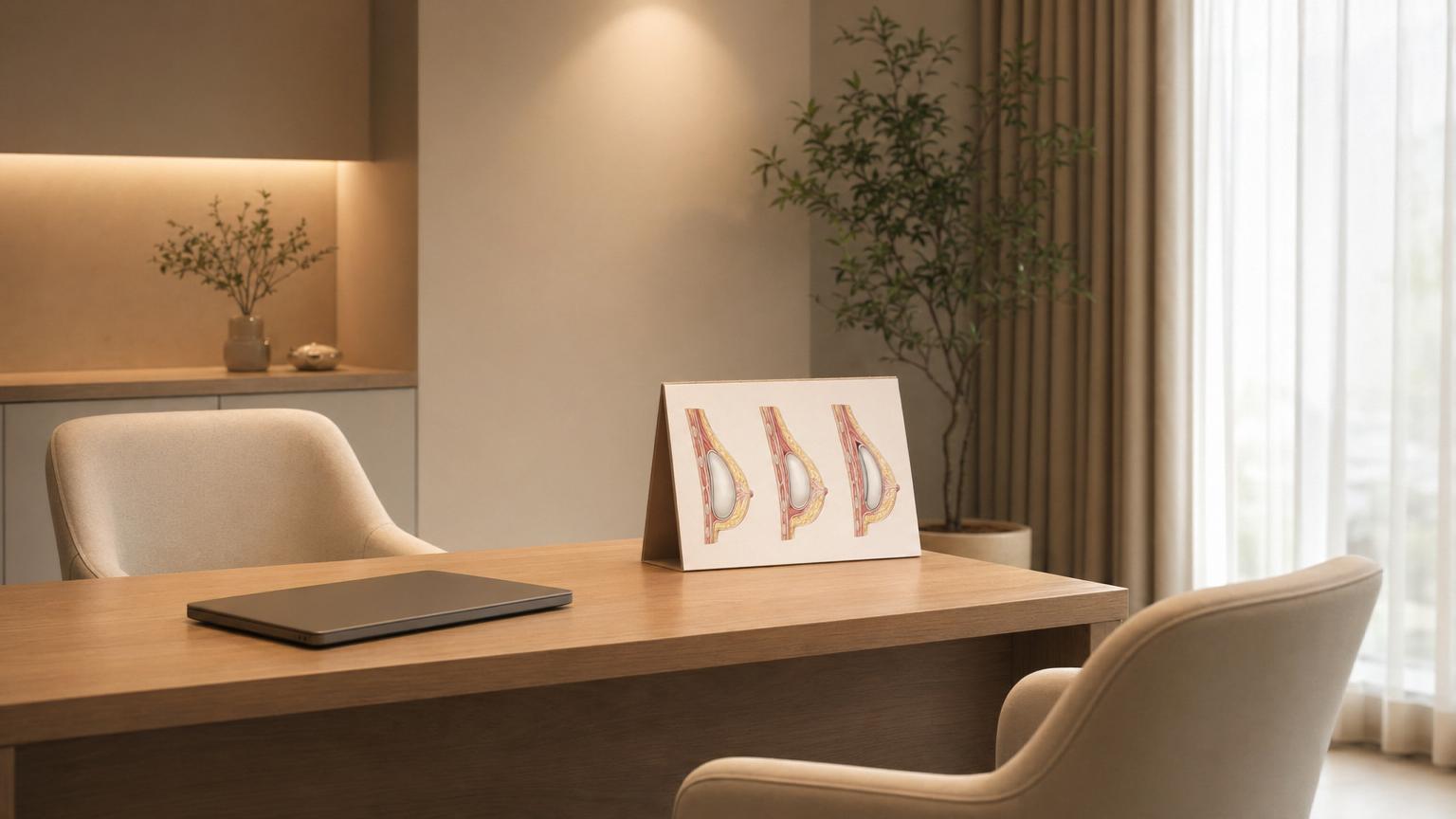
A few specific questions separate clinics that are right for international primary breast augmentation patients from clinics that simply accept them:
- Does the surgeon assigned to you (not just “the clinic”) have a published gallery of breast augmentation cases that includes both Korean and non-Korean patient body types? Several Gangnam clinics — including Link Plastic Surgery — publish individual surgeon galleries that allow this verification.
- Is Mentor MemoryGel Xtra the standard implant offered, or is the clinic pushing alternatives that may not be FDA-listed in your home country?
- Is the surgical approach clearly stated as IMF subfascial (or dual plane for thin-coverage patients), with a specific reason given for any deviation?
- Does the clinic include 3+ in-person follow-up visits in the quoted price, or are those billed separately?
- Is there a remote follow-up protocol (KakaoTalk, WhatsApp, email) for after you fly home, with photos sent at week 2, month 1, and month 3?
If a clinic answers most of these clearly without you having to push for specifics, that is the kind of clinic foreign patients should consider. If the answers are vague or deflect to “you can ask in the consultation,” that is a signal to look elsewhere.
Recommended for Your Recovery
Products patients commonly use during the breast augmentation recovery window — same items routinely included in the post-op kits Seoul clinics hand out at discharge.
- Arnica Montana Tablets — start 3 days before surgery to reduce bruising around the IMF incision and along the lower chest area. Check price on Amazon
- Bromelain Supplement (500mg) — natural anti-inflammatory commonly recommended by Korean clinics for breast augmentation patients to speed swelling resolution. Check price on Amazon
- Silicone Scar Sheets — cut to size and apply along the IMF incision line from week 3 onward to optimize scar maturation. Check price on Amazon
- Beauty of Joseon Relief Sun SPF 50+ — lightweight Korean sunscreen for the healing IMF scar from week 4 onward to prevent post-inflammatory pigmentation along the lower breast crease. Check price on Amazon
As an Amazon Associate, GlobalBeautySpot earns from qualifying purchases at no extra cost to you.
Frequently Asked Questions
Is Mentor MemoryGel Xtra the same Mentor I would get in the U.S.?
Yes — Mentor is a U.S.-based company (now owned by Johnson & Johnson MedTech), and the MemoryGel Xtra series sold in Korea is the same product line sold in the U.S. and most other major markets. The serial numbers and product cards you receive after surgery are identical and your home-country plastic surgeon can verify them.
Will I be able to breastfeed after Mentor breast augmentation in Korea?
Almost always yes. The IMF subfascial approach does not cut milk ducts, the gland tissue, or the nerves to the nipple. Studies on Mentor implants specifically and on subfascial placement generally show breastfeeding rates very close to the rate in women who never had augmentation. The periareolar incision approach has higher impact on breastfeeding — which is part of why the IMF approach is preferred in Korea.
How long do Mentor implants last?
Mentor’s published warranty and FDA-approved labeling describe the implants as not lifetime devices but with no required replacement timeline absent complication. Most patients keep them for 15–25 years before considering replacement, and many keep them longer. The decision to replace is usually driven by capsular contracture, gradual change in implant shape, or the patient simply wanting a different size — not by a fixed expiration date.
What is capsular contracture and how do I avoid it?
The body forms a thin scar capsule around any implant — that is normal. Capsular contracture is when that capsule tightens abnormally, making the breast feel firm or look distorted. Korean clinics prescribe a 4-week course of leukotriene-receptor antagonist medication after surgery to reduce the rate, and recommend gentle massage from day 14 onward. Following the protocol drops the rate meaningfully — most established clinics report rates well under 5% over a 5-year window with their standardized protocol.
Can I see the surgeon’s specific Mentor case gallery before booking?
Yes, you should. Established clinics with international patient programs publish surgeon-specific galleries, and any clinic that does not show you the specific surgeon’s results — separately from generic clinic marketing photos — is a clinic to question. Several Gangnam clinics including the one referenced in the cafe community above publish this clearly.
How long do I need to stay in Korea after surgery?
Minimum 7 days. Recommended 10–14 days. The first follow-up at day 3, the suture check at day 5–7, and the first compression-band adjustment at day 10 all need to happen in person. Flying out earlier is technically possible but you lose the structured early follow-up that catches early complications.
Is the IMF scar visible in a bikini or low-cut top?
Not in any normal viewing position. The scar sits in the natural breast crease and is visible only when the breast is lifted manually in good light. After 3–6 months it fades to a pale line that most patients describe as “I have to know exactly where to look.” Bikinis, swimwear, and low-cut tops do not expose it because the crease itself stays covered by the breast.
What if I want to push back on the Mentor choice?
Push back is fine and a good clinic will explain the alternatives. If you specifically want Motiva (popular in Australia), Sebbin (popular in France), or another brand, ask in the initial inquiry email — not in the in-person consultation, where switching brands at the last minute is logistically difficult. Some Korean clinics will accommodate alternative brand requests for international patients with advance notice, and some will not. Confirm before flying.