She booked a four-day trip to Seoul and a long list of procedures, then sat in the consultation realizing her plan was impossible. She had wanted a thread lift and lower-eyelid surgery before a wedding back home the following week, not understanding that one needs a couple of weeks to look settled and the other has swelling that takes months to fully resolve. Her four days were fine for the filler and laser she also wanted, but the surgery and the wedding could not share the same fortnight. The clinic helped her restructure: do the quick-recovery treatments now, plan the surgery for a separate, longer trip. The consultation at Link Plastic Surgery often starts by matching the procedure’s recovery to the trip, because downtime varies enormously by type.
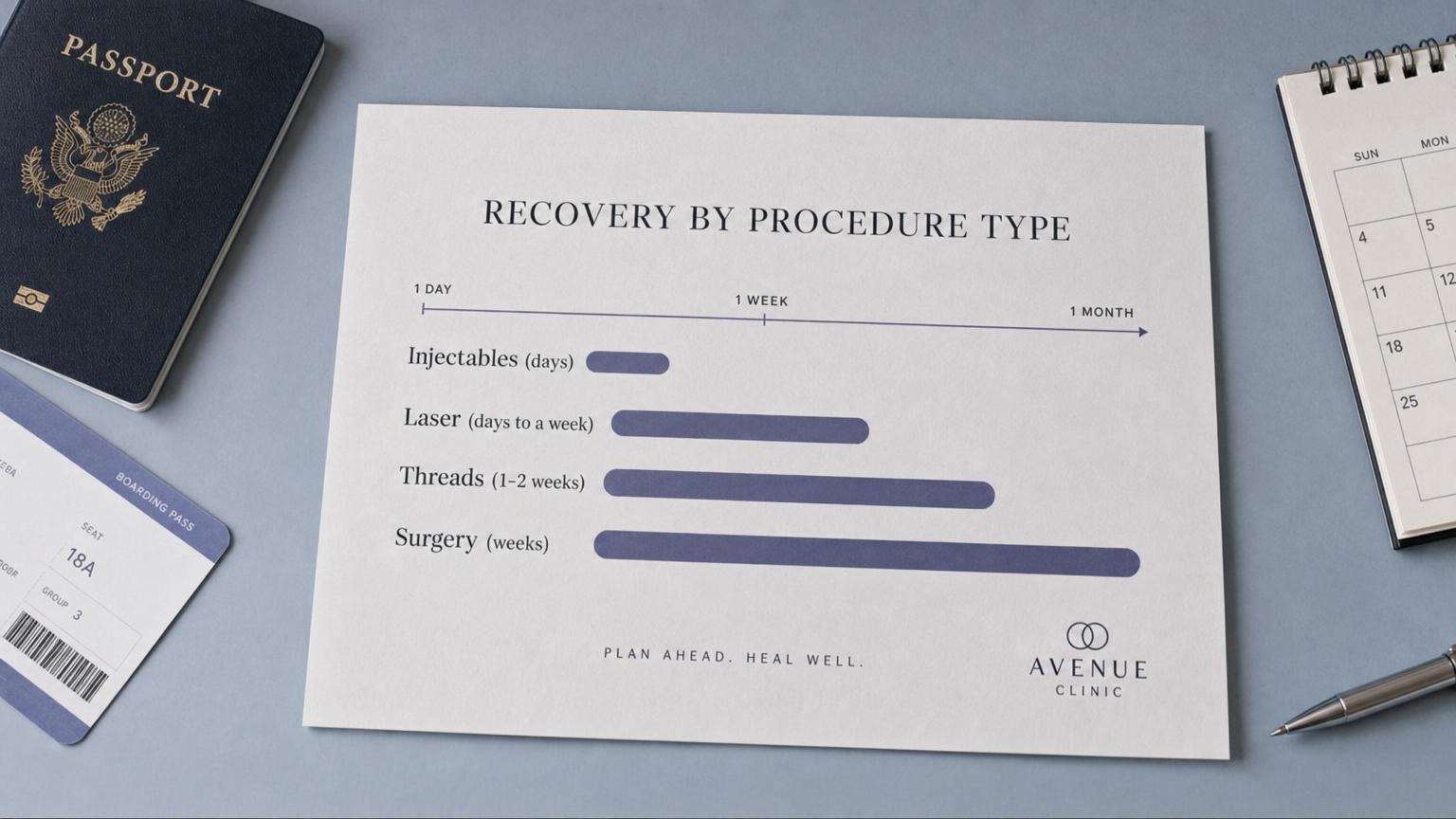
Recovery is the part international patients most often underestimate, and it is wrapped in a costly misconception: that downtime is roughly similar across procedures, or that you can fit anything into a short trip. In reality, recovery ranges from hours to weeks depending on the type of procedure, and there is a crucial difference between when you look presentable and when the final result settles. Understanding the four broad recovery categories, and planning the trip around the longest item rather than the shortest, is what keeps a Seoul plan realistic.
Four Recovery Categories
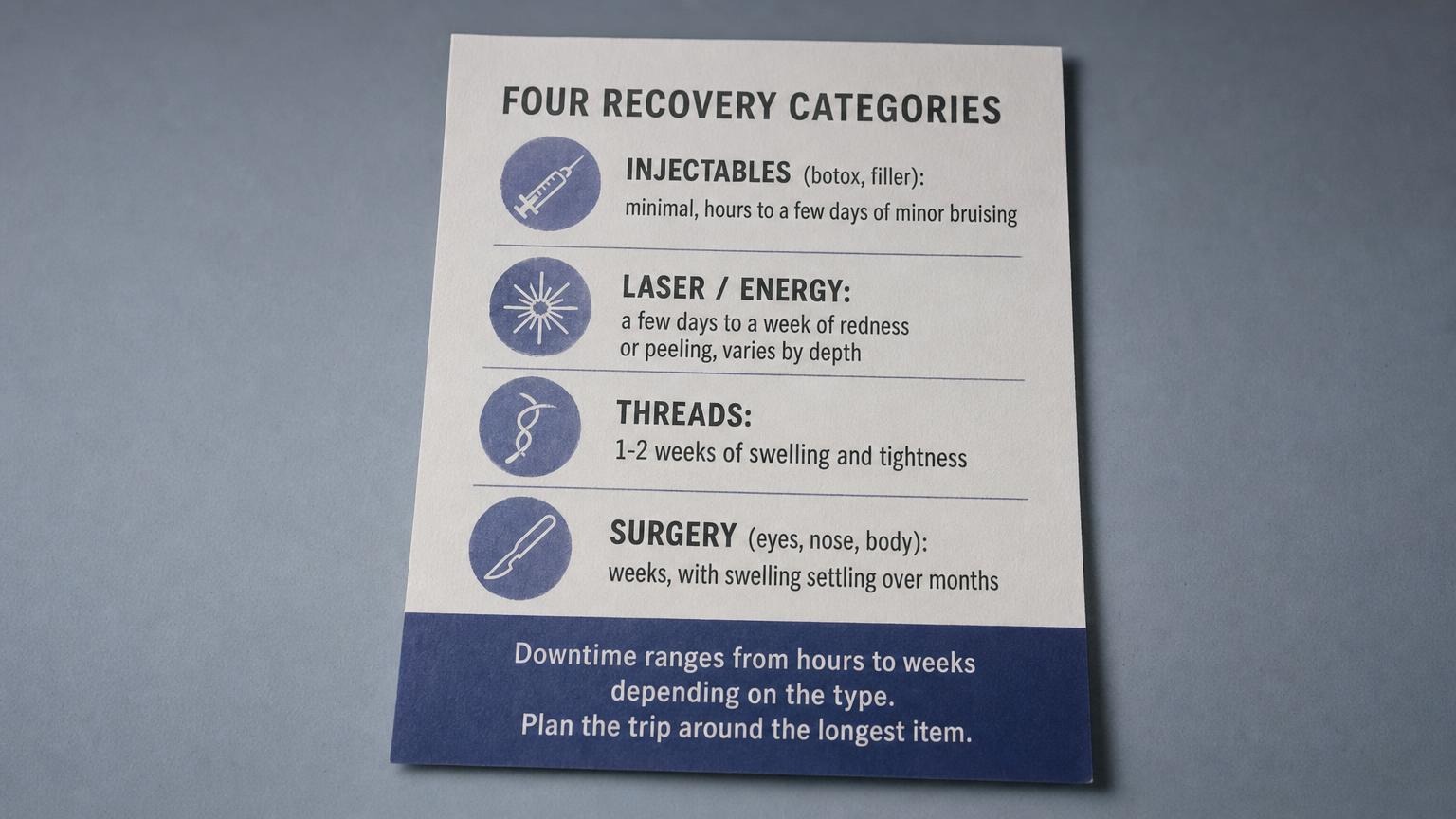
Procedures fall into four broad recovery categories, and knowing which is which is the foundation of any plan. Injectables, such as botox and filler, have minimal downtime, from hours to a few days of minor bruising. Laser and energy treatments involve a few days to about a week of redness or peeling, varying by depth, with gentle treatments milder and ablative ones longer. Threads involve roughly one to two weeks of swelling and tightness. And surgery, whether eyes, nose, or body, involves weeks of meaningful recovery, with swelling that continues to settle over months.
The span from hours to weeks is enormous, which is exactly why lumping procedures together leads to impossible plans. The right approach is to plan the trip around the longest-recovery item you choose, not the shortest. The recovery specifics for each area are detailed across our guides to Korean eye surgery, facial procedures, and body procedures, each of which carries its own timeline.
Two Different Timelines
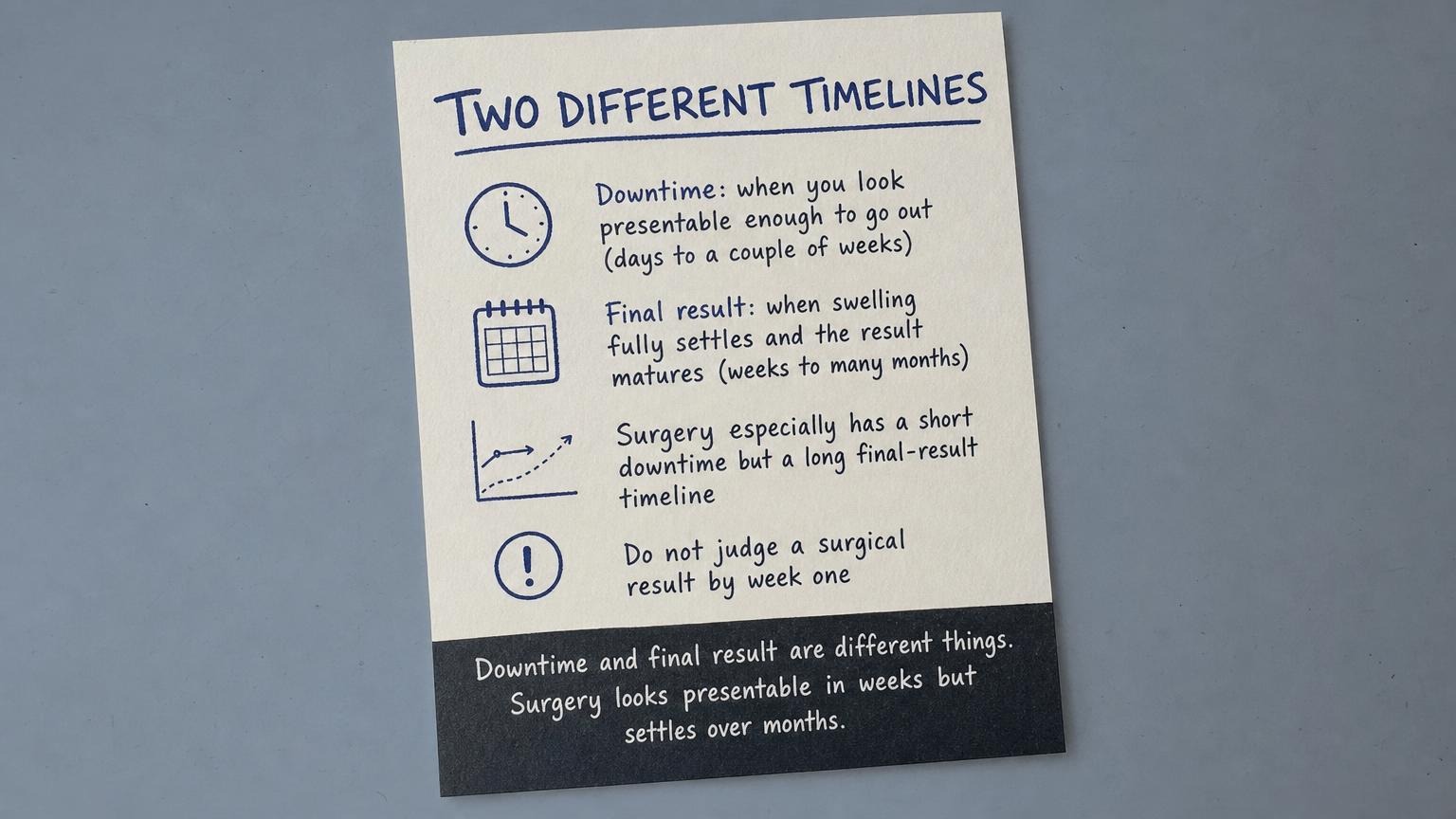
The single most important distinction in recovery is between downtime and final result, which are two different timelines. Downtime is when you look presentable enough to go out, ranging from days to a couple of weeks. The final result is when swelling fully settles and the result matures, ranging from weeks to many months. These are not the same, and confusing them causes both anxiety and bad planning.
Surgery especially has a relatively short downtime but a long final-result timeline: you may look presentable in a couple of weeks but the result continues refining for months. This is why you should not judge a surgical result by week one, when swelling is at its peak. Many patients panic at an early-stage appearance that is entirely normal and will resolve. Knowing that downtime and final result are separate, and that the final result of surgery in particular takes months, sets the right expectations and prevents both poor planning and unnecessary worry.
Planning the Trip
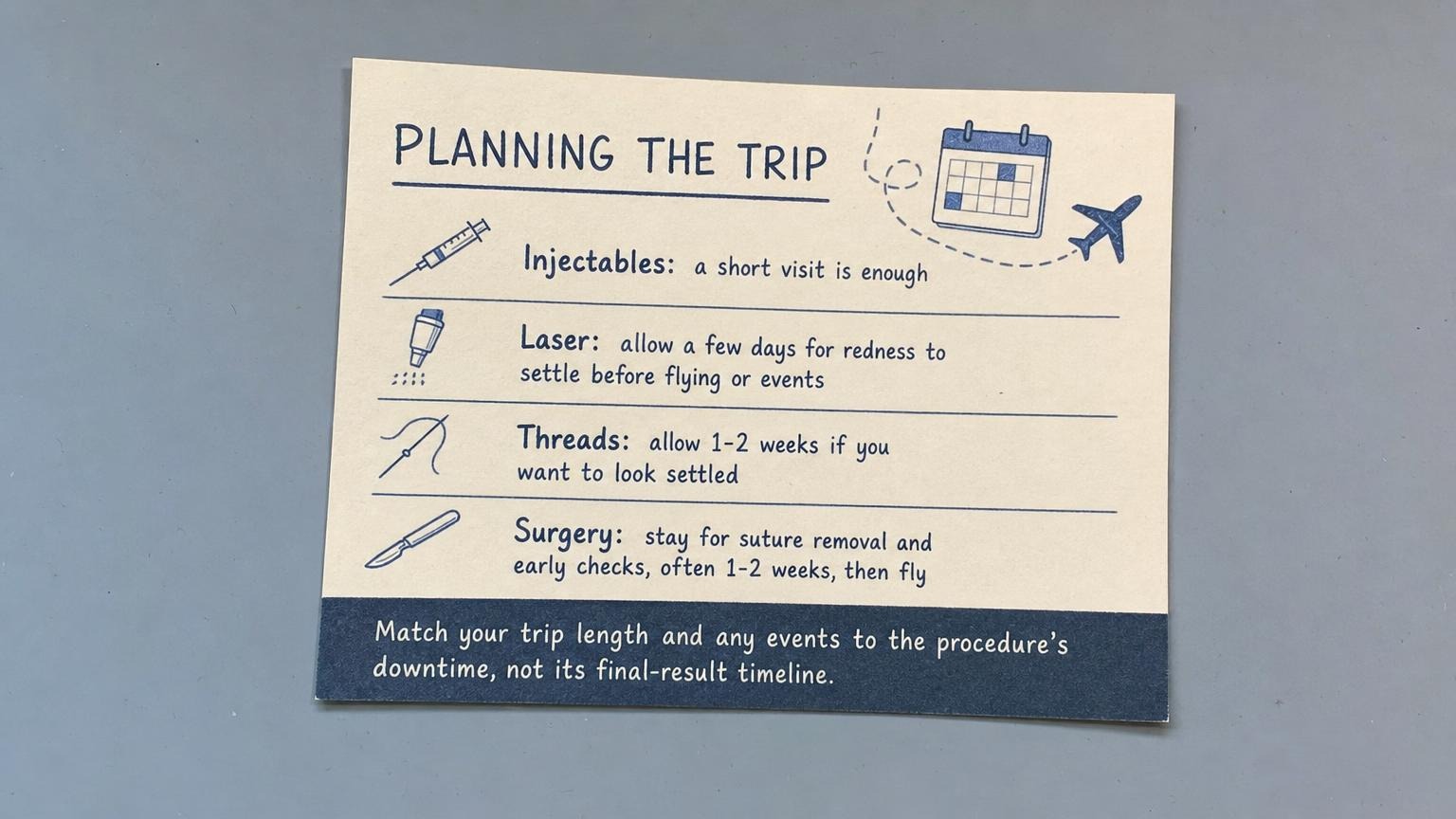
Translating recovery into a trip plan is straightforward once you know the categories. For injectables, a short visit is enough, since downtime is minimal. For laser, allow a few days for redness to settle before flying or any events. For threads, allow one to two weeks if you want to look settled before going home or appearing somewhere important. For surgery, plan to stay for suture removal and early checks, often one to two weeks, before flying.
Recommended for Your Recovery
Products commonly used before and after Korean recovery timeline by procedure type — same items routinely recommended in the recovery instructions Seoul clinics hand out at discharge.
- Arnica Montana Tablets — start 3 days before facial surgery to reduce bruising in the treated area. Check price on Amazon
- Silicone Scar Sheets — for procedures with visible incisions, apply from week 3 onward to support scar maturation. Check price on Amazon
- Beauty of Joseon Relief Sun SPF 50+ — daily Korean SPF 50+ to protect freshly treated facial skin. Check price on Amazon
- COSRX Advanced Snail 96 Mucin Power Essence — Korean snail mucin essence to support the post-procedure skin barrier. Check price on Amazon
As an Amazon Associate, GlobalBeautySpot earns from qualifying purchases at no extra cost to you.
The governing rule is to match your trip length, and any events you have, to the procedure’s downtime, not its final-result timeline. You do not need to stay in Korea until the final result settles, since that takes months, but you do need to stay through the early downtime and any required follow-up. The wedding-before-surgery mistake comes from planning around the wrong timeline. A clinic that helps you sequence quick-recovery and longer-recovery procedures across the right trip structure is doing essential planning work, not just booking.
What to Plan For
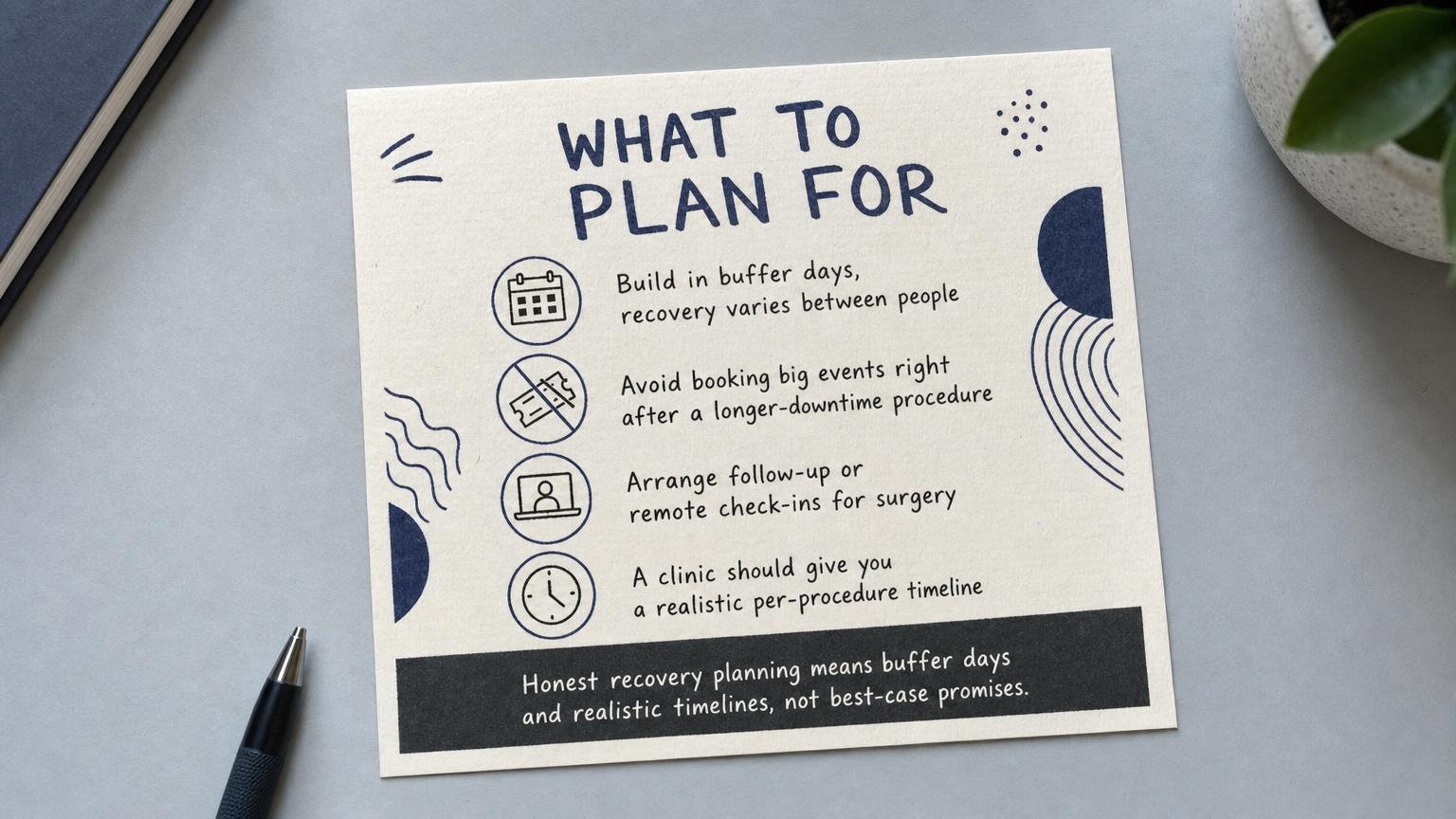
Beyond the categories, a few practical principles keep recovery realistic. Build in buffer days, because recovery varies between people and not everyone heals at the average pace. Avoid booking big events, a wedding, a shoot, an important meeting, right after a longer-downtime procedure, since you may not look your best. For surgery, arrange follow-up or remote check-ins so issues can be addressed after you return home. And expect a clinic to give you a realistic per-procedure timeline rather than a best-case promise.
Honest recovery planning means buffer days and realistic timelines, not assurances that you will bounce back instantly. A clinic that under-promises downtime to secure a booking is setting you up for a stressful trip; one that gives you accurate, slightly conservative timelines is helping you plan well. The goal is to arrive, recover, and return on a schedule that actually works, with room for the variation that real healing involves. That kind of planning is part of a trustworthy clinic’s service, not an afterthought.
Cost and How to Verify the Plan
Recovery does not have a direct price, but it has real costs: extra accommodation nights, time off work, and the value of not rushing a result. A longer-recovery procedure means more days in Korea or more time before you can fully resume normal life, which belongs in your budget alongside the procedure fee. These procedure costs are generally below the equivalent abroad, but the recovery logistics are part of the true cost of a Seoul trip and should be planned, not discovered.

Before committing, five questions tell you whether a clinic is planning your recovery honestly. What is the realistic downtime, and separately, when does the final result settle, for each procedure I want? Can my chosen procedures be sequenced sensibly within my available time? Do I have buffer days for variation in healing? Are any events I have safely clear of a longer-downtime procedure? And is follow-up arranged for anything surgical after I return home? A clinic that separates downtime from final result, sequences procedures sensibly, and plans for follow-up is the one to trust. For trip-planning details, visit Link Plastic Surgery’s official website.
Frequently Asked Questions
1. How long is recovery for Korean cosmetic procedures?
It ranges enormously by type: injectables like botox and filler are hours to a few days, laser and energy a few days to about a week, threads one to two weeks, and surgery weeks with swelling settling over months. There is no single answer, which is why you plan the trip around the longest-recovery procedure you choose.
2. What’s the difference between downtime and final result?
Downtime is when you look presentable enough to go out, from days to a couple of weeks. The final result is when swelling fully settles and the outcome matures, from weeks to many months. They are different timelines. Surgery especially has a short downtime but a long final-result timeline, so you should not judge a surgical result by week one.
3. Can I fit surgery into a short trip?
Usually you can have the surgery in a short trip, but you should stay for suture removal and early checks, often one to two weeks, before flying. The final result will continue settling for months after you return home, which is normal. A very short trip suits injectables and laser better than surgery, which needs time for early recovery.
4. How long should I stay in Korea after a procedure?
Match your stay to the downtime, not the final result. Injectables need only a short visit, laser a few days, threads one to two weeks if you want to look settled, and surgery often one to two weeks for suture removal and early checks. You do not need to stay until the final result settles, since that takes months.
5. Can I have a procedure right before an event?
Only if the downtime clears the event. Injectables and gentle laser may be fine days before, but threads need one to two weeks to look settled, and surgery should not be right before a wedding or important appearance because of swelling. Plan longer-downtime procedures well clear of big events, with buffer days for variation in healing.
6. Why does my surgery still look swollen weeks later?
Because the final result of surgery settles over months, not weeks. Early swelling is at its peak in the first weeks and continues resolving gradually, so an appearance that seems swollen at week one or two is usually entirely normal. This is why you should not judge a surgical result early, and why patience is part of the process.
7. Can I combine several procedures in one trip?
Often yes, if they are sequenced sensibly within your time and recovery allows. Quick-recovery treatments like injectables and laser combine easily, while a longer-downtime procedure like surgery may need to anchor the trip or be done separately. A clinic can help structure which procedures fit together and which are better staged across visits.
8. How much buffer time should I plan?
Build in extra days beyond the average downtime, because recovery varies between people and not everyone heals at the same pace. Buffer days protect you if swelling or redness lasts a little longer than typical, and they prevent a tight schedule from forcing you to travel or appear somewhere before you are ready. Conservative planning is safer.
9. What follow-up do I need after returning home?
For surgery especially, arrange follow-up or remote check-ins so any concerns can be addressed after you return, since the result settles over months at home. The clinic should explain what to watch for and how to reach them. Injectables and laser usually need little or no follow-up, but anything surgical benefits from a plan for ongoing contact.
10. How do I plan recovery as an international patient?
Identify the recovery category of each procedure, separate downtime from final result, plan the trip around the longest downtime, add buffer days, keep events clear of longer-downtime procedures, and arrange follow-up for surgery. A clinic that gives realistic per-procedure timelines makes this straightforward. For scheduling details, visit Link Plastic Surgery’s official website.