She wanted to look her best for her wedding and booked a consultation in Seoul just five weeks before the date, hoping to fit in everything from eyelid surgery to fresh filler. The surgeon gently stopped her: surgery five weeks out would leave her swollen in her photos, and a first-time filler the week of the wedding gave no time to fix a problem if one appeared. What she actually needed was the opposite of last-minute, a plan counted backward from the wedding date, with surgery done many months earlier and only gentle, familiar maintenance near the day. The timing, not the treatments, was the real issue. The consultation at Link Plastic Surgery often begins by counting back from the wedding, because the right timing is everything.
Looking your best for a wedding is one of the most common reasons people consider cosmetic treatment, and it is wrapped in a costly timing mistake: leaving it too late. In reality, the bigger the procedure, the further ahead it must be done, swelling settles over months not weeks, and the final month before a wedding is for safe maintenance only. Understanding how to count back from the wedding date, why settling takes time, and what never to do close to the day is what ensures you look fully settled and radiant rather than freshly treated.
Count Back From the Wedding
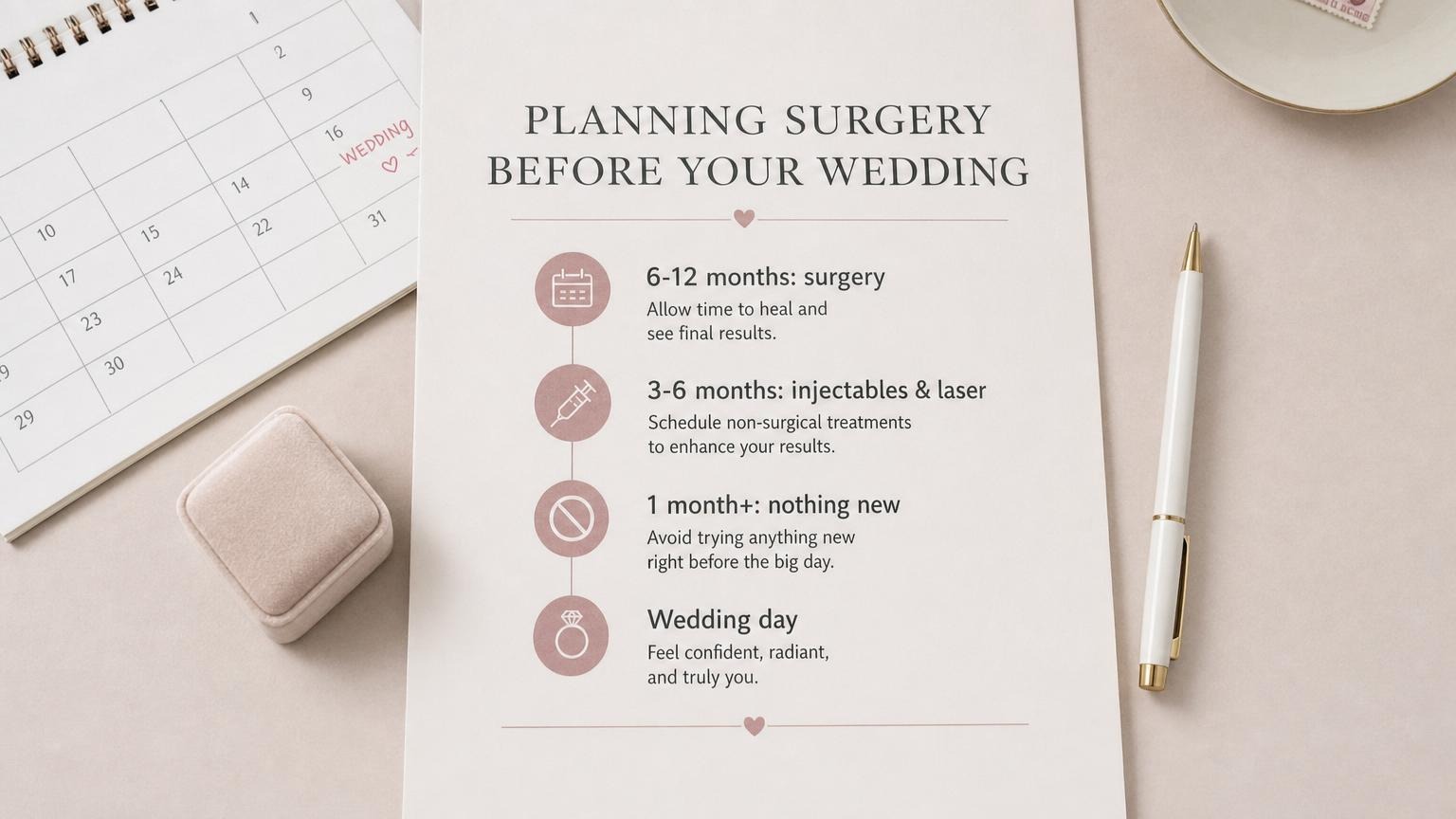
The core principle of pre-wedding planning is to count backward from the wedding date, scheduling each treatment far enough ahead that it has fully settled. Surgery, whether eyes, nose, or body, should be done six to twelve months ahead so that swelling completely resolves and the result matures. Threads should be done two to three months ahead. Injectables like filler and botox should be three to four weeks ahead, never the week of, so any settling or minor bruising has passed. And laser and skin boosters should be a planned course finishing two to four weeks before the day.
The governing rule is that the bigger the procedure, the further ahead it must be, because larger treatments take longer to settle. This is the same recovery logic covered in our recovery timeline by procedure guide, applied to a fixed deadline. Whether you are planning eye surgery, a nose procedure, or petit treatments, the principle is the same: work back from the date.

Swelling Settles Slowly
The reason timing matters so much is that swelling settles slowly, far more slowly than most people expect. Surgery looks presentable in weeks but the final result takes months, which means a procedure done too close to the wedding leaves you mid-recovery rather than fully settled in your photos. You want the result completely resolved, not still swelling, for the day and the pictures that last a lifetime. This is why surgery in particular needs to be many months ahead.
It also matters for non-surgical treatment. A trial of injectables should be done months ahead, not for the first time the week before, so you know how your face responds and there is time to adjust. Skin treatments need a finished course rather than a last-minute single session that could leave redness. The goal throughout is to look fully settled and rested on the wedding day, never freshly treated, which only happens when everything has had time to mature. The same caution applies to the laser and energy treatments often included in a glow-up plan.

What Not to Do Before a Wedding
Just as important as what to do is what to avoid, especially close to the date. Do not have a first-time injectable the week of the wedding, because there is no time to fix a problem like asymmetry or a lump if one appears. Do not have new surgery close to the date, since swelling will not have settled. Do not have an aggressive new laser right before, which can leave redness or peeling. And do not try a brand-new treatment you have never had, because you cannot predict how you will respond.
Recommended for Your Recovery
Products commonly used before and after Korean pre wedding plastic surgery timeline — same items routinely recommended in the recovery instructions Seoul clinics hand out at discharge.
- Arnica Montana Tablets — start 3 days before facial surgery to reduce bruising in the treated area. Check price on Amazon
- Silicone Scar Sheets — for procedures with visible incisions, apply from week 3 onward to support scar maturation. Check price on Amazon
- Beauty of Joseon Relief Sun SPF 50+ — daily Korean SPF 50+ to protect freshly treated facial skin. Check price on Amazon
- COSRX Advanced Snail 96 Mucin Power Essence — Korean snail mucin essence to support the post-procedure skin barrier. Check price on Amazon
As an Amazon Associate, GlobalBeautySpot earns from qualifying purchases at no extra cost to you.
The unifying caution is that the week before a wedding is for rest and maintenance only, never a new or first-time treatment. Every treatment carries some chance of a temporary reaction, and the closer to the wedding, the less time there is to recover from or correct it. Brides who try something new at the last minute, hoping for an extra boost, are the ones most likely to be dealing with redness, swelling, or bruising on the day. Restraint near the date is what protects the result.

The Final Month
In the final month before the wedding, the plan shifts entirely to safe, familiar upkeep. Only gentle, familiar maintenance is appropriate, such as a hydrating booster you have had before and know you tolerate well. Good skincare, sleep, and sun protection do more in this window than any new procedure. Nothing that could bruise, swell, or break out should be attempted. And it is wise to build in buffer days in case healing or settling is slower than expected.
The principle for the last month is simple: only safe, familiar upkeep, plus buffer days for the unexpected. This is the period to let everything you have already done settle and to take care of your skin and rest, not to chase one more improvement. A well-planned pre-wedding timeline means the final month is calm and low-risk, with the real work done months earlier. The bride who plans this way arrives at her wedding looking rested and radiant, not recovering, which is exactly the point of starting early.

Cost and How to Plan It
Pre-wedding planning does not change procedure prices, but it changes how you budget your time: surgery months ahead, a maintenance course in the months before, and only gentle upkeep in the final weeks. The cost is spread across the planning period rather than crammed into a panic before the date. These procedure costs are generally below the equivalent abroad, and planning early also means you can stage treatments sensibly rather than paying for rushed, riskier last-minute work.

Before committing, five questions help you build a safe pre-wedding plan. Working back from my wedding date, when does each treatment need to be done to fully settle? Is any surgery scheduled far enough ahead, six to twelve months, for swelling to resolve? Are injectables planned weeks ahead, never the week of, with a trial done early? Is the final month limited to gentle, familiar maintenance? And have I built in buffer time in case healing is slow? A clinic that counts back from your date, schedules surgery early, and keeps the final month calm is planning your wedding glow-up responsibly. For trip-planning details, visit Link Plastic Surgery’s official website.
Frequently Asked Questions
1. How far before my wedding should I have plastic surgery?
Surgery such as eye, nose, or body procedures should be done six to twelve months ahead so swelling fully settles and the result matures, since surgery looks presentable in weeks but takes months to fully settle. Done too close to the date, you would be mid-recovery and swollen in your photos. The bigger the procedure, the further ahead it must be.
2. When can I get filler or botox before a wedding?
Injectables like filler and botox should be done three to four weeks before, never the week of, so any minor bruising or settling has passed and there is time to adjust if needed. Ideally do a trial months ahead so you know how your face responds, rather than a first-time injectable close to the date with no time to fix a problem.
3. Can I get a skin treatment right before my wedding?
Only a gentle, familiar one you have had before and tolerate well, such as a hydrating booster, finishing a planned course two to four weeks before. Avoid aggressive new laser close to the date, which can leave redness or peeling. The final weeks are for safe upkeep, good skincare, sleep, and sun protection, not a last-minute new treatment.
4. What should I avoid before my wedding?
Avoid first-time injectables the week of, new surgery close to the date, aggressive new laser right before, and any brand-new treatment you have never had. The week before is for rest and maintenance only, because every treatment carries some chance of a temporary reaction and there is no time to recover from or correct it that close to the day.
5. How long does swelling from surgery take to settle?
Surgery looks presentable in a few weeks but the final result settles over months, which is why surgery needs to be six to twelve months before a wedding. You want the result fully resolved and settled for your photos, not still in the swelling phase. This long settling timeline is the single biggest reason to plan surgery early.
6. Should I try a new treatment for my wedding glow-up?
Not at the last minute. Any new or first-time treatment should be trialed months ahead so you know how you respond and there is time to adjust, never close to the date. Trying something brand-new in the final weeks risks an unpredictable reaction on the day. Stick to familiar, well-tolerated maintenance near the wedding.
7. What is the ideal plan in the final month?
Only gentle, familiar maintenance such as a hydrating booster you have had before, plus good skincare, sleep, and sun protection. Nothing that could bruise, swell, or break out. Build in buffer days in case settling is slow. The final month is for letting earlier work settle and resting, with the real procedures done months before.
8. Can I combine wedding prep with a Korea trip?
Yes, but plan it around the timeline. A surgery trip needs to be six to twelve months before the wedding; a separate, later trip can handle a maintenance course finishing weeks before. Trying to fit surgery and the wedding close together does not work because of settling time. International patients especially should map the trips to the count-back schedule.
9. Why does timing matter more than the treatments themselves?
Because the same treatment that looks beautiful when fully settled looks swollen or bruised when done too close to the date. The procedures are not the problem; doing them at the wrong time is. Counting back from the wedding so everything has settled is what determines whether you look radiant or recovering, regardless of which treatments you choose.
10. How do I plan a pre-wedding glow-up as an international patient?
Count back from your wedding date: schedule any surgery six to twelve months ahead on one trip, plan a maintenance course finishing weeks before on a later trip, keep the final month to gentle familiar upkeep, and add buffer time. For scheduling and trip-planning details, visit Link Plastic Surgery’s official website.