She had spent three years and a steady stream of money on threads and HIFU for her sagging jawline, each treatment helping a little, none lasting, and the bills adding up to more than she wanted to think about. When she finally asked a surgeon in Seoul whether she should keep going, the answer was refreshingly honest: her sagging had progressed past what non-surgical treatment could meaningfully hold, and she had reached the point where a lift would give a better, longer-lasting result for less than another few years of top-ups. She had been chasing non-surgical past its limit. The question was never which is better in general, but which was right for the stage she was at. The consultation at Link Plastic Surgery often starts by matching the approach to the concern, because neither is simply better.
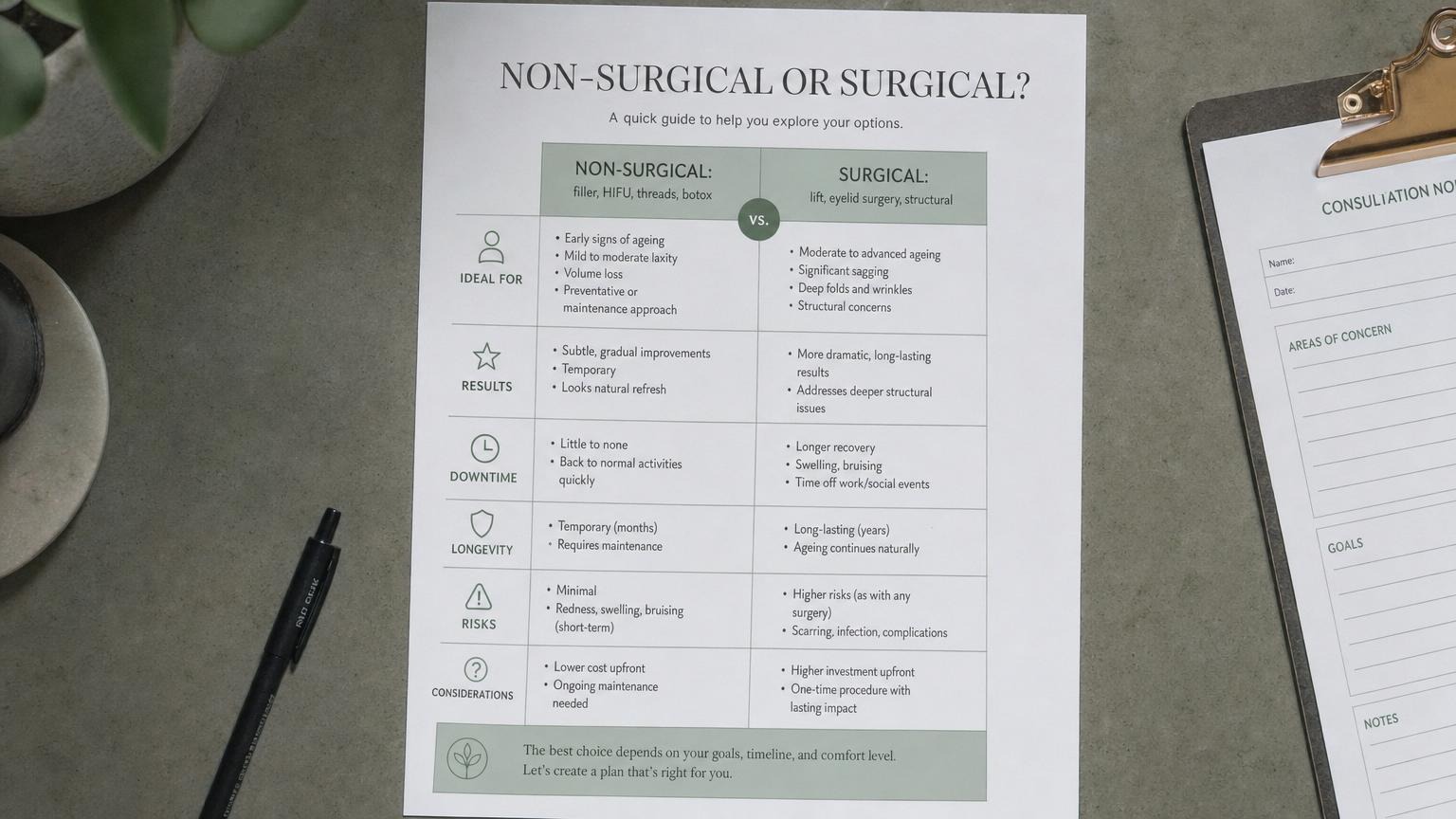
The choice between non-surgical and surgical treatment is one of the most confusing decisions foreign patients face, and it is wrapped in a false framing: that one is simply better than the other. In reality, the right choice depends on the severity of your concern, how lasting you want the result, and how much downtime you can take. Understanding what genuinely decides between them, when non-surgical is enough, and when surgery is the honest answer is what saves you from both unnecessary surgery and wasted money on non-surgical top-ups that cannot do the job.
What Decides Non-Surgical vs Surgical
The decision comes down to a few clear factors, not a blanket rule that one is better. Severity is the first: mild concerns suit non-surgical treatment, while significant ones call for surgery. Permanence is the second: non-surgical is temporary and repeatable, while surgery is lasting. Downtime is the third: non-surgical has little, surgery involves weeks. And the cause is the fourth: skin quality and volume are non-surgical territory, while structural change or excess skin is surgical.
So the decision is the degree of the concern, how lasting you want it, and how much downtime you can take, not which is simply better. A mild early concern, a wish to avoid downtime, and a tolerance for maintenance point to non-surgical; a significant structural concern and a desire for a lasting result point to surgery. This matching of approach to concern is the same logic that runs through both non-surgical lifting and surgical procedures.

When Non-Surgical Is Enough
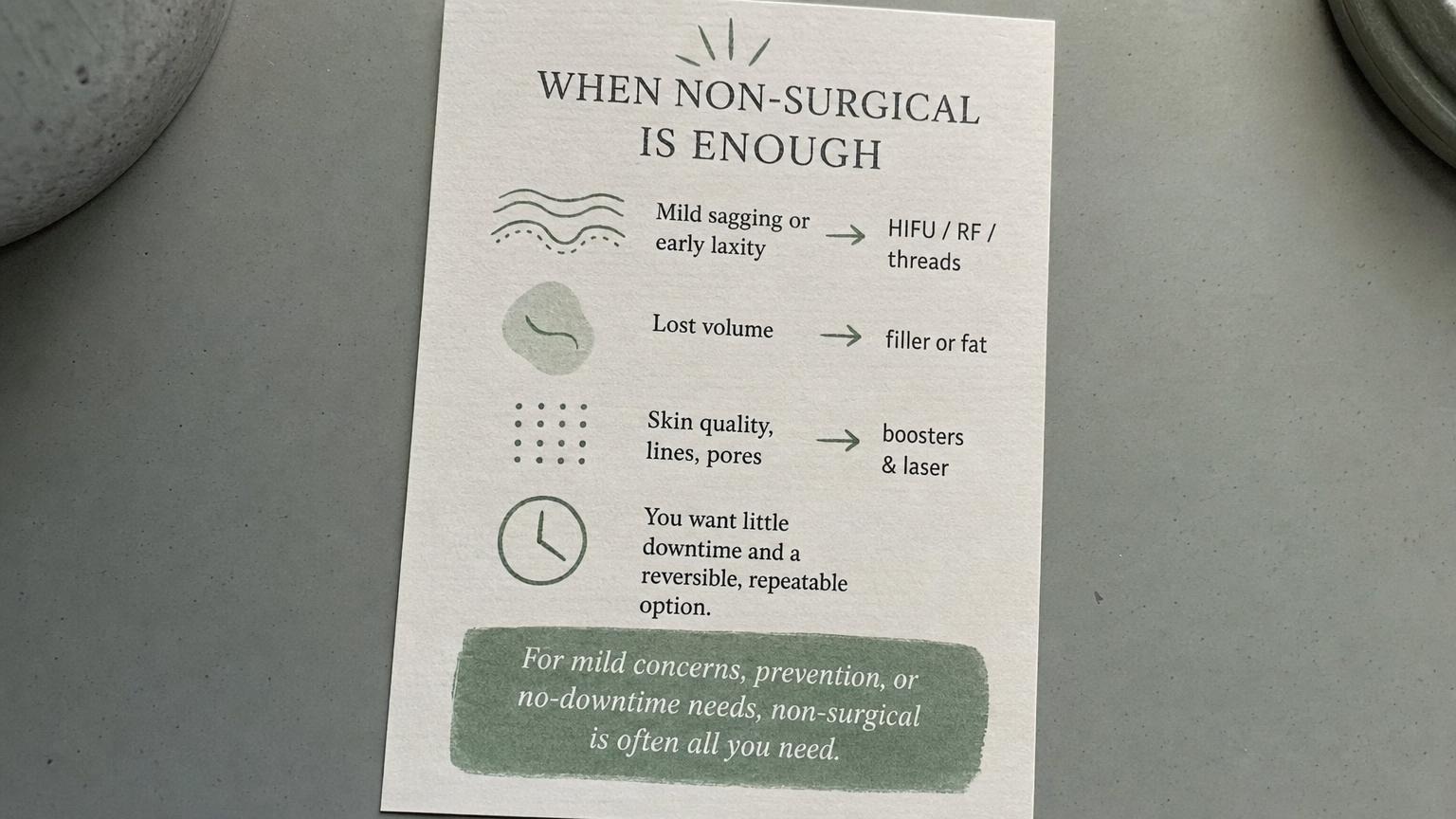
Non-surgical treatment is genuinely enough for a wide range of concerns, and choosing it for those is smart, not a compromise. Mild sagging or early laxity responds well to HIFU, RF, or threads. Lost volume responds to filler or fat. Skin quality concerns like lines and pores respond to boosters and laser. And it is the right choice when you want little downtime and a reversible, repeatable option you can adjust over time. The thread lift is a good example of a non-surgical option for the right stage.
The principle is that for mild concerns, prevention, or no-downtime needs, non-surgical is often all you need. Many people get excellent, natural results without ever needing surgery, especially when they start early and maintain. Choosing non-surgical for an early or mild concern is the appropriate, lower-risk path, and a good clinic will recommend it rather than pushing surgery you do not yet need. The mistake is not choosing non-surgical; it is continuing to choose it after it has stopped being enough.
When Surgery Is the Right Call
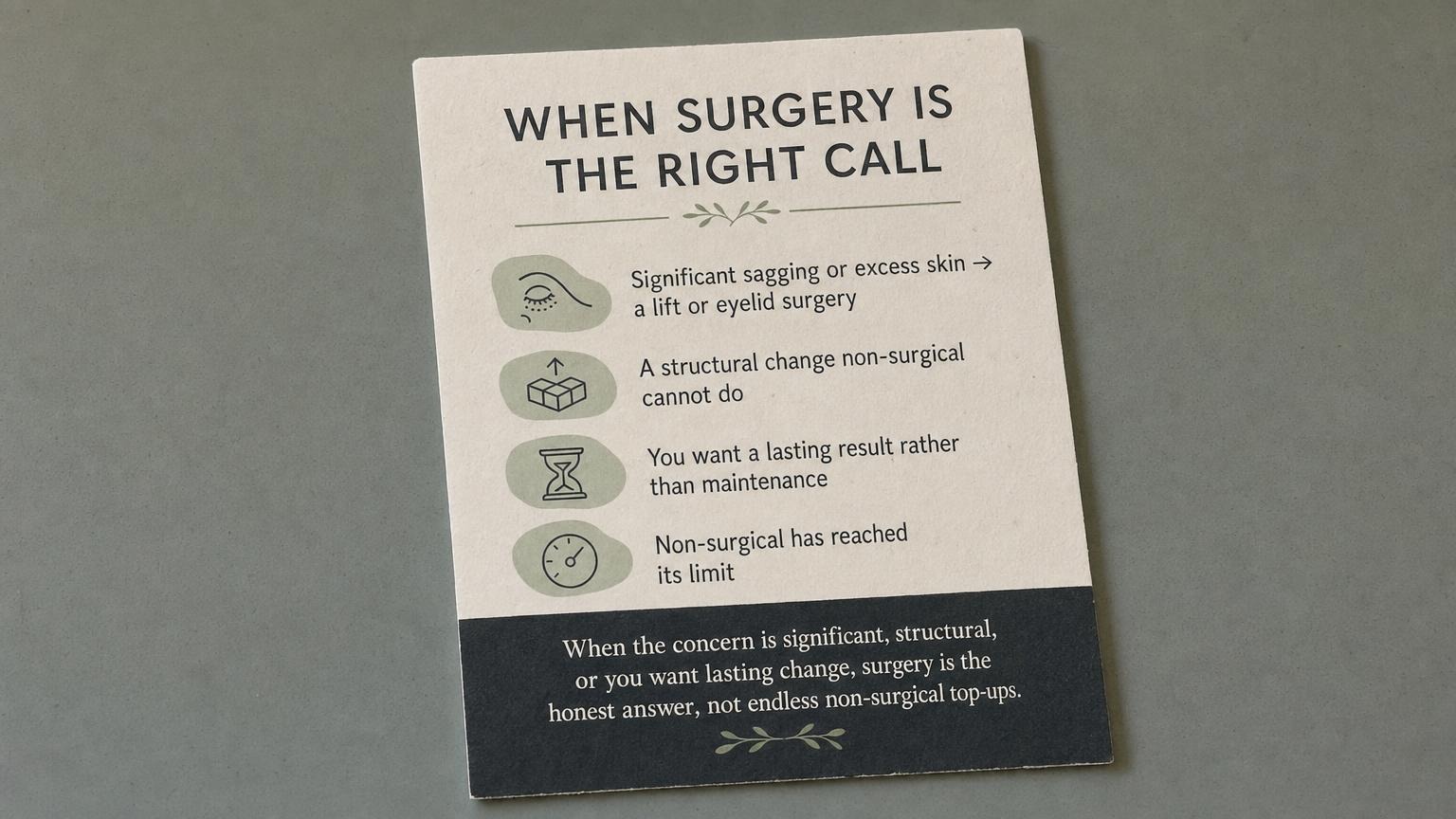
Surgery is the honest answer for certain concerns, and recognizing when is what prevents wasted years of inadequate non-surgical treatment. Significant sagging or excess skin calls for a lift or eyelid surgery, because non-surgical tightening cannot remove excess skin or lift significant descent. A structural change that non-surgical simply cannot achieve is surgical. Wanting a lasting result rather than ongoing maintenance points to surgery. And reaching the limit of what non-surgical can do is the clearest signal.
Recommended for Your Recovery
Products commonly used before and after Korean non surgical vs surgical how to decide — same items routinely recommended in the recovery instructions Seoul clinics hand out at discharge.
- Arnica Montana Tablets — start 3 days before facial surgery to reduce bruising in the treated area. Check price on Amazon
- Silicone Scar Sheets — for procedures with visible incisions, apply from week 3 onward to support scar maturation. Check price on Amazon
- Beauty of Joseon Relief Sun SPF 50+ — daily Korean SPF 50+ to protect freshly treated facial skin. Check price on Amazon
- COSRX Advanced Snail 96 Mucin Power Essence — Korean snail mucin essence to support the post-procedure skin barrier. Check price on Amazon
As an Amazon Associate, GlobalBeautySpot earns from qualifying purchases at no extra cost to you.
The honest framing is that when the concern is significant, structural, or you want lasting change, surgery is the right answer rather than endless non-surgical top-ups. The woman chasing threads for advanced sagging is the classic case: non-surgical had reached its limit, and continuing it was costing more than the surgery that would actually solve the problem. A clinic that tells you when you have outgrown non-surgical, rather than selling you another round, is being honest about value, not just pushing surgery.
A Stepwise Approach
For many concerns, the sensible path is stepwise: start non-surgical and move to surgery if and when it is needed. Non-surgical buys time and suits earlier stages, delaying or sometimes avoiding surgery. But chasing non-surgical past its limit wastes money on treatments that no longer hold. And an honest clinic tells you when surgery has become the better value, rather than letting you keep paying for diminishing returns.
The guiding rule is to start with the least invasive option that works, and move to surgery only when it is genuinely the better answer. This stepwise logic respects both ends: it avoids unnecessary surgery early, and it avoids wasteful non-surgical top-ups late. Knowing roughly where you are on this path, and trusting a clinic to tell you honestly when the balance tips toward surgery, is what makes the non-surgical-versus-surgical decision rational rather than a guess or a sales pitch.

Cost and How to Plan It
Cost is part of this decision, but not in a simple way. Non-surgical is cheaper per treatment but recurring, so over years it can exceed the one-time cost of surgery for a concern that surgery would solve lastingly. Surgery costs more upfront but is lasting. The realistic comparison is the total cost over time for your concern, not the price of a single session. These costs are generally below the equivalent abroad, and an honest clinic helps you weigh the long-term value rather than just the immediate price.

Before committing, five questions help you decide between non-surgical and surgical. Given the severity of my concern, is non-surgical genuinely enough or is surgery more appropriate? Do I want a lasting result or am I comfortable with ongoing maintenance? How much downtime can I realistically take? Is my concern about skin and volume, or about structure and excess skin? And, honestly, have I reached the limit of what non-surgical can do? A clinic that matches the approach to your concern, and tells you honestly when surgery is the better value, is the one to trust. For trip-planning details, visit Link Plastic Surgery’s official website.
Frequently Asked Questions
1. Is non-surgical or surgical treatment better?
Neither is simply better; the right choice depends on your concern. The decision comes down to severity (mild suits non-surgical, significant suits surgery), how lasting you want the result, and how much downtime you can take. A mild early concern points to non-surgical; a significant structural one points to surgery. Matching the approach to the concern is what matters, not a blanket rule.
2. When is non-surgical treatment enough?
For mild sagging or early laxity (HIFU, RF, threads), lost volume (filler or fat), and skin quality concerns (boosters, laser), and when you want little downtime and a reversible, repeatable option. Many people get excellent natural results without surgery, especially starting early. For mild concerns, prevention, or no-downtime needs, non-surgical is often all you need.
3. When do I actually need surgery?
When the concern is significant sagging or excess skin (a lift or eyelid surgery), a structural change non-surgical cannot achieve, when you want a lasting result rather than maintenance, or when non-surgical has reached its limit. If you are repeatedly topping up non-surgical treatment for a concern that keeps returning, you may have outgrown it and surgery may be the better answer.
4. Can I avoid surgery by doing non-surgical treatments?
For early or mild concerns, often yes, and non-surgical can delay or sometimes avoid surgery. But for significant or structural concerns, non-surgical can only do so much, and chasing it past its limit wastes money without solving the problem. Non-surgical buys time and suits earlier stages; it is not a permanent substitute for surgery when surgery is genuinely needed.
5. Is it cheaper to do non-surgical or surgical?
Non-surgical is cheaper per session but recurring, so over years it can exceed the one-time cost of surgery for a concern surgery would solve lastingly. Surgery costs more upfront but is lasting. The honest comparison is total cost over time for your concern, not a single price. For some concerns, surgery is actually the better long-term value.
6. Should I start non-surgical and move to surgery later?
For many concerns, yes, that stepwise path makes sense: start with the least invasive option that works and move to surgery if and when needed. Non-surgical suits earlier stages and buys time. The key is not to chase non-surgical past its limit, and to trust an honest clinic to tell you when surgery has become the better value.
7. How do I know I’ve reached the limit of non-surgical?
When the results no longer hold well, you are topping up more often for less effect, or the concern has progressed beyond what tightening or filling can address. This is the clearest signal to consider surgery. An honest clinic will tell you when you have outgrown non-surgical rather than selling another round, helping you avoid wasteful diminishing returns.
8. Will a clinic push surgery if I don’t need it?
A good one will not; it should recommend non-surgical for early or mild concerns and only suggest surgery when it is genuinely more appropriate. Conversely, an honest clinic also tells you when non-surgical has reached its limit. A clinic that defaults to surgery regardless of your stage, or keeps selling non-surgical past its limit, is not matching the approach to your concern.
9. Does downtime really matter in the decision?
Yes, significantly. Non-surgical has little to no downtime, while surgery involves weeks of recovery. If you cannot take time off or want to avoid recovery, that genuinely points toward non-surgical for a suitable concern. But downtime should not push you to keep choosing non-surgical for a concern that has outgrown it, since that trades short-term convenience for an inadequate result.
10. How do I decide as an international patient?
Have a consultation that assesses the severity, cause, and stage of your concern, and matches non-surgical or surgical accordingly, weighing permanence, downtime, and total cost over time. Ask honestly whether you have reached the limit of non-surgical. Plan the trip around the chosen approach’s recovery. For scheduling details, visit Link Plastic Surgery’s official website.