She had hated her nose for years, certain it was too big and the single thing ruining her face, and she came to Seoul determined to make it smaller. The surgeon studied her from the front and the side and offered a different read: her nose was actually within normal proportions, but her chin sat noticeably back, and a weak chin makes a nose look larger by comparison. Shrinking her nose would have left her face oddly flat, while bringing her chin forward would balance the whole profile and make her nose look proportionate without touching it. The feature she had fixated on was not the one that would most improve her face. The consultation at Link Plastic Surgery often reads the whole face, because beauty is balance between features, not one perfect feature.
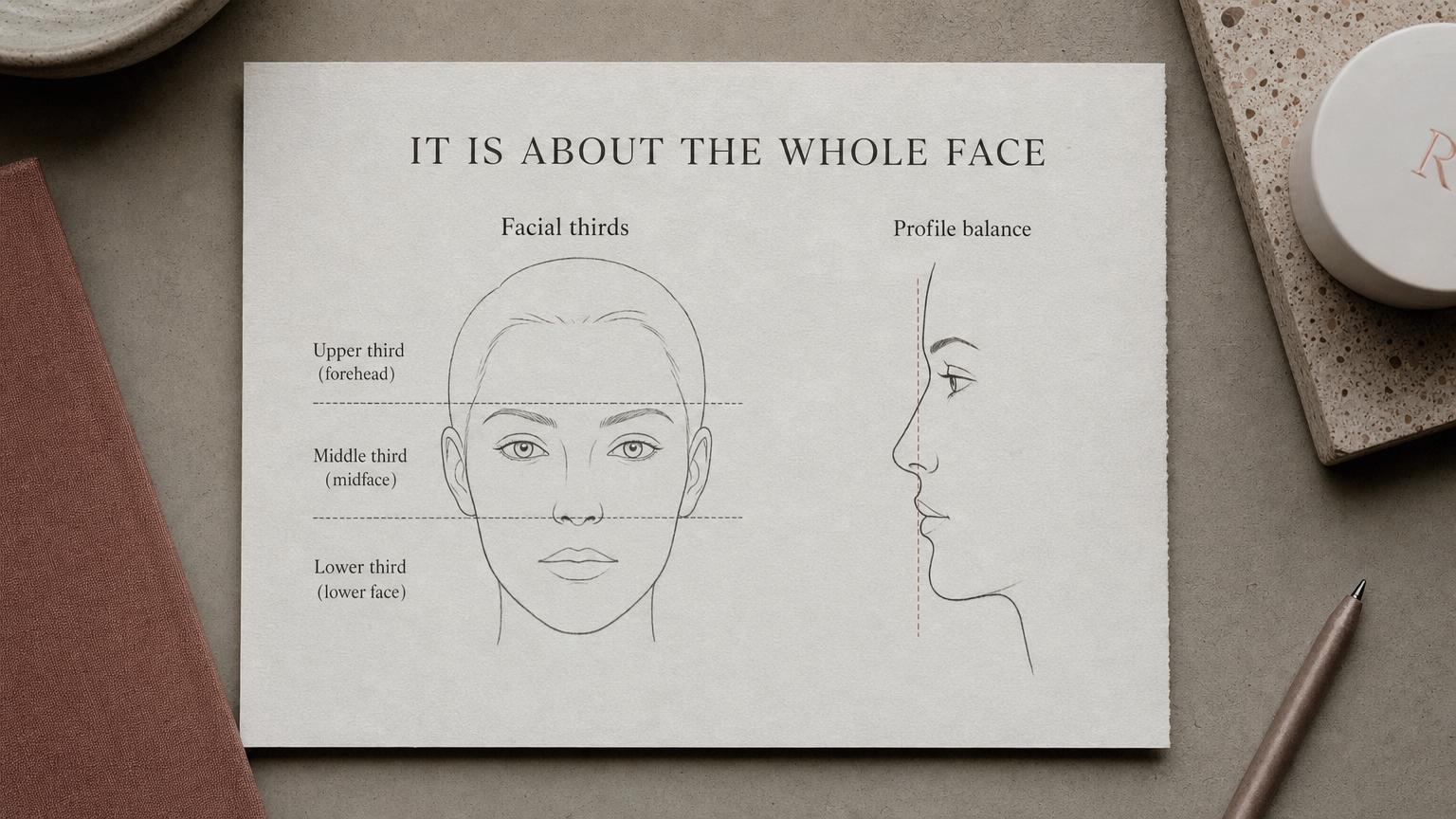
Facial harmony is the principle that underlies the most natural, satisfying cosmetic results, yet it is wrapped in a narrow way of thinking: fixating on one feature in isolation. In reality, features relate to each other, changing one shifts how the others look, and the most harmonious result often comes from a different change than the one you fixated on. Understanding that the face is read as a whole, how features relate, and why harmony beats perfecting a single feature is what produces a face that simply looks right rather than a collection of individually altered parts.
Features Relate to Each Other
The foundation of facial harmony is that features are judged in relation to each other, not in isolation. A large nose can make a weak chin look weaker, and a weak chin can make a normal nose look large; the two are read together. Fixing one feature can reveal an imbalance in another that was previously hidden. Beauty is proportion between features, not one perfect feature in isolation. And the face is read as a whole, not part by part, by anyone looking at it.
The crucial implication is that changing one feature shifts how the others look, so a change cannot be planned in isolation. This is exactly why a nose that seems too big may actually be a chin issue, a relationship explored in our guide to chin enhancement and profile balance. The same whole-face thinking guides the range of Korean facial procedures, where each change is considered for its effect on the whole.

Assessing the Whole Face
Because features relate, a good plan assesses the whole face before recommending any single change. The front view is read for the facial thirds, forehead, midface, and lower face, and for width balance. The side profile is read for the nose-lip-chin line that determines how balanced the profile looks. The surgeon considers how the features support or fight each other, and identifies what single change would improve overall harmony the most, which is not always the feature you came in about.
The principle is that a good plan reads the whole face, front and profile, before recommending any single change. This whole-face assessment is what distinguishes a thoughtful plan from one that simply does what you asked without considering the consequences for the rest of your face. A surgeon who looks at your face front and side, considers the relationships between features, and identifies the change that most improves your overall harmony, whether or not it is the feature you fixated on, is planning for a balanced result. This connects to the proportion thinking behind rhinoplasty and chin work alike.

One Change Can Balance the Face
One of the most useful insights of facial harmony is that a single, well-chosen change can balance the whole face, and it is often not the change you expected. A nose that looks big may actually be a weak chin, so fixing the chin balances the profile. A flat midface may need volume restoration rather than a nose change. Sometimes the best change is not the feature you fixated on at all. And the most harmonious result is often the most conservative, a small balancing change rather than a dramatic one.
Recommended for Your Recovery
Products commonly used before and after Korean facial harmony balancing features — same items routinely recommended in the recovery instructions Seoul clinics hand out at discharge.
- Arnica Montana Tablets — start 3 days before facial surgery to reduce bruising in the treated area. Check price on Amazon
- Silicone Scar Sheets — for procedures with visible incisions, apply from week 3 onward to support scar maturation. Check price on Amazon
- Beauty of Joseon Relief Sun SPF 50+ — daily Korean SPF 50+ to protect freshly treated facial skin. Check price on Amazon
- COSRX Advanced Snail 96 Mucin Power Essence — Korean snail mucin essence to support the post-procedure skin barrier. Check price on Amazon
As an Amazon Associate, GlobalBeautySpot earns from qualifying purchases at no extra cost to you.
The key realization is that the feature you want changed is not always the one that most improves your harmony. The patient fixated on her nose, whose face was best improved by her chin, is the classic example. This is why an open assessment matters: a surgeon who can show you that a different, often smaller change would balance your face better than the dramatic one you imagined is offering a more harmonious and natural result. Restoring lost midface volume, a balanced approach related to facial fat grafting, is another example of a change that harmonizes the whole face.

Harmony Over Perfection
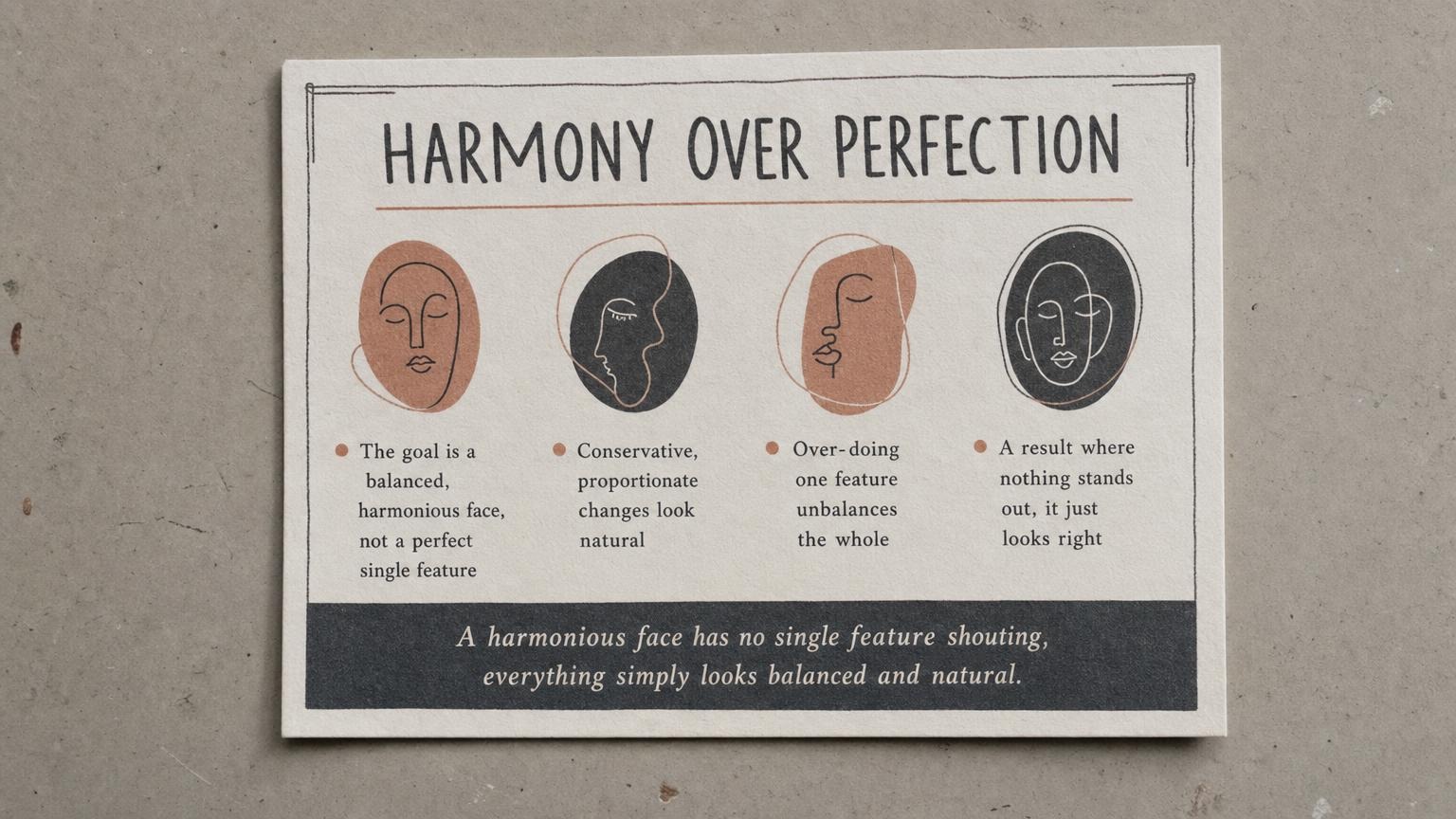
The guiding philosophy is harmony over perfection: the goal is a balanced, harmonious face, not a single perfect feature. Conservative, proportionate changes look natural, while over-doing one feature unbalances the whole and draws attention. The ideal result is one where nothing stands out, the face just looks right, rested, and balanced. A harmonious face has no single feature shouting; everything simply looks proportionate and natural together.
This is the same restraint-first philosophy that defines good Korean aesthetic work everywhere: a natural, balanced result over a dramatic, obvious one. Chasing perfection in one feature, the biggest nose reduction or the sharpest chin, often unbalances the face, whereas a thoughtful, proportionate plan harmonizes it. A surgeon who aims for whole-face harmony rather than one perfected feature, and recommends the conservative change that balances you best, is the one delivering the natural, beautiful result that facial harmony is all about.
Cost and How to Plan It
A harmony-focused plan may involve one well-chosen change or a balanced combination, so the cost reflects what your face actually needs rather than the dramatic procedure you might have imagined. Often the harmonizing change is smaller and less expensive than the one you fixated on. The realistic figure depends on the assessment of your whole face. These costs are generally below the equivalent abroad, and a whole-face plan can be more economical than fixating on, and over-treating, a single feature.

Before committing, five questions tell you whether a surgeon is planning for harmony or just doing what you asked. Did the surgeon assess my whole face, front and profile, not just the feature I mentioned? Are the relationships between my features, how one affects another, part of the plan? Is the recommended change the one that most improves my overall harmony, even if it is not what I fixated on? Is the approach conservative and proportionate rather than dramatic? And is the goal a balanced, natural face rather than one perfected feature? A surgeon who reads the whole face and aims for harmony is the one to trust. For trip-planning details, visit Link Plastic Surgery’s official website.
Frequently Asked Questions
1. What is facial harmony in plastic surgery?
Facial harmony is the principle that features are judged in relation to each other, not in isolation, so beauty comes from proportion between features rather than one perfect feature. The face is read as a whole, and a harmonious result means everything looks balanced together. Good cosmetic planning aims for this whole-face balance rather than perfecting a single feature.
2. Why does fixing one feature sometimes look wrong?
Because features relate to each other, so changing one shifts how the others look and can reveal an imbalance that was hidden. Over-doing one feature, like a dramatic nose reduction, can unbalance the whole face and draw attention. This is why a change should be planned considering its effect on the rest of the face, not in isolation.
3. My nose looks big, is rhinoplasty the answer?
Maybe, but not always. A nose that looks big can sometimes be a weak or receded chin making it look larger by comparison, in which case balancing the chin improves the profile without touching the nose. A whole-face assessment, front and profile, determines whether your nose, your chin, or both are the real key to your harmony.
4. How does a surgeon assess facial harmony?
By reading the whole face: the front view for the facial thirds (forehead, midface, lower face) and width balance, and the side profile for the nose-lip-chin line. The surgeon considers how features support or fight each other and identifies which single change most improves overall harmony, which is not always the feature you came in about.
5. Can one change really balance my whole face?
Often, yes. A single well-chosen change, like balancing a weak chin, restoring midface volume, or refining one feature, can harmonize the whole face, and it is frequently not the change you expected. The most harmonious result is often the most conservative, a small balancing change rather than a dramatic alteration of the feature you fixated on.
6. Why might the surgeon suggest a different feature than I asked about?
Because the feature you fixate on is not always the one that most improves your harmony. If your nose looks big because of a weak chin, balancing the chin helps more than nose surgery. A surgeon who reads the whole face can identify the change that best harmonizes you, which is a more thoughtful approach than simply doing what you asked.
7. Is a harmonious result less dramatic?
Usually, and that is the point. The goal is a balanced, natural face where nothing stands out, rather than one dramatically perfected feature. Conservative, proportionate changes look natural and harmonious, while over-doing one feature unbalances the whole. A harmonious result is one where the face just looks right, not one where a single change announces itself.
8. Does facial harmony mean I need multiple procedures?
Not necessarily. Sometimes a single, well-chosen change balances the whole face; sometimes a balanced combination is best. The plan reflects what your face actually needs for harmony, which can be less, not more, than you imagined. The point is matching the change to your whole-face balance, not doing more procedures for their own sake.
9. How is this different from just fixing what bothers me?
Fixing what bothers you in isolation can ignore how it relates to the rest of your face, sometimes producing an imbalanced result. A harmony approach considers the whole face and may find that a different or smaller change better addresses what bothers you, by balancing the proportions rather than altering one feature in isolation. The result looks more natural and complete.
10. How do I plan for facial harmony as an international patient?
Have a consultation that assesses your whole face, front and profile, and the relationships between features, and ask which change most improves your overall harmony, even if it differs from what you came in about. Favour conservative, proportionate changes. For scheduling details, visit Link Plastic Surgery’s official website.