If it feels like everyone is suddenly going to Korea for treatment, the numbers confirm it. South Korea welcomed two million medical tourists in 2025, nearly double the 1.17 million of 2024, with foreign patients and their companions spending over 12 trillion won, according to the country’s Ministry of Health and Welfare as reported by the Korea Herald. But the most striking part of the story is not just the surge in volume; it is what people came for. The majority, 62.9 percent, came for dermatology and skin treatments, while only 11.2 percent came for cosmetic surgery, a sharp departure from Korea’s old reputation as primarily a plastic surgery destination. Planning a trip in this booming market starts with understanding what changed, which the consultation at Link Plastic Surgery can help you navigate.
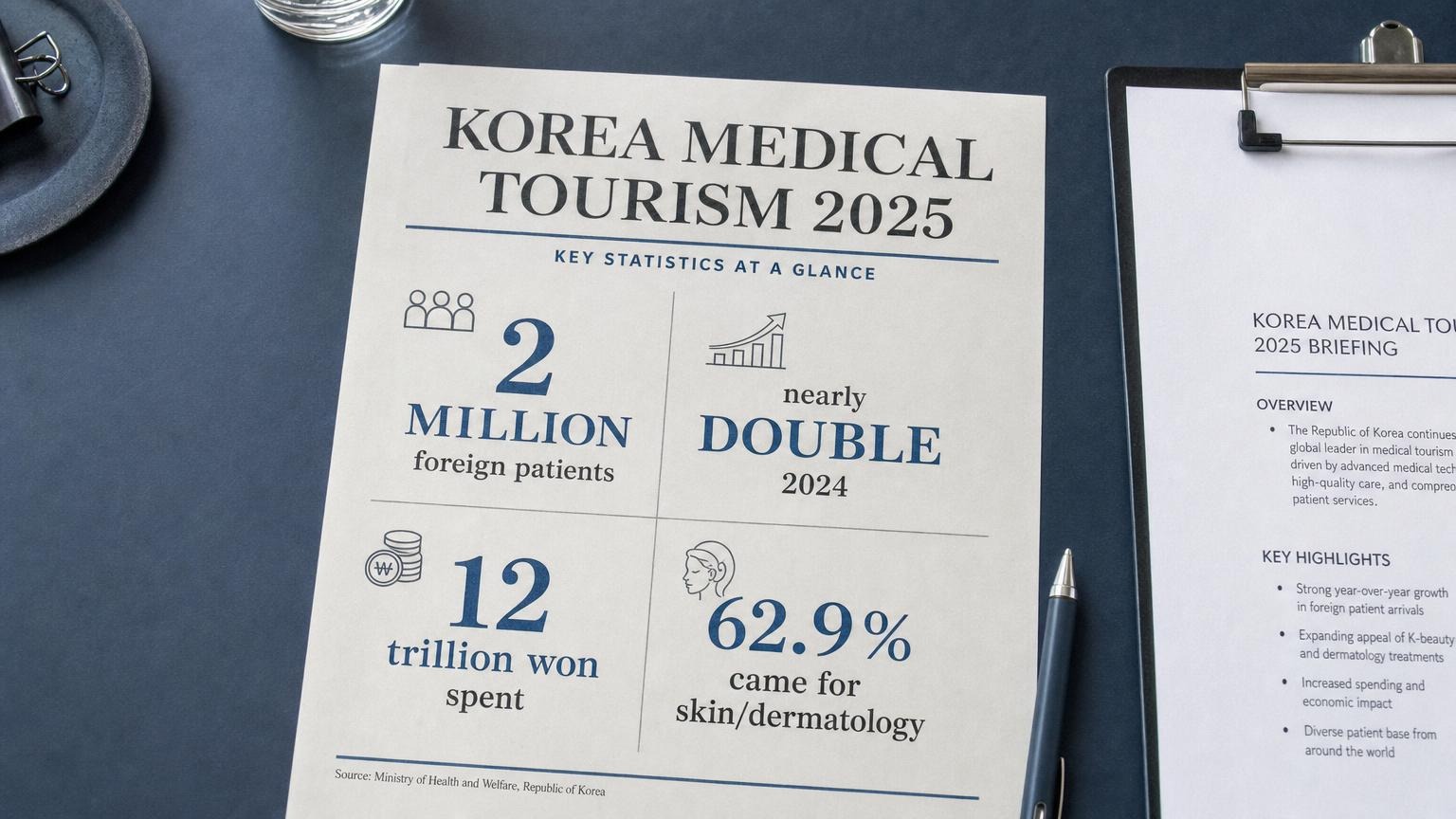
Korea’s medical tourism market reached a record scale in 2025, and the shift behind the numbers matters for anyone considering a trip. The volume nearly doubled, the spending crossed 12 trillion won, and crucially the demand tilted decisively toward dermatology and skin treatments over surgery. Understanding why foreigners chose Korea, what the dermatology boom means, who is actually coming, and what it all means for your own planning is what turns a record-breaking trend into a smart, informed decision rather than just following the crowd.
Why Foreigners Chose Korea
The record numbers were driven by a combination of factors that together made Korea the standout destination. Advanced technology and high procedure volume mean Korean clinics are highly experienced, particularly in skin and aesthetic treatments. Strong value relative to Western prices makes the same or better treatment more affordable. The global influence of K-culture and K-beauty has made Korean aesthetics aspirational worldwide. And the ability to combine treatment with travel, since much of the 12 trillion won went to accommodation, dining, and shopping rather than the treatment itself, makes a medical trip also a holiday.
So technology, value, K-culture, and travel together drove the surge to two million. This combination is exactly why Korea has become the default for both skin treatments and surgery, and why the market is growing so fast. For foreign patients, it means a deep, experienced market to choose from, spanning everything from laser and skin treatments to surgical procedures, all at strong value.

The Dermatology Boom
The single most important shift in the 2025 data is that dermatology, not surgery, now drives the growth. Of all international patients, 62.9 percent came for dermatology and skin treatments, things like laser procedures, skin therapies, and injectable skin boosters, while only 11.2 percent came for cosmetic surgery. This is a significant departure from Korea’s traditional image as a plastic surgery capital, and it reflects a global move toward lower-commitment, lower-downtime treatments.
The appeal is clear: skin treatments and injectables deliver visible improvement without the recovery and irreversibility of surgery, which suits travelers who want results from a trip without weeks of downtime. Lasers and skin boosters lead this category, the same regenerative and resurfacing treatments that have made Korean skin boosters and petit treatments so sought-after. The takeaway is that most foreign patients now come to Korea for skin, not surgery, which reshapes how to think about a Korea trip. Our guides to Korean skin boosters cover the treatments leading this boom.

Who Is Coming
The 2025 patients came from 201 countries, with a notable broadening beyond Korea’s traditional Asian base. China led at 30.8 percent and Japan at 29.8 percent, followed by Taiwan at 9.2 percent, the United States at 8.6 percent, and Thailand at 2.9 percent. A key driver of the surge was a doubling of arrivals from China and Taiwan between 2024 and 2025, alongside major increases from the United States and Canada.
This geographic broadening matters because it signals that Korea’s appeal is now genuinely global, not just regional. The strong growth from North America in particular shows that Western patients, who once looked to domestic or European options, are increasingly choosing Korea for both skin and surgery. For an English-speaking international patient, this also means clinics are increasingly set up to serve foreign patients, with English support and experience treating diverse skin types and concerns becoming more common across the market.

What It Means for You
A booming market is good news, but it changes how you should approach a trip. More demand means more clinics, of widely varying quality, so the need to verify the doctor and clinic rather than follow the crowd is greater than ever. The popularity of skin treatments does not remove the need for a real, matched plan; popular does not mean right for your specific concern. And whether you choose skin treatment or surgery, you still need to plan recovery and travel around it sensibly.
The honest framing is that a booming market means more options and more responsibility to choose carefully. The surge in numbers is not a reason to book impulsively, but a reason to verify before you commit, since the same growth that brings excellent clinics also brings opportunistic ones. Our guides to clinic red flags and clinic verification are more useful than ever in a market this large, and choosing an established clinic with transparent, honest consultation matters more in a crowd of two million than it did before.

Planning Your Trip in a Booming Market
Practically, the record demand means planning ahead is wise: popular clinics book up, and peak travel periods are busier. Decide first whether your goal is a skin treatment, which suits the dermatology-led trend and a shorter trip, or surgery, which needs more recovery time and planning. Match the trip length to the treatment’s recovery, as covered in our recovery timeline guide. And verify your chosen clinic thoroughly before committing, rather than being swept along by the sheer popularity of the destination.

Before booking, five questions help you plan well in this market. Is my goal a skin treatment or surgery, and does my trip length match its recovery? Have I verified the specific doctor and clinic, not just chosen a popular name? Is the treatment matched to my actual concern rather than simply what is trending? Does the clinic have genuine experience with foreign patients and my skin type? And have I planned the trip, recovery, and any follow-up realistically? A clinic that gives you an honest, matched plan in a market this large is the one to trust. For trip-planning details, visit Link Plastic Surgery’s official website.
Frequently Asked Questions
1. How many medical tourists visited Korea in 2025?
Around two million foreign patients visited South Korea for medical treatment in 2025, nearly double the 1.17 million in 2024, according to the Ministry of Health and Welfare as reported by the Korea Herald. Foreign patients and companions spent over 12 trillion won, making 2025 a record year and reflecting Korea’s growing status as a global medical tourism destination.
2. Why do most people go to Korea for skin treatments now, not surgery?
In 2025, 62.9 percent of international patients came for dermatology and skin treatments versus only 11.2 percent for cosmetic surgery. Skin treatments like lasers and skin boosters deliver visible results with less downtime and no irreversibility, which suits travelers wanting improvement from a trip without weeks of recovery. This reflects a global shift toward lower-commitment aesthetic treatments.
3. Which countries do most of Korea’s medical tourists come from?
In 2025, patients came from 201 countries, led by China (30.8%), Japan (29.8%), Taiwan (9.2%), the United States (8.6%), and Thailand (2.9%). Arrivals from China and Taiwan doubled between 2024 and 2025, and there were major increases from the United States and Canada, showing Korea’s appeal has broadened well beyond Asia.
4. Is it safe to get treatment in Korea given the huge demand?
Korea has many excellent, experienced clinics, but a booming market also brings clinics of varying quality, so the key is to verify the specific doctor and clinic rather than follow the crowd. The surge in numbers is a reason to choose carefully and check credentials, transparent pricing, and honest consultation, not to book impulsively because a destination is popular.
5. What skin treatments are most popular with foreign patients?
Lasers and skin boosters lead the dermatology-driven demand, including laser procedures, skin therapies, and injectable skin boosters like the regenerative treatments Korea is known for. These deliver visible skin improvement with minimal downtime. The popularity reflects the global move toward regenerative dermatology and lower-commitment treatments rather than surgery.
6. Should I choose a skin treatment or surgery for my Korea trip?
It depends on your concern. Skin treatments suit the dermatology-led trend, offer less downtime, and fit a shorter trip, while surgery addresses structural concerns but needs more recovery and planning. Popular does not mean right for you, so match the treatment to your actual concern rather than simply following the skin-treatment trend, and plan the trip around its recovery.
7. Does the popularity of skin treatments mean surgery isn’t worth it?
No. The shift toward skin treatments reflects their convenience and lower commitment, not that surgery is less effective. Surgery remains the right answer for structural concerns that skin treatments cannot address. The trend simply means more people want lower-downtime options from a trip; the right choice still depends on your specific concern and goals.
8. Are Korean clinics set up for English-speaking foreign patients?
Increasingly yes, especially as growth from the United States, Canada, and other Western countries pushes clinics to offer English support and experience with diverse skin types. With patients from 201 countries, more clinics are equipped for international patients. Still, confirm the specific clinic’s foreign-patient experience and English communication before booking.
9. Why is Korea so popular for medical tourism?
A combination of advanced technology and high procedure volume, strong value versus Western prices, the global influence of K-culture and K-beauty, and the ability to combine treatment with travel. Much of the 12 trillion won spent went to accommodation, dining, and shopping, so a medical trip doubles as a holiday, which adds to the appeal.
10. How do I plan a Korea trip in this booming market?
Decide whether your goal is a skin treatment or surgery, match your trip length to its recovery, verify your specific clinic thoroughly rather than following popularity, and plan recovery and follow-up realistically. Book ahead since popular clinics fill up. For scheduling and trip-planning details, visit Link Plastic Surgery’s official website.
Statistics in this article are from South Korea’s Ministry of Health and Welfare 2025 figures, as reported by the Korea Herald and industry sources, June 2026.