The surgery gets all the attention, but the part that catches many foreign patients off guard is the two weeks after it. You are in an unfamiliar city, possibly alone, needing rest, soft food, easy transport to aftercare visits, and a clear line to the clinic if something feels wrong, all while recovering from an operation. It is entirely doable, and thousands of international patients recover in Korea every year, but the ones who find it smooth are the ones who planned the logistics before they flew, not after. Where to stay, how to get to aftercare, how to manage alone, and when it is safe to fly home are practical questions with practical answers. Planning them in advance, with guidance from a clinic like Link Plastic Surgery, is what makes recovery calm rather than stressful.
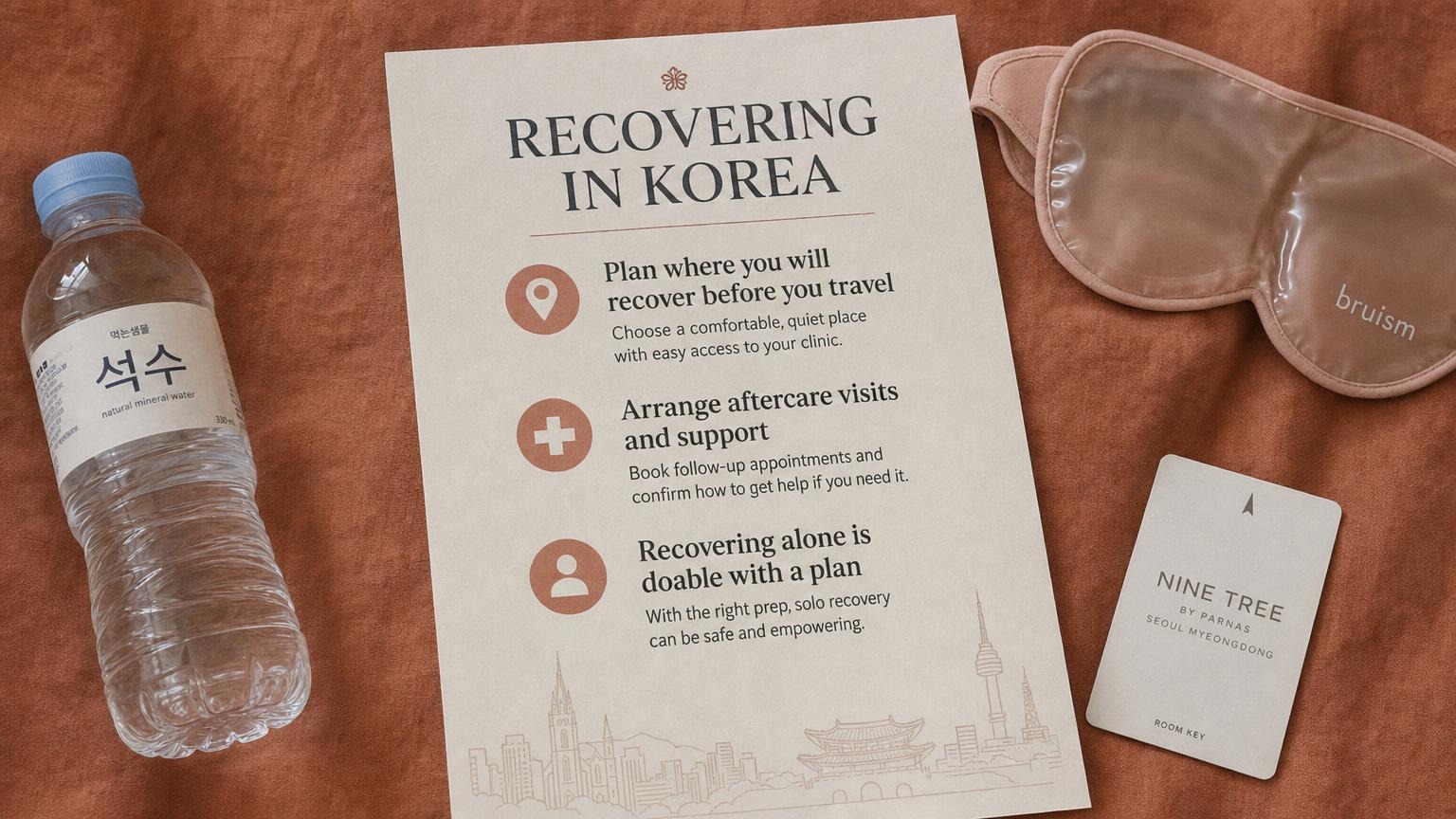
For a foreign patient, the surgery is only half the trip; recovering in an unfamiliar country, often alone, is the other half, and it goes far more smoothly with a plan. The essentials are booking accommodation near the clinic, arranging aftercare visits and transport, preparing to recover alone, and knowing when it is safe to fly home. Understanding how to plan each of these before you travel is what turns a daunting prospect into a manageable one.
Before You Travel
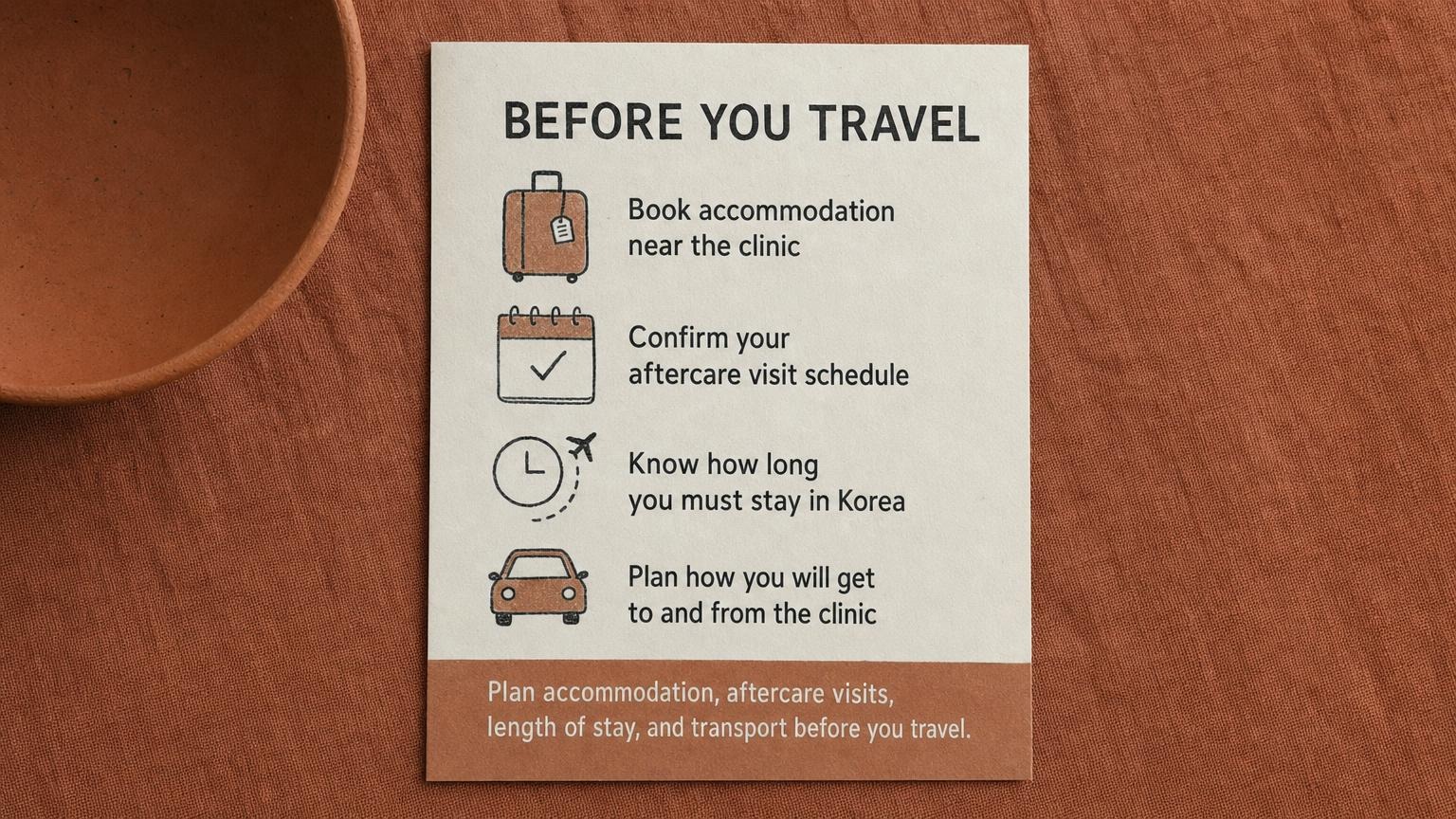
The most important recovery decisions are made before you leave home. Book accommodation near the clinic, so getting to aftercare visits is easy when you are tired and sore. Confirm your aftercare visit schedule, so you know how many visits you need and when. Know how long you must stay in Korea, which depends on your procedure and follow-up needs. And plan how you will get to and from the clinic, since public transport may be hard right after surgery. These four things, settled in advance, remove most of the stress.
The principle is to plan accommodation, aftercare visits, length of stay, and transport before you travel. Sorting these out in advance, rather than improvising once you arrive and are recovering, is the single biggest difference between a smooth trip and a stressful one. This planning is a core part of the broader trip logistics covered in our medical tourism and trip-planning guidance, and a good clinic will help you understand exactly what your specific procedure requires.
Where to Stay
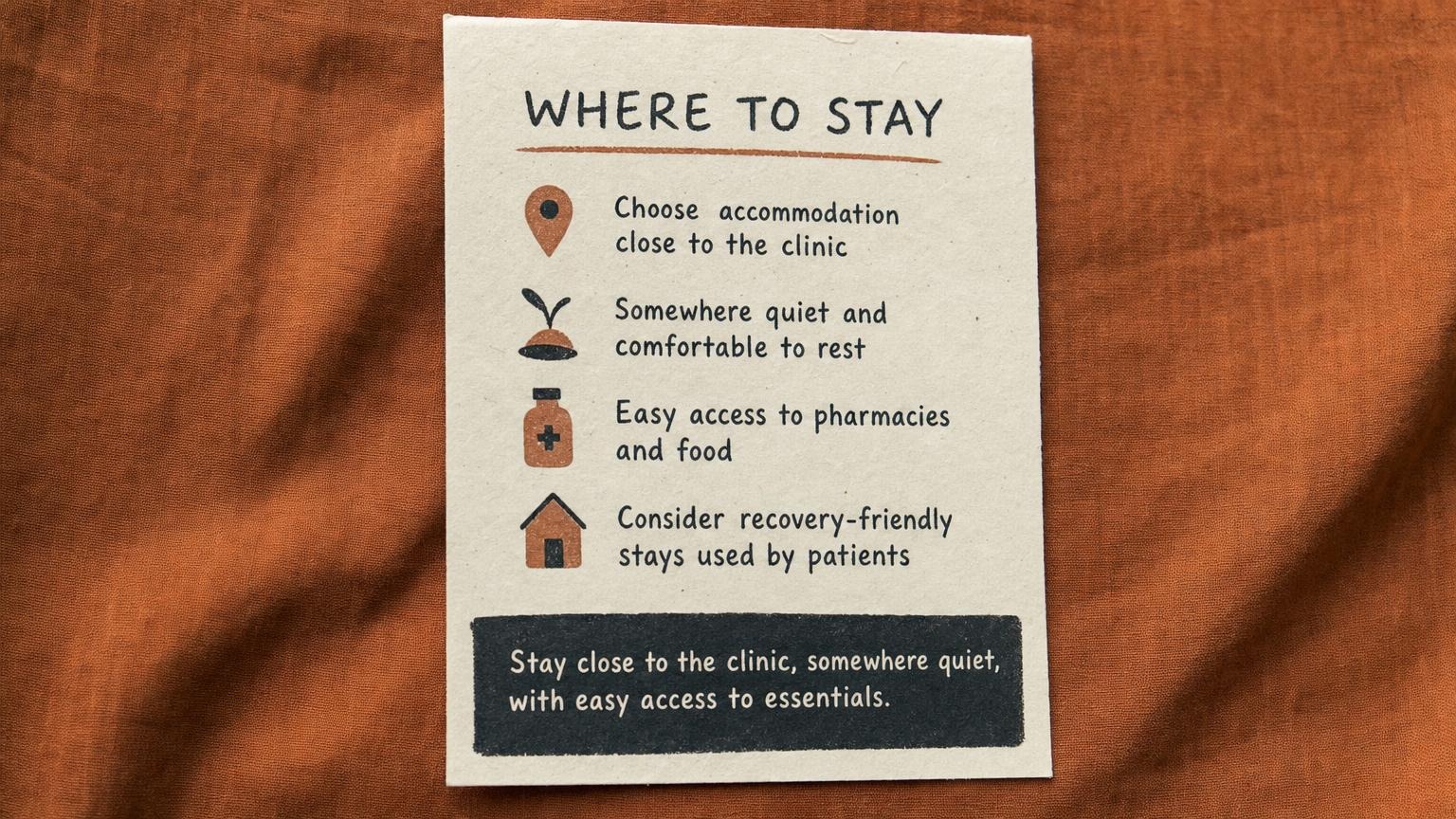
Accommodation choice shapes your whole recovery. Choose somewhere close to the clinic, so aftercare visits are short and easy. Pick somewhere quiet and comfortable to rest, since recovery needs calm. Look for easy access to pharmacies and food, which you will need without wanting to travel far. And consider recovery-friendly stays used by patients, which are set up for exactly this purpose. The goal is a base that makes resting and getting to the clinic as effortless as possible.
So the guidance is to stay close to the clinic, somewhere quiet, with easy access to essentials. A convenient, restful base removes a surprising amount of friction from recovery, while a distant or noisy one adds strain at exactly the wrong time. When you plan your stay, think about the days after surgery specifically, when even a short, complicated journey to the clinic can feel like a lot, rather than choosing accommodation as you would for an ordinary trip. The right base is one built around resting and recovering.
Recovering Alone
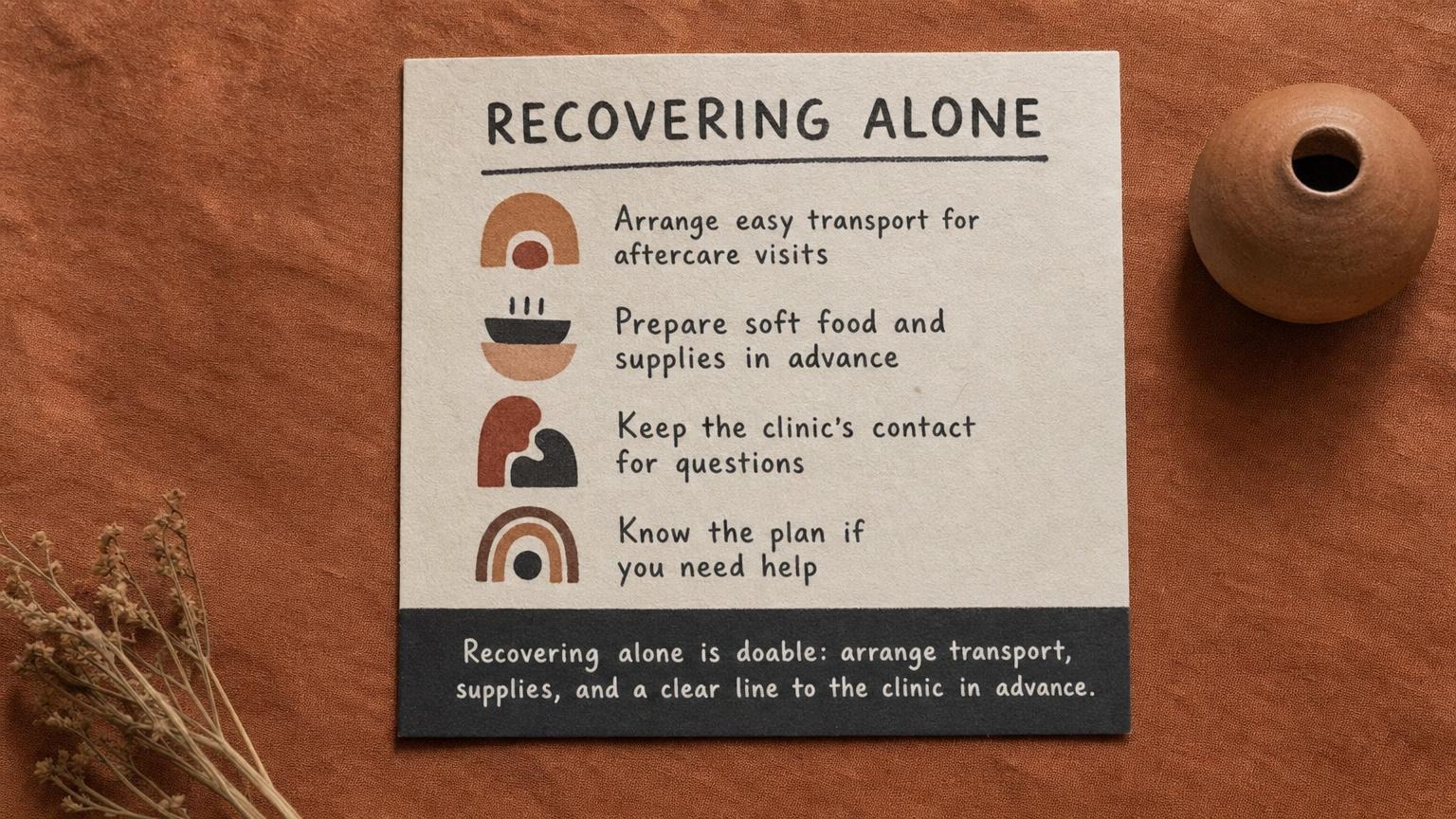
Many foreign patients recover without a companion, and it is manageable with preparation. Arrange easy transport for aftercare visits, so you are not struggling with public transport when sore. Prepare soft food and supplies in advance, so you have what you need without errands. Keep the clinic’s contact details handy for any questions. And know the plan if you need help, so you are not improvising in a difficult moment. None of this requires a companion; it requires having thought it through beforehand.
The reassurance is that recovering alone is doable: arrange transport, supplies, and a clear line to the clinic in advance. Solo recovery feels daunting mainly when unplanned, and straightforward when the practical needs, getting around, eating, and reaching the clinic, are sorted before surgery. A good clinic used to international patients will help you prepare for solo recovery and will be reachable if you have concerns. Preparation, not company, is what makes recovering alone in Korea perfectly workable.
Aftercare and Follow-Up
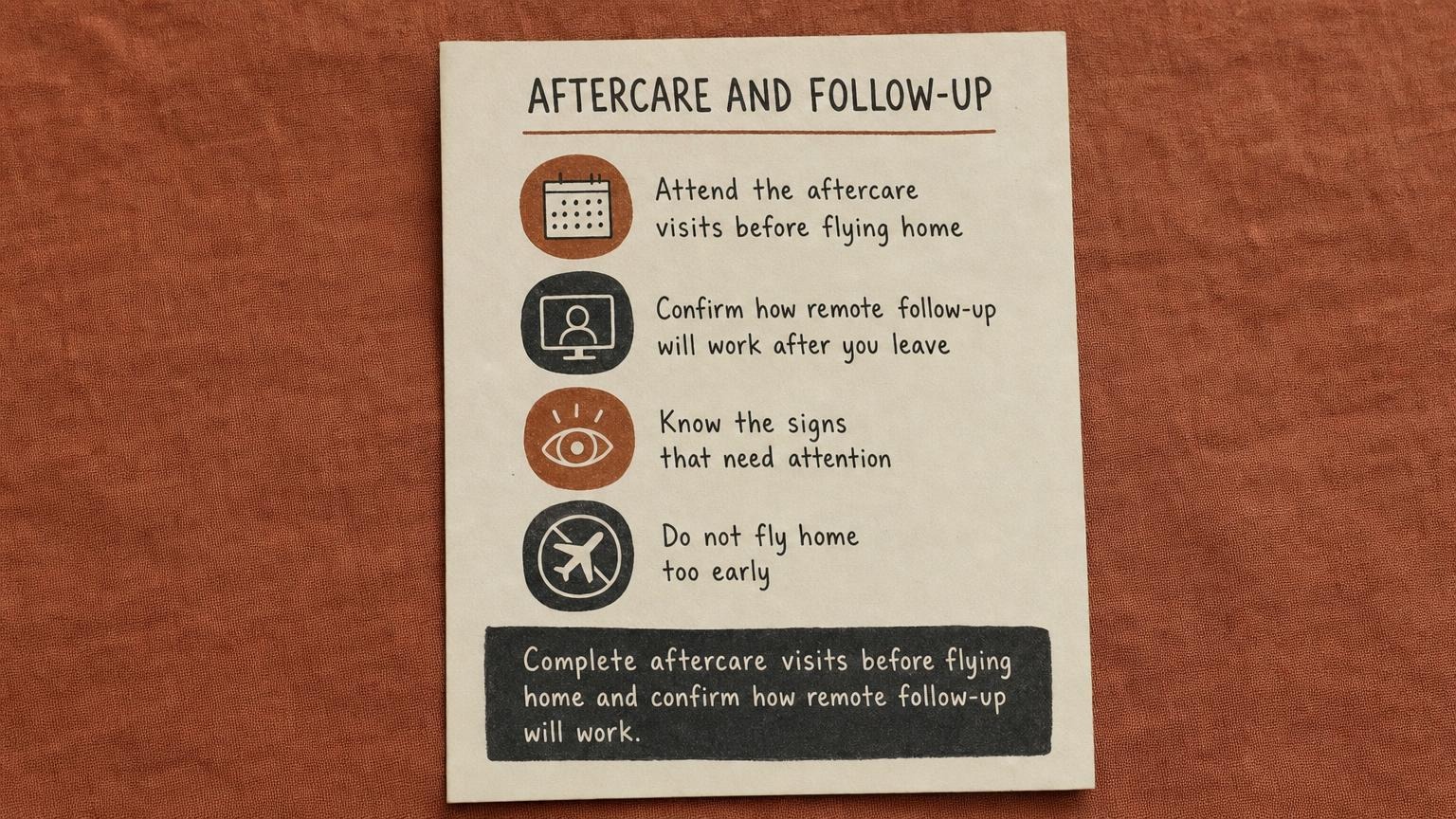
The end of the trip needs as much thought as the start. Attend the aftercare visits before flying home, since they are part of the treatment, not optional extras. Confirm how remote follow-up will work after you leave, so you have support once you are back home. Know the signs that need attention, so you can act if something is not right. And do not fly home too early, since flying before you are ready can affect recovery. Getting the timing and follow-up right protects the result you traveled for.
The key point is to complete aftercare visits before flying home and confirm how remote follow-up will work. Cutting the trip short to save time or money, or flying before the clinic clears you, risks the very result you invested in. A clinic experienced with international patients will have a clear plan for aftercare during your stay and for remote follow-up afterward, which is worth confirming before you book. Planning the end of the trip as carefully as the beginning is what ensures your recovery, and your result, are properly supported.
Cost and How to Plan It
Recovery logistics are a real part of the trip budget that patients often overlook. Accommodation for the length of your required stay, transport to aftercare visits, food and supplies during recovery, and enough time before flying home all add to the total beyond the procedure itself. The sensible approach is to budget for the full recovery period your procedure requires, not just the surgery and a quick departure. Much of a Korea trip’s spending goes to this side of things, and planning it realistically, rather than assuming a short stay, is what keeps both your recovery and your budget sound.
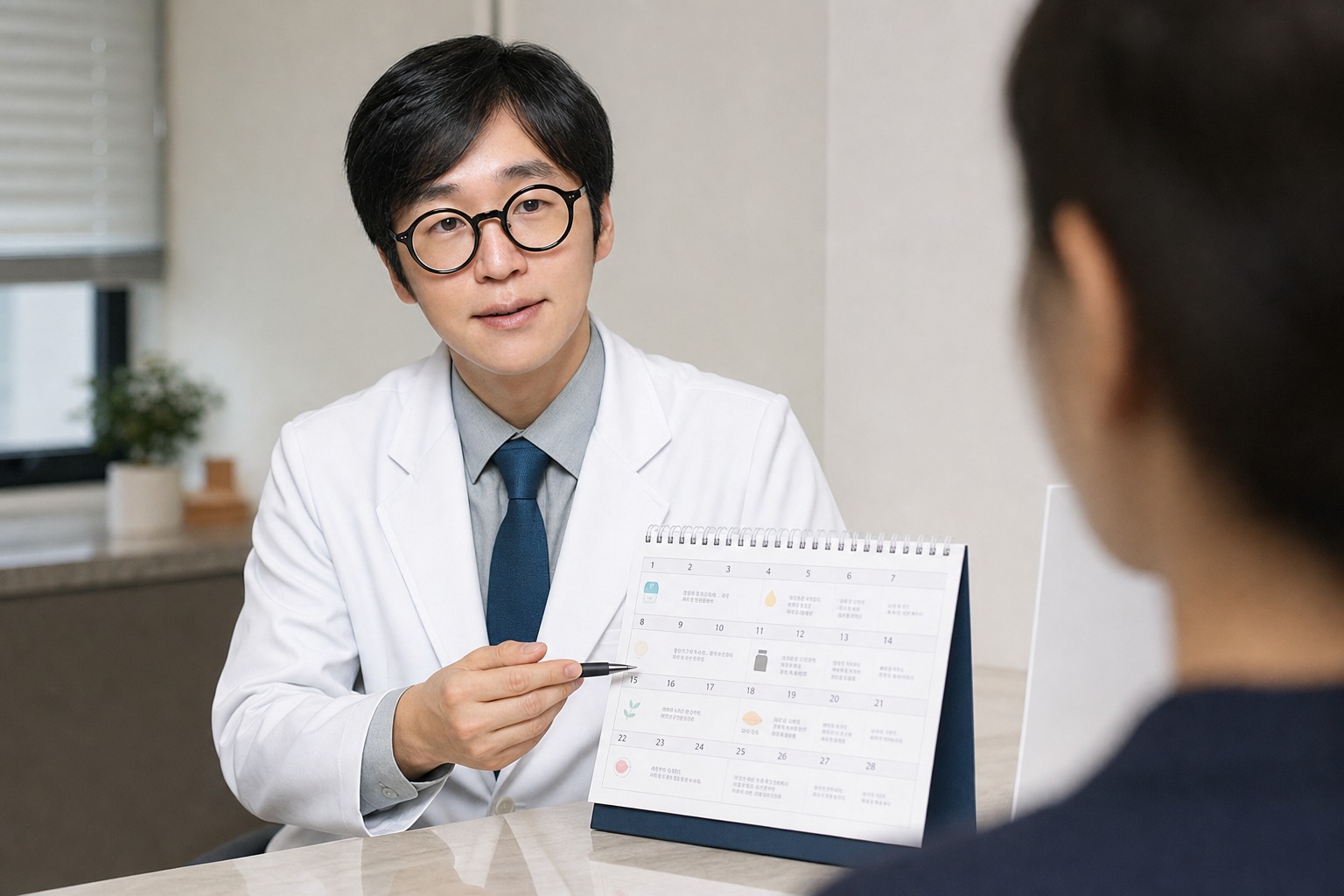
Before committing, five questions keep your recovery well planned. Have I booked accommodation close to the clinic, quiet and comfortable to rest in? Do I know my aftercare visit schedule and how long I must stay in Korea? Have I arranged transport, food, and supplies for recovering alone? Do I know how remote follow-up will work and the signs that need attention? And have I planned enough time so I do not fly home too early? A clinic experienced with international patients that helps you plan all of this is the one to trust. For trip-planning details, visit Link Plastic Surgery’s official website.
Frequently Asked Questions
1. How do I plan recovery in Korea as a foreign patient?
Plan the key logistics before you travel: book accommodation near the clinic, confirm your aftercare visit schedule, know how long you must stay, and plan transport to and from the clinic. Sorting these out in advance, rather than improvising once you are recovering, is the biggest difference between a smooth trip and a stressful one. A good clinic helps you plan for your specific procedure.
2. Where should I stay while recovering?
Choose accommodation close to the clinic, quiet and comfortable to rest in, with easy access to pharmacies and food. Consider recovery-friendly stays that patients use, which are set up for the purpose. Think about the days right after surgery specifically, when even a short, complicated journey feels like a lot, rather than picking accommodation as you would for an ordinary trip.
3. Can I recover alone, without a companion?
Yes, many foreign patients do, and it is manageable with preparation. Arrange easy transport for aftercare visits, prepare soft food and supplies in advance, keep the clinic’s contact handy, and know the plan if you need help. Solo recovery feels daunting mainly when unplanned; sorting out getting around, eating, and reaching the clinic beforehand makes it perfectly workable.
4. How long do I need to stay in Korea?
It depends on your procedure and how many aftercare visits you need before you are cleared to fly. This is something to confirm with the clinic when planning, since flying home too early can affect recovery. Budget for the full recovery period your specific procedure requires rather than assuming a short stay, and do not book a return flight before you know the required length.
5. When is it safe to fly home?
When you have completed the necessary aftercare visits and the clinic has cleared you, not before. Flying too early can affect recovery, so the timing should follow your procedure’s needs and the surgeon’s advice rather than your travel convenience. Plan enough time in Korea for this, and confirm the expected timeline with the clinic before booking your return flight.
6. How does follow-up work after I go home?
Confirm with the clinic before you travel how remote follow-up will work once you are back home, including how to reach them and what to do if any issue arises. A clinic experienced with international patients will have a clear plan for this. Knowing the signs that need attention and having a line to the clinic means distance does not leave you without support.
7. What supplies should I prepare for recovery?
Soft food and basic recovery supplies you can have ready without needing errands, plus any items the clinic recommends for your specific procedure. Preparing these in advance, rather than shopping while sore, makes solo recovery much easier. Ask the clinic what you will need for your particular surgery so you can have everything ready at your accommodation before the procedure.
8. How do I get to aftercare visits after surgery?
Arrange easy transport in advance, since public transport can be hard right after surgery. Staying close to the clinic makes visits short, and planning how you will travel, whether a taxi or a nearby stay, removes the strain of figuring it out while recovering. This is one of the main reasons to choose accommodation near the clinic rather than somewhere far.
9. What if something goes wrong while I’m recovering alone?
Keep the clinic’s contact details handy, know the signs that need attention, and have a plan for getting help if needed. A clinic experienced with international patients will be reachable for concerns during your stay. Knowing in advance what to watch for and how to reach the clinic means that even recovering alone, you are not left improvising in a difficult moment.
10. How much should I budget for recovery logistics?
Budget for accommodation over your full required stay, transport to aftercare, food and supplies, and enough time before flying home, all beyond the procedure cost. Much of a Korea trip’s spending goes to this side. Planning for the full recovery period your procedure needs, rather than a quick departure, keeps both your recovery and budget sound. For trip-planning details, visit Link Plastic Surgery’s official website.