She wanted a double eyelid but had two fears that had kept her from booking: that a non-incision method would loosen and disappear in a year, and that the crease would look obviously done, a hard line that gave the surgery away even when her eyes were closed. At a consultation in Seoul she learned about a technique that addresses both worries directly, the natural adhesion method, one of the refinements driving Korea’s 2026 eye-surgery trends. It is a non-incision approach designed to create a crease so seamless it looks natural even with the eyes shut, while being more stable than the older buried-suture methods she was afraid of. The fears that had held her back were exactly what this technique was developed to solve. The consultation at Link Plastic Surgery can explain whether it suits your eye.
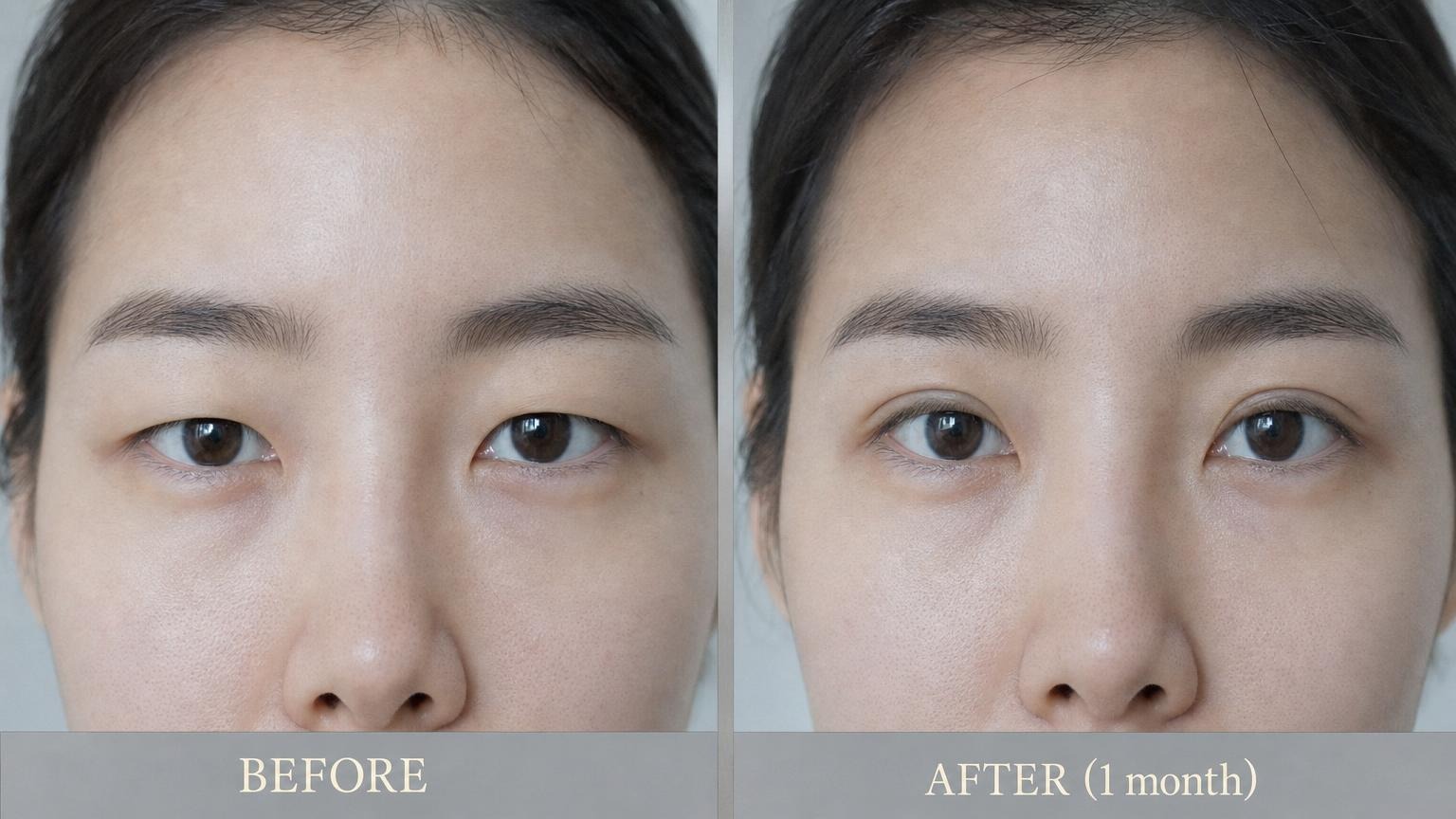
Double eyelid surgery remains the most requested procedure in Korea, and the 2026 trend is a refinement toward ever more natural, seamless results, with the natural adhesion method one of the most talked-about techniques. It is a non-incision approach aiming for a crease that looks natural even with the eyes closed, more stable than classic buried-suture methods, and suited to the right candidate. Understanding what the technique actually is, how it compares, who it suits, and what to realistically expect is what separates an informed choice from chasing a trend name.
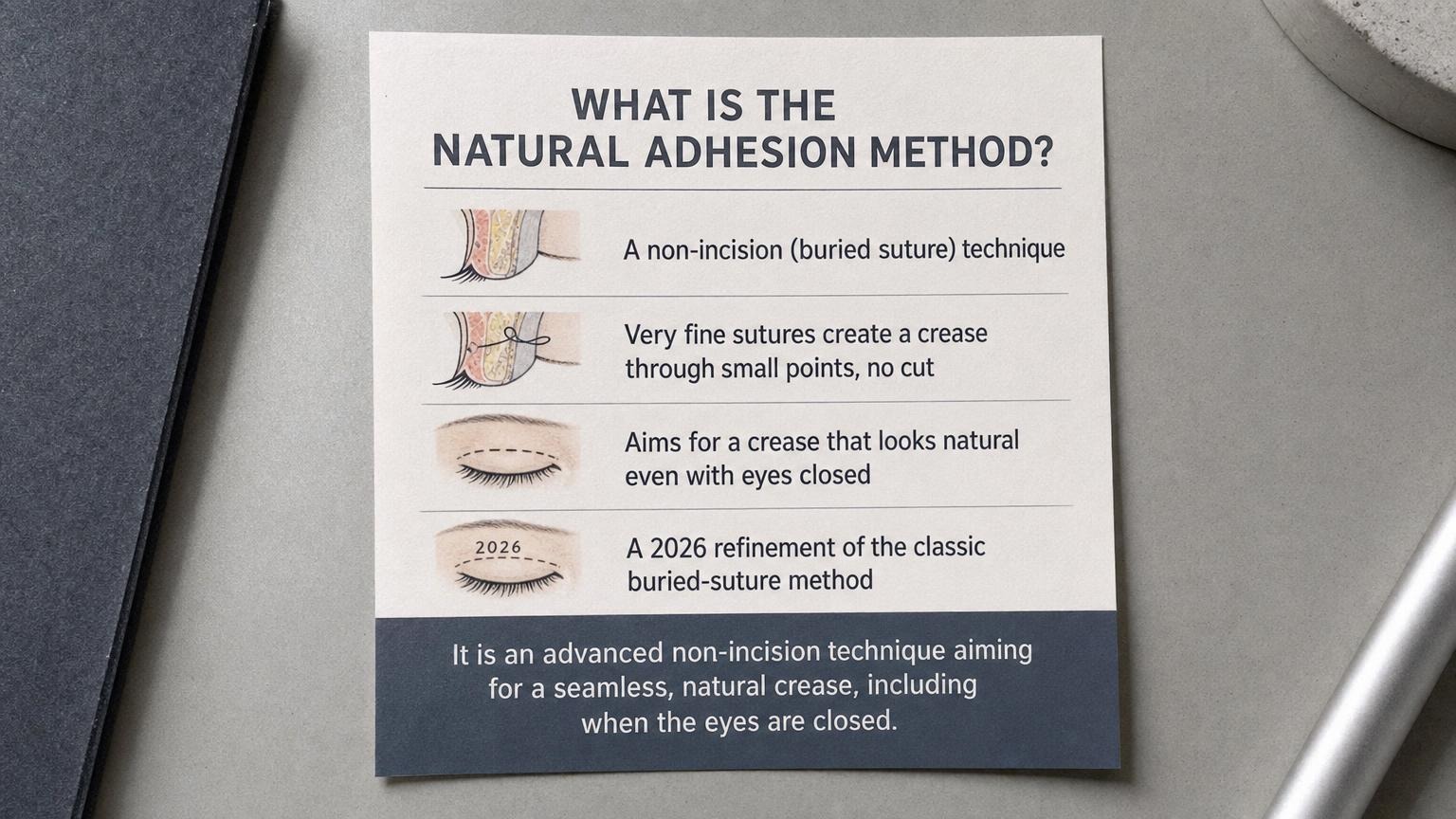
What Is the Natural Adhesion Method?
The natural adhesion method is, at its core, a non-incision (buried-suture) technique, meaning the crease is created without cutting the eyelid. Very fine sutures form the crease through small points rather than an incision, so there is no cut and a faster recovery. The defining aim of the technique is a crease that looks natural even with the eyes closed, addressing the common complaint that older non-incision results could look set or artificial when the eye was shut. It is best understood as a 2026 refinement of the classic buried-suture method, part of the broader trend toward seamless, natural eye results.
So it is an advanced non-incision technique aiming for a seamless, natural crease, including when the eyes are closed. This connects to the same individualized, natural-result philosophy behind Korean double eyelid surgery generally, where the goal is a crease designed for your eye rather than a generic line. The trend name matters less than the underlying aim: a non-incision crease that looks and stays natural.
How It Compares
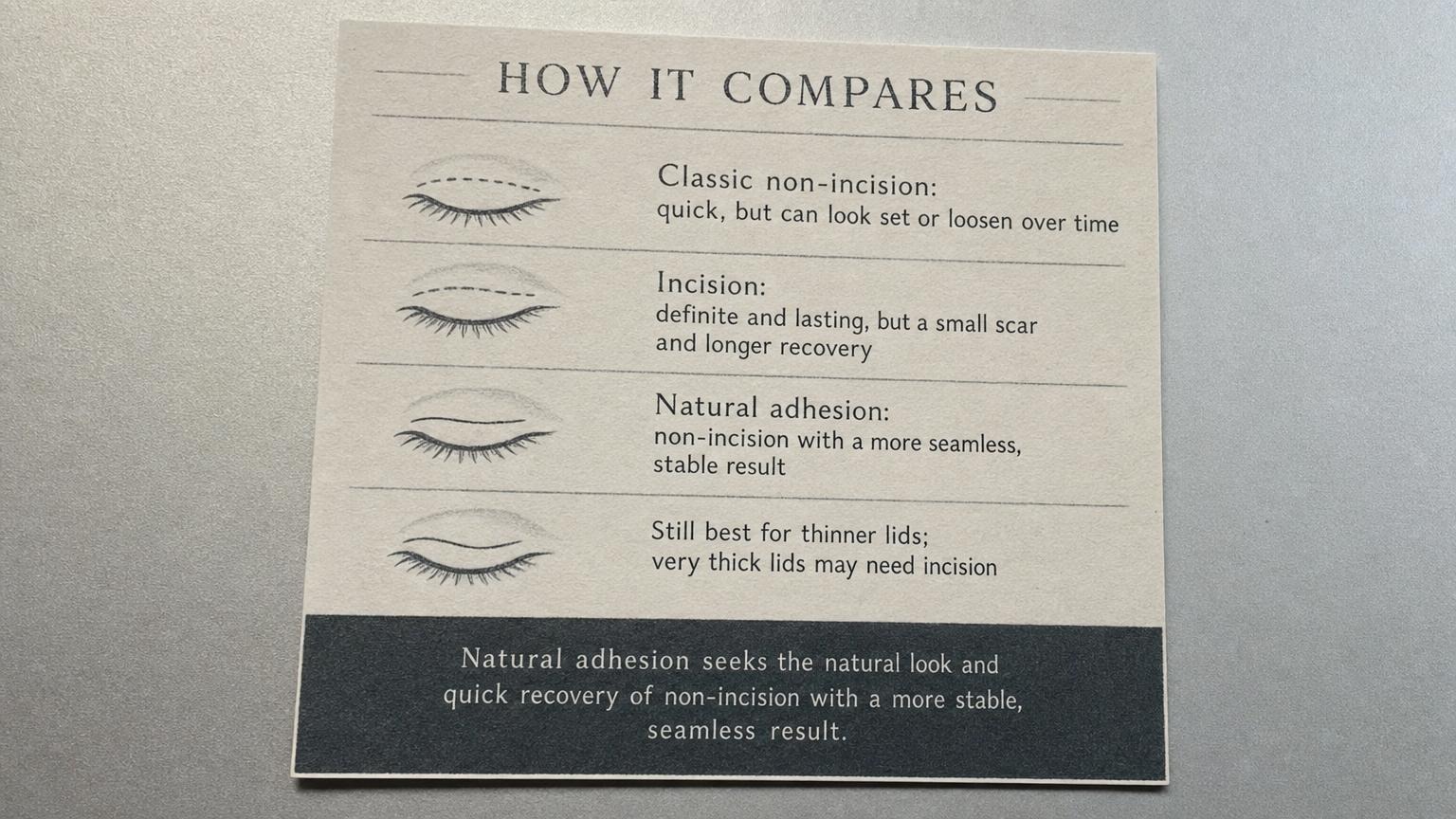
Understanding where natural adhesion sits among the options helps you judge whether it is right for you. The classic non-incision method is quick and scar-free but can look slightly set or loosen over time. The incision method gives a definite, lasting result but leaves a small scar and involves longer recovery. The natural adhesion method aims to be non-incision with a more seamless and stable result, capturing the best of both, the natural look and quick recovery of non-incision with improved stability. It remains best for thinner lids, however; very thick lids may still need the incision method.
The takeaway is that natural adhesion seeks the natural look and quick recovery of non-incision with a more stable, seamless result than older buried-suture techniques. It is not a replacement for incision surgery in every case, and the right method still depends on your eyelid, as explored in our guide to incision versus non-incision double eyelid surgery. Natural adhesion is a meaningful refinement within the non-incision category, not a universal answer.
Who It Suits
The natural adhesion method, like all non-incision techniques, suits particular eyes best. It works well for thinner eyelids without much excess skin or fat, since non-incision methods cannot remove tissue. It suits those wanting a natural, low crease and a quick recovery, and people nervous about a visible scar or long downtime. It is not ideal for very thick or hooded lids, or eyes with significant excess skin, which may need the incision method to achieve a clean, lasting result.
So it is best for thinner lids and a natural look with fast recovery, while thick or hooded lids may still need an incision method. This is why an honest assessment of your eyelid matters more than the appeal of a trend name: the natural adhesion method is excellent for the right candidate and the wrong choice for an eyelid that genuinely needs incision. The same eye-by-eye thinking applies across the range of Korean eye surgery, where the method follows the eye.

Realistic Expectations
Honest expectations are essential, especially with a trending technique. The natural adhesion method is more natural and stable than older non-incision approaches, but it is still a non-incision technique, with the inherent characteristics that brings. No technique is permanent for everyone; suitability matters most, and a non-incision method on an unsuitable eyelid will not hold as well as on a thin, well-matched one. A skilled surgeon and the right candidate matter far more than the trend name, and the crease should be kept conservative to preserve your natural eye.
The honest framing is that the technique helps, but the surgeon’s skill and choosing the right candidate matter more than any 2026 trend name. It is easy to be drawn to a buzzy technique, but the same method produces a beautiful result on a suitable eye and a disappointing one on an unsuitable eye. A surgeon who assesses whether your eyelid truly suits a non-incision approach, rather than simply selling the trending name, is the one who will give you the natural, stable result the technique promises.

Cost and How to Plan It
The natural adhesion method is priced as a non-incision double eyelid procedure, generally less than incision surgery, with a quicker recovery that suits a shorter trip. The realistic figure depends on the clinic and whether any additional procedure is combined. These costs are generally below the equivalent abroad. The faster recovery of a non-incision technique is part of its appeal for an international patient, but the cost should never be the reason to choose non-incision for an eyelid that genuinely needs incision.

Before committing, five questions help you decide on the natural adhesion method. Does my eyelid genuinely suit a non-incision technique, thin enough without excess skin or fat? Is the surgeon recommending it because it fits my eye, not just because it is trending? How natural and stable can I realistically expect the result to be for my eyelid? Would an incision method give a better lasting result in my case? And is the crease being kept conservative for a natural look? A surgeon who matches the technique to your eye, rather than selling the trend, is the one to trust. For trip-planning details, visit Link Plastic Surgery’s official website.
Frequently Asked Questions
1. What is the natural adhesion double eyelid method?
It is a non-incision (buried-suture) technique that creates a double-eyelid crease using very fine sutures through small points, with no cut. Its defining aim is a crease that looks natural even when the eyes are closed, addressing a common complaint about older non-incision methods. It is a 2026 refinement of the classic buried-suture approach, part of the trend toward seamless, natural eye results.
2. Is it better than the classic non-incision method?
It aims to be, by producing a more seamless and stable result than older buried-suture techniques while keeping the natural look and quick recovery of non-incision. For the right candidate it can improve on the classic method’s tendency to look set or loosen over time. But it is still a non-incision technique, so suitability of your eyelid remains the key factor.
3. Will the crease look natural even with my eyes closed?
That is the specific goal of the natural adhesion method, addressing the older complaint that some non-incision creases looked artificial when the eye was shut. Done well on a suitable eyelid, the crease aims to look seamless open or closed. However, the result still depends on your eyelid and the surgeon’s skill, not the technique name alone.
4. Who is a good candidate for this method?
People with thinner eyelids without much excess skin or fat, who want a natural low crease and quick recovery, and who are nervous about a visible scar or long downtime. It is not ideal for very thick or hooded lids or eyes with significant excess skin, which may need the incision method. An honest eyelid assessment determines whether it suits you.
5. How does it compare to incision double eyelid surgery?
Incision surgery gives a definite, lasting result but leaves a small scar and involves longer recovery, and it can remove excess skin or fat. Natural adhesion is non-incision, so it is scar-free with quick recovery but cannot remove tissue and suits thinner lids. For thick or hooded lids, incision may give a better lasting result; for thin lids, natural adhesion is appealing.
6. Will the result last, or will it loosen?
Natural adhesion aims to be more stable than older non-incision methods, but as a non-incision technique its longevity depends heavily on eyelid suitability, thin, well-matched lids hold better than thick ones. No technique is permanent for everyone. Choosing the right candidate and a skilled surgeon matters more for lasting results than the trend name itself.
7. Is recovery faster than incision surgery?
Yes, like other non-incision methods, the natural adhesion technique generally has a quicker recovery than incision surgery because there is no cut, which is part of its appeal and suits a shorter trip. Swelling still needs time to settle for the final natural look, but the downtime is typically shorter than the incision method’s.
8. Is this just a marketing trend?
The natural adhesion method is a genuine refinement of the buried-suture technique that is prominent in Korea’s 2026 eye-surgery trends, but the trend name matters less than whether it suits your eye and the surgeon’s skill. A good surgeon recommends it because your eyelid is suitable, not just because it is trending. Be wary of any clinic selling a buzzy name over a proper assessment.
9. Can it remove excess eyelid skin or fat?
No. As a non-incision method, the natural adhesion technique cannot remove excess skin or fat; it creates a crease through sutures only. If your eyelid has significant excess skin or is very hooded or thick, the incision method, which can remove tissue, may be the better choice. This is why an eyelid assessment is essential before choosing.
10. How do I decide on this method as an international patient?
Have a consultation that honestly assesses whether your eyelid suits a non-incision technique, and confirms the natural adhesion method is recommended because it fits your eye rather than because it is trending. Weigh it against the incision method for your specific lid. Plan the trip around the quicker non-incision recovery. For scheduling details, visit Link Plastic Surgery’s official website.