Korean Upper Eyelid Fat Removal: The Procedure for People Whose Eyes Look Tired Even When They Aren’t

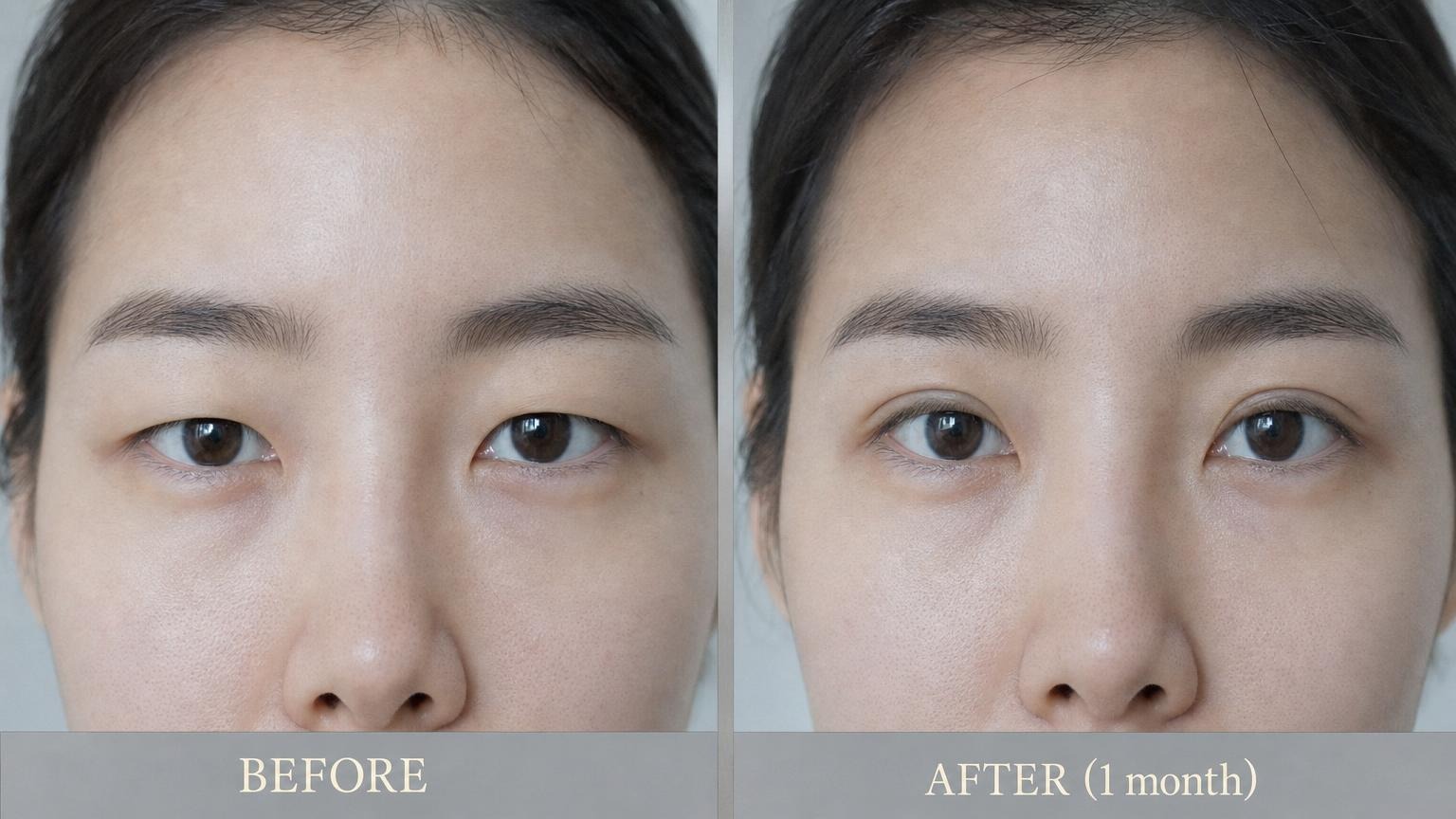
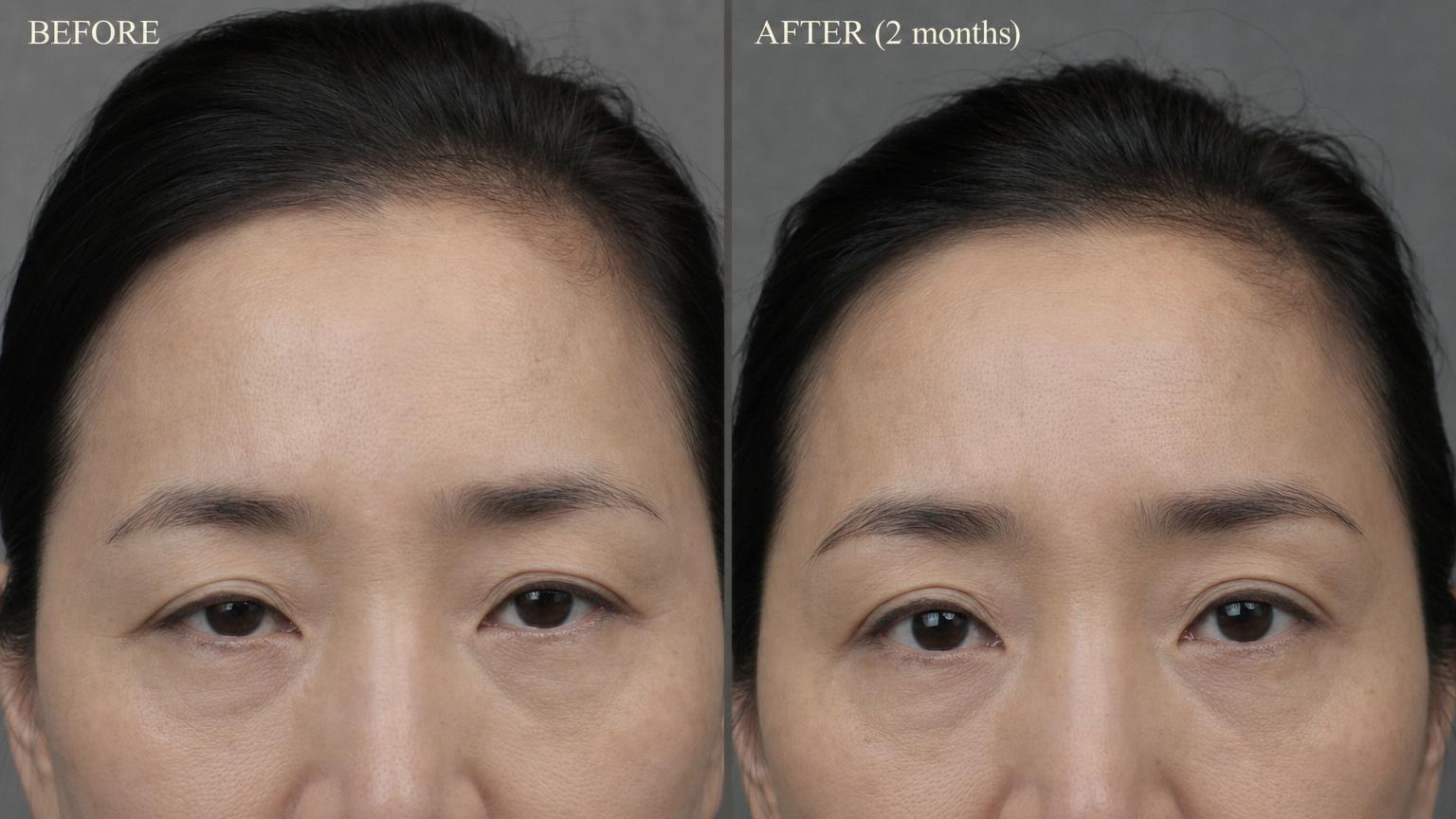
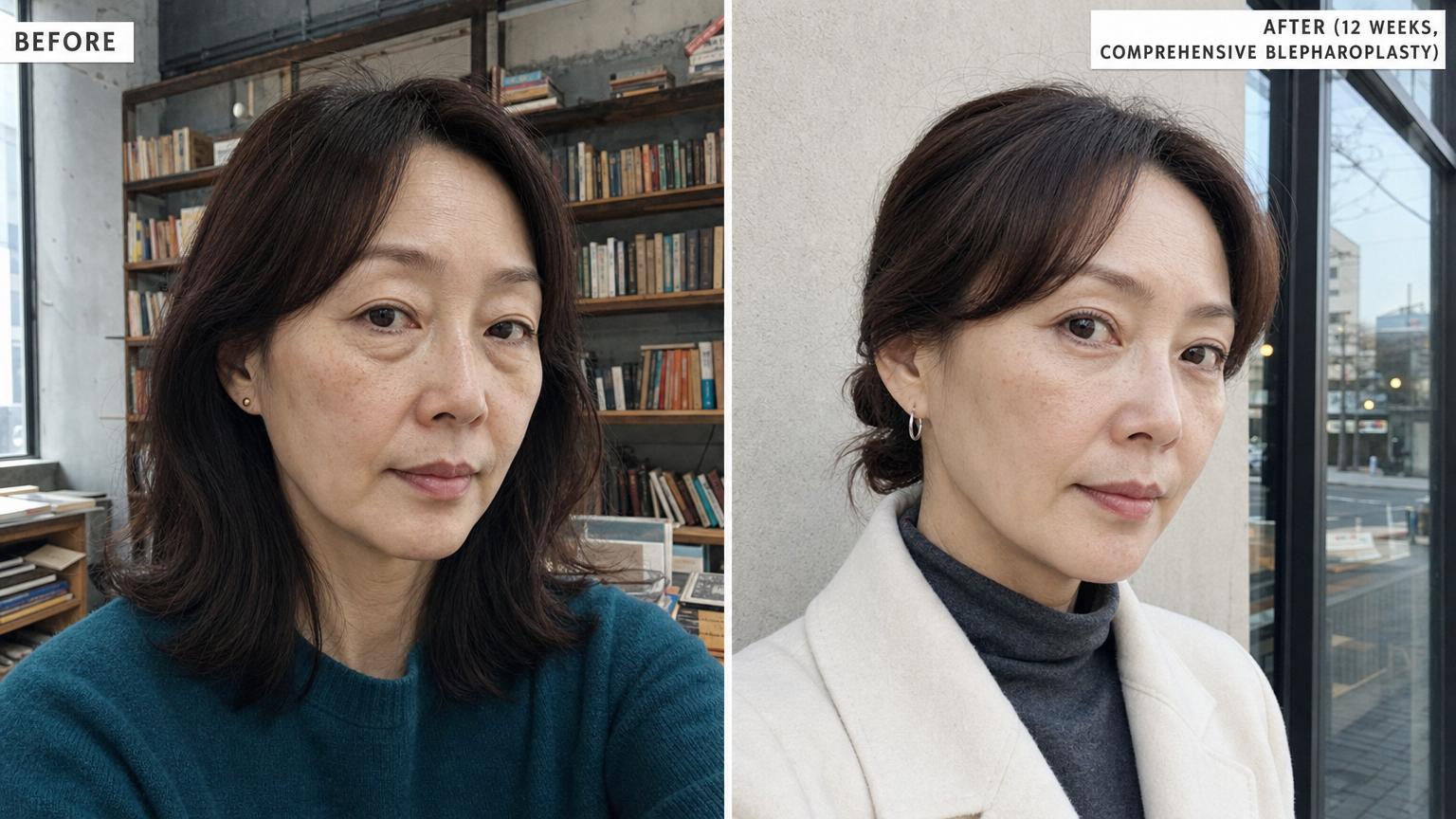
Before-and-after of a Korean woman three months after upper eyelid fat removal — thinner upper lids, more visible eyelid platform, eye shape unchanged

Most foreign patients fly into Seoul wanting double-eyelid surgery and walk out with a different plan: upper eyelid fat removal without creating a double-eyelid line. The procedure reduces ROOF fat for the patient whose eyes look tired even when they aren’t — fastest recovery in the Korean eye-surgery menu.

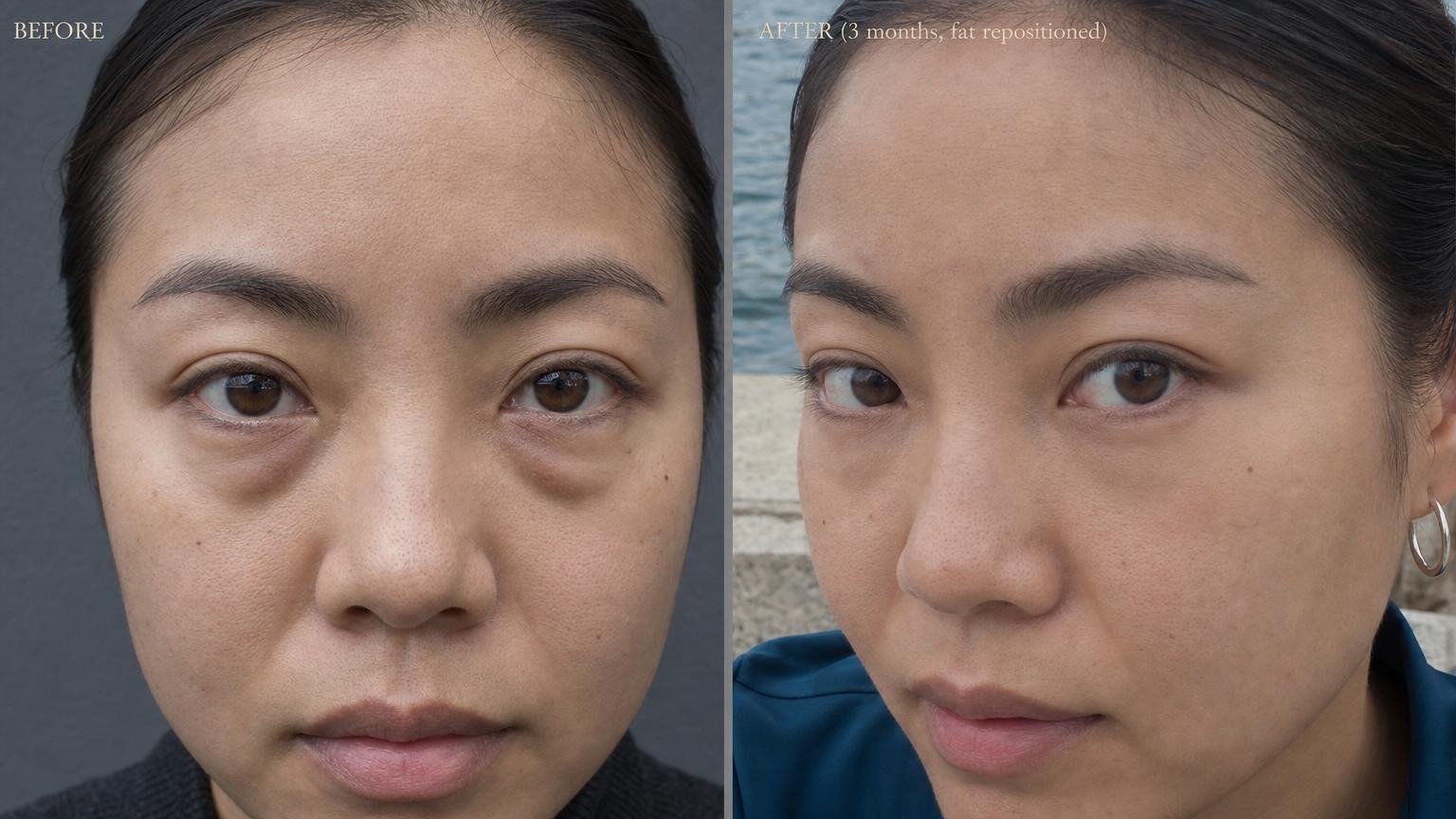
Korean Under-Eye Fat Repositioning Recovery: What Each Day Actually Looks Like

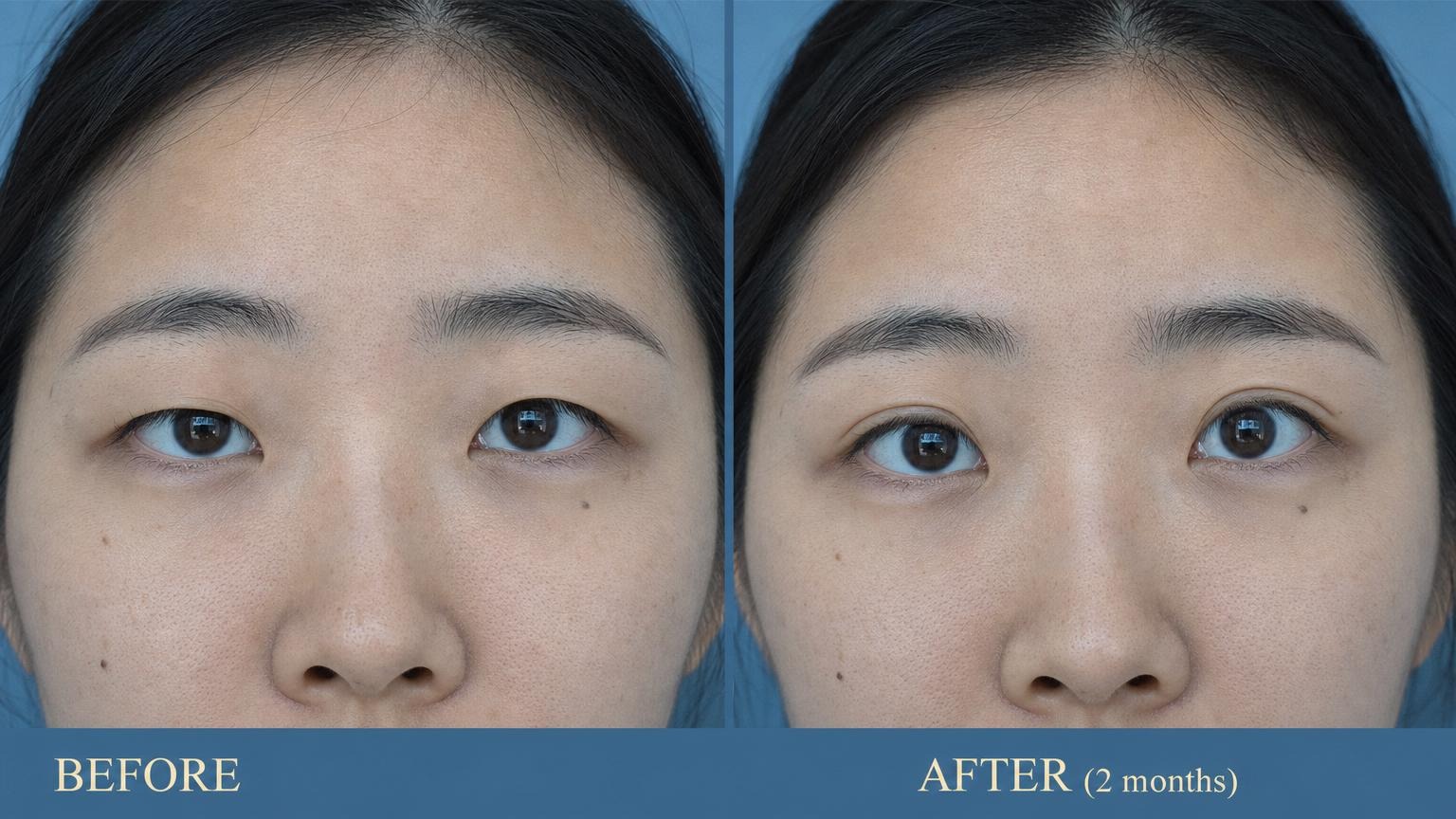
Before-and-after of a Korean woman in her early thirties at three months post-op showing tear trough hollow filled and lower-lid bag flattened by Korean transconjunctival under-eye fat repositioning

Every Korean clinic posts the three-month after-photo. The eight weeks of looking like you lost a fight that came before it never make it onto the website. This is what each day actually looks like, with references from real Seoul patients.

Tear Trough Hollow vs Eye Bag: Which Korean Surgery Do You Actually Need?

Editorial diagram comparing three under-eye conditions side by side — tear trough hollow, herniated eye bag, and skin pigmentation

Half the patients who fly to Seoul asking for ‘dark circle surgery’ don’t have a dark circle problem. They have a shadow problem — and the source of the shadow decides which surgery actually fixes it. Three conditions, three different procedures.

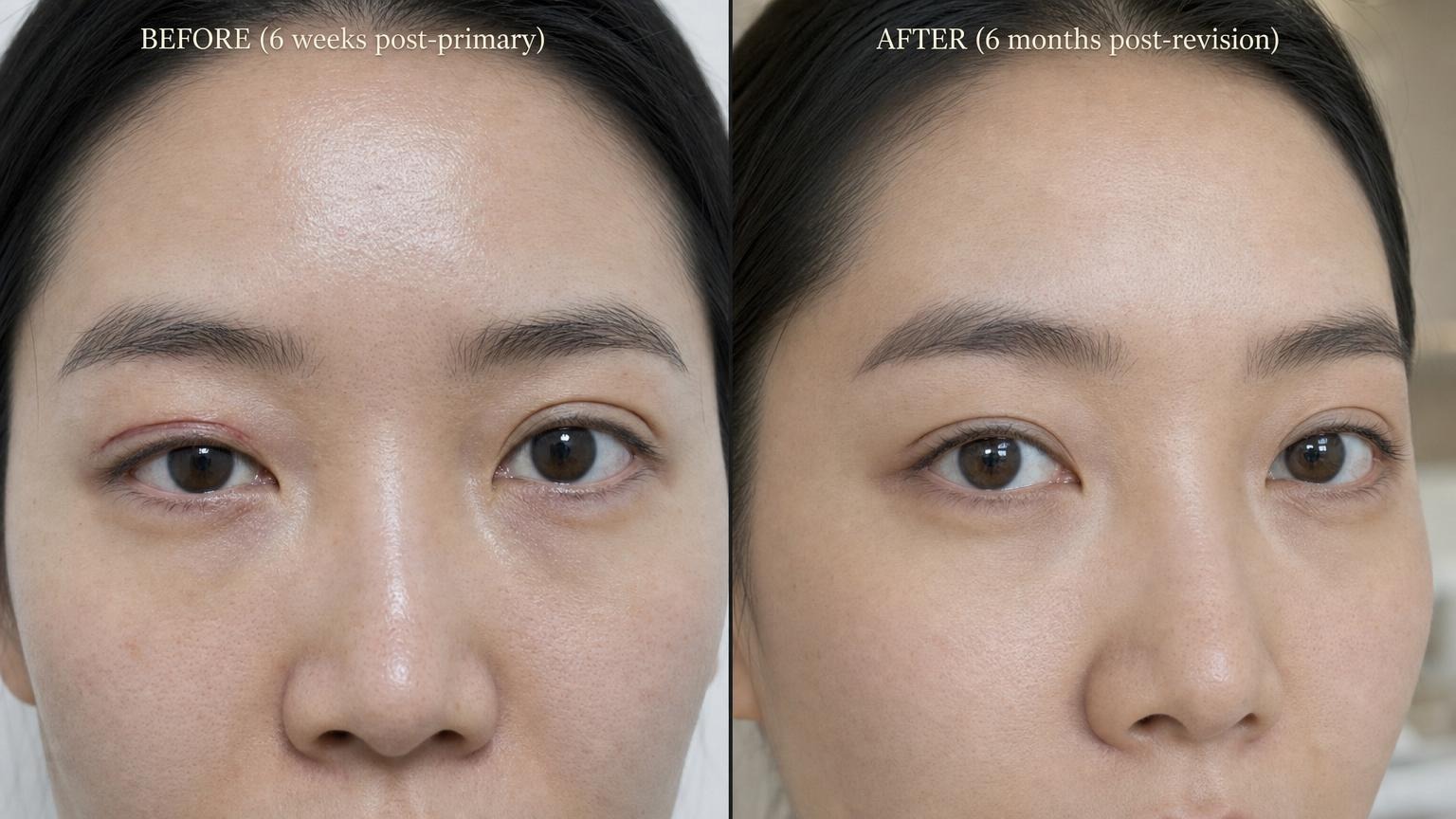
Korean Double Eyelid Surgery: Incision vs Non-Incision (Real 1-Month Recovery)

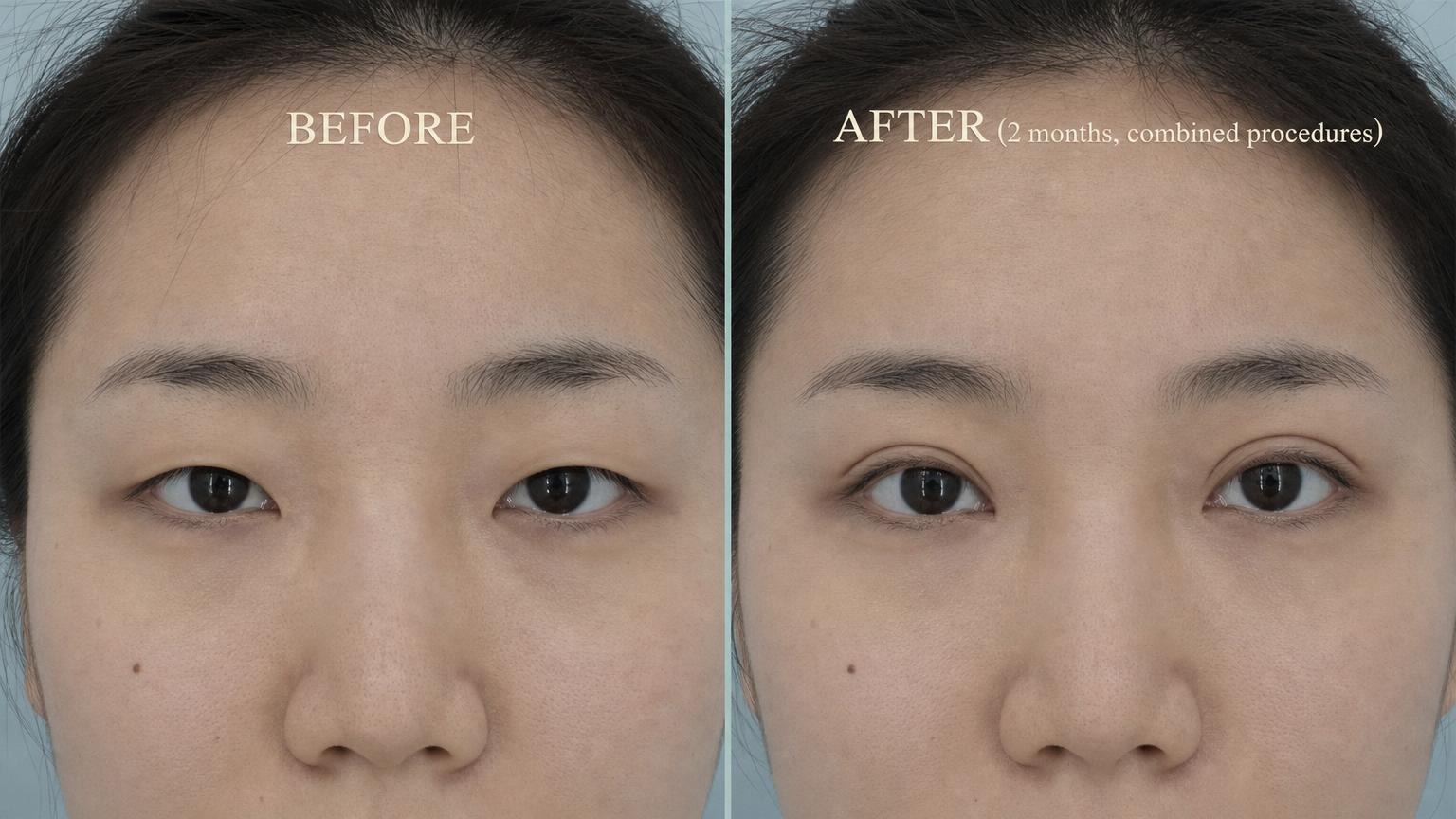
Before-and-after photo of a Korean female patient one month after combined incision double eyelid surgery, ptosis correction, and epicanthoplasty at Link Plastic Surgery

Most foreign patients pick the wrong method before they walk into a Korean clinic. Here’s the real difference between incision and non-incision double eyelid surgery, with a 1-month recovery timeline based on actual Seoul cases.