She had wanted double eyelid surgery for years but never booked it, held back by one fear: that she would come out looking like a different person, her Asian eyes replaced with a generic Western pair, her own character erased. The before-and-after photos she had seen online, with their deep dramatic creases and rounded eyes, confirmed her worry. When she finally consulted a surgeon in Seoul, he understood the fear immediately, and he showed her something different: a soft, low crease designed around her own eye that made her look more rested and defined while remaining unmistakably herself. The result she feared was a real risk, but only from surgery that was overdone. The consultation at Link Plastic Surgery often begins by reassuring patients that the goal is to refine their own eye, not replace it.

The fear of looking westernized is one of the most common anxieties foreign patients bring to Korean eye surgery, and it is not an irrational one. Overdone eye surgery genuinely can erase a person’s character, producing the standardized, operated look that haunts the worst before-and-after galleries. But that result comes from a particular kind of aggressive surgery, not from eye surgery itself. The Korean natural standard is built precisely around preserving your own eye character while refining it, and understanding the difference is what separates a result you love from one you regret.
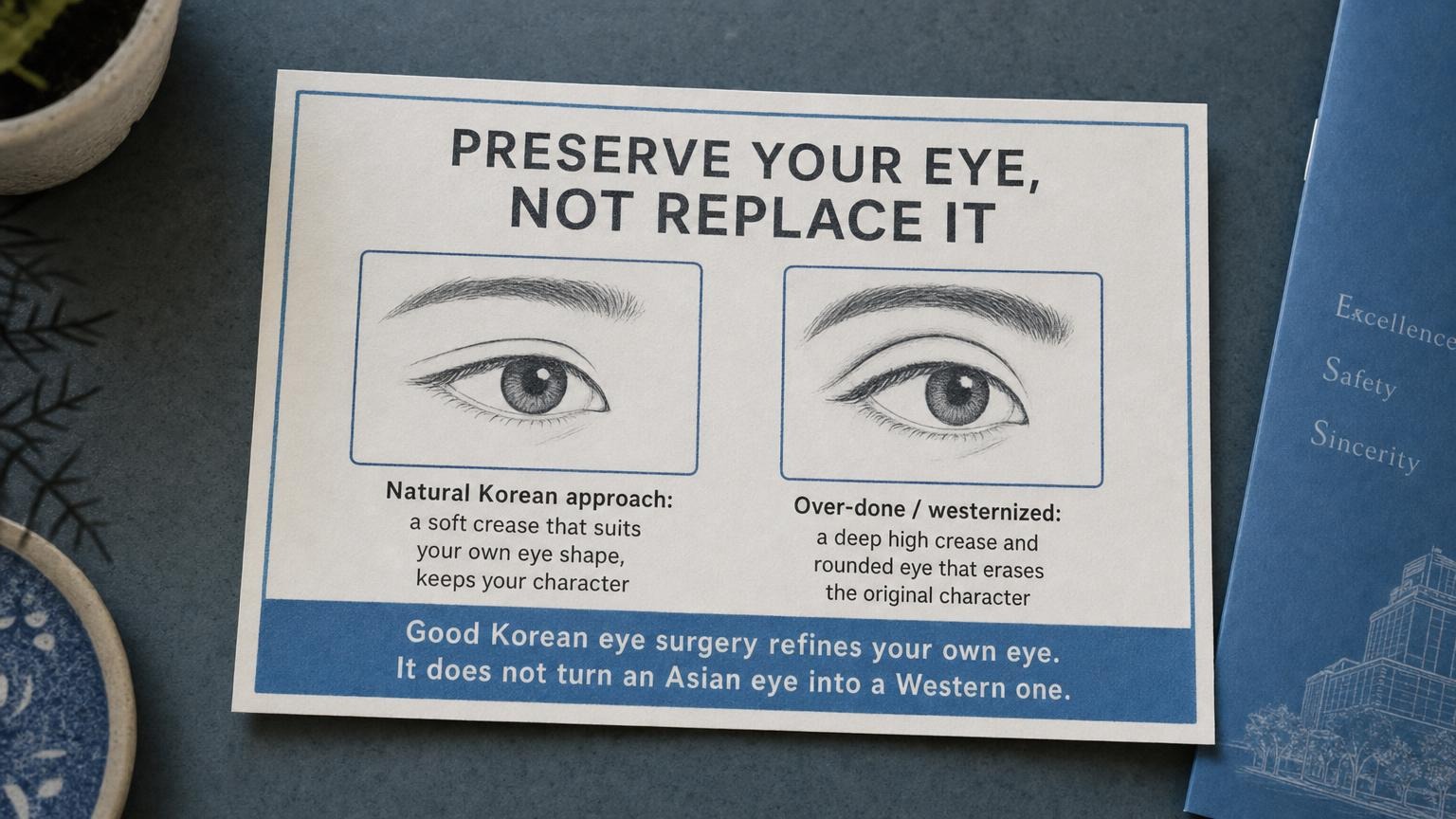
Preserve Your Eye, Not Replace It
The central distinction is between refining your own eye and replacing it with a generic one. These are different philosophies that produce very different results, and the gap between them is exactly where the fear of westernization lives.
The natural Korean approach designs a soft crease that suits your own eye shape and keeps your character; the eye looks more defined and rested, but it is recognizably still your eye. The overdone or westernized approach imposes a deep, high crease and a rounded eye that erases the original character, turning a distinctive Asian eye into a standardized shape that looks operated and unlike the person. Good Korean eye surgery refines your own eye; it does not turn an Asian eye into a Western one. This is the same individualized philosophy that runs through procedures like Korean double eyelid surgery, where the crease is designed for the individual rather than to a template.
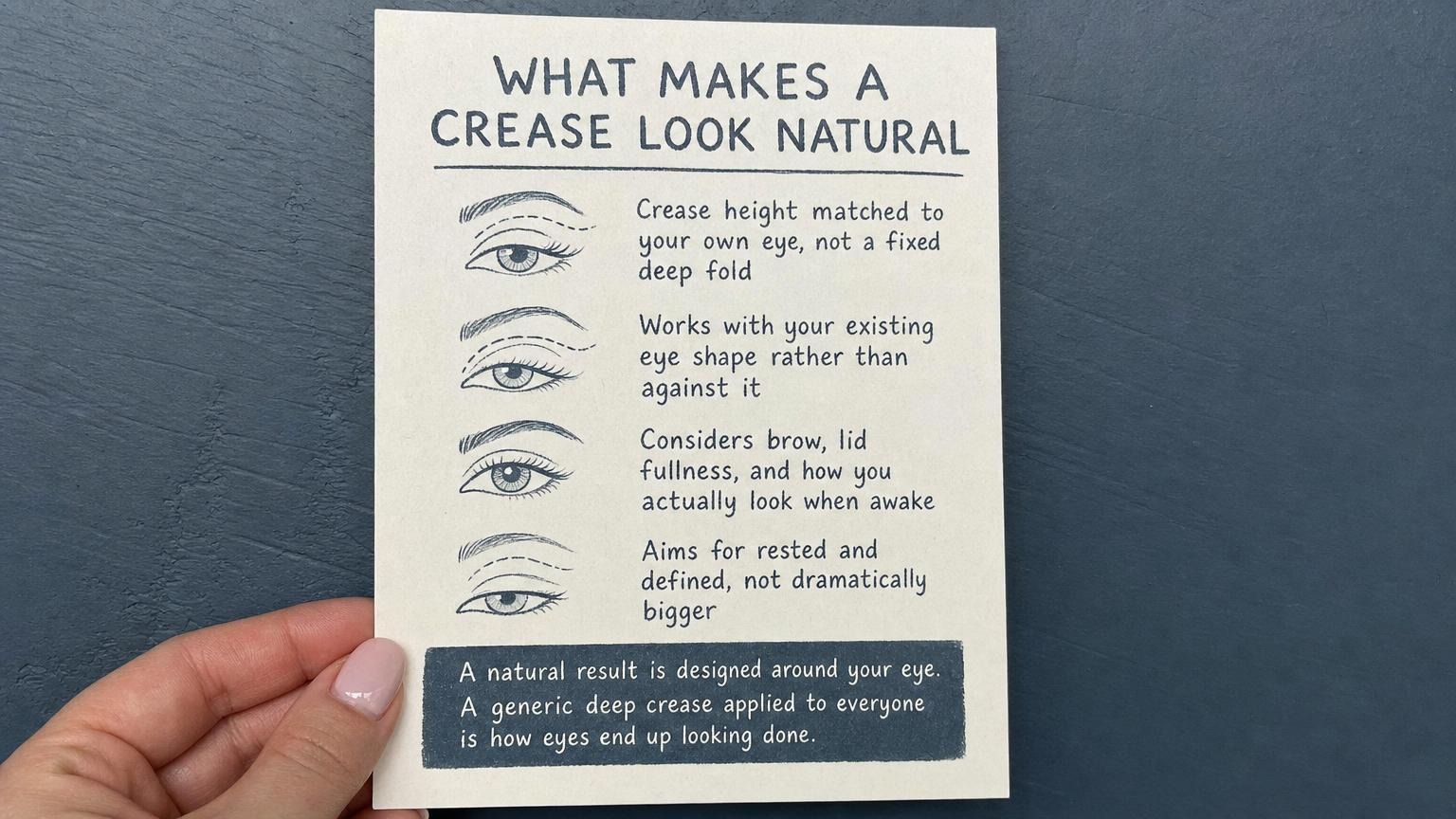
What Makes a Crease Look Natural
A natural result is not luck; it is the product of specific design choices that keep the surgery in service of your own eye rather than against it. Several factors distinguish a natural crease from an obvious one.
Crease height is matched to your own eye rather than set to a fixed deep fold, because a high crease that suits one face looks artificial on another. The design works with your existing eye shape rather than fighting it, enhancing what is there instead of imposing a different geometry. It considers the brow, the fullness of the lid, and how you actually look when awake and animated, not just lying flat on a consultation chair. And the aim is rested and defined rather than dramatically bigger. The difference between a natural and an obvious result comes down to whether the crease was designed around your eye or whether a generic deep crease was applied to everyone the same way. That individualized design thinking extends to subtle procedures like Korean epicanthoplasty as well.
The Methods, and Keeping Character
The different surgical methods each have their place, and the key is that any of them can be kept natural when chosen and designed correctly. The non-incision, or buried-suture, method creates a subtle crease, suits thinner lids, and is easy to keep natural. The incision method is used for thicker lids or a more defined change, and it too is designed to stay natural rather than dramatic. Epicanthoplasty, which opens the inner corner of the eye, can make the eye look subtly larger, but it is the procedure most easily overdone, so it must be approached conservatively to avoid that rounded, westernized look.
Recommended for Your Recovery
Products commonly used before and after Korean natural eye surgery character — same items routinely recommended in the recovery instructions Seoul clinics hand out at discharge.
- Arnica Montana Tablets — start 3 days before facial surgery to reduce bruising in the treated area. Check price on Amazon
- Silicone Scar Sheets — for procedures with visible incisions, apply from week 3 onward to support scar maturation. Check price on Amazon
- Beauty of Joseon Relief Sun SPF 50+ — daily Korean SPF 50+ to protect freshly treated facial skin. Check price on Amazon
- COSRX Advanced Snail 96 Mucin Power Essence — Korean snail mucin essence to support the post-procedure skin barrier. Check price on Amazon
As an Amazon Associate, GlobalBeautySpot earns from qualifying purchases at no extra cost to you.
The point is that the method is selected to suit your eye, not to standardize it. Even an inner-corner opening, which is where a lot of the westernizing effect can come from, should be conservative precisely to preserve character. A surgeon focused on natural results uses these methods to refine what you have, choosing among them based on your lid and eye shape, rather than applying the same aggressive combination to everyone. The broader range of eye options is covered in our Korean eye surgery guides.

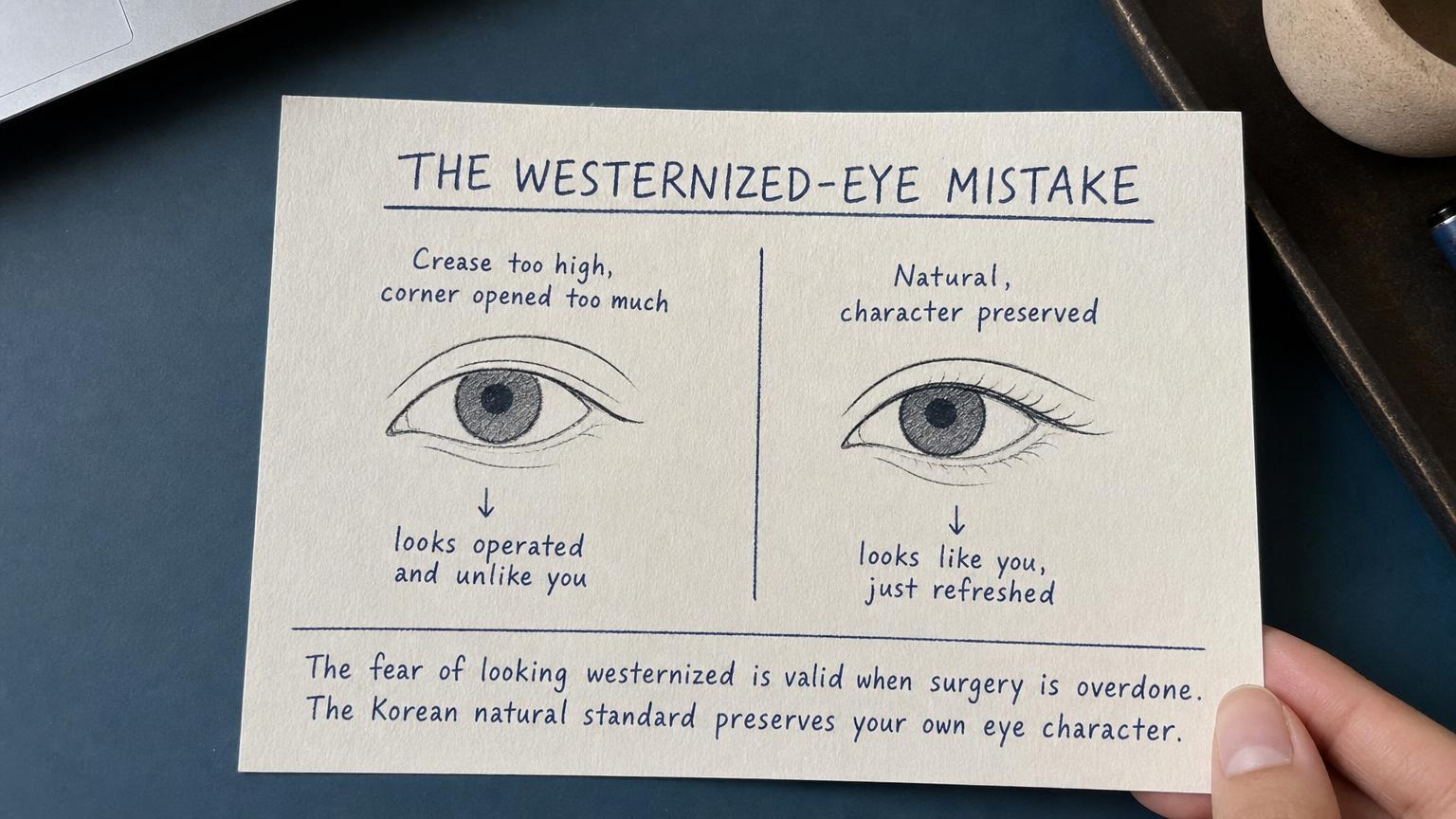
The Westernized-Eye Mistake
The fear of looking westernized is valid, but it is specifically a fear of overdone surgery, not of eye surgery in general. The mistake happens when the crease is set too high and the inner corner is opened too much, producing an over-rounded, unnatural eye that looks operated and unlike the person it belongs to. This is the result that fills the cautionary before-and-after images, and it is real. But it is the product of an aggressive, one-size-fits-all approach, not an inevitable outcome of having eye surgery.
The Korean natural standard exists precisely to avoid this. By matching the crease to your own eye, keeping any inner-corner work conservative, and designing for rested definition rather than dramatic change, surgery can refine the eye while fully preserving the character. A patient who fears westernization should not avoid surgery altogether but should choose a surgeon committed to the natural approach and should explicitly discuss preserving their eye character. The fear is best addressed not by avoiding surgery but by avoiding overdone surgery, which is a matter of surgeon philosophy and design.
Cost and How to Verify the Plan
Pricing depends on the method and whether more than one procedure is combined, with non-incision generally lower than incision, and epicanthoplasty adding to the total when included. These costs are generally below the equivalent abroad. The more useful consideration than price alone is whether the surgeon’s design philosophy matches your goal of a natural, character-preserving result.
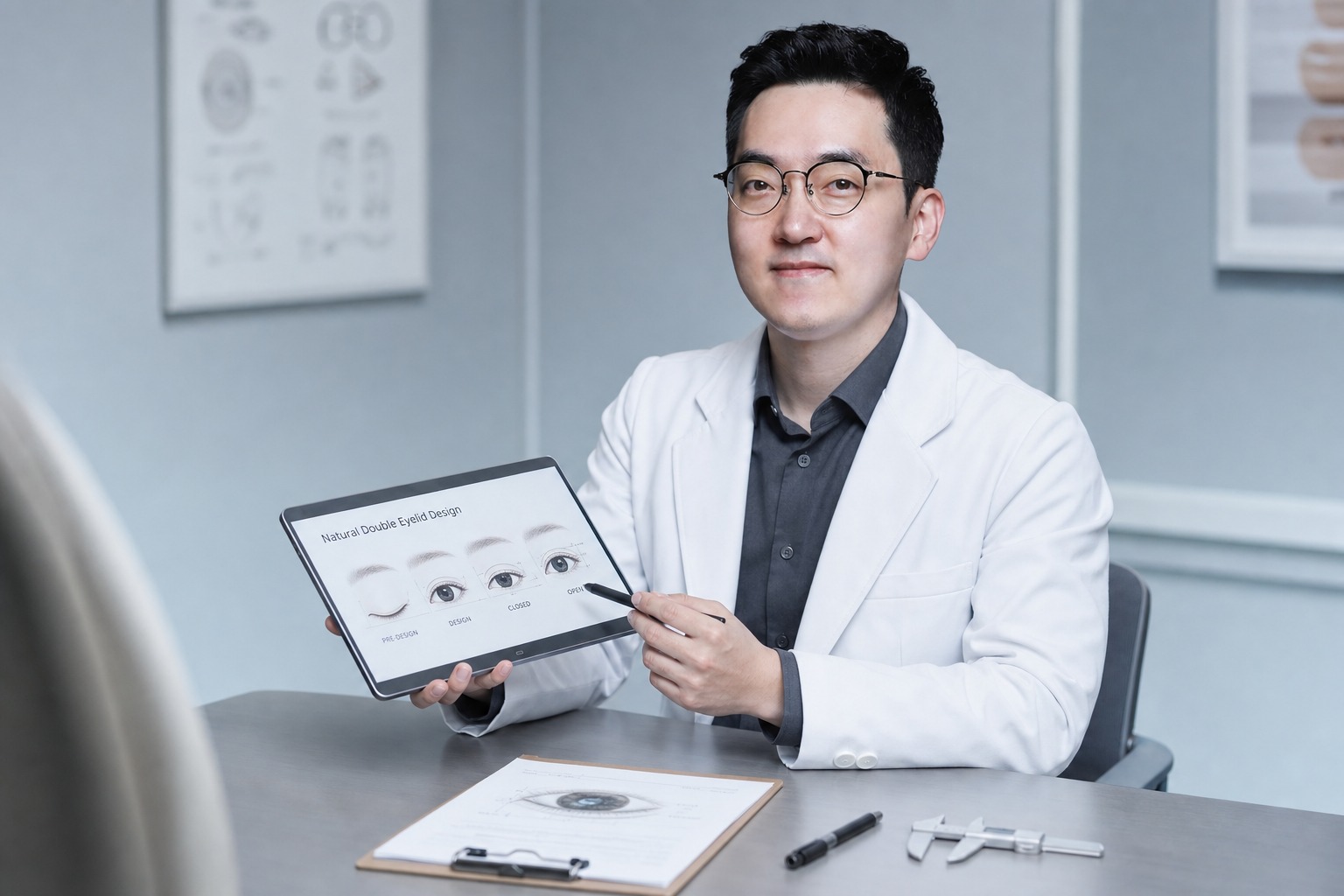
Before committing, five questions tell you whether a surgeon will preserve your character or standardize it. Will the crease be designed around your specific eye, and how is the height decided? How do you ensure the result still looks like me rather than a generic eye? If epicanthoplasty is suggested, why, and how is it kept conservative? Can you show me natural results on eyes like mine, not just dramatic transformations? And how will I look awake and animated, not just on the chart? A surgeon who designs around your eye, keeps inner-corner work conservative, and talks about preserving character is the one who will give you a natural result. For trip-planning details, visit Link Plastic Surgery’s official website.
Frequently Asked Questions
1. Will Korean double eyelid surgery make me look Western?
Not if it is done with a natural approach. Looking westernized comes from overdone surgery, a crease set too high and an inner corner opened too much. A natural Korean approach designs a soft crease around your own eye so you look more defined and rested while remaining recognizably yourself. The fear is valid only for aggressive, generic surgery.
2. How do I make sure I still look like myself?
Choose a surgeon committed to natural results and explicitly discuss preserving your eye character. Ask for the crease to be matched to your own eye, for any inner-corner work to be conservative, and to see natural results on eyes like yours. The design philosophy of the surgeon is what determines whether you still look like you.
3. What makes a double eyelid crease look natural?
A crease height matched to your own eye rather than a fixed deep fold, a design that works with your existing eye shape, attention to how you look awake and animated, and an aim of rested definition rather than a dramatically bigger eye. A generic deep crease applied to everyone is what looks obvious.
4. Is epicanthoplasty what makes eyes look westernized?
It can be, if overdone. Opening the inner corner too much is a common source of the rounded, westernized look. It is the procedure most easily overdone, so it must be conservative. Done subtly, it can open the eye while preserving character; done aggressively, it erases it. Conservatism is key.
5. Which method is the most natural?
The non-incision (buried suture) method is subtle and easy to keep natural, suiting thinner lids. But the incision method can also be designed to stay natural for thicker lids. The method matters less than whether it is chosen and designed for your specific eye rather than applied generically. Any method can look natural with the right design.
6. Can I get a defined eye without looking operated?
Yes, that is exactly what the natural Korean approach aims for: an eye that looks more defined and rested but clearly still yours. The operated look comes from over-aggression, not from definition itself. A well-designed crease enhances your eye without crossing into the standardized, obvious result.
7. Should I avoid eye surgery if I fear looking different?
The better response is to choose the right surgeon rather than avoid surgery. The fear is of overdone surgery, which is avoidable. A surgeon with a natural philosophy who designs around your eye can give you the definition you want while preserving your character, addressing the fear directly rather than leaving it unresolved.
8. Do Korean surgeons understand wanting to keep Asian features?
Yes, and the natural Korean standard is built around exactly this. The aesthetic goal in good Korean eye surgery is a refined version of your own eye, not a Western one. Surgeons who work to this standard expect and respect the wish to preserve character, and design accordingly.
9. Will my eyes look bigger after natural surgery?
They will typically look more defined and rested, which can read as subtly brighter or more open, but the natural approach aims for refinement rather than a dramatically bigger eye. If you want a large change, that is a different conversation, but a character-preserving result prioritizes looking like a refreshed version of yourself.
10. How do I plan natural eye surgery as an international patient?
Have a consultation that focuses on designing the crease around your own eye and preserving character, ask to see natural results on similar eyes, and confirm any inner-corner work will be conservative. For scheduling and trip-planning details, visit Link Plastic Surgery’s official website.