She booked a simple double-eyelid surgery, expecting a crease to solve everything, and was puzzled when the surgeon in Seoul examined her and said a crease alone would leave her disappointed. Her eye was not just creaseless; the inner corner was covered, and the lid muscle was a little weak, so her eye looked small and slightly sleepy. A crease by itself would add a line but not open the eye the way she imagined. What she actually needed, the surgeon explained, was a combination: the crease plus an inner-corner opening, and a small ptosis adjustment, all in one surgery. The combination, not a single procedure, was what would give her the open, refreshed eye she wanted. The consultation at Link Plastic Surgery often maps which eye procedures pair, because the eye is rarely one problem.
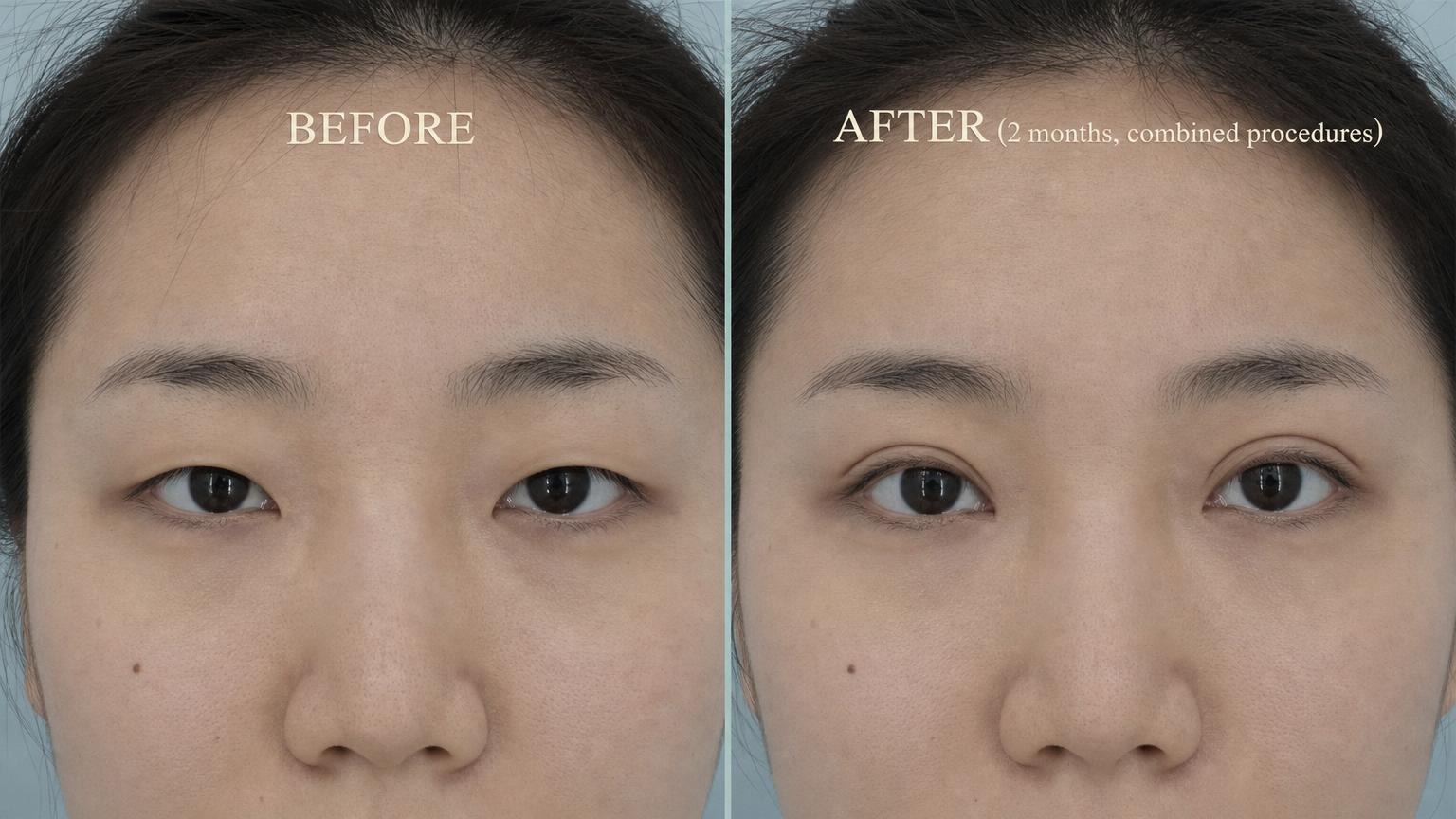
Eye surgery is the most requested cosmetic procedure for foreign patients in Korea, and it is wrapped in an oversimplification: that a double-eyelid crease alone does everything. In reality, many eyes need more than a crease, the procedures that pair depend on your specific eye, and combining them in one surgery addresses the whole eye rather than just the fold. Understanding why one procedure often is not enough, which procedures pair, and how to keep a combination natural is what produces the open, refreshed result most patients actually want.
Why One Procedure Often Isn’t Enough
The starting point is understanding why a double-eyelid crease alone frequently disappoints. A crease alone may not open a hooded or small eye, because the crease adds definition but does not address what is making the eye look small or covered. If the eyelid muscle is weak, a condition called ptosis, the eye still looks sleepy even with a new crease, since the lid is not lifting fully. And a covered inner corner limits how open the eye looks regardless of the crease. So combining procedures addresses the whole eye, not just the fold.
The key realization is that many eyes need more than a crease, and combining procedures addresses the real cause of a small or tired-looking eye. Adding a crease to an eye whose real issue is a weak lid or a covered corner treats the symptom while leaving the cause. This is the same individualized, cause-first thinking that runs through Korean eye surgery, where the design follows the specific eye rather than a template.

Which Procedures Pair
Once the eye is assessed, the procedures that pair follow from what it needs. The most common pair is double eyelid surgery with epicanthoplasty, the inner-corner opening, for a bigger, more open eye. Double eyelid surgery is combined with ptosis correction when the lid muscle is weak and the eye looks sleepy, lifting the lid so the eye truly opens. A lateral opening can be added to widen the eye outward. And crucially, these are done together in one surgery, under one anesthesia, rather than as separate operations.
The pattern is that the common combination is double eyelid plus inner-corner, with ptosis correction added when the eye also droops. Doing them together is efficient and means a single recovery instead of several. Which combination is right depends entirely on your eye, so the assessment of your crease, inner corner, and lid strength determines the plan, not a fixed package. A surgeon who examines all of these and proposes the matched combination is treating your specific eye rather than applying a one-size approach.

What Your Eye Needs
Matching the combination to your eye follows a clear logic. If you just want a crease and your eye opens well already, double eyelid surgery alone may be enough. If your eye looks small or the inner corner is covered, adding epicanthoplasty opens it. If your eye looks sleepy and the lid covers part of the pupil, adding ptosis correction lifts it. And if you want a wider eye, a lateral opening can be considered. The right combination is specific to your anatomy.
Recommended for Your Recovery
Products commonly used before and after Korean eye surgery combinations which procedures pair — same items routinely recommended in the recovery instructions Seoul clinics hand out at discharge.
- Arnica Montana Tablets — start 3 days before facial surgery to reduce bruising in the treated area. Check price on Amazon
- Silicone Scar Sheets — for procedures with visible incisions, apply from week 3 onward to support scar maturation. Check price on Amazon
- Beauty of Joseon Relief Sun SPF 50+ — daily Korean SPF 50+ to protect freshly treated facial skin. Check price on Amazon
- COSRX Advanced Snail 96 Mucin Power Essence — Korean snail mucin essence to support the post-procedure skin barrier. Check price on Amazon
As an Amazon Associate, GlobalBeautySpot earns from qualifying purchases at no extra cost to you.
The important principle is that the right combination depends on your eye, your crease, inner corner, and lid strength, not a fixed package sold to everyone. This is why a proper assessment matters so much: it identifies which of these contribute to how your eye looks and therefore which procedures to combine. A clinic that examines your eye thoroughly and tailors the combination is far more likely to give you the result you want than one that defaults to a crease alone or pushes a standard package regardless of your anatomy.

Combined but Still Natural
A common worry about combining procedures is that more surgery means a more obvious, over-done result, but the opposite is true when done well. Each part is kept conservative so the eye stays yours, and combining is to address the cause, not to maximize change. Inner-corner and lateral work in particular is done subtly to avoid a rounded, westernized look. And combining means one recovery instead of several separate surgeries, which is gentler on you overall.
So a good combined eye surgery refines the whole eye naturally and heals in one recovery, rather than producing a rounded, over-done look. The goal of combining is precision, treating each contributing factor appropriately, not aggression. A surgeon who keeps each component conservative, opens the corners subtly, and aims for a natural, open eye that still looks like yours is using combination surgery exactly as it should be used, to address the whole eye while preserving your character. Done this way, the combined result looks more natural, not less.

Cost and How to Plan It
A combined eye surgery costs more than a single procedure but less than having each done separately, since they share one operation and one anesthesia. The realistic figure depends on which procedures your eye needs combined. These costs are generally below the equivalent abroad, part of why eye surgery anchors so many Seoul trips. Combining also means one recovery period rather than several, which is more practical for an international patient.

Before committing, five questions tell you whether a surgeon is assessing your eye or defaulting to a crease. Did the surgeon examine my crease, inner corner, and lid strength to see what my eye actually needs? Is the recommended combination matched to my eye rather than a standard package? If ptosis correction is suggested, is it because my lid is genuinely weak? Will any inner-corner or lateral opening be kept conservative to look natural? And will it all be done in one surgery and recovery? A surgeon who assesses the whole eye and tailors a conservative combination is the one to trust. For trip-planning details, visit Link Plastic Surgery’s official website.
Frequently Asked Questions
1. Is double eyelid surgery alone enough?
Sometimes, but often not. A crease alone may not open a hooded or small eye, and if the lid muscle is weak (ptosis) or the inner corner is covered, the eye still looks small or sleepy despite a new crease. Many eyes need a combination to truly open. A proper assessment of your eye determines whether a crease alone is enough or a combination is needed.
2. What is the most common eye surgery combination?
Double eyelid surgery with epicanthoplasty (an inner-corner opening) is the most common pair, for a bigger, more open eye. Ptosis correction is added when the lid muscle is weak and the eye looks sleepy, and a lateral opening can be added to widen the eye. The exact combination depends on your specific eye anatomy.
3. Why would I need ptosis correction with double eyelid surgery?
If your eyelid muscle is weak, the lid does not lift fully, so the eye looks sleepy and partly covered even with a new crease. Ptosis correction strengthens the lift so the eye truly opens. Adding a crease without correcting the weak muscle would leave the eye still looking tired, which is why the two are combined when ptosis is present.
4. Can these procedures be done at the same time?
Yes, and they usually are. Double eyelid surgery, epicanthoplasty, ptosis correction, and a lateral opening are done together in one surgery under one anesthesia, which is efficient and means a single recovery instead of several separate operations. Combining them in one procedure is both practical and gives a cohesive, balanced result for the whole eye.
5. How do I know which combination I need?
By having your eye assessed: your crease, inner corner, and lid strength determine the plan. If your eye opens well and you just want a crease, double eyelid alone may suit; if the inner corner is covered, epicanthoplasty is added; if the lid is weak, ptosis correction is added. The combination is specific to your anatomy, not a fixed package.
6. Will combining procedures look over-done or westernized?
Not when done well. Each part is kept conservative so the eye stays yours, and combining addresses the cause rather than maximizing change. Inner-corner and lateral work is done subtly specifically to avoid a rounded, westernized look. A good combined surgery refines the whole eye naturally; the over-done look comes from aggression, not from combining itself.
7. Is recovery longer for combined eye surgery?
Recovery is one period for the combined surgery rather than several separate recoveries, which is gentler overall than doing each procedure on its own. Swelling and the settling timeline are similar to a single eye surgery, just addressing more at once. Combining means you go through recovery once, which is more practical, especially for international patients.
8. What is an inner-corner (epicanthoplasty) opening?
Epicanthoplasty opens the inner corner of the eye, which in many Asian eyes is partly covered by a fold, limiting how open the eye looks. Opening it subtly makes the eye look bigger and more defined, and it pairs naturally with a double-eyelid crease. It must be done conservatively to keep the result natural and avoid an over-rounded appearance.
9. Can I get just a crease and add more later?
You can, but if your eye genuinely needs a combination, doing only a crease first may leave you disappointed and require a second surgery and recovery later. It is usually better to assess the whole eye upfront and do the right combination in one surgery. A thorough assessment helps you avoid an incomplete result that needs revising.
10. How do I plan combined eye surgery as an international patient?
Have a consultation that assesses your crease, inner corner, and lid strength, and proposes a combination matched to your eye, done in one surgery and recovery. Plan the trip around the single recovery period. Ask that any corner or lateral work be kept conservative. For scheduling details, visit Link Plastic Surgery’s official website.