The clinic was beautiful, the reviews were glowing, and within ten minutes of sitting down she had been quoted a price for a procedure no one had examined her to recommend. The consultant was warm and the discount was generous, but it expired if she left without booking that day. Something felt off, so she walked out, and at the next clinic a surgeon spent twenty minutes examining her, told her two of the things she had been about to pay for were unnecessary for her face, and did not mention price until the end. The contrast taught her more about choosing a clinic than any before-and-after gallery ever had. The consultation itself, how a clinic behaves when you are in the room, is the single most reliable signal of whether you can trust it. That is exactly the standard a good consultation at Link Plastic Surgery is built around.

Choosing a Korean clinic from abroad is genuinely hard. Foreign patients lean on reviews, social media, and beautiful before-and-after photos, all of which can be curated or bought. The one thing that is much harder to fake is how a clinic conducts a consultation, and learning to read that, the red flags that warn you off and the signs that reassure you, is the most practical skill an international patient can develop. This guide lays out what to watch for.
Consultation Red Flags
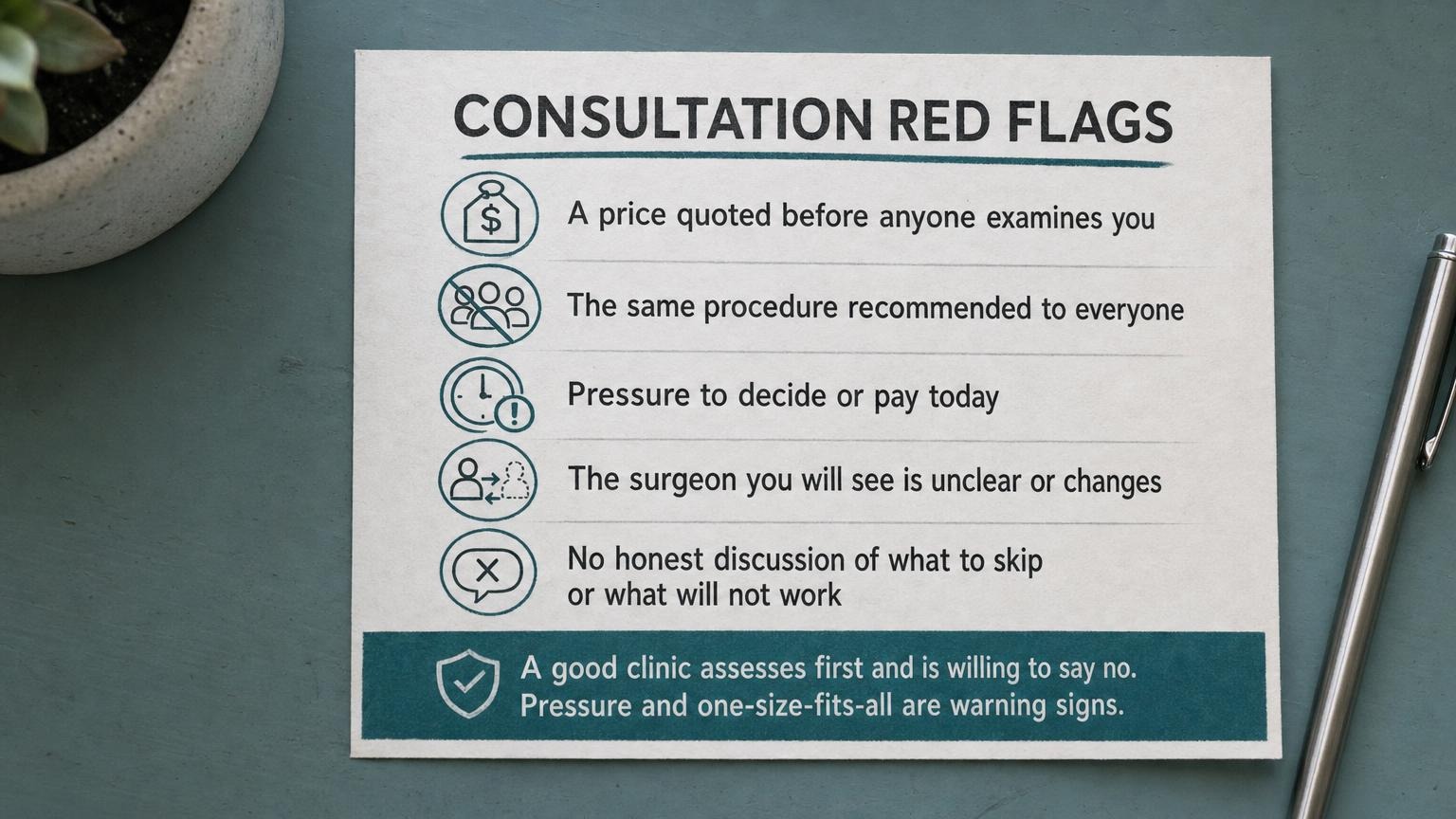
Certain behaviours in a consultation are reliable warning signs, not because any single one is proof of a bad clinic, but because they reveal a clinic that is selling rather than assessing.
The clearest red flag is a price quoted before anyone has examined you, because it means the recommendation is coming from a price list, not from your anatomy. Closely related is the same procedure being recommended to everyone, a sign the clinic has a product to push rather than a problem to solve. Pressure to decide or pay that day, especially tied to an expiring discount, is a sales tactic that has no place in a medical decision. Ambiguity about who will actually perform your procedure is a serious concern, because the person you consult with is not always the one who operates. And the absence of any honest discussion of what to skip or what will not work for you suggests a clinic unwilling to talk you out of anything. A good clinic assesses first and is comfortable saying no, which is the opposite of these patterns. The principle of careful, individualized assessment is the same one that should run through any procedure, whether you are researching Korean eye surgery or anything else.
Signs of a Good Consultation
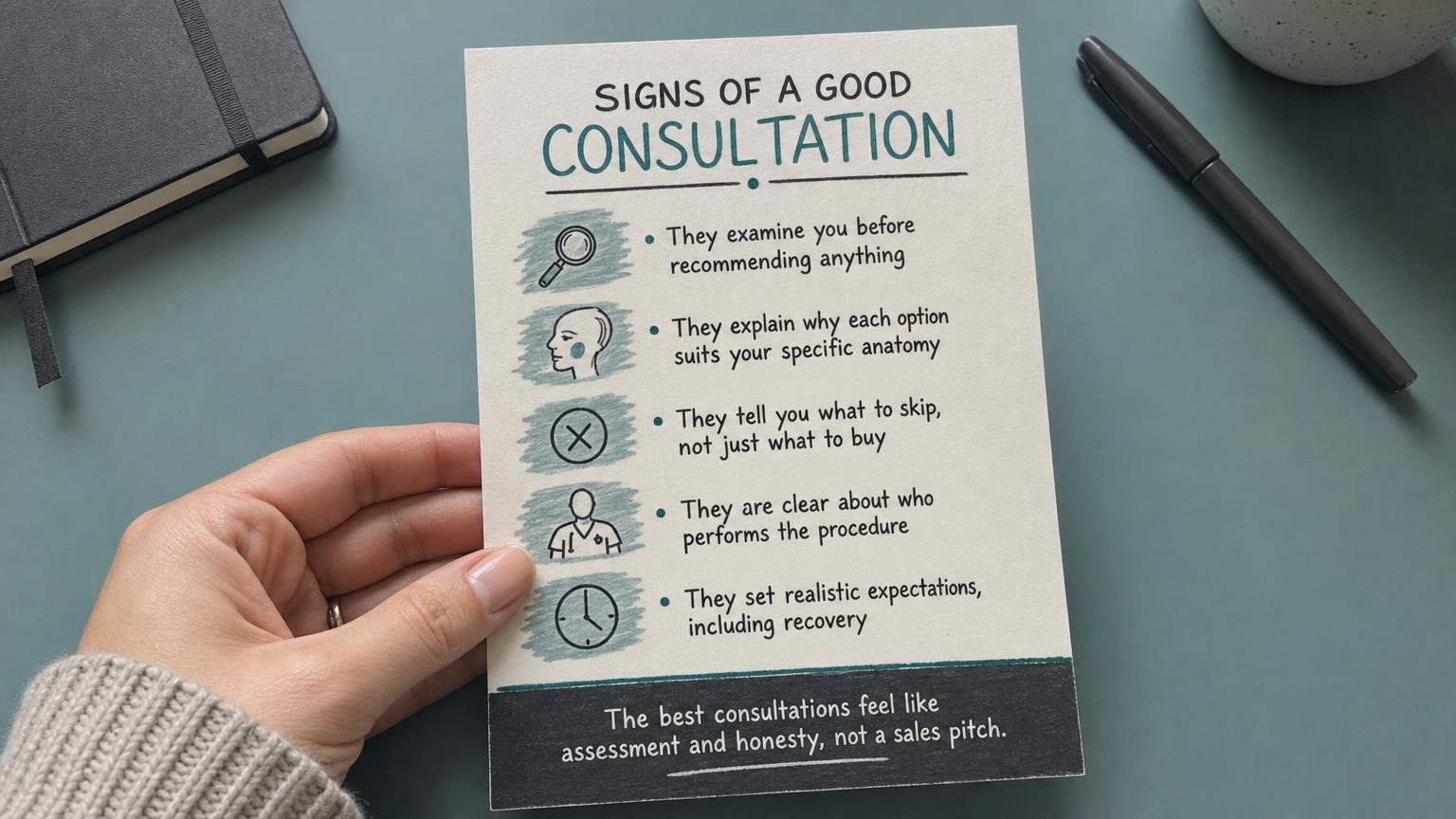
Just as there are warning signs, there are reassuring ones, and they tend to be the mirror image of the red flags. A good consultation feels like assessment and honesty rather than a pitch.
A good clinic examines you before recommending anything, and the recommendation is explained in terms of your specific anatomy rather than a generic package. It tells you what to skip, not just what to buy, and is willing to say a procedure you came in asking for is unnecessary or wrong for you. It is clear about who performs the procedure, with no ambiguity. And it sets realistic expectations, including an honest account of recovery rather than only the polished result. These signs are not about luxury or warmth, which any clinic can project, but about whether the clinic is genuinely assessing your case. The same standard applies whether you are considering Korean rhinoplasty or a non-surgical treatment; the quality of the assessment is what matters.
Questions That Reveal a Lot
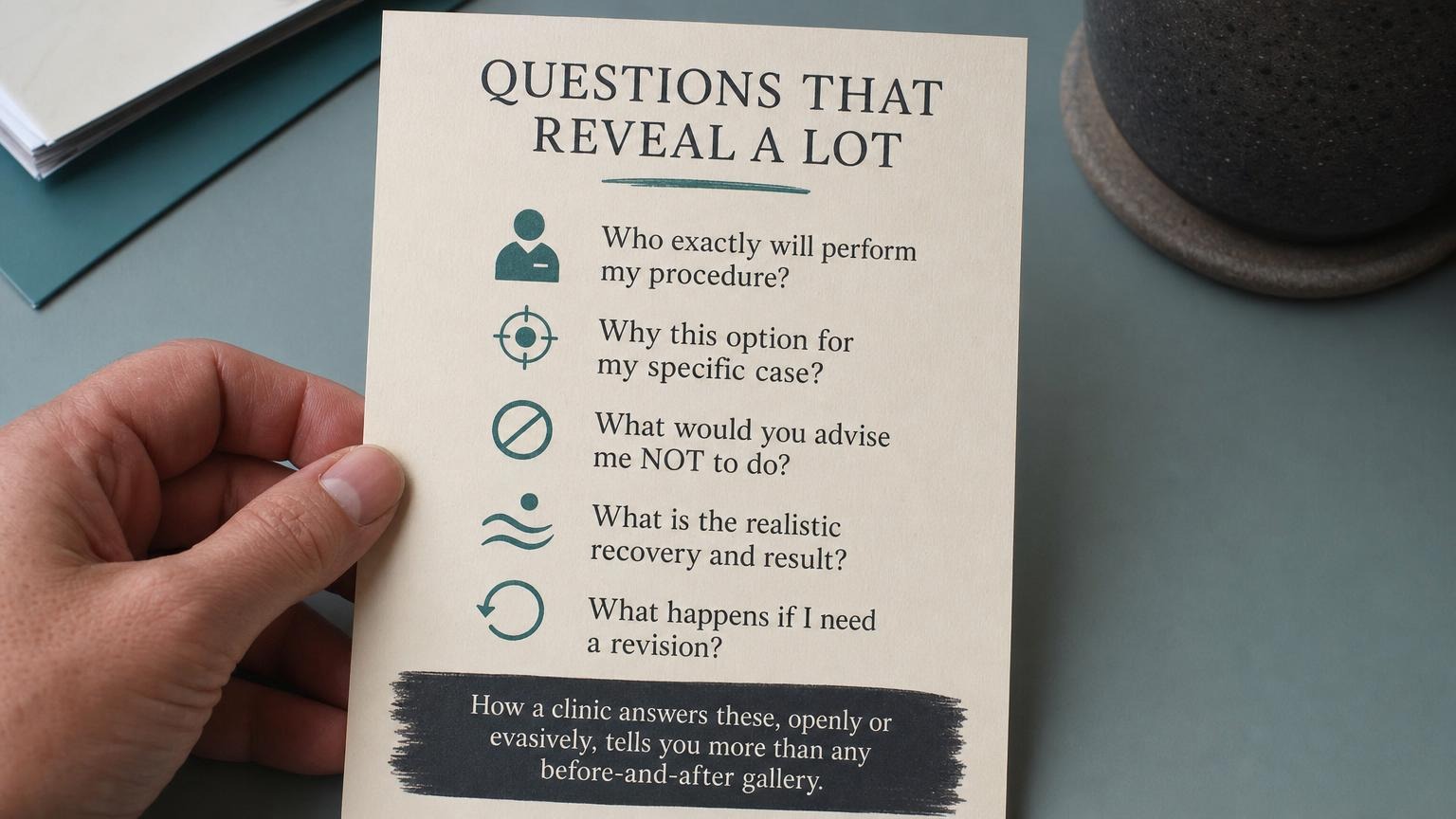
You can actively test a clinic by asking a few specific questions, because how a clinic answers, openly or evasively, tells you more than any gallery. Ask who exactly will perform your procedure, and watch for a clear, direct answer rather than a vague one. Ask why this particular option suits your specific case, and expect reasoning tied to your anatomy rather than a generic benefit. Ask what they would advise you not to do, which a confident, honest clinic will answer readily and a sales-driven one will dodge. Ask what the realistic recovery and result look like, and listen for honesty about the harder parts. And ask what happens if you need a revision, which reveals whether the clinic thinks beyond the sale.
Recommended for Your Recovery
Products commonly used before and after Korean clinic red flags bad consultation — same items routinely recommended in the recovery instructions Seoul clinics hand out at discharge.
- Arnica Montana Tablets — start 3 days before facial surgery to reduce bruising in the treated area. Check price on Amazon
- Silicone Scar Sheets — for procedures with visible incisions, apply from week 3 onward to support scar maturation. Check price on Amazon
- Beauty of Joseon Relief Sun SPF 50+ — daily Korean SPF 50+ to protect freshly treated facial skin. Check price on Amazon
- COSRX Advanced Snail 96 Mucin Power Essence — Korean snail mucin essence to support the post-procedure skin barrier. Check price on Amazon
As an Amazon Associate, GlobalBeautySpot earns from qualifying purchases at no extra cost to you.
The pattern in the answers matters more than any individual response. A clinic that meets these questions with openness, specifics, and a willingness to discuss downsides is behaving like a medical provider. One that deflects, generalizes, or steers every answer back to booking is behaving like a salesperson. This is true across every category, from Korean facial procedures to body and skin treatments alike.
The Pressure Tactics to Watch For
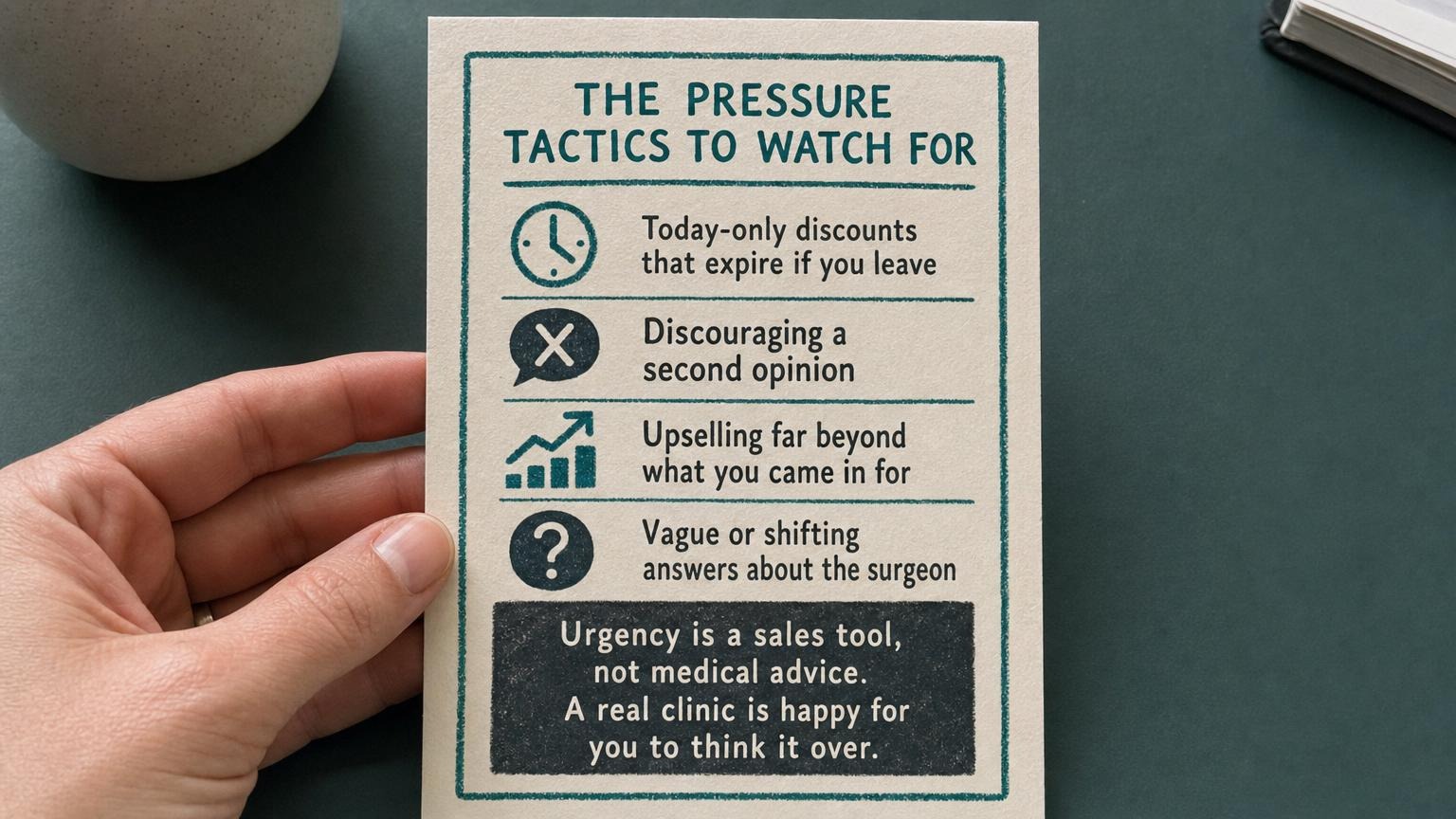
Pressure is the through-line of almost every bad consultation, and recognizing its forms is the most protective thing you can learn. Today-only discounts that expire if you leave are designed to short-circuit a careful decision, and no legitimate medical choice needs to be made under that kind of artificial urgency. Discouraging a second opinion is a particularly telling sign, because a confident clinic welcomes you comparing it with others. Upselling far beyond what you came in for, turning a single concern into a long list of procedures, points to a sales target rather than your needs. And vague or shifting answers about who the surgeon is should never be brushed aside.
Urgency, in particular, is worth internalizing as a rule: it is a sales tool, not medical advice. A real clinic is happy for you to think it over, get a second opinion, and return when you are ready, because its result speaks for itself. The moment you feel rushed, that feeling is information. This caution applies just as much to Korean body procedures and to non-surgical treatments covered in our Korean laser and energy guides, where package upselling is especially common.
Putting It Together
No single red flag condemns a clinic, and no single good sign guarantees one; it is the overall pattern that tells the story. A clinic that examines before recommending, explains its reasoning, is clear about the surgeon, tells you what to skip, and never pressures you is one you can trust, even if its gallery is less flashy than a competitor’s. A clinic that quotes before examining, pushes the same procedures on everyone, and rushes you toward a deposit is one to walk away from, however beautiful the premises.
For an international patient who cannot easily return, getting this right at the consultation stage is everything, because the consultation is the one part of the process you can fully evaluate in person before committing. Trust how a clinic treats you in the room over how it presents itself online. Before committing, the simplest test is this: did the clinic assess you and tell you the truth, including the inconvenient parts, or did it sell you a package? For trip-planning details on how a careful consultation should work, visit Link Plastic Surgery’s official website.

Frequently Asked Questions
1. What is the biggest red flag in a clinic consultation?
A price quoted before anyone has examined you. It means the recommendation is coming from a price list rather than your anatomy, which is the opposite of how a medical decision should be made. A good clinic assesses you first and discusses cost only once a plan suited to you is established.
2. Are good reviews enough to trust a clinic?
Not on their own. Reviews and before-and-after photos can be curated, selected, or bought, so they are a weak signal compared with how a clinic actually conducts a consultation. The behaviour you observe in the room, assessment versus sales pressure, is much harder to fake and more reliable.
3. Should I be worried if I am pressured to book today?
Yes. Today-only discounts and pressure to decide immediately are sales tactics, not medical advice. No legitimate procedure needs to be decided under artificial urgency. A real clinic is comfortable with you thinking it over, seeking a second opinion, and returning when ready.
4. How do I find out who will actually perform my procedure?
Ask directly, and expect a clear answer. The person who consults with you is not always the one who operates, so ambiguity or shifting answers about the surgeon is a serious concern. A trustworthy clinic states plainly who will perform your procedure and does not dodge the question.
5. Is it rude to ask a clinic difficult questions?
Not at all, and a good clinic welcomes them. Asking who operates, why an option suits you, what to avoid, and what happens with a revision is exactly the due diligence a careful patient should do. How openly a clinic answers tells you a great deal about whether to trust it.
6. What if a clinic recommends far more than I came in for?
Significant upselling, turning one concern into a long list of procedures, points to a sales target rather than your needs. A good clinic may suggest a relevant addition with clear reasoning, but it should also be willing to tell you what to skip, not just keep adding to the bill.
7. Should I get a second opinion?
If you have any doubt, yes, and a confident clinic will encourage it. A clinic that discourages a second opinion is revealing insecurity about how it compares. Especially as an international patient making a significant decision, comparing consultations is a sensible and protective step.
8. What does a good consultation actually feel like?
Like an assessment and an honest conversation rather than a sales pitch. You are examined before anything is recommended, the reasoning is specific to you, you are told what to skip, the surgeon is clearly identified, and recovery is discussed honestly. Warmth and luxury are not the signal; honest assessment is.
9. Can a beautiful, famous clinic still be a bad choice?
Yes. Premises, fame, and marketing are easy to invest in and tell you little about how your specific case will be handled. A less flashy clinic that assesses carefully and is honest is a better choice than a famous one that quotes before examining and pressures you to book.
10. How do I evaluate a clinic as an international patient who cannot visit twice?
Use the consultation itself, the one part you can fully judge in person, and apply the red flags and good signs here: examination before recommendation, clarity about the surgeon, willingness to say no, and absence of pressure. For how a careful consultation should work, visit Link Plastic Surgery’s official website.