She booked a laser package for her cheek pigmentation at a clinic that promised to clear it in a few sessions, and for a couple of weeks it looked like it was working. Then the patch came back, darker and patchier than before. What she had been told was a simple sun spot was actually melasma, and the aggressive laser that would have erased a sun spot had instead provoked the melasma into rebounding worse. By the time she consulted a surgeon in Seoul, she was convinced her pigmentation was permanent. It was not; it had simply been treated as the wrong type. The consultation at Link Plastic Surgery often begins by identifying exactly what kind of pigment is on the skin, because the wrong laser can make some types dramatically worse.

Pigmentation is one of the most common skin concerns foreign patients bring to Korean clinics, and it is also where the most damage is done by treating everything the same way. Melasma, freckles, sun spots, and deeper pigment are not one problem; they sit at different depths, behave differently, and respond to different lasers, and the single most important fact is that the aggressive laser that clears a sun spot can make melasma rebound darker. Understanding which type of pigment you have is not a detail; it is the difference between clearing your skin and making it worse.
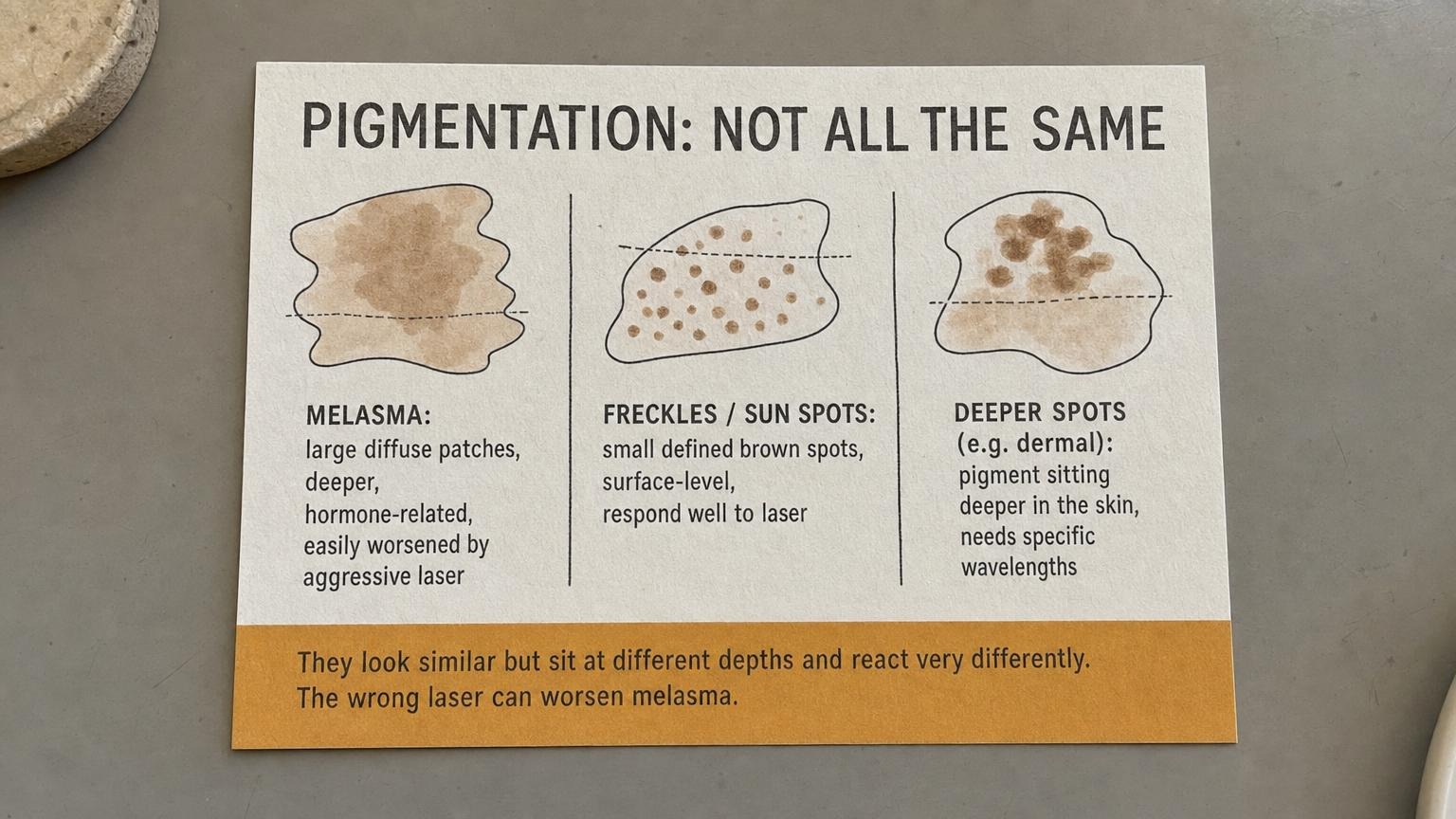
Pigmentation Is Not All the Same
The pigments that look broadly similar in the mirror are in fact quite different conditions, and the differences are what matter for treatment.
Melasma appears as larger, diffuse patches, often on the cheeks or forehead, sits deeper, and is strongly linked to hormones and sun. It is notoriously easy to worsen with aggressive treatment. Freckles and sun spots are small, defined brown spots that sit closer to the surface and generally respond well and predictably to pigment laser. Deeper pigment, such as certain dermal spots, sits lower in the skin and needs specific wavelengths that can reach that depth. The reason this classification is so important is that these types react very differently to the same laser: what clears a surface sun spot can provoke melasma. This is why the broader Korean approach to laser and energy treatments always starts with identifying the target.
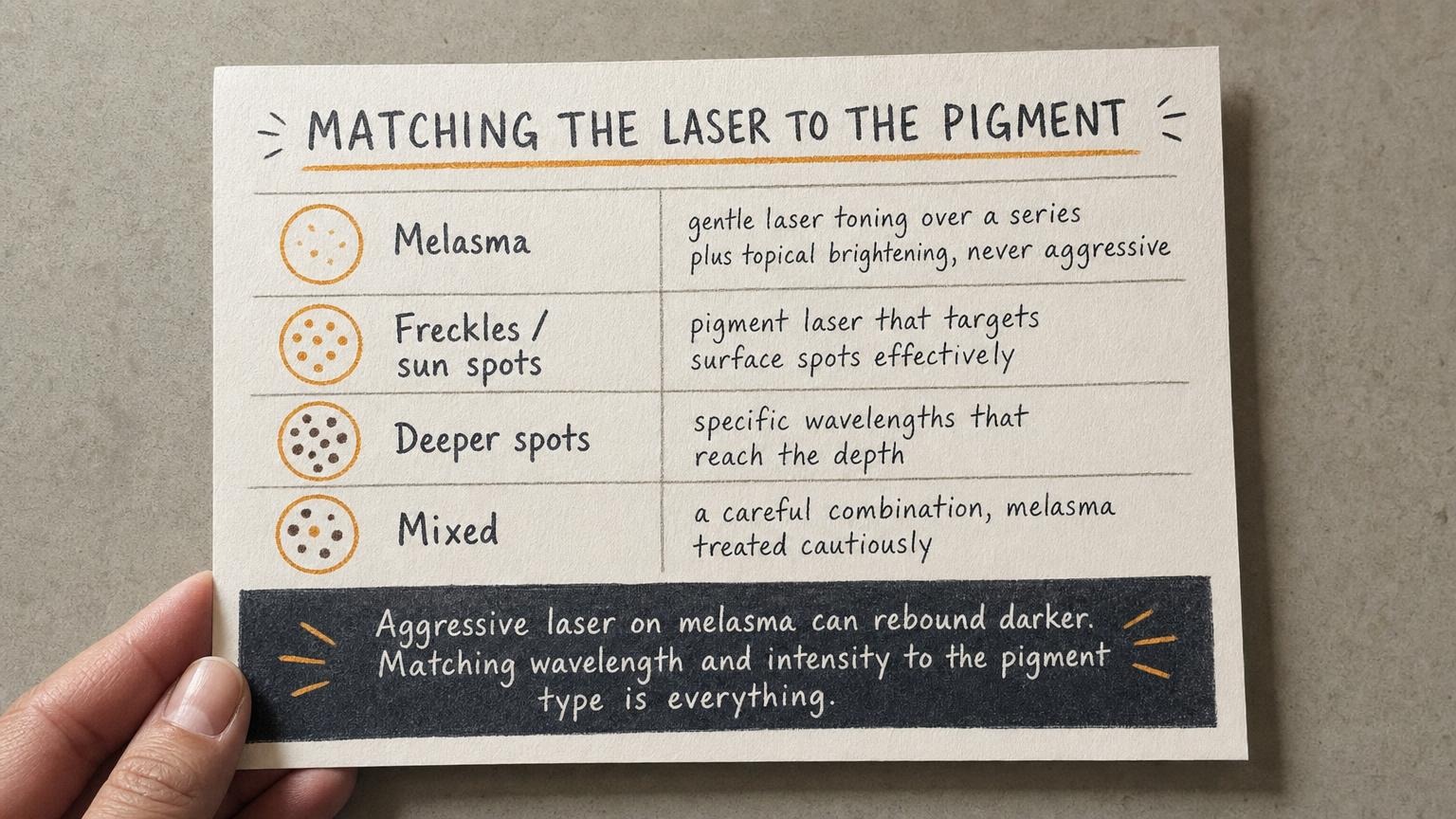
Matching the Laser to the Pigment
Once the type is identified, the right laser approach follows, and just as importantly the wrong one can be avoided. Each pigment calls for a different strategy.
Melasma is treated cautiously, with gentle laser toning over a series combined with topical brightening, never with aggressive single-pass clearing, because power provokes it. Freckles and sun spots, being surface-level and well-defined, respond to a pigment laser that targets and clears the spots more directly, often in fewer sessions. Deeper spots require specific wavelengths chosen to reach the depth the pigment sits at. Mixed pigmentation, where someone has both melasma and sun spots, needs a careful combination in which the melasma in particular is handled gently. Korean clinics use a range of devices for this, and the skill is in selecting the wavelength and intensity for the pigment type rather than applying one setting to everything, a principle covered across our guides to treatments like Korean Fraxel and the Korean Accento pigment laser.
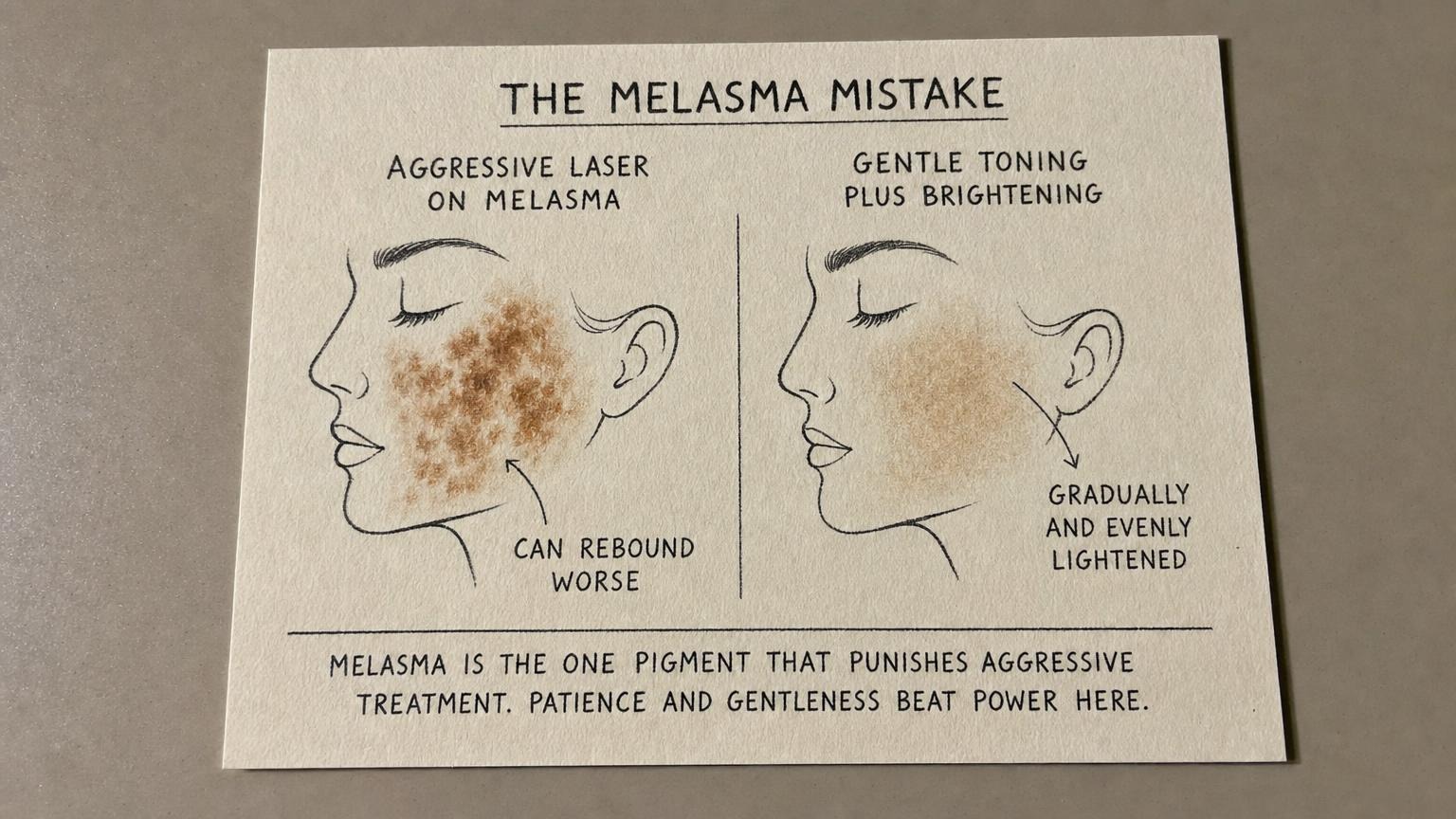
The Melasma Mistake
The single most common and damaging error in pigmentation treatment is treating melasma aggressively. Because melasma can look like a sun spot to the untrained eye, and because aggressive laser does clear sun spots impressively, a clinic that does not distinguish the two may hit melasma with too much power. The melasma responds by rebounding, often returning darker and patchier than before, exactly what happened to the patient at the start. This is not a rare complication; it is a predictable result of using the wrong approach on a pigment that punishes aggression.
Recommended for Your Recovery
Products commonly used before and after Korean pigmentation melasma freckles spots laser — same items routinely recommended in the recovery instructions Seoul clinics hand out at discharge.
- COSRX Advanced Snail 96 Mucin Power Essence — Korean barrier essence for the post-laser tissue regeneration window. Check price on Amazon
- Beauty of Joseon Relief Sun SPF 50+ — strict SPF 50+ daily for at least 3 months after any pigment or resurfacing laser — UV reverses results. Check price on Amazon
- Gel Eye Mask (Cold Compress) — cold compress for residual redness in the first 24 to 48 hours after a session. Check price on Amazon
- Silicone Scar Sheets — for ablative laser zones with crust formation, support scar maturation as new skin emerges. Check price on Amazon
As an Amazon Associate, GlobalBeautySpot earns from qualifying purchases at no extra cost to you.
Melasma is the one pigment that rewards patience and gentleness over power. A clinic that promises to clear your patchy cheek pigmentation in a couple of aggressive sessions, without distinguishing melasma from sun spots, is the clinic most likely to make it worse. A careful clinic identifies the melasma, treats it gently over a managed series, and sets realistic expectations that it is controlled rather than instantly erased. The contrast in approach, between gentle managed toning and aggressive clearing, is the whole story with melasma, and it sits within the kind of careful assessment that runs through treatments like the Korean CO2 laser for surface lesions, which is a different tool for a different problem again.
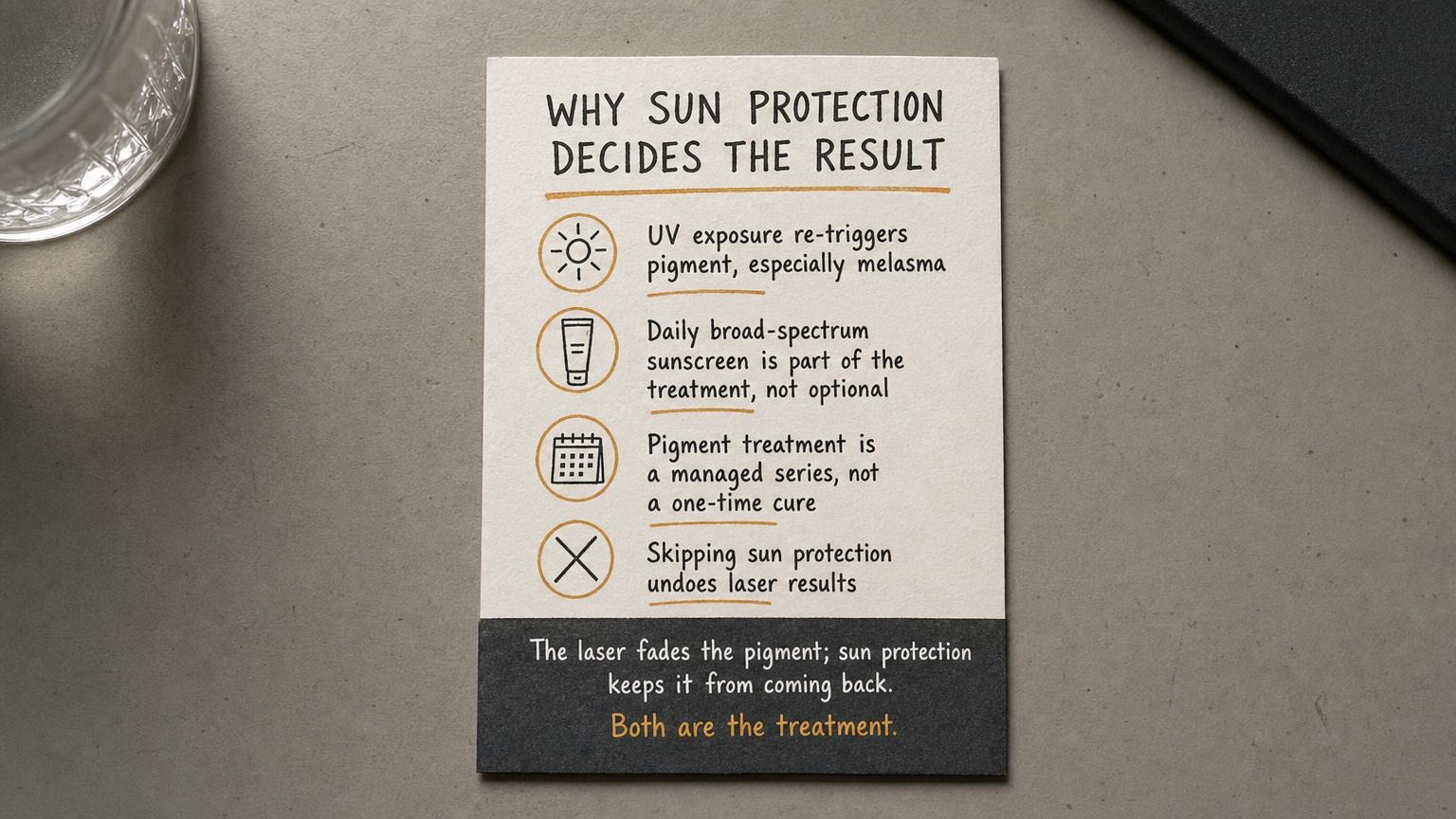
Why Sun Protection Decides the Result
No pigmentation treatment holds without sun protection, and for melasma in particular, sun exposure re-triggers the pigment directly. Daily broad-spectrum sunscreen is not an optional add-on to pigment laser; it is part of the treatment itself, and skipping it undoes the laser’s work. This is why pigmentation, more than most skin concerns, is a managed condition rather than a one-time cure: the laser fades the existing pigment, and sun protection keeps new pigment from forming.
Patients who understand this get lasting results; those who treat the laser as a one-off and resume unprotected sun exposure see the pigment return and conclude, wrongly, that the treatment failed. The realistic frame is a series of carefully matched laser sessions plus consistent sun protection as ongoing maintenance. Both halves are the treatment, and a clinic that explains this is setting you up for a result that lasts rather than one that fades back.
Cost and How to Verify the Plan
Pricing is per session, and because pigmentation, especially melasma, is treated as a series, the realistic cost is the course plus maintenance rather than a single visit. Surface sun spots may clear in fewer sessions than melasma, which is managed over a longer, gentler course. These costs are generally below the equivalent abroad, though the multi-session structure and the maintenance mean planning around your travel and your home sun-protection routine matters.
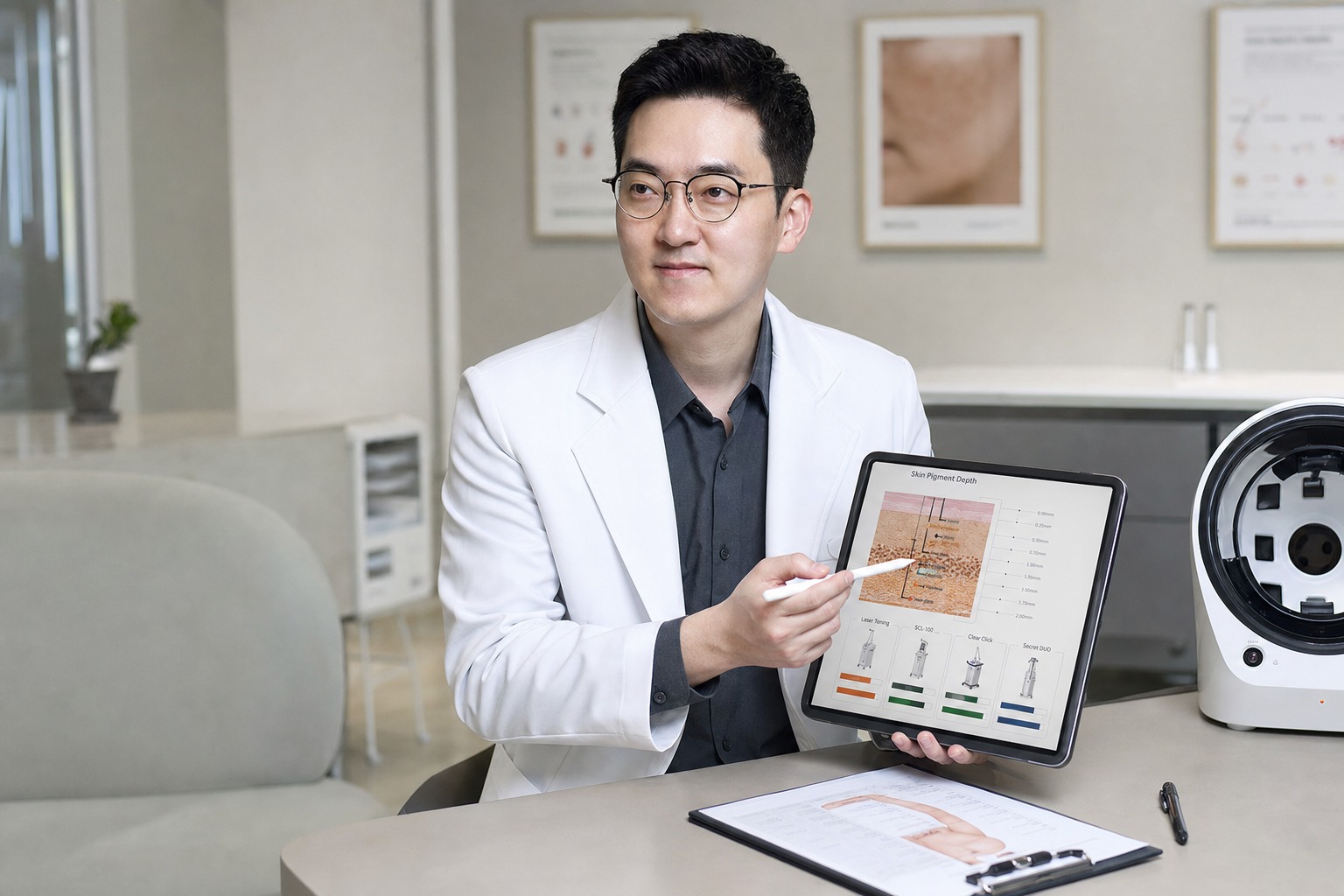
Before committing, five questions tell you whether a clinic is identifying your pigment or selling a generic package. Did the clinic distinguish whether your pigment is melasma, sun spots, or deeper, and how? If it is melasma, why is a gentle approach being used rather than aggressive clearing? Which laser and wavelength suit your specific pigment type? How many sessions, and what is the maintenance and sun-protection plan? And what realistic outcome should you expect, given melasma is managed rather than cured? A clinic that classifies the pigment first, and treats melasma gently, is the one that will not make your skin worse. For trip-planning details, visit Link Plastic Surgery’s official website.
Frequently Asked Questions
1. Why did my pigmentation come back darker after laser?
Most likely the pigment was melasma treated with too aggressive a laser. Melasma rebounds when hit with power, often returning darker and patchier. The fix is to identify it as melasma and treat it gently with toning and brightening over a series, rather than aggressive clearing.
2. How do I know if I have melasma or sun spots?
Melasma tends to be larger, diffuse patches that sit deeper and are linked to hormones and sun, while sun spots are small, defined brown spots closer to the surface. They can look similar, which is exactly why a clinic should classify the pigment properly before treating, since they respond very differently to laser.
3. Can melasma be cured?
Melasma is managed rather than cured in a single course. It improves significantly with gentle laser toning, topical brightening, and strict sun protection, but it can return if sun exposure resumes, so it is treated as an ongoing condition. Realistic expectations are part of treating it well.
4. Why does the wrong laser make pigmentation worse?
Because different pigments sit at different depths and react differently. The aggressive laser that clears a surface sun spot delivers too much energy for melasma, which responds by overproducing pigment and rebounding darker. Matching the laser type and intensity to the pigment is what prevents this.
5. Which laser is best for freckles and sun spots?
Surface freckles and sun spots respond well to a pigment laser that targets defined spots, often clearing them in relatively few sessions. They are the more straightforward pigment to treat because they sit near the surface and are well-defined, unlike the diffuse, deeper melasma.
6. Is sunscreen really that important after laser?
Yes, it is part of the treatment. UV exposure re-triggers pigment, especially melasma, so daily broad-spectrum sunscreen keeps new pigment from forming and protects the laser’s results. Skipping it is the most common reason pigmentation returns after a course of treatment.
7. How many sessions will I need?
It depends on the type. Surface sun spots may clear in a few sessions, while melasma is managed over a longer, gentler series with maintenance. Deeper pigment needs sessions targeted at its depth. A proper assessment gives a realistic session count for your specific pigment.
8. Can I treat all my pigmentation at once?
Mixed pigmentation is treated with a careful combination, but the different types are handled differently within it, melasma gently and sun spots more directly. It is not a matter of one laser pass clearing everything; the plan respects that each pigment type needs its own approach.
9. Does pigmentation differ for Asian skin?
Asian skin is more prone to melasma and to post-inflammatory pigmentation, and it can be more reactive to aggressive laser, which is exactly why Korean clinics tend to favour gentle, conservative pigment treatment. The caution that protects melasma is especially relevant for Asian skin tones.
10. How do I plan pigmentation treatment as an international patient?
Have a consultation that classifies your pigment type before any laser, and plan around the series structure and the sun-protection maintenance you will continue at home. For scheduling and trip-planning details, visit Link Plastic Surgery’s official website.