She had assumed her stretch marks were permanent and untreatable, a fact of having had two children, and never asked about them. When she mentioned them almost in passing during a Seoul consultation for something else, the dermatologist took a closer look and pointed out something she did not know: some of her marks were still reddish, which meant they were fresh and would respond well, while the older silvery ones could be improved if not erased. The timing mattered, she learned, far more than she realized, the red ones being the best window to treat. The marks were not the immovable fact she had assumed. The consultation at Link Plastic Surgery often distinguishes fresh from mature marks, because the stage decides how well they respond.
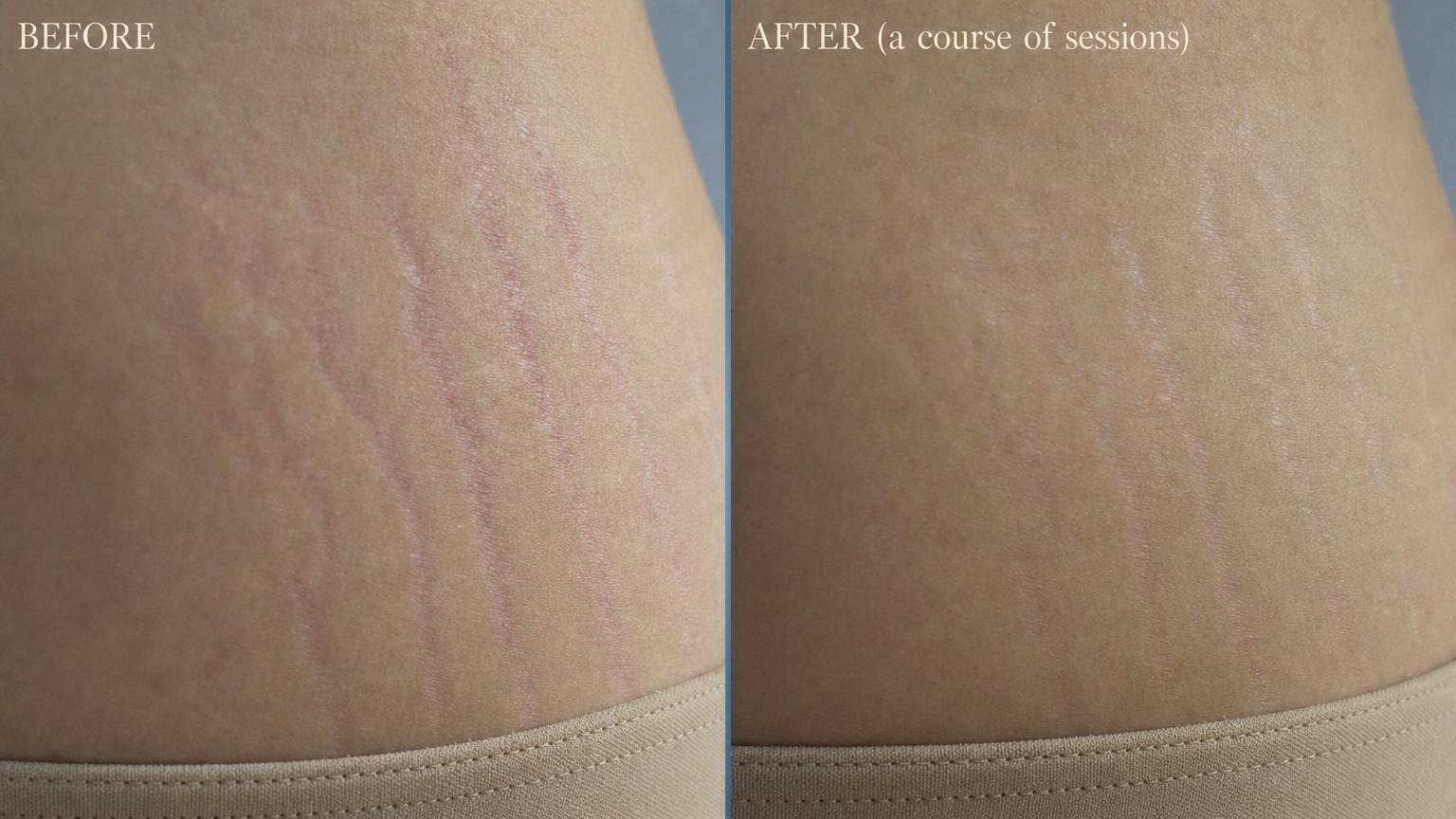
Stretch marks are one of the most common skin concerns, often from pregnancy, growth, or weight change, and they are wrapped in a defeating misconception: that they are permanent and untreatable. In reality, stretch marks come in two stages that respond very differently, the right tool depends on which stage and the texture, and while they are improved and faded rather than erased, fresh ones in particular respond well. Understanding the two stages, the tools matched to each, and the realistic goal of improvement is what makes stretch marks worth treating rather than resigning to.
Two Stages of Stretch Marks
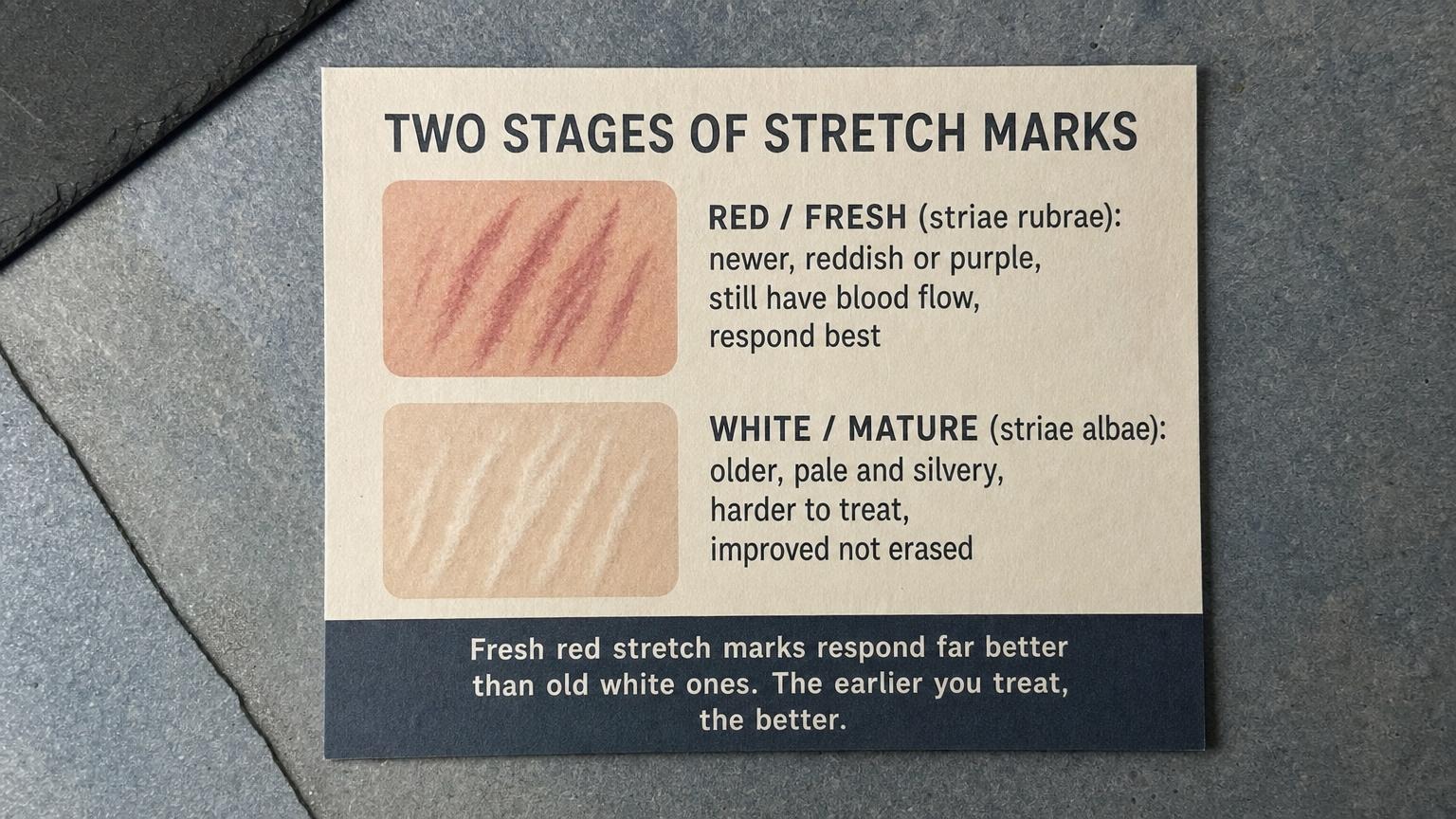
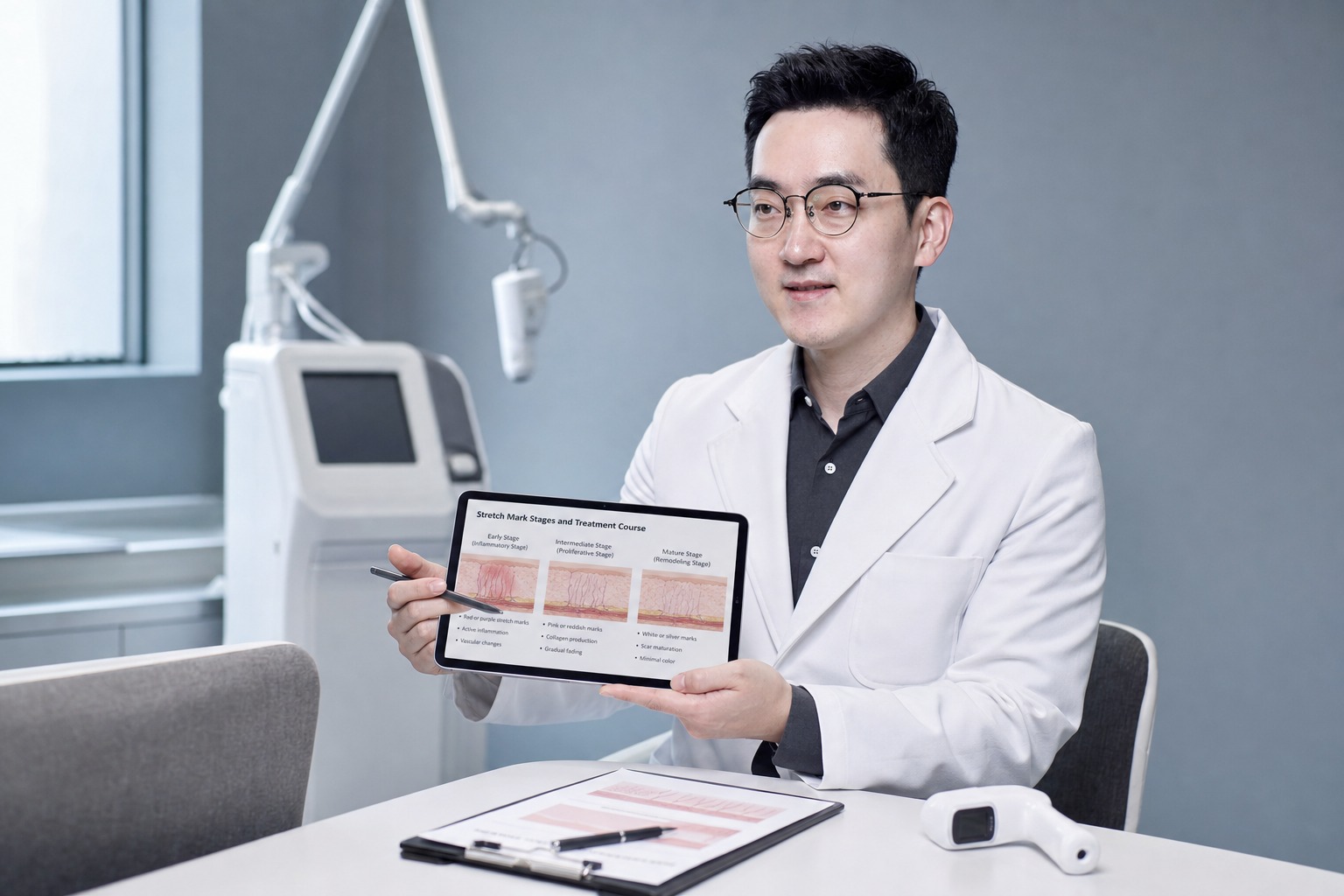
The single most important fact about stretch marks is that they exist in two stages that behave very differently. Red or fresh stretch marks, known as striae rubrae, are newer, reddish or purple, and still have active blood flow, which is why they respond best to treatment. White or mature stretch marks, known as striae albae, are older, pale, and silvery, having lost their blood flow, which makes them harder to treat and improved rather than erased.
The practical implication is significant: fresh red marks respond far better than old white ones, so the earlier you treat, the better the outcome. This is why catching stretch marks while they are still red is the ideal window, and why mature marks, while still improvable, take more work for a partial result. This stage-matched thinking is part of the broader logic of Korean laser and energy treatments, where the condition of the tissue determines the approach.
Matching the Tool
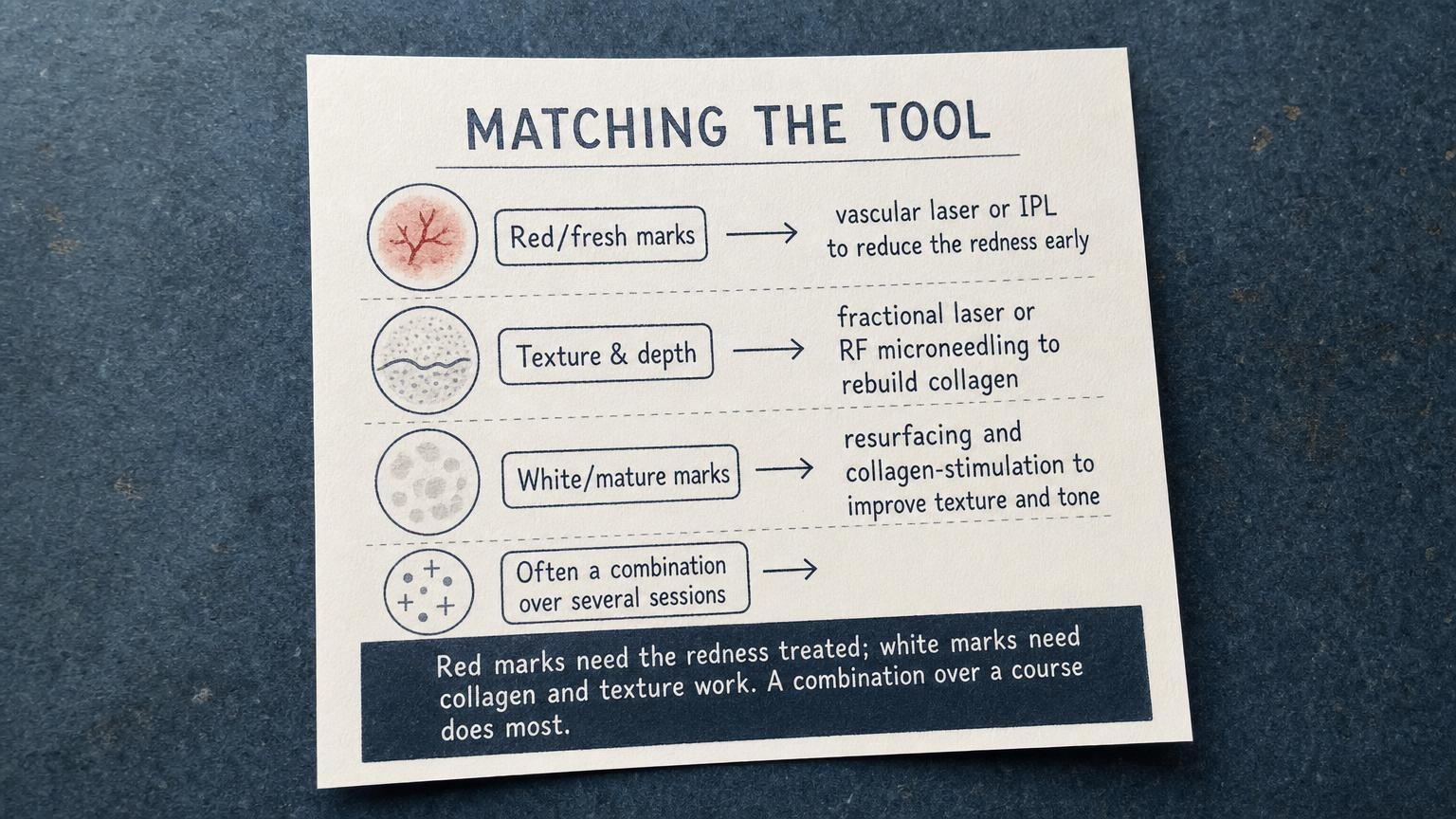
Once the stage and texture are assessed, each is matched to the right tool, and a real plan often combines several. Red, fresh marks respond to a vascular laser or IPL that reduces the redness early, treating them while they are most responsive. Texture and depth, the indented or rippled quality of the marks, respond to fractional laser or RF microneedling that rebuilds collagen in the area. White, mature marks respond to resurfacing and collagen-stimulation that improve their texture and tone, blending them better into the surrounding skin. Often a combination over several sessions does the most.
The key principle is that red marks need the redness treated while white marks need collagen and texture work, so the tool is matched to the stage and quality of your marks. A plan that combines vascular treatment for fresh redness with collagen-building resurfacing for texture, over a course, is what produces meaningful improvement. The collagen-stimulation side connects to the same logic as broader Korean body procedures that work with the skin’s own regeneration.
What Is Realistic
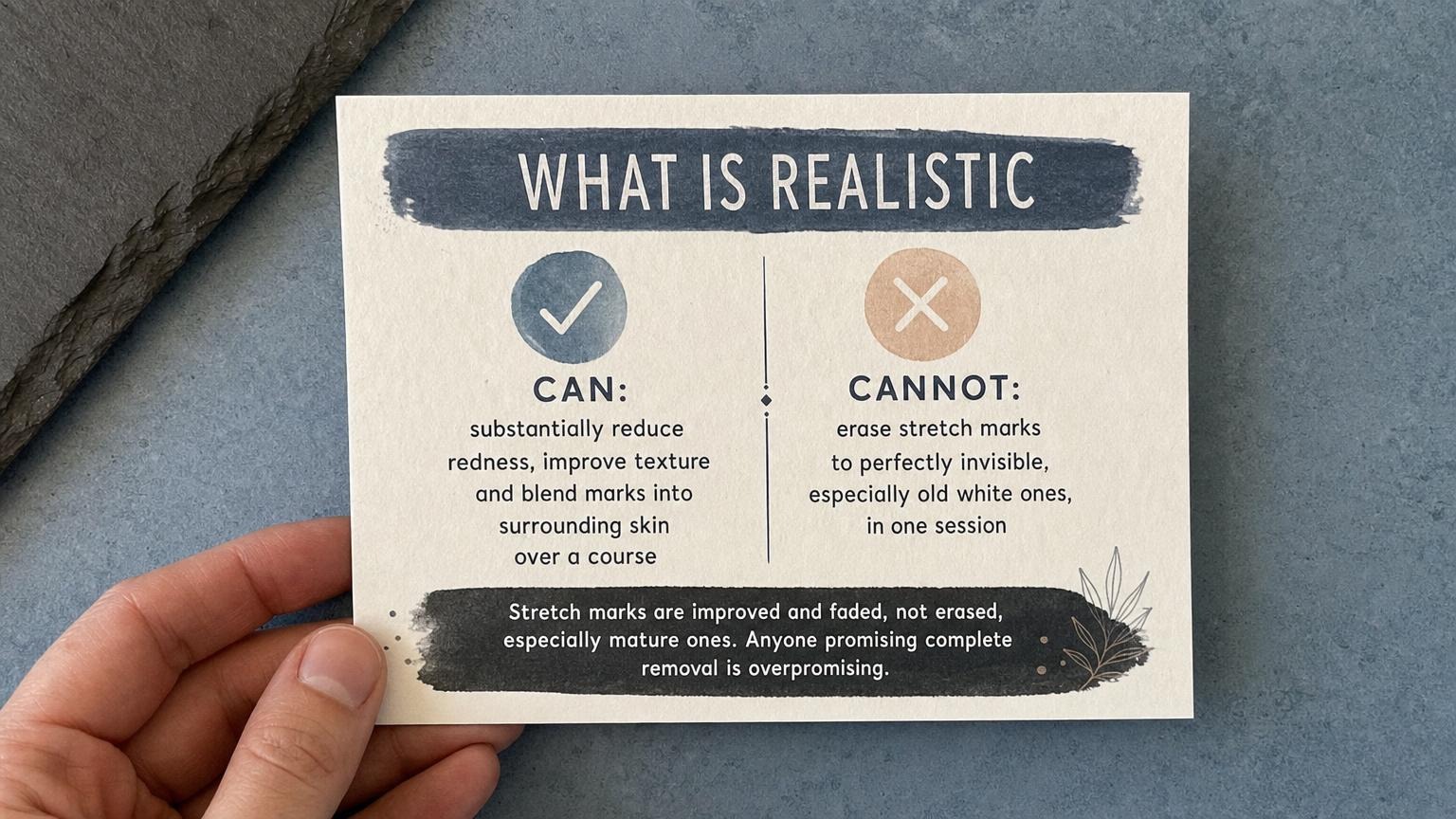
Honest expectations are essential, because stretch mark treatment is genuinely helpful but bounded. A matched course can substantially reduce redness, improve texture, and blend marks into the surrounding skin, often making them far less noticeable. What it cannot do is erase stretch marks to perfectly invisible, especially old white ones, in a single session. Stretch marks are improved and faded, not erased, particularly the mature ones, and setting that expectation is part of an honest plan.
Recommended for Your Recovery
Products commonly used before and after Korean stretch mark treatment — same items routinely recommended in the recovery instructions Seoul clinics hand out at discharge.
- Arnica Montana Tablets — start 3 days before body surgery to reduce bruising in the treated zone. Check price on Amazon
- Silicone Scar Sheets — cut to size and apply over incision lines starting week 3 to flatten scar formation. Check price on Amazon
- Beauty of Joseon Relief Sun SPF 50+ — daily UV protection on healing scars — sun exposure during the first 6 months drives post-inflammatory pigmentation. Check price on Amazon
- COSRX Advanced Snail 96 Mucin Power Essence — gentle Korean skin essence to support overall skin barrier during the recovery window. Check price on Amazon
As an Amazon Associate, GlobalBeautySpot earns from qualifying purchases at no extra cost to you.
This is why a promise of complete removal is a warning sign. Stretch marks, once formed, are a change in the skin’s structure that treatment improves rather than fully reverses, especially for white mature marks. The genuine result, marks substantially reduced and blended over a course, is well worth having and far more honest than a guarantee of complete erasure. A clinic that frames the goal as significant improvement, with realistic expectations by stage, is being straight with you rather than overselling.
Timing and Expectations
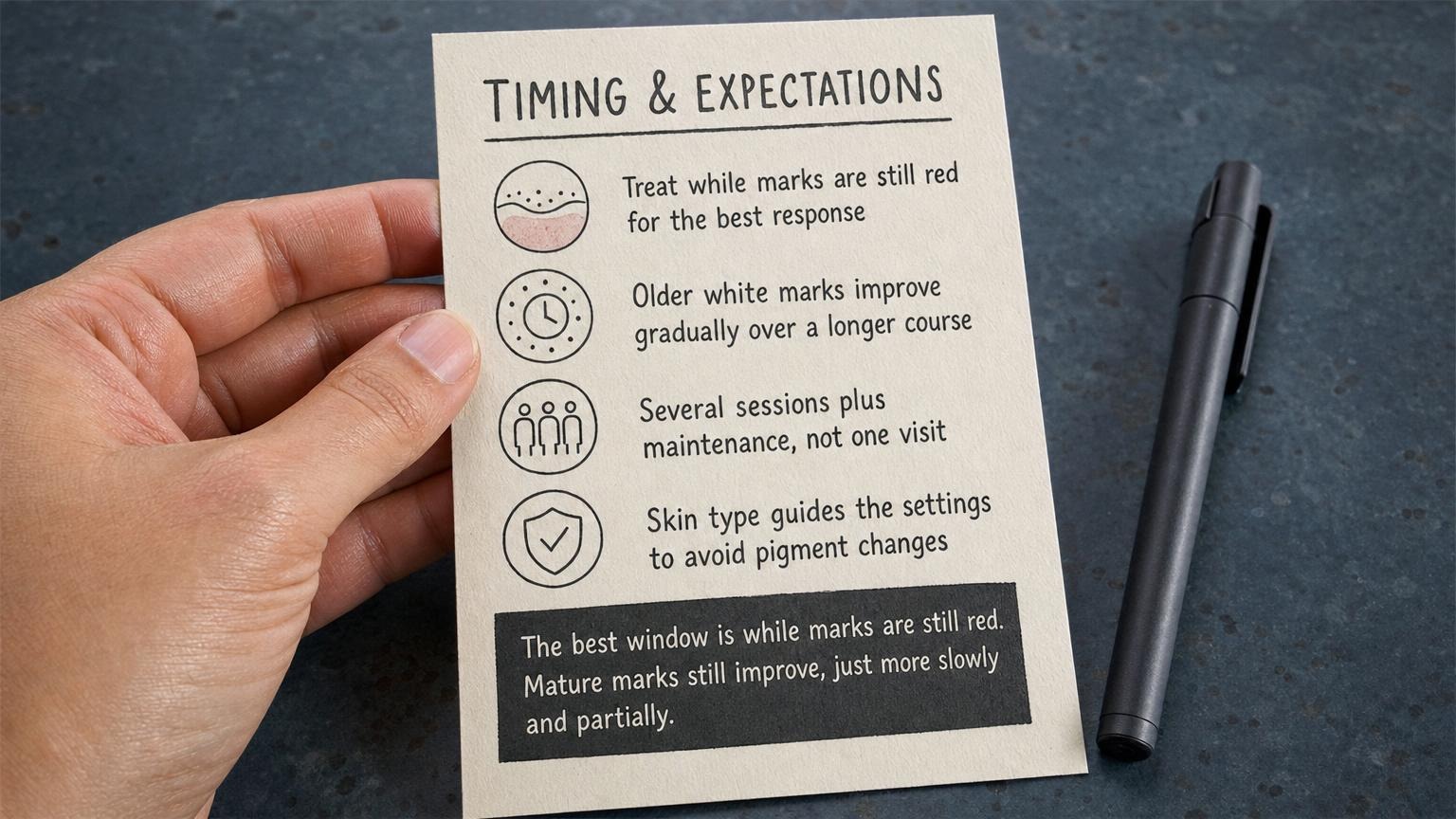
Timing strongly affects the outcome, which is worth knowing if you have a choice. Treating while marks are still red gives the best response, since fresh marks with active blood flow improve most. Older white marks improve gradually over a longer course, so they are not hopeless but require more sessions for a partial result. Either way, treatment is several sessions plus maintenance rather than one visit, and your skin type guides the settings used to avoid causing pigment changes, which matters especially for deeper skin tones.
So the best window is while marks are still red, and if you have fresh marks, treating them sooner rather than waiting for them to turn white gives a better outcome. Mature marks still improve, just more slowly and partially, so they are worth treating too, with realistic expectations. A clinic that assesses the stage of your marks, sets the timing-based expectations, and adjusts settings for your skin type is planning the treatment properly rather than applying one approach to all marks regardless of stage.
Cost and How to Verify the Plan
Pricing reflects the combination and the number of sessions, since a stretch mark course involves several treatments plus maintenance rather than one. Vascular laser, fractional resurfacing, and RF microneedling each carry their own cost, and the realistic figure is the planned course, which is larger for mature marks needing more sessions. These costs are generally below the equivalent abroad. Treating fresh marks early is more economical than a longer course for mature ones later.
Before committing, five questions tell you whether a clinic is assessing your marks properly. Are my stretch marks red and fresh, white and mature, or a mix, and how does that change the plan? Is the tool matched to the stage, vascular for red, collagen-building for texture and white marks? Is the goal framed as significant improvement rather than complete erasure? How many sessions, over what period, for my marks? And are the settings adjusted for my skin type to avoid pigment changes? A clinic that distinguishes the stages, matches the tools, and sets realistic improvement goals is the one to trust. For trip-planning details, visit Link Plastic Surgery’s official website.
Frequently Asked Questions
1. Can stretch marks be removed?
They are improved and faded rather than fully removed, especially older white ones. A matched course can substantially reduce redness, improve texture, and blend marks into the surrounding skin so they are far less noticeable, but stretch marks are a structural skin change that treatment improves rather than erases. Anyone promising complete removal is overpromising, particularly for mature marks.
2. What is the difference between red and white stretch marks?
Red or fresh stretch marks (striae rubrae) are newer, reddish or purple, and still have blood flow, which makes them respond best to treatment. White or mature ones (striae albae) are older, pale, and silvery, having lost their blood flow, which makes them harder to treat and improved rather than erased. The stage strongly affects how well they respond.
3. Do fresh stretch marks treat better than old ones?
Yes, significantly. Fresh red marks still have active blood flow and respond far better to treatment, so the earlier you treat, the better the outcome. Older white marks have lost their blood flow and improve more slowly and partially over a longer course. If you have a choice, treating while marks are still red gives the best response.
4. What treatments work for stretch marks?
It depends on the stage and texture. Red marks respond to vascular laser or IPL that reduces the redness, texture and depth respond to fractional laser or RF microneedling that rebuilds collagen, and white marks respond to resurfacing and collagen-stimulation to improve texture and tone. A combination over several sessions usually does the most.
5. How many sessions will I need?
Stretch marks are treated over a course, typically several sessions plus maintenance, with the number depending on the stage, extent, and tools used. Fresh red marks often need fewer sessions than old white ones, which require a longer course for a partial result. The clinic should set a realistic plan based on your specific marks and their stage.
6. Can stretch marks from pregnancy be treated?
Yes. Pregnancy stretch marks are treated the same way as any others, matched to their stage: vascular treatment if still red, collagen-building resurfacing for texture and white marks. Treating them while they are still reddish after pregnancy gives the best response, but older pale ones can still be improved, just more gradually, with realistic expectations.
7. Are stretch mark treatments safe for darker skin?
They can be, but the settings must be adjusted for your skin type to avoid pigment changes, which is more of a risk for deeper skin tones with some lasers. An experienced provider chooses appropriate devices and settings for your skin. This is why disclosing your skin type and choosing a clinic experienced with it matters for both safety and results.
8. Will treatment leave my skin looking even?
The goal is to blend the marks into the surrounding skin so they are far less noticeable, improving texture and reducing redness, rather than perfectly erasing them. The result is more even-looking skin where the marks are softened and faded, especially for fresh ones. Mature marks improve and blend partially, which still makes a meaningful visible difference.
9. Is it too late to treat old white stretch marks?
No, but expectations should be realistic. Old white marks have lost their blood flow and are harder to treat, so they improve gradually and partially over a longer course of collagen-stimulating and resurfacing treatment, rather than being erased. They are still worth treating for meaningful improvement, just with more sessions and a partial rather than complete result.
10. How do I plan stretch mark treatment as an international patient?
Have a consultation that assesses whether your marks are red, white, or mixed, and matches the tools to the stage, with settings for your skin type. Treat fresh marks sooner for the best response, and plan for several sessions plus maintenance since a full course spans months. For scheduling details, visit Link Plastic Surgery’s official website.