For years she was told her constant facial redness was just sensitive skin, something to live with, and she had given up on it. The flushing, the visible little vessels on her cheeks and nose, the way her face stayed warm and pink, all of it she had accepted as permanent. A dermatologist in Seoul looked closely and disagreed: her redness was not one vague problem but a mix of dilated visible vessels and a reactive, barrier-damaged skin, each of which could be specifically addressed, the vessels with a vascular laser and the reactivity with trigger control and barrier repair. It was manageable, not a life sentence. The consultation at Link Plastic Surgery often starts by identifying why the face stays red, because the cause decides the treatment.
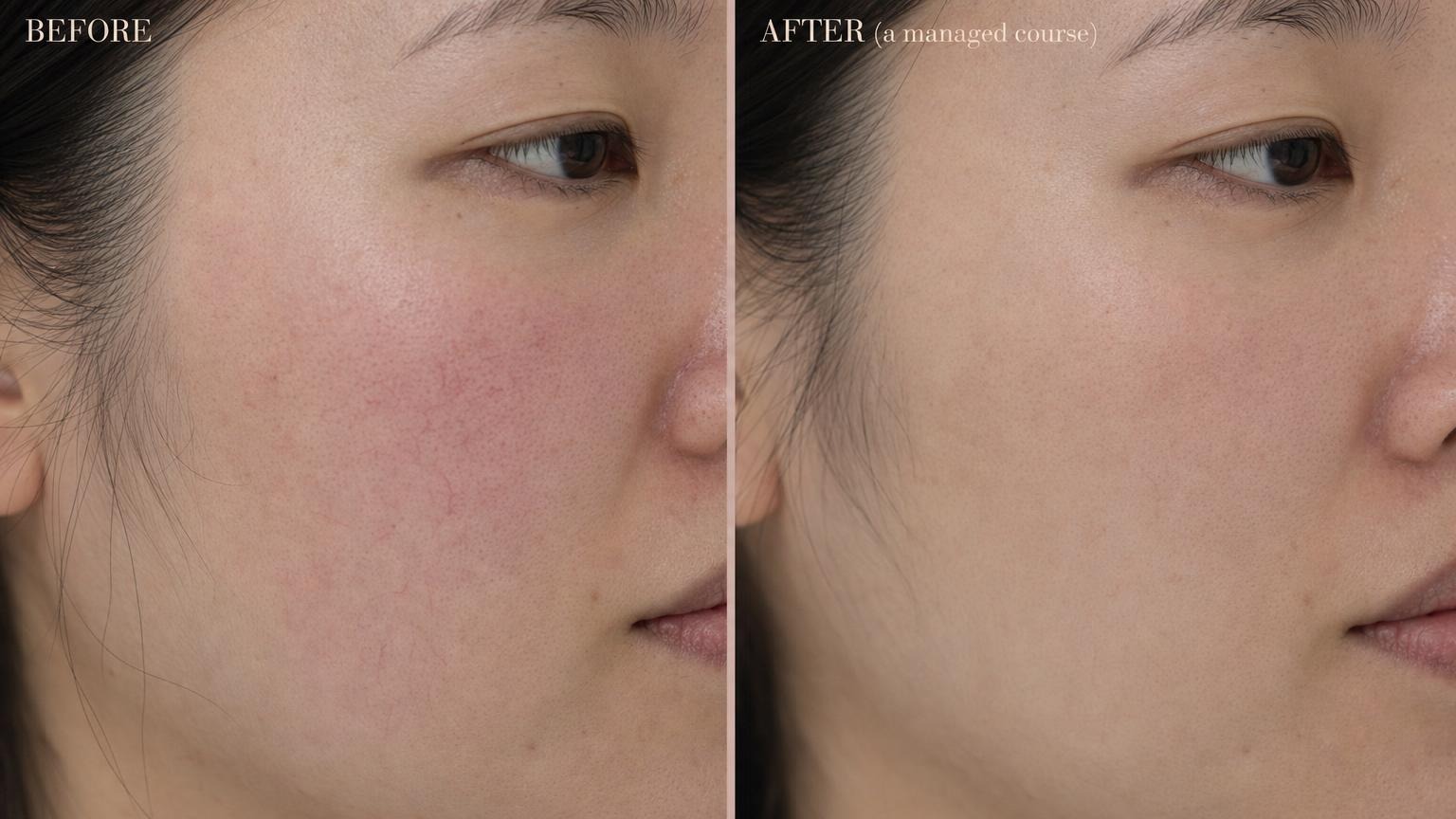
Persistent facial redness and rosacea-type skin are common concerns, especially for fair or reactive skin, and they are wrapped in a discouraging misconception: that redness is just sensitivity you cannot change. In reality, persistent redness has several distinct causes, each with its own treatment, and while it is a condition to be managed rather than cured overnight, it can be substantially calmed. Understanding the cause of your redness, the tool matched to it, and the trigger control that keeps it calm is what turns resignation into real improvement.
Why the Face Stays Red
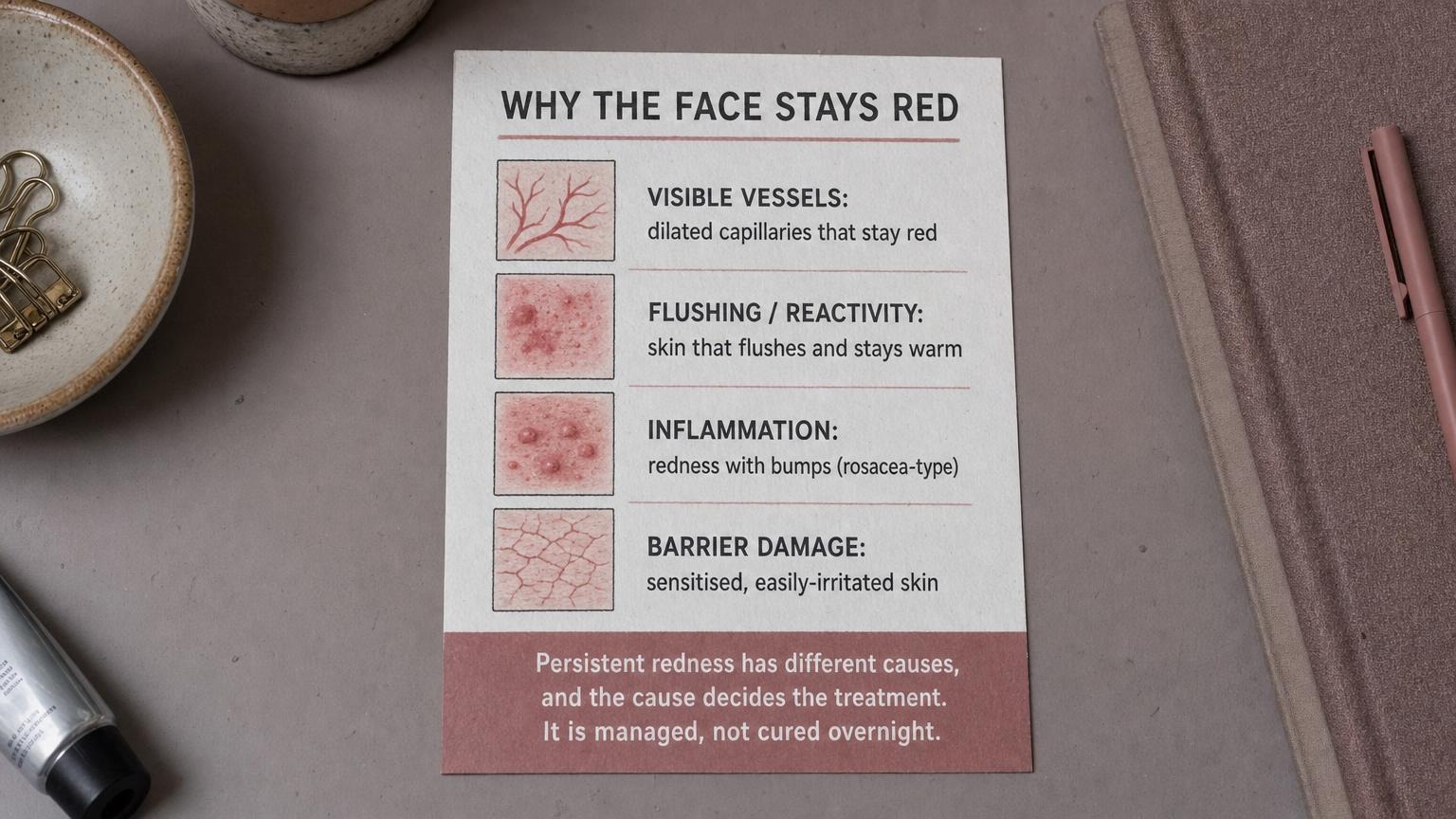
The first step is recognizing that persistent redness has different causes, and the cause determines the treatment. Visible vessels are dilated capillaries that stay red on the cheeks and around the nose. Flushing and reactivity describe skin that flushes easily and stays warm and pink. Inflammation produces redness with bumps, the rosacea-type presentation. And barrier damage leaves skin sensitised and easily irritated, which keeps it red. Many people have a combination of these.
The important point is that these are genuinely different problems, and a single treatment rarely addresses all of them; the cause decides the approach, and redness is managed rather than cured in one go. This cause-first thinking is the same that runs through the broader range of Korean laser and energy treatments, where matching the tool to the specific cause is what makes the difference between real improvement and frustration.
Matching the Tool
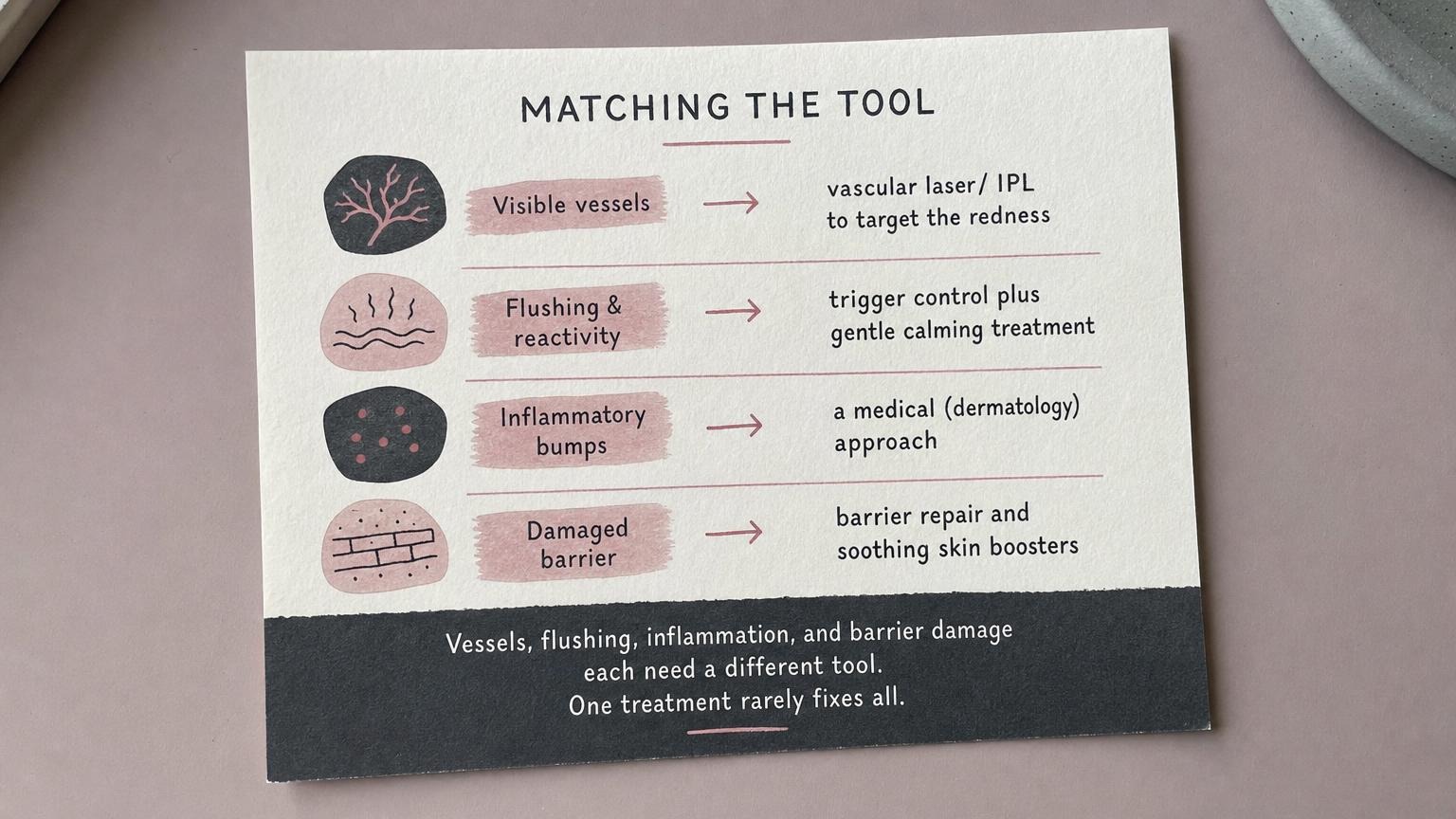
Once the cause is identified, each is matched to the right approach, and a real plan often combines a few. Visible vessels respond to a vascular laser or IPL that targets the redness in the blood vessels specifically, an approach related to the pigment- and vessel-targeting devices covered in our guide to Korean dual-wavelength laser. Flushing and reactivity respond to trigger control plus gentle calming treatment. Inflammatory bumps call for a medical, dermatology-led approach. And a damaged barrier responds to barrier repair and soothing skin boosters.
The key principle is that vessels, flushing, inflammation, and barrier damage each need a different tool, and one treatment rarely fixes all of them. A plan matched to your particular mix, often combining vascular laser for the vessels with barrier repair and trigger control for the reactivity, is what calms the redness in a lasting way. The barrier-repair and soothing side connects to regenerative skin treatments such as Korean skin boosters that strengthen sensitised skin.
Controlling Triggers
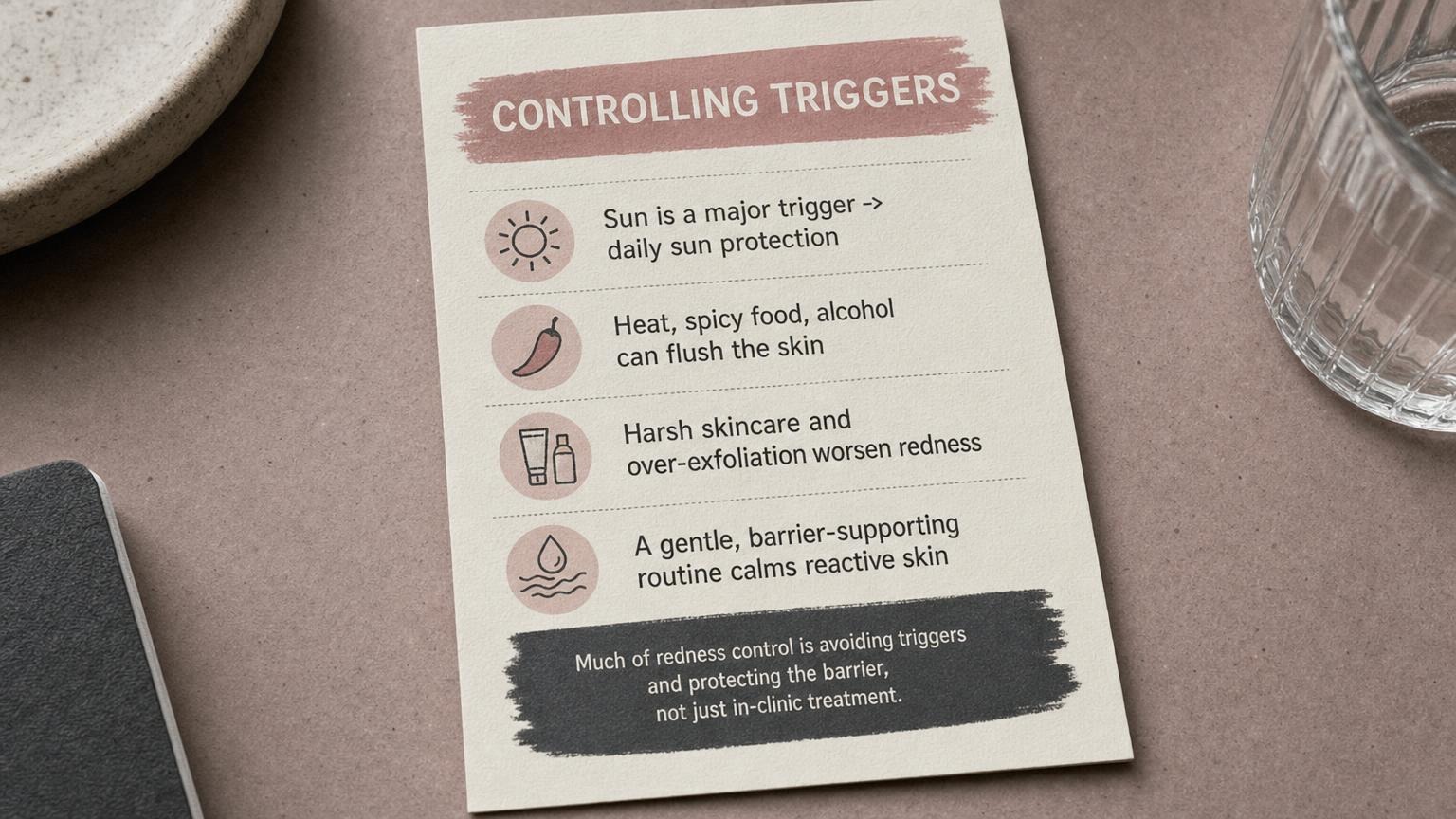
Beyond in-clinic treatment, much of redness control is avoiding triggers and protecting the skin barrier. Sun is a major trigger, so daily sun protection is foundational. Heat, spicy food, and alcohol can flush the skin and worsen redness for those prone to it. Harsh skincare and over-exfoliation, often used in an attempt to fix the skin, actually damage the barrier and worsen redness. And a gentle, barrier-supporting routine calms reactive skin over time.
Recommended for Your Recovery
Products commonly used before and after Korean rosacea facial redness treatment — same items routinely recommended in the recovery instructions Seoul clinics hand out at discharge.
- Arnica Montana Tablets — start 3 days before facial surgery to reduce bruising in the treated area. Check price on Amazon
- Silicone Scar Sheets — for procedures with visible incisions, apply from week 3 onward to support scar maturation. Check price on Amazon
- Beauty of Joseon Relief Sun SPF 50+ — daily Korean SPF 50+ to protect freshly treated facial skin. Check price on Amazon
- COSRX Advanced Snail 96 Mucin Power Essence — Korean snail mucin essence to support the post-procedure skin barrier. Check price on Amazon
As an Amazon Associate, GlobalBeautySpot earns from qualifying purchases at no extra cost to you.
The point is that trigger control and a gentle routine are as important as any in-clinic treatment, because they prevent the redness from being re-provoked. Many people unknowingly worsen their redness with aggressive skincare or sun exposure, undoing the benefit of treatment. A plan that pairs in-clinic work with trigger avoidance and barrier support is what keeps the skin calm, whereas treatment alone, without changing the habits that provoke redness, gives a short-lived result. The daily routine is part of the treatment.
What Is Realistic
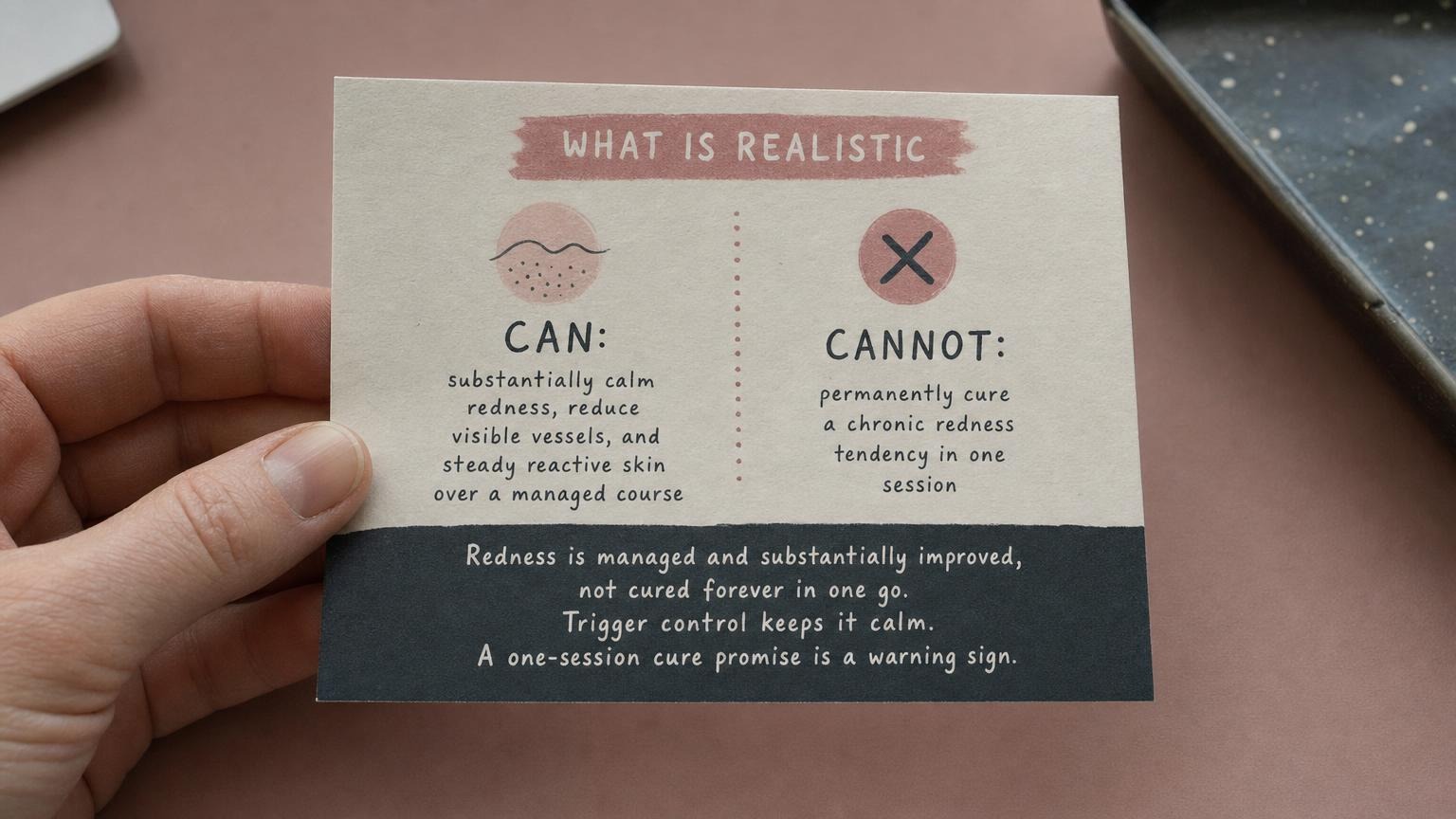
Honest expectations matter, because redness treatment is effective but bounded. A matched, managed course can substantially calm redness, reduce visible vessels, and steady reactive skin, often making a dramatic difference to how the skin looks and feels. What it cannot do is permanently cure a chronic redness tendency in a single session. Conditions like rosacea are managed and substantially improved, not eliminated forever in one go, and trigger control is what keeps the improvement holding.
This is why a one-session cure promise is a warning sign. A chronic redness tendency does not disappear permanently from one treatment, so a clinic guaranteeing that is overselling. The genuine result, redness substantially calmed and maintained with treatment and trigger control, is well worth having and far more honest than a false promise of a permanent cure. A clinic that frames redness as managed and improved, with realistic maintenance, is being straight with you rather than selling a myth.
Cost and How to Verify the Plan
Pricing reflects the combination and the number of sessions, since a managed course involves several treatments plus maintenance rather than one. Vascular laser or IPL, barrier-repair treatments, and any medical management each carry their own cost, and the realistic figure is the planned course plus upkeep. These costs are generally below the equivalent abroad. Paying for a proper cause-matched plan plus trigger control is more economical than years of products and single treatments that do not address the actual cause.

Before committing, five questions tell you whether a clinic is diagnosing your redness or selling a single fix. Did the clinic identify whether your redness is from visible vessels, flushing, inflammation, or barrier damage? Is the plan matched to that cause and combining the right tools? Is trigger control and barrier support part of the plan, not just in-clinic treatment? Is the goal framed as managed and improved rather than permanently cured? And is anyone promising a one-session cure, which is a warning sign? A clinic that diagnoses the cause, includes trigger control, and sets realistic management goals is the one to trust. For trip-planning details, visit Link Plastic Surgery’s official website.
Frequently Asked Questions
1. Can facial redness actually be treated?
Yes, substantially, though it is managed rather than cured overnight. Persistent redness has causes, visible vessels, flushing and reactivity, inflammation, or barrier damage, that can each be specifically addressed: vessels with a vascular laser, reactivity with trigger control and barrier repair. It is not just sensitivity to live with; a matched plan can calm it significantly.
2. Why is my face always red?
For one of several reasons, often a mix: dilated visible vessels that stay red, skin that flushes and stays reactive, inflammation with bumps (rosacea-type), or a damaged barrier that keeps skin sensitised and irritated. Identifying which cause or causes you have is what allows a matched treatment, rather than treating all redness as a single vague problem.
3. What treats visible blood vessels on the face?
Visible vessels respond to a vascular laser or IPL that targets the redness within the blood vessels specifically, reducing their appearance over a course of treatments. This is different from treating brown pigmentation and is matched to the vessel-driven redness. A barrier-repair and trigger-control plan is usually added if there is also reactivity.
4. Is rosacea curable?
Rosacea is a chronic condition that is managed and substantially improved rather than permanently cured in one session. Treatment can calm the redness, reduce visible vessels, and address inflammatory bumps, and trigger control keeps it steady, but it is an ongoing management approach. Anyone promising a permanent one-session cure of a chronic redness tendency is overselling.
5. What triggers facial redness?
Common triggers include sun exposure (a major one), heat, spicy food, and alcohol, which flush the skin, as well as harsh skincare and over-exfoliation that damage the barrier. A gentle, barrier-supporting routine and daily sun protection are foundational. Much of redness control is avoiding these triggers, since they re-provoke the redness even after treatment.
6. Can the wrong skincare make redness worse?
Yes, very commonly. Harsh products and over-exfoliation, often used to try to fix the skin, actually damage the barrier and worsen redness and reactivity. A gentle, barrier-supporting routine calms reactive skin, while an aggressive one keeps it inflamed. Simplifying and soothing the routine is frequently a big part of improving persistent facial redness.
7. How many sessions does redness treatment take?
Redness is treated over a managed course, typically several sessions matched to your cause, followed by maintenance, rather than a single visit. The number depends on the cause, severity, and tools used. Improvement builds gradually, and trigger control between and after sessions is what keeps the redness calm, so it is an ongoing plan rather than one-and-done.
8. Will treatment make my skin look pale or unnatural?
No. The goal is to calm excess redness and even the tone, not to remove natural colour, so the result is more even, healthier-looking skin rather than a paled-out appearance. Reducing diffuse redness and visible vessels brings the skin to a calmer, natural tone, which looks better and more rested, not artificial.
9. Is barrier repair important for redness?
Yes, especially when reactivity and a damaged barrier drive the redness. Soothing, barrier-repairing treatments and a gentle routine strengthen sensitised skin so it is less easily provoked, which reduces flushing and irritation. For many people, barrier repair plus trigger control is as important as treating the vessels, since reactive skin keeps re-reddening without it.
10. How do I plan redness treatment as an international patient?
Have a consultation that identifies whether your redness is from vessels, flushing, inflammation, or barrier damage, and proposes a matched course plus trigger control and barrier support. Maintain sun protection and a gentle routine after you return home, since triggers re-provoke redness. For scheduling details, visit Link Plastic Surgery’s official website.