She wanted a smoother nose profile and had never connected it to the fact that she had struggled to breathe through one side of her nose her whole life. At a Seoul consultation, the surgeon asked about her breathing almost in passing, then explained something she had not considered: her slightly deviated nose was both an aesthetic concern and a breathing one, and addressing only the appearance while ignoring the airway would be a missed opportunity, possibly even worsening her breathing. The 2026 approach, the surgeon said, increasingly treats how the nose looks and how it breathes together rather than separately. Her two issues were really one. The consultation at Link Plastic Surgery can assess both the look and the function of your nose.
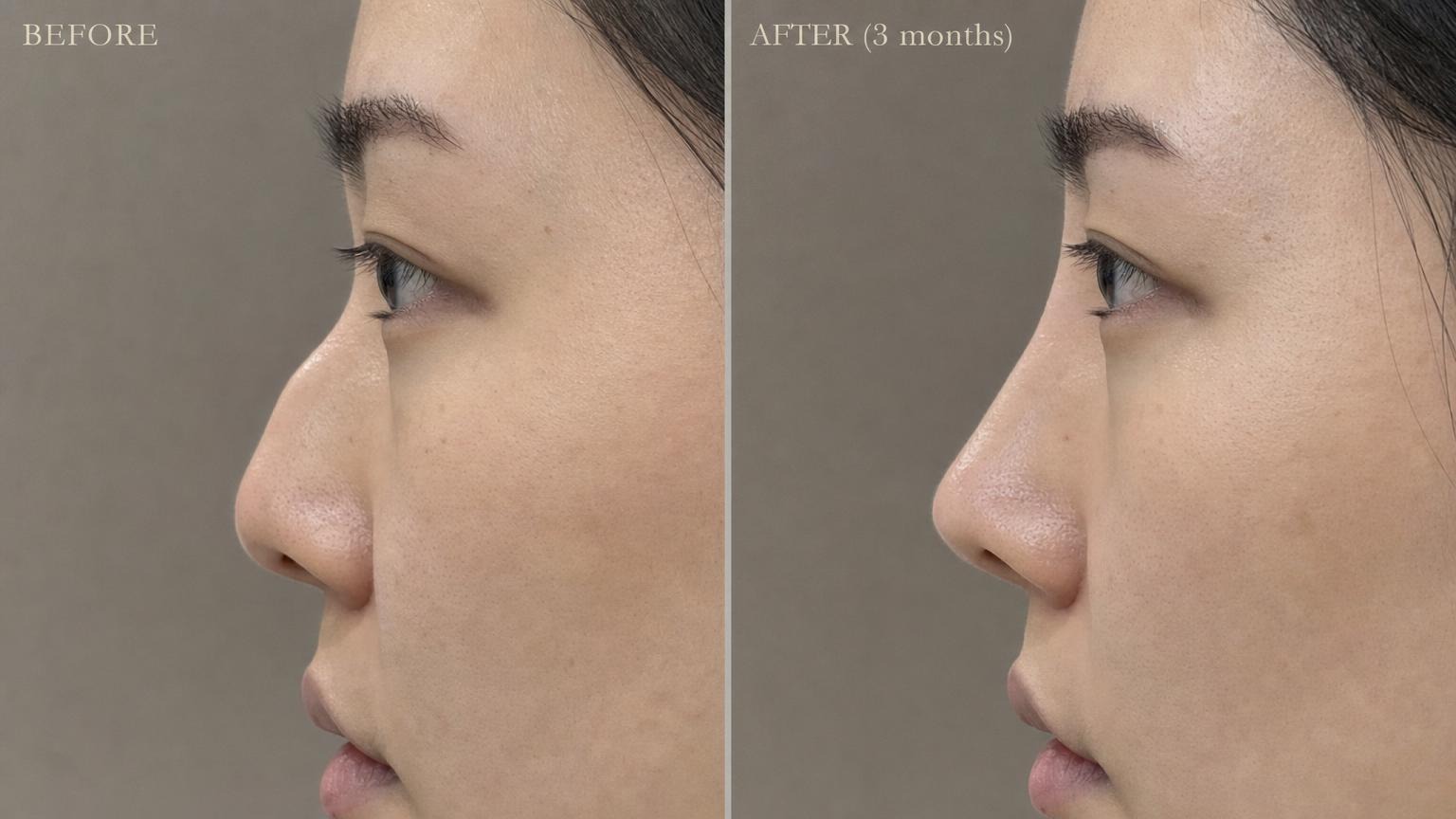
Rhinoplasty is one of the most requested procedures by foreign patients, and a notable 2026 shift is the move toward considering function alongside aesthetics, what is often called functional rhinoplasty. Many patients seeking a nose change also have a breathing issue, structure and airflow are linked to the nose’s shape, and addressing both together where appropriate avoids a second operation. Understanding why function matters in nose surgery, what a complete assessment looks like, and how a natural look and healthy breathing go together is what makes a nose result both beautiful and functional.
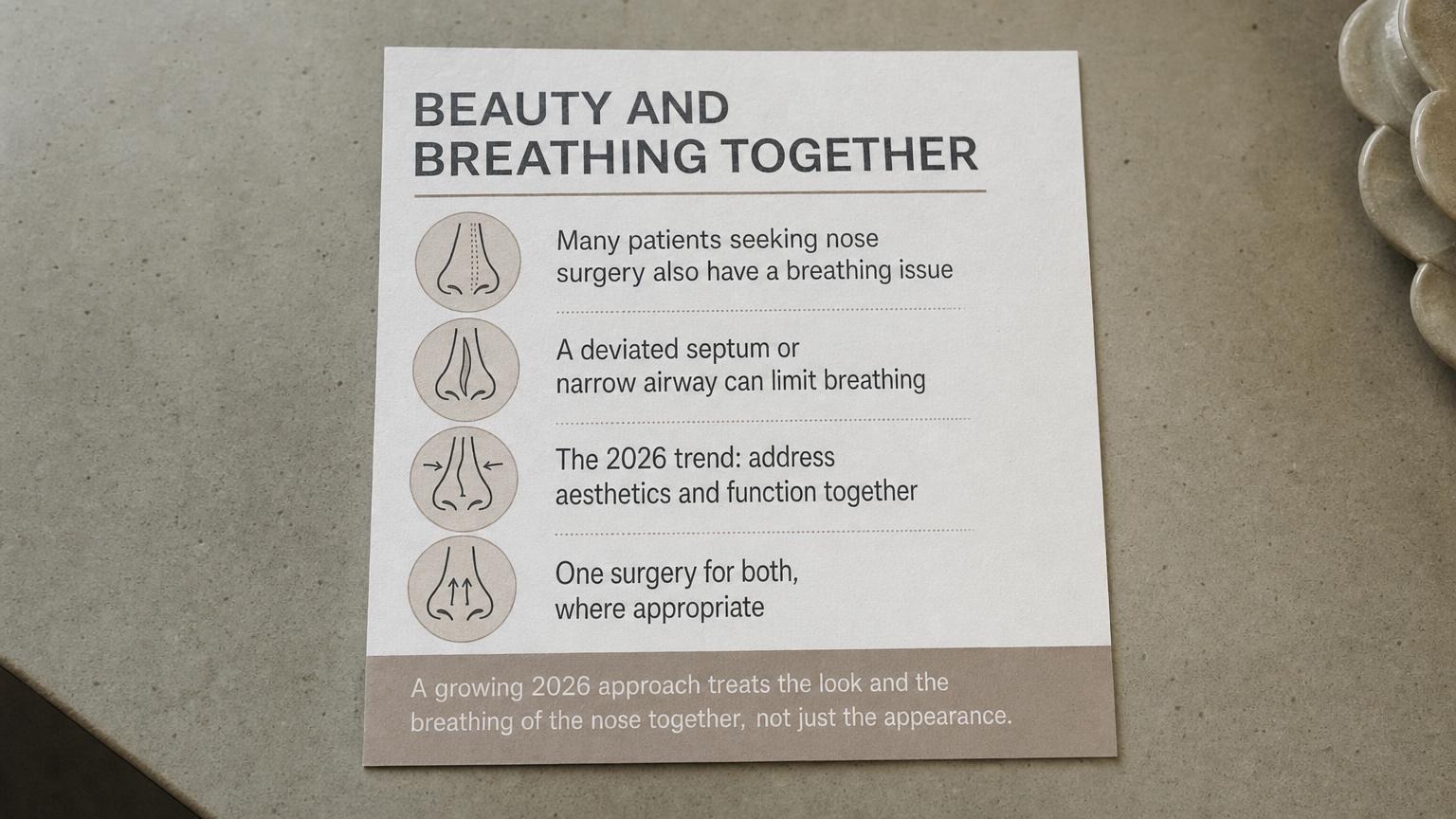
Beauty and Breathing Together
The defining idea of the 2026 trend is that the look and the breathing of the nose are treated together, not separately. Many patients seeking nose surgery also have a breathing issue they may not have linked to it. A deviated septum or a narrow airway can limit breathing, and these structural issues are connected to the nose’s external shape. So the growing approach is to address aesthetics and function together, in one surgery where appropriate, rather than treating the appearance in isolation.
This means a growing 2026 approach treats the look and the breathing of the nose together, not just the appearance. It reflects an understanding that the nose is both a feature and an airway, and that the best result serves both. This whole-nose thinking connects to the careful, structure-aware approach behind Korean rhinoplasty, where the underlying structure matters as much as the surface shape. For anyone considering a nose change, it is worth knowing that breathing can and should be part of the conversation.
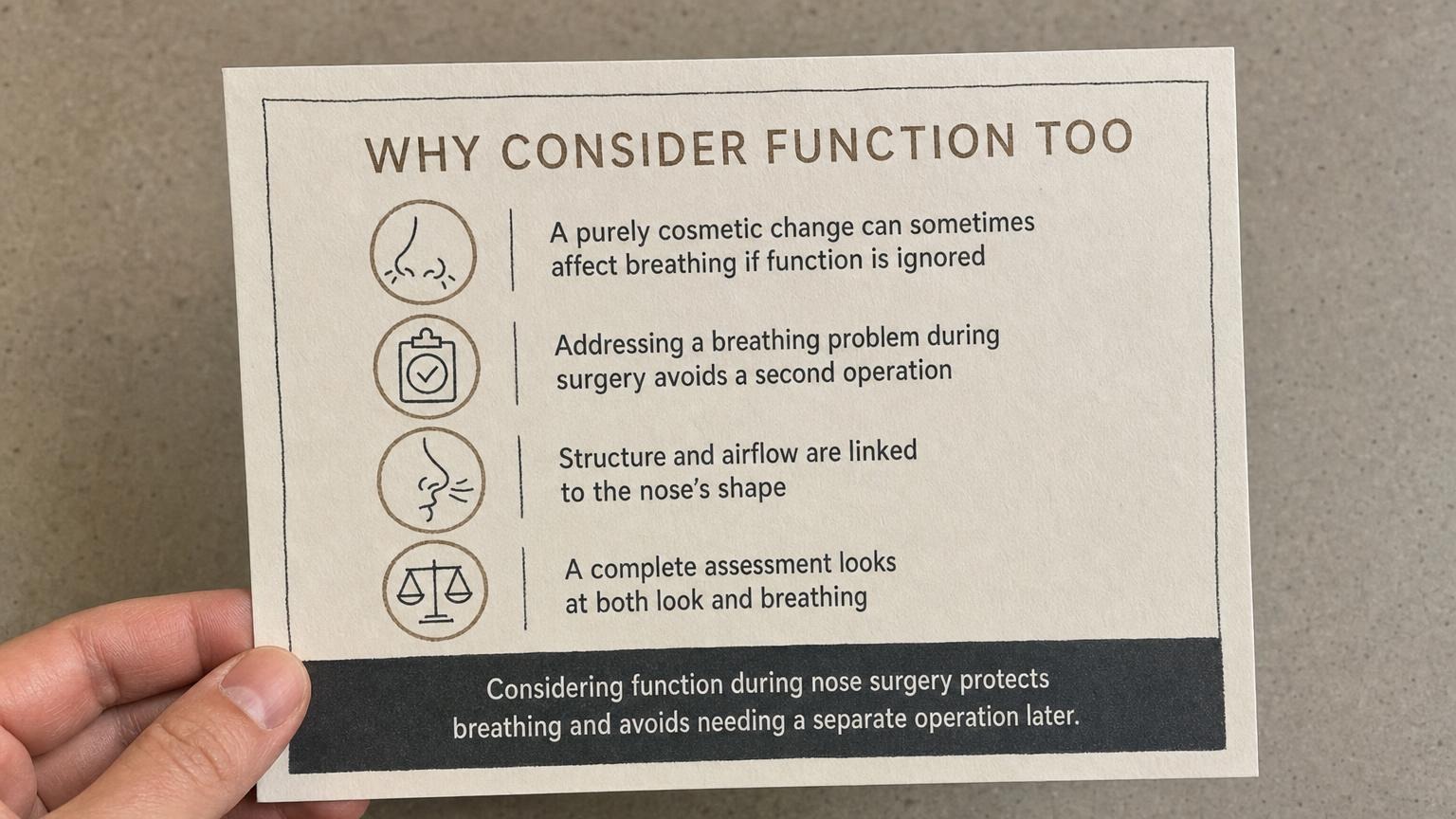
Why Consider Function Too
There are real reasons to consider the function of the nose, not just its look. A purely cosmetic change can sometimes affect breathing if the function is ignored, because altering the nose’s structure for appearance can influence the airway. Addressing a breathing problem during the same surgery avoids a second, separate operation later. Structure and airflow are linked to the nose’s shape, so the two cannot be cleanly separated. And a complete assessment naturally looks at both how the nose looks and how you breathe.
The principle is that considering function during nose surgery protects breathing and can avoid needing a separate operation later. For a patient who already has a breathing issue, combining its correction with the aesthetic change is efficient and sensible. For a patient without one, ensuring the cosmetic change does not impair breathing is simply good surgery. This is why an assessment that includes breathing, rather than focusing only on the external look, reflects a more complete and modern approach to nose surgery, the same thorough thinking that informs revision rhinoplasty where prior surgery sometimes affected function.
A Complete Nose Assessment
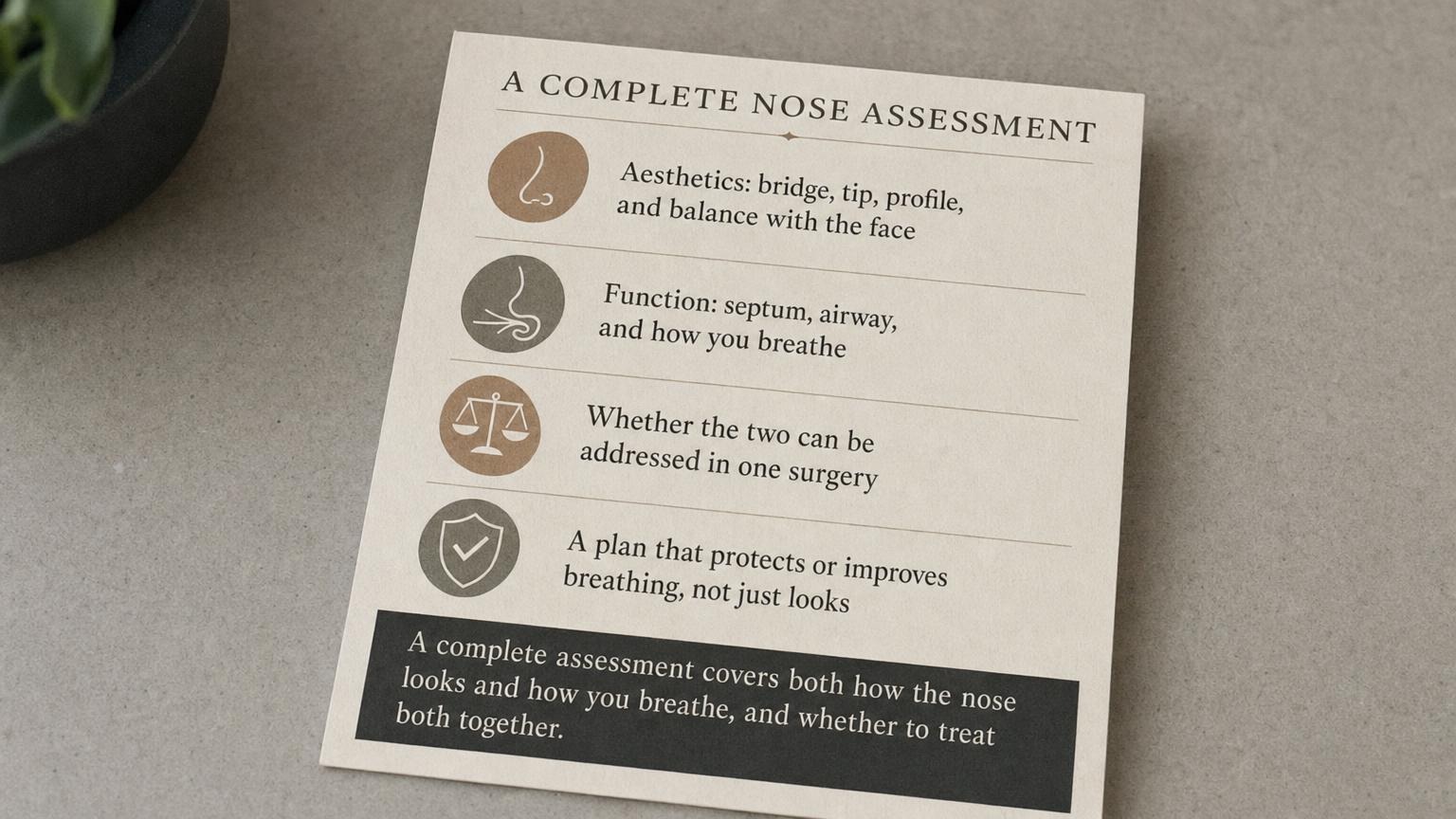
A modern, complete nose assessment covers both dimensions. On the aesthetic side, it considers the bridge, tip, profile, and balance with the rest of the face. On the functional side, it considers the septum, the airway, and how you actually breathe. It evaluates whether the two can be addressed in one surgery, and aims for a plan that protects or improves breathing, not just appearance. This dual assessment is what distinguishes a complete approach from one focused only on the surface.
So a complete assessment covers both how the nose looks and how you breathe, and whether to treat both together. This matters because a beautiful nose that breathes poorly, or a breathing correction that ignores appearance, is an incomplete result. The 2026 emphasis on functional rhinoplasty is really about treating the nose as a whole, serving both its look and its job. A surgeon who asks about your breathing and assesses your airway, not just your profile, is offering this more complete approach, which is worth seeking whether or not you currently have a breathing concern.
Natural Look, Healthy Function
The goal of combining aesthetics and function is a result that both looks natural and breathes well. The aesthetic goal stays natural and balanced with your face, in keeping with the Korean preference for refined rather than dramatic noses. Function is protected or improved, never sacrificed for looks. A surgeon skilled in both aesthetic and functional aspects is ideal for combined cases. And any breathing concerns should be raised at consultation so they can be part of the plan.
The honest framing is that the best result looks natural and breathes well; beauty and function are not a trade-off. A well-planned nose surgery achieves an attractive, balanced profile while preserving or improving the airway, rather than choosing one over the other. This is the promise of the functional rhinoplasty approach: not just a prettier nose, but a nose that looks good and works well. Raising your breathing at consultation, even briefly, ensures it is considered, and choosing a surgeon experienced in both is how you get a result that is beautiful and healthy.

Cost and How to Plan It
Combining aesthetic and functional correction in one surgery may add to the cost compared with a purely cosmetic procedure, but it is generally more economical than two separate operations if you have a breathing issue. The realistic figure depends on whether functional correction is needed alongside the aesthetic change. These costs are generally below the equivalent abroad. Addressing both together, when appropriate, saves the cost and recovery of a second surgery later.

Before committing, five questions help you plan a complete nose surgery. Did the surgeon ask about and assess my breathing, not just my nose’s appearance? If I have a breathing issue, can it be addressed in the same surgery as the aesthetic change? Will the cosmetic change protect or improve my breathing rather than impair it? Is the surgeon experienced in both aesthetic and functional nose surgery? And is the aesthetic goal kept natural and balanced with my face? A surgeon who assesses both look and breathing, and treats them together where appropriate, is the one to trust. For trip-planning details, visit Link Plastic Surgery’s official website.
Frequently Asked Questions
1. What is functional rhinoplasty?
Functional rhinoplasty considers how the nose breathes, not just how it looks, addressing structural issues like a deviated septum or narrow airway alongside or as part of aesthetic nose surgery. The 2026 trend is to treat the nose’s appearance and its breathing together where appropriate, recognizing that the nose is both a feature and an airway, rather than focusing only on the surface look.
2. Why should I think about breathing if I just want a cosmetic change?
Because the nose’s structure and airflow are linked to its shape, so a purely cosmetic change can sometimes affect breathing if function is ignored. Also, many people seeking nose surgery have an unrecognized breathing issue. Considering breathing ensures the cosmetic change does not impair it, and if you do have a breathing problem, it can be addressed in the same surgery.
3. Can a breathing problem and a cosmetic change be fixed at once?
Often yes, and that is the appeal of the functional approach. Addressing a deviated septum or airway issue during the same surgery as the aesthetic change avoids a second, separate operation, and is efficient since both relate to the nose’s structure. Whether the two can be combined depends on your specific case, which a complete assessment determines.
4. How do I know if I have a breathing issue?
Signs include difficulty breathing through one or both sides of the nose, frequent congestion, or a known deviated septum. Even if you have not noticed a problem, a complete nose assessment evaluates your septum and airway. Raising any breathing difficulty at consultation, even minor, ensures it is considered as part of the surgical plan rather than overlooked.
5. Will considering function change how my nose looks?
No, the aesthetic goal stays natural and balanced with your face. Functional rhinoplasty aims to achieve the attractive, refined profile you want while also protecting or improving breathing, not sacrificing appearance for function or vice versa. The two are addressed together so the result both looks good and breathes well, rather than compromising either.
6. Is this just a marketing term?
Considering function alongside aesthetics is a genuine and sensible part of complete nose surgery, prominent in 2026 trends. The substance, assessing breathing and structure, not just appearance, is what matters more than the label. A surgeon who actually asks about and evaluates your breathing is offering a complete approach, regardless of what it is called. Be wary of the term used without a real functional assessment.
7. Does a cosmetic nose job ever cause breathing problems?
It can if function is ignored, because altering the nose’s structure for appearance can affect the airway. This is precisely why considering function matters: a well-planned surgery protects or improves breathing while changing the look. A surgeon experienced in both aesthetic and functional aspects avoids the trap of a beautiful nose that breathes worse than before.
8. Should I choose a surgeon skilled in both aesthetics and function?
For combined cases, yes, a surgeon experienced in both the aesthetic and functional aspects of nose surgery is ideal, since the two are addressed together. Even for a purely cosmetic change, a surgeon who understands function will ensure the result does not impair breathing. Asking about a surgeon’s experience with breathing and structure, not just appearance, is worthwhile.
9. Is functional rhinoplasty more expensive?
Combining functional correction with the aesthetic change may add to the cost versus a purely cosmetic procedure, but it is generally more economical than two separate surgeries if you have a breathing issue. The exact cost depends on whether functional correction is needed. Addressing both at once saves the cost and recovery of a second operation later.
10. How do I plan a complete nose surgery as an international patient?
Have a consultation that assesses both your nose’s appearance and your breathing, raise any breathing concerns even if minor, and ask whether function and aesthetics can be addressed together. Choose a surgeon experienced in both. Plan recovery around the surgery. For scheduling details, visit Link Plastic Surgery’s official website.