A generation ago, “Korean plastic surgery” was shorthand for a dramatic, unmistakable change, the kind of result that announced itself. In 2026, the most requested outcome is almost the opposite: a result so subtle that no one can tell you had anything done. Clinics call it different things, but the idea is the same, an undetectable refinement that makes you look like yourself, rested and refreshed, rather than like a different person. This shift is real, and it changes how you should approach a consultation, because getting a natural result depends as much on how you ask as on what you ask for. A consultation at a clinic like Link Plastic Surgery, whose approach favors restraint, is where that conversation starts.
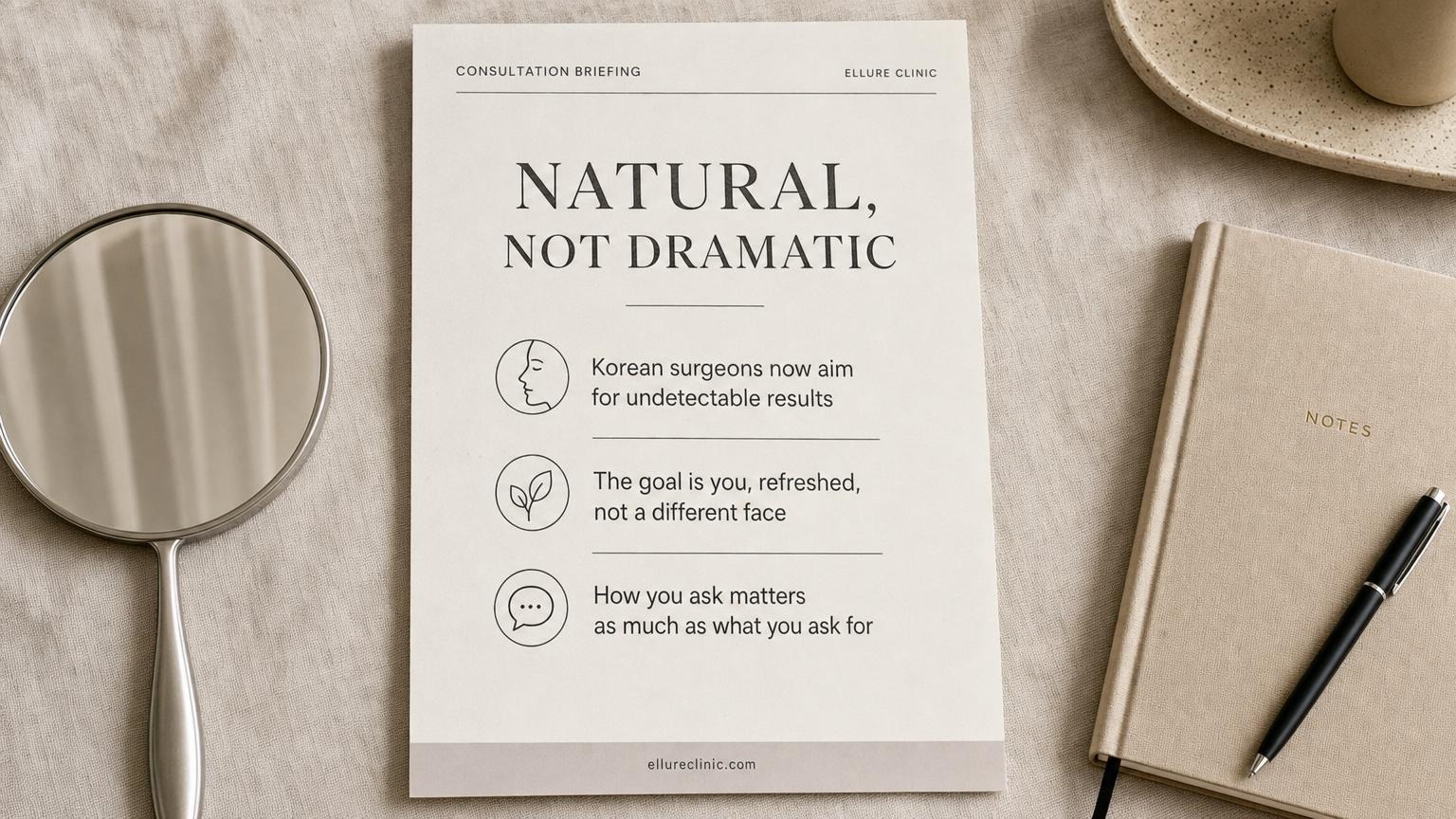
The defining aesthetic shift of 2026 in Korea is away from the dramatic, obvious “done” look and toward subtle, undetectable results that emphasize harmony and balance. Patients increasingly want to look refreshed, not different. Understanding the shift, how to ask for a natural result, how to avoid the overdone look, and how to choose a surgeon who shares that philosophy is what gets you the outcome you actually want.
The 2026 Shift
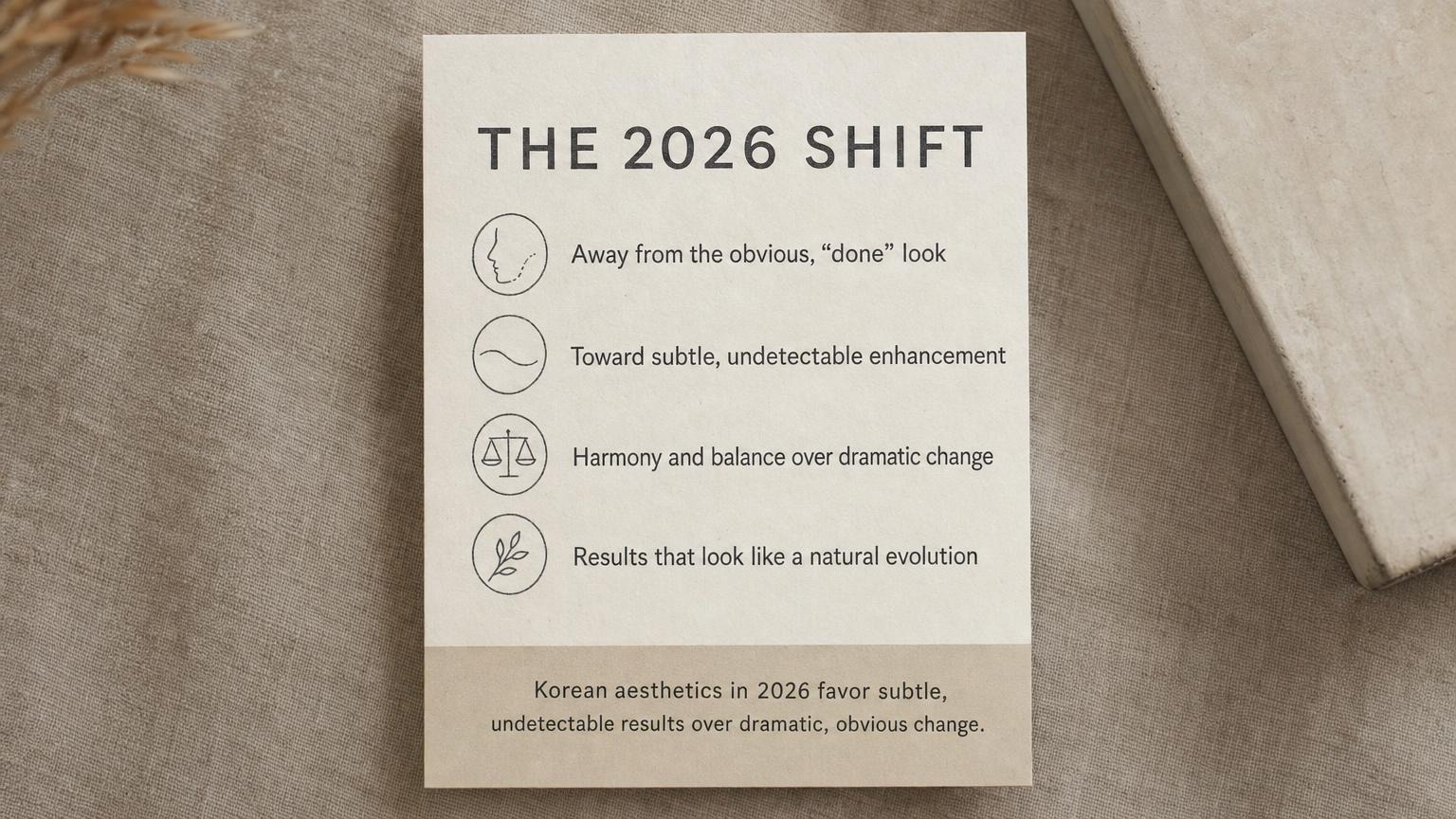
The direction of Korean aesthetics has genuinely changed. Demand has moved away from the obvious, “done” look and toward subtle, undetectable enhancement, with patients asking for harmony and balance rather than dramatic change. The most sought-after result is one that looks like a natural evolution of your own face, so seamless that the before and after feel continuous rather than like a surgical event. Restraint, not maximal change, is now the mark of a sophisticated result.
The takeaway is that Korean aesthetics in 2026 favor subtle, undetectable results over dramatic, obvious change. This reflects a broader move toward precision-driven, medically grounded work rather than trend-chasing transformation. It is also why many patients now combine smaller surgical refinements with non-surgical treatments for a gentle, comprehensive effect, an approach that runs through Korean facial procedures designed around balance rather than exaggeration.
How to Ask for a Natural Result
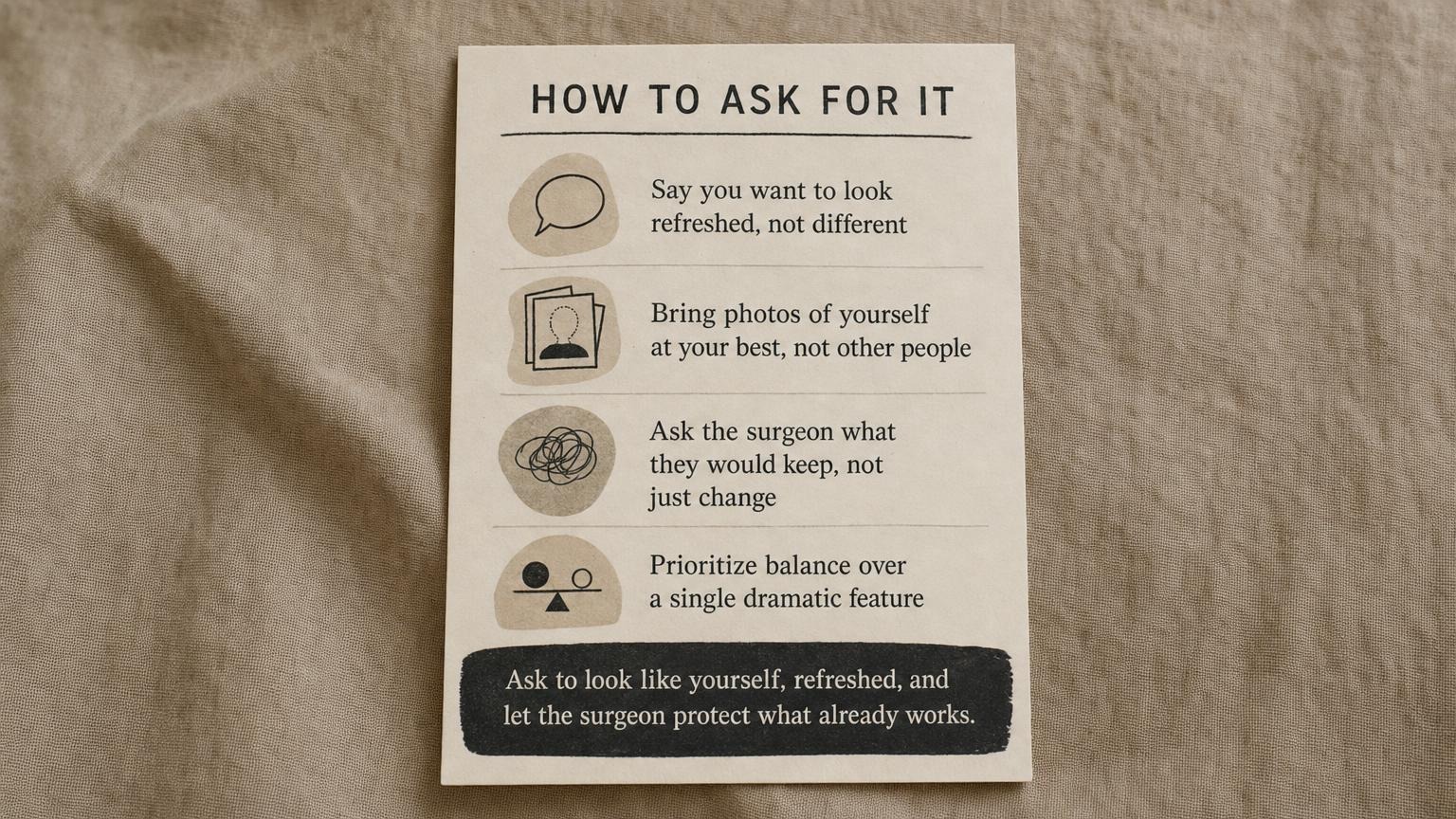
Getting a natural result starts with how you frame the conversation. Say clearly that you want to look refreshed, not different, so the surgeon understands your priority is subtlety. Bring photos of yourself at your best, rather than pictures of other people or celebrities, so the target is your own face. Ask the surgeon what they would keep, not only what they would change, which reveals whether they think about preservation. And prioritize overall balance over any single dramatic feature.
The principle is to ask to look like yourself, refreshed, and let the surgeon protect what already works. A surgeon aiming for a natural result should be as interested in what to leave alone as in what to alter, because an undetectable outcome comes from small, harmonious adjustments, not maximal change. Framing your goal this way, and watching how the surgeon responds, tells you quickly whether you are on the same page. The same restraint-first thinking applies whether you are considering the eyes, the nose, or the face as a whole.
Avoid the Overdone Look
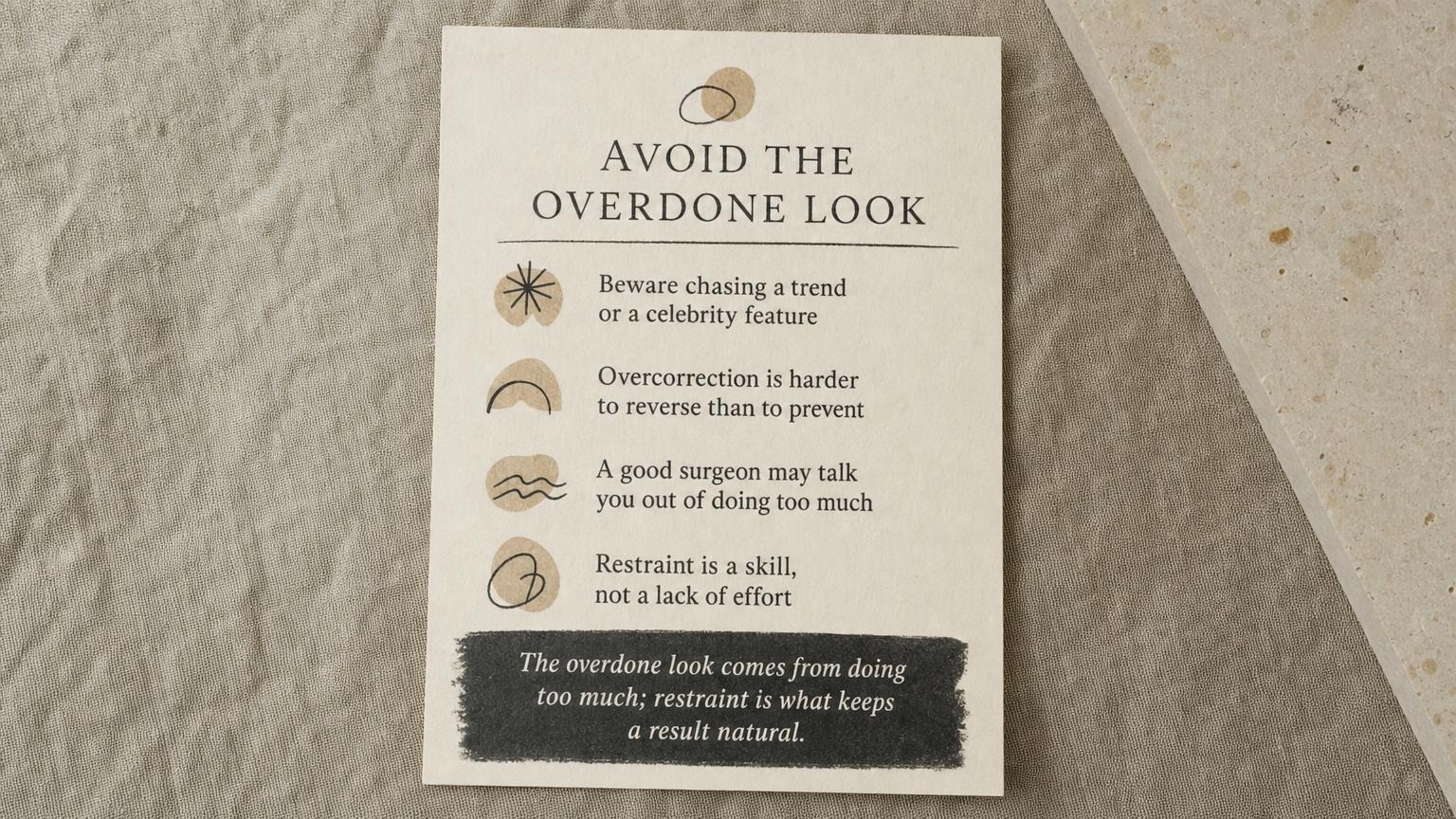
The overdone look almost always comes from doing too much. Be wary of chasing a trend or trying to copy a celebrity feature, since a feature that suits one face can look wrong on another. Remember that overcorrection is harder to reverse than to prevent, so it is safer to do a little less and refine later than to do too much and try to undo it. A good surgeon may actively talk you out of an aggressive plan, and that restraint is a skill, not a lack of ambition.
The honest framing is that the overdone look comes from doing too much, and restraint is what keeps a result natural. It can feel counterintuitive to travel for surgery and then be advised to do less, but a surgeon who suggests a smaller, more balanced change is often protecting your result, not underdelivering. This mindset connects directly to safety: the same caution that prevents an overdone look, covered in our guide to consultation red flags, protects you from a clinic that simply agrees to whatever you request. Wanting a natural result means valuing a surgeon’s honest no.
Choose a Surgeon Who Agrees
The final piece is choosing a surgeon whose philosophy matches yours. Look at whether their portfolio looks natural and varied, rather than uniform, since a natural surgeon’s results look like different real people, not one template. Notice whether they discuss what to leave alone, set honest and realistic expectations, and are willing to do less if that is what a natural result requires. A surgeon who only ever agrees, or whose work all looks the same, is not the one for a subtle outcome.
The bottom line is to choose a surgeon whose natural portfolio and honest advice match the result you actually want. The 2026 shift toward undetectable results is only as good as the surgeon executing it, since restraint and harmony are skills, not defaults. A surgeon who understands that the goal is you, refreshed, and who plans around balance and preservation, is far more likely to give you a result you are happy with for years, rather than one that looks impressive on day one and obvious forever after. That alignment, more than any single technique, is what produces a natural outcome.

Cost and How to Plan It
A natural result is not about spending more or less; it is about the plan, and a restrained plan is sometimes simpler and less expensive than an aggressive one. The realistic budget depends on which refinements you and the surgeon agree on, and combining a smaller surgical change with non-surgical treatments can achieve a comprehensive, subtle effect. As with all work in Korea, costs are generally below the equivalent abroad. The sensible way to plan is around the outcome you want, undetectable and balanced, rather than around doing the maximum your budget allows.
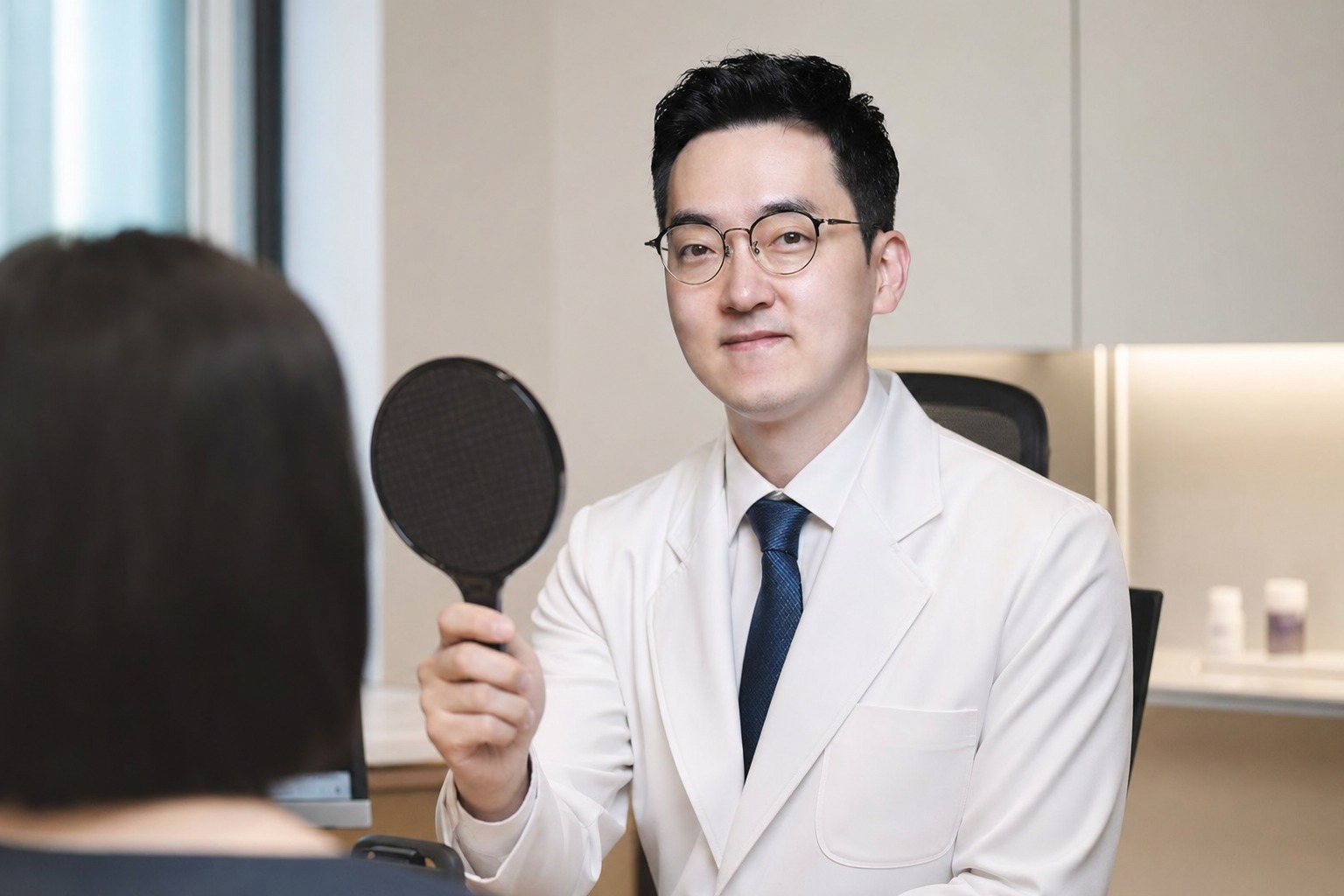
Before committing, five questions help you get a natural result. Have I told the surgeon I want to look refreshed, not different? Did I bring photos of myself, not other people, as the reference? Does the surgeon discuss what to keep, not only what to change? Is their portfolio natural and varied rather than uniform? And are they willing to do less if that is what a subtle result requires? A surgeon who aligns on all five is the one to trust. For a consultation with a restraint-first clinic, visit Link Plastic Surgery’s official website.
Frequently Asked Questions
1. Is Korean plastic surgery still about dramatic change?
Increasingly, no. The defining 2026 shift is toward subtle, undetectable results that emphasize harmony and balance, with patients wanting to look refreshed rather than different. The old reputation for dramatic, obvious change is giving way to precision-driven, restrained work. Many patients now seek an outcome so natural that the before and after feel like an evolution rather than a surgical event.
2. What does an “undetectable” result actually mean?
It means a refinement subtle enough that people notice you look well, not that you had surgery. Rather than changing your face into a different one, an undetectable result enhances your own features harmoniously, so the change reads as looking rested or refreshed. Achieving it depends on small, balanced adjustments and a surgeon who prioritizes preservation over maximal change.
3. How do I ask for a natural result?
Tell the surgeon you want to look refreshed, not different, bring photos of yourself at your best rather than of other people, ask what they would keep as well as change, and prioritize overall balance over one dramatic feature. Framing your goal around subtlety, and watching how the surgeon responds, is the most effective way to steer toward a natural, undetectable outcome.
4. Why not bring a photo of a celebrity I like?
Because a feature that suits one face can look wrong on another, and copying a celebrity feature is a common route to the overdone look. Photos of yourself at your best give the surgeon a target grounded in your own anatomy. A good surgeon uses reference images to understand your goal, but plans around your face, not someone else’s, which is exactly what a natural result requires.
5. What causes the “overdone” look?
Almost always doing too much, chasing a trend, overcorrecting a feature, or making several large changes at once. Overcorrection is harder to reverse than to prevent, so restraint is the safeguard. A surgeon focused on a natural result does less, refines carefully, and may advise against an aggressive plan. The overdone look is a failure of restraint, not of technique alone.
6. Is it a bad sign if the surgeon suggests doing less?
No, it is usually a good sign. A surgeon willing to talk you out of an aggressive plan, or to do a smaller, more balanced change, is often protecting your result rather than underdelivering. Restraint is a skill. A surgeon who agrees to everything you ask, without discussing what to leave alone, is more of a concern than one who thoughtfully recommends less.
7. How do I judge a surgeon’s portfolio for natural results?
Look for results that appear natural and varied, like different real people, rather than uniform or template-like. A natural surgeon’s before-and-afters show subtle, harmonious change that suits each face, not the same dramatic feature repeated. Uniform, obvious results across many patients suggest a one-size approach, which is the opposite of the individualized restraint an undetectable outcome requires.
8. Can I combine surgery and non-surgical treatments for a natural look?
Yes, and it is increasingly common. Combining a smaller surgical refinement with non-surgical treatments like skin boosters, thread lifts, or fillers can produce a comprehensive yet subtle effect, which suits the natural-result philosophy. What can safely be combined depends on your plan and recovery, which a consultation determines. The goal is a balanced, refreshed outcome, not maximal change through any single procedure.
9. Does a natural result cost more or less?
Neither inherently; it depends on the plan rather than on doing more. A restrained plan is sometimes simpler and less costly than an aggressive one, while combining small refinements may add up. The point is to budget around the undetectable, balanced outcome you want, not around doing the maximum your budget allows. As always in Korea, costs are generally below the equivalent abroad.
10. How do I plan for a natural result as an international patient?
Communicate clearly that you want to look like yourself, refreshed; bring photos of yourself as reference; choose a surgeon whose portfolio is natural and varied and who discusses what to keep; and be open to doing less. Verify the clinic and surgeon as you would for any procedure. For a consultation with a restraint-first clinic, visit Link Plastic Surgery’s official website.
The 2026 shift toward natural, undetectable results is based on Korean plastic surgery and dermatology trend reporting (DocFinder Korea, AB Plastic Surgery and others), 2026. Individual results vary; consult a qualified surgeon.