You Walked In for Under-Eyes. The Korean Surgeon Wants to Talk About Your Whole Face.
If you book a consultation in Seoul for under-eye fat repositioning, there is a meaningful chance you will leave the room with a different plan than the one you came in with. The surgeon will look at your photos, mark up the temples, the cheekbones, and the upper lip area with a pen, and quietly recommend that you combine the under-eye procedure with full-face fat grafting.
This catches almost every foreign patient off guard. It feels like upselling. It is not. It is the most common recommendation pattern in Korean facial rejuvenation, and the underlying logic is actually defensible — the under-eye area never sits in isolation, and fixing only the under-eye when there is volume loss elsewhere produces a result the patient eventually wishes they had gone bigger on.
This guide explains why Korean surgeons recommend the combination so often, what it actually costs and adds to recovery, and the specific cases where you should politely push back.
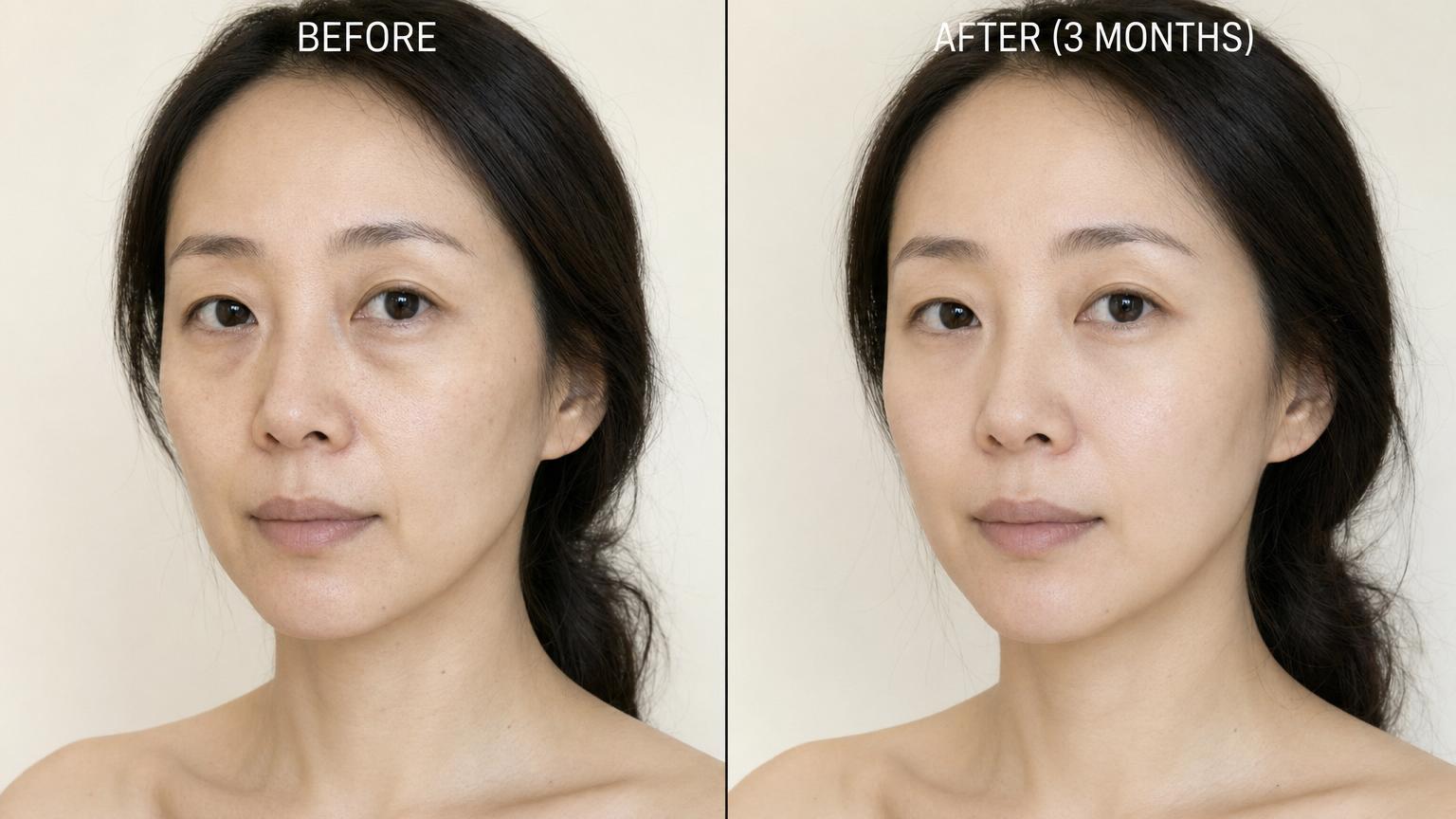
- Korean surgeons recommend combining under-eye fat repositioning with full-face fat grafting more often than not, especially for patients in their late thirties and beyond.
- The reasoning is anatomical — fixing only the under-eye when there is global volume loss elsewhere creates an “isolated improvement” that ages awkwardly.
- The combination uses fat harvested from the abdomen or thigh, processed, and grafted into the temples, midface, deeper tear trough, and sometimes the upper lip area.
- Cost adds roughly KRW 2.5–4M (USD 1,800–3,000) on top of standalone under-eye repositioning. Total for the combined procedure typically runs KRW 5–8M (USD 3,700–5,900).
- Recovery is longer — about 3–4 weeks of visible swelling instead of 1–2 for under-eye alone, with final settling at 4–6 months.
- The combination is the wrong answer for some patients — those under 30 with isolated under-eye hollows, those with very thin facial skin envelope, and those wanting a single targeted change.
- Two real cafe reviews from a Korean clinic community describe exactly this pattern — patients arriving for under-eye and leaving with a combined plan after the surgeon walked through their before-photos.
The Anatomy Argument — Why “Just Under-Eye” Often Is Not the Right Answer
The under-eye area does not exist in a structural vacuum. It sits in the middle of a continuous fat compartment system that includes the temples above, the midface below, and the upper lip area further down. When the entire system loses volume, fixing only the lid-cheek transition creates a visible step — the under-eye looks restored, but the surrounding architecture still looks deflated, and the contrast becomes obvious.
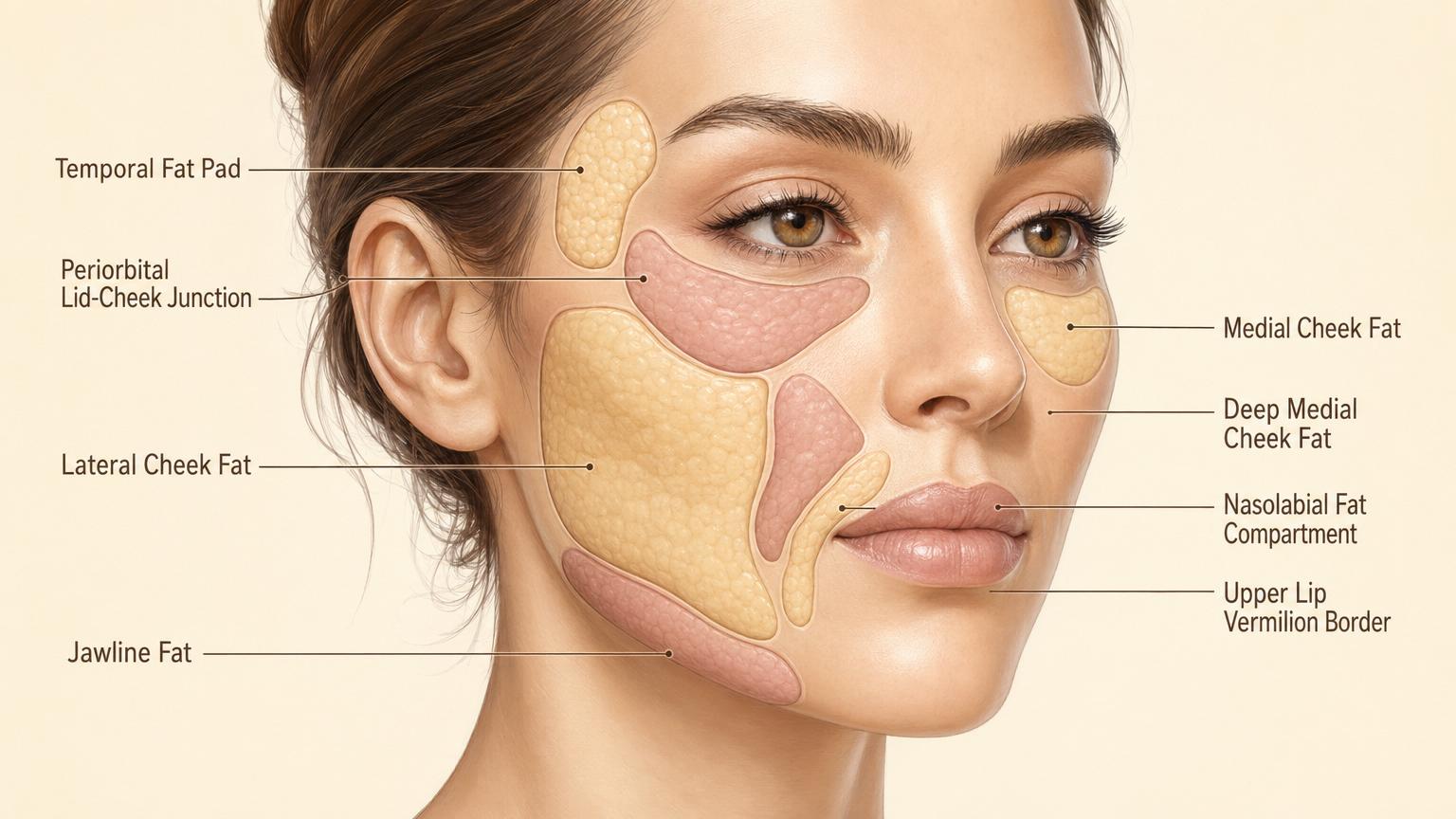
The compartments work as a system
The temporal fat pad sits at the upper outer corner of the eye. When it deflates, the temple looks hollow and the brow descends slightly. The medial and lateral cheek compartments support the under-eye area from below — when they deflate, the lid-cheek junction sinks even if the orbital fat itself is fine. The nasolabial fat compartment shapes the upper lip and the area just below the nose. All four compartments lose volume together, at roughly the same rate, driven by the same aging biology.
This is why an experienced Korean surgeon, looking at a patient with under-eye hollows in their late thirties, almost always sees four problems instead of one. The under-eye is the most visible because it sits right next to the eye, but the other three are usually present, just less noticed.
Fixing one without the others — the “isolated improvement” problem
If the surgeon repositions the orbital fat into the tear trough hollow without addressing the surrounding compartments, the immediate result looks great. The under-eye is smooth. The patient is happy at month one and at month three. Then around the year mark, as the rest of the face continues to deflate at its own rate, the under-eye starts looking like a younger, plumper area sitting on top of an older, flatter midface. The patient describes it as “looking weird in photos” without being able to name what is wrong.
Korean surgeons have seen this pattern enough that they recommend the combination preemptively. It is not that under-eye-only surgery does not work. It is that under-eye-only surgery for the patient who actually needs the combination produces a result that looks worse over time, not better.
The two cafe cases — same pattern, different fat balance
One Korean cafe review at the one-month mark describes this exact decision flow. The patient went in expecting standalone under-eye fat repositioning. The surgeon walked through her photos with a marker, pointed out where she had volume loss beyond the lower lid, and proposed adding full-face fat grafting in the same operation. She agreed. At one month she described the result as “more than just under-eyes — the whole face looks like a slightly fuller, refreshed version of itself.”
A separate two-week post-op update from a similar combined case describes the same trajectory. The patient had presented with thin under-eye fat plus generalized facial volume loss. The surgeon recommended the combined approach rather than under-eye work in isolation. At two weeks the patient described early swelling but already visible improvement in the deeper areas — which matches the textbook combined-recovery curve.
Both patients were in their thirties or forties. Neither walked in expecting the combination. Both, in the post-op write-up, describe the surgeon’s framing as “this is what your face actually needs” rather than as a sales pitch.
What the Combined Procedure Actually Does, and What It Costs
Knowing the anatomy is half the work. The other half is understanding the technical procedure and the practical numbers.
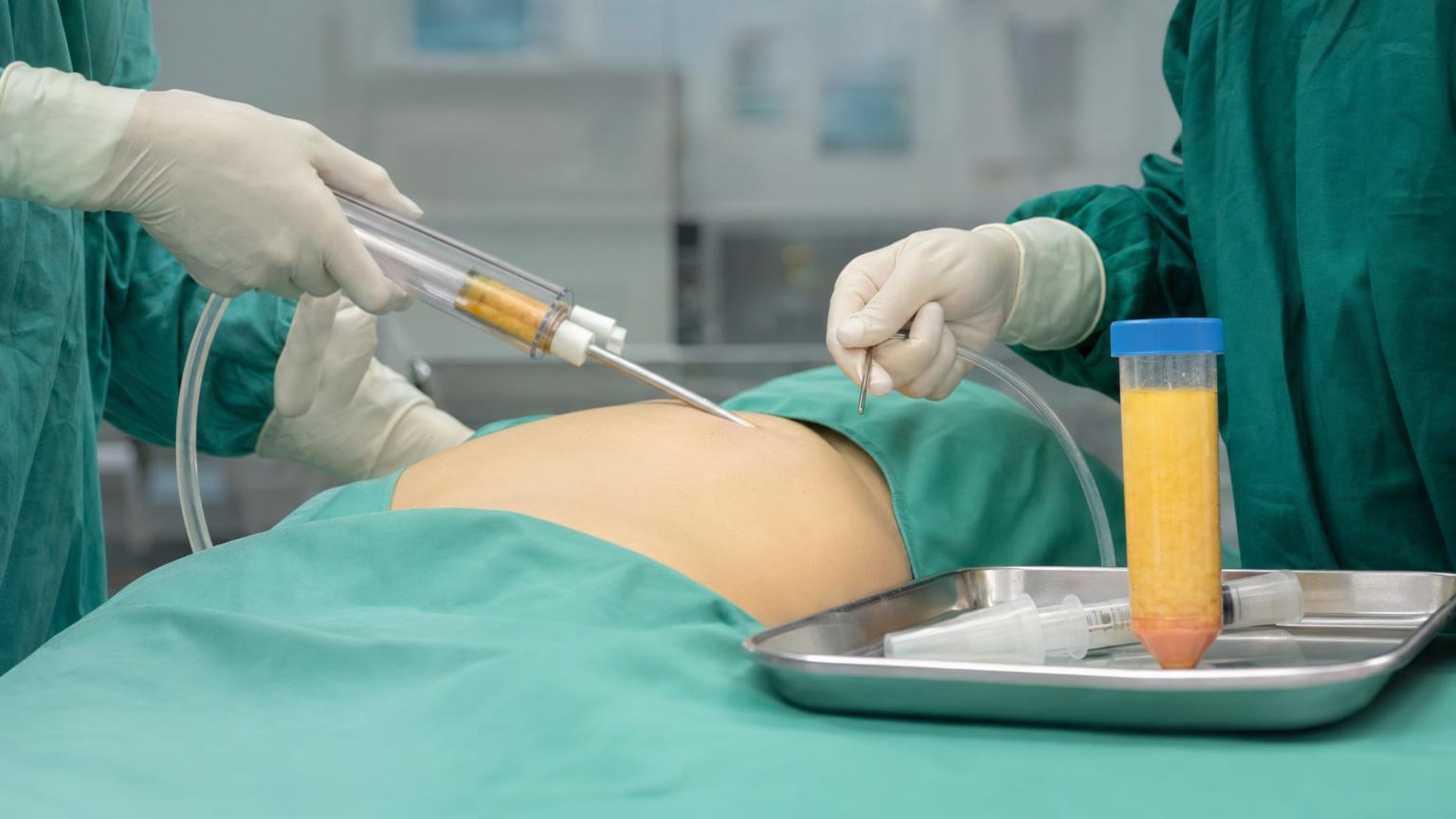
The technical sequence
The combined procedure runs in three stages within one operation. Stage one is harvesting — the surgeon takes fat from the abdomen or the thigh using fine cannulas through small entry points. The amount harvested is typically 30 to 60 cc, roughly half the volume of a small espresso shot. Stage two is processing — the harvested fat is centrifuged or filtered to remove blood, oil, and damaged adipocytes, leaving concentrated viable fat cells ready for grafting. Stage three is grafting — the processed fat is injected in microdroplets into the target compartments using fine blunt cannulas, with the under-eye repositioning happening in the same session through a separate transconjunctival approach.
The whole operation takes 2 to 3 hours under IV sedation. Recovery starts the same day, and the patient leaves the clinic with cold compresses and a soft compression band on the abdominal harvest sites.
Survival rate and why some patients need a second session
Not all grafted fat survives. The survival rate depends on the recipient site, the surgeon’s technique, and the patient’s individual biology — typical rates run 50 to 70 percent at the one-year mark. The surgeon overcorrects slightly during the procedure to account for this. A patient who needs 8 cc of long-term volume in the temples might receive 12 cc, with the expectation that 8 cc will survive and integrate.
For some patients, particularly those with very thin facial skin or with prior trauma to the recipient sites, the survival rate is lower than the average. These patients sometimes need a second smaller grafting session at the 6 to 12-month mark to top up the areas that lost more volume than expected. The second session is usually shorter, costs less than half the original procedure, and is something the surgeon discusses up front rather than as a surprise.
The numbers
| Procedure | Korea (KRW) | USD | Recovery |
|---|---|---|---|
| Under-eye fat repositioning alone | 2.5M – 3.5M | $1,800 – $2,600 | 1–2 weeks visible |
| Full-face fat grafting alone | 3M – 5M | $2,200 – $3,700 | 2–3 weeks visible |
| Combined (under-eye + full-face) | 5M – 8M | $3,700 – $5,900 | 3–4 weeks visible |
| Touch-up grafting (if needed at 6–12mo) | 1.5M – 2.5M | $1,100 – $1,800 | 1–2 weeks visible |
Established Gangnam clinics that publish surgeon-specific galleries — including Link Plastic Surgery’s facial fat grafting page — sit in the middle of these ranges. Cheaper quotes from app-based platforms typically exclude the design consultation, exclude follow-up grafting if needed, or assume a junior surgeon rather than the senior one in the photos. The combined procedure is not the place to optimize for the cheapest quote — fat grafting outcomes vary meaningfully with surgeon experience.
Recovery, Risks, and When to Politely Push Back
The combined recovery is roughly twice as long as standalone under-eye work, and the failure modes are different. Knowing the recovery curve and the cases where the combination is the wrong answer is what separates an informed decision from a sold one.
Day 1 to Day 7 — swelling everywhere
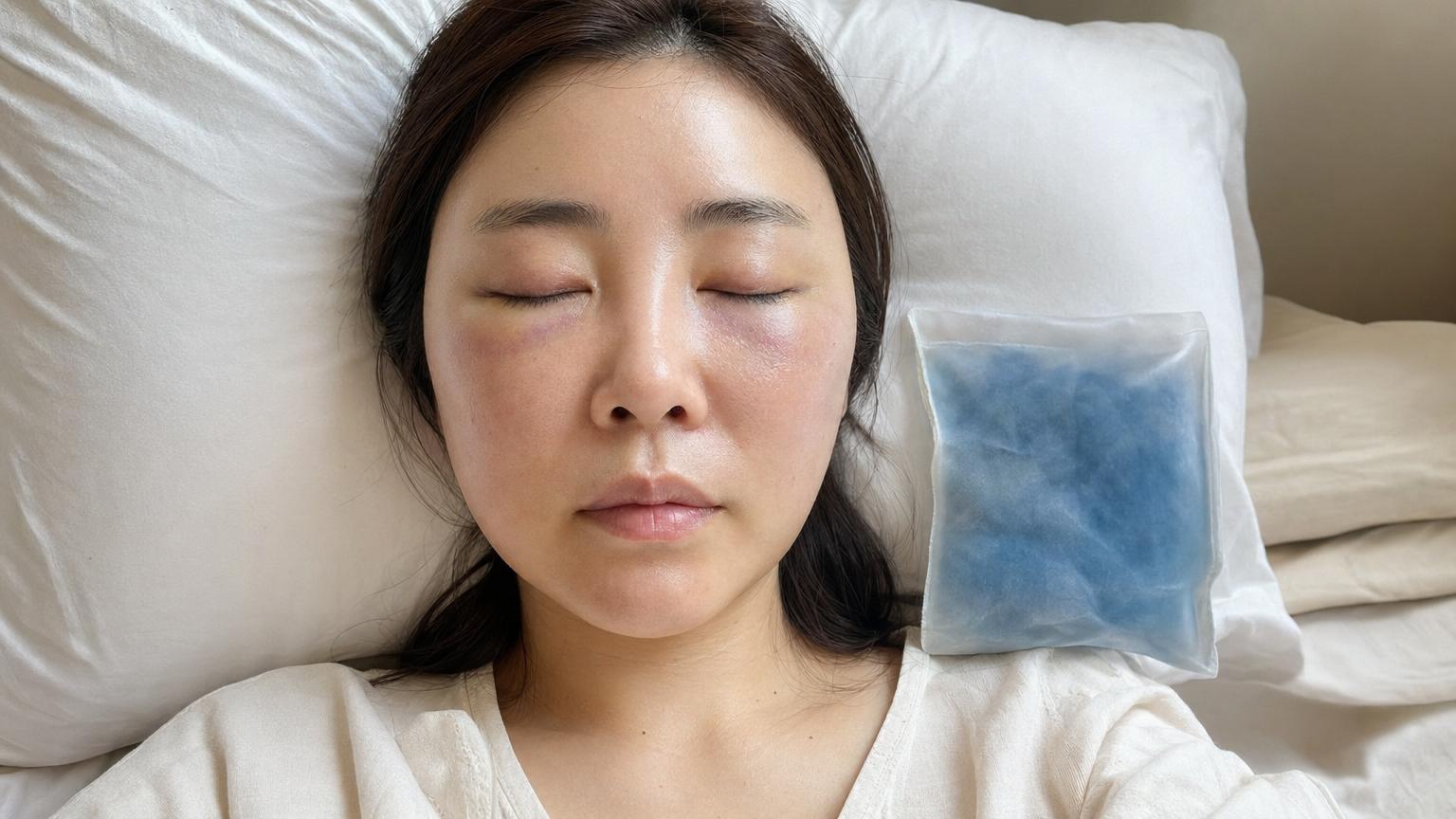
The first week of combined recovery feels different from standalone under-eye recovery in one specific way — the swelling is everywhere, not just localized. The under-eye, temples, midface, and sometimes the upper lip area are all visibly puffy. This looks alarming if you are expecting a localized swelling pattern, but it is actually the expected outcome — the surgeon over-grafted by about 30 percent to account for absorption, so the day-one face looks fuller than the final settled result.
Patients describe day three as “everything peaks at once” and day five as “starting to look human again.” Bruising under the eyes and along the cheekbones fades from purple to yellow over days 5 to 8.
Day 8 to Day 21 — the awkward middle
This is the period where patients often regret the combination. The face looks fuller than they expected. The result they paid for is buried under weeks of residual swelling. They start asking themselves whether they over-did it.
They did not over-do it — they are looking at a face that is currently 30 percent over-corrected on purpose. By week three the swelling is dropping noticeably. By week four most patients can return to in-person work without anyone commenting that something looks different. By month one the face starts looking like the final settled version.
Light makeup becomes practical around day fourteen. Concealer covers the residual under-eye yellowing. The fuller midface actually photographs well from week three onward, even if it does not match the patient’s mental image of the final result yet.
Month 1 to Month 6 — settling and the survival question
By the one-month mark, swelling is mostly resolved and the face looks proportional but still slightly fuller than the final shape. From here the changes are subtle — fat grafting absorption continues until about month four to six, and the final settled result becomes visible somewhere in that window.
This is also when the surgeon assesses whether a touch-up session is needed. A small minority of patients (roughly 10 to 20 percent) end up needing a second smaller grafting at 6 to 12 months to top up areas that absorbed more than average. Most patients do not need this. The surgeon evaluates at the 4-month follow-up and tells the patient one way or the other.
When the combination is the wrong recommendation
This is where you push back. Three patient profiles where the combined plan is usually not the right answer:
The first is patients under 30 with isolated under-eye hollows and otherwise full facial volume. At this age the surrounding compartments have not started deflating yet. Adding full-face grafting creates a face that looks slightly over-filled for their actual age. The right answer is standalone under-eye fat repositioning, with the combination available later if needed.
The second is patients with very thin facial skin envelope, where small irregularities in grafted fat distribution are visible through the skin. Some surgeons recommend smaller, more conservative grafting sessions for these patients, or filler-based volumization instead of fat. Pushing back and asking specifically “is my skin thickness suitable for this much grafting?” is reasonable.
The third is patients who genuinely want a single targeted change — a specific concern about the under-eye area only, with no interest in changing how the rest of the face looks. The surgeon’s combination recommendation is anatomically driven, but the patient’s preference for a specific scope is also valid. A good surgeon will respect the limited-scope decision and document it clearly in the consultation notes.
Month 3 — the result the surgeon was actually planning for

By the three-month mark the result the surgeon was designing for becomes clear. The under-eye is smooth. The temples are no longer hollow. The midface has volume that matches the under-eye. The face as a whole looks like a slightly fuller, more rested version of the patient’s natural appearance — not transformed, just calibrated.
This is what the combination is supposed to deliver. It is also why the surgeon proposed it in the consultation. The end state is not “under-eye plus extras.” The end state is “a face that ages well from here,” which is a different goal than the patient walked in with.
Recommended for Your Recovery
Products patients commonly use during the combined under-eye plus full-face fat grafting recovery window — same items routinely included in the post-op kits Seoul clinics hand out at discharge.
- Arnica Montana Tablets — start 3 days before surgery to reduce bruising across the entire face, particularly helpful for the combined procedure where bruising is more diffuse than under-eye-alone surgery. Check price on Amazon
- Bromelain Supplement (500mg) — natural anti-inflammatory commonly recommended by Korean clinics for fat grafting procedures to speed swelling resolution across multiple compartments. Check price on Amazon
- COSRX Snail Mucin Essence — gentle hydration safe for the delicate skin around the eyes and grafted areas once cleared by your surgeon, typically from week 1 onward. Check price on Amazon
- Beauty of Joseon Relief Sun SPF 50+ — lightweight Korean sunscreen for the healing facial skin from week 2 onward to prevent post-inflammatory pigmentation across the multiple grafting sites. Check price on Amazon
As an Amazon Associate, GlobalBeautySpot earns from qualifying purchases at no extra cost to you.
Frequently Asked Questions
Is full-face fat grafting always the right add-on?
No. For patients under 30 with isolated under-eye hollows, the combination is usually unnecessary. For patients with very thin facial skin envelope, the combination may be too aggressive. The right answer depends on your specific anatomy, age, and goals — not on a default upsell.
Can I do the under-eye now and the fat grafting later?
Yes, and some patients prefer this — get the targeted change you came in for, see how you feel about the result at 6 to 12 months, then add fat grafting if needed. The downside is two anesthesias instead of one and slightly higher total cost. Korean surgeons will do this if you ask.
How long does the grafted fat last?
The fat that survives the first 6 to 12 months tends to last as long as your own native facial fat — meaning years to decades. Aging continues, so the face will continue to change after the procedure, but the grafted fat does not “wear off” the way filler does.
What is the survival rate?
Typical survival rates run 50 to 70 percent at the one-year mark, with the rest absorbing in the first six months. Korean surgeons over-correct by about 30 percent during the procedure to compensate, so the day-zero face looks slightly fuller than the final shape. A small minority of patients need a touch-up session at 6 to 12 months for areas that absorbed more than average.
Is fat grafting better than filler?
For volume restoration in patients in their late thirties and beyond, generally yes — fat grafting integrates as native tissue, ages with you, and does not require maintenance injections every 9 to 12 months. For patients in their twenties, filler is often the better starting point because the volume needs are smaller and the patient may not need permanent volumization yet. The choice is mostly about age and goals, not absolute superiority.
Will I look “done”?
If the surgeon designs an appropriate amount of grafting for your starting anatomy, no. The result looks like a slightly fuller, more rested version of you. The “obviously over-filled” results you see online almost always come from over-grafting in patients whose surrounding facial volume did not actually need that much restoration. Restraint is the Korean signature here as much as in rhinoplasty.
How long until I can fly home?
Day seven is the realistic earliest comfortable departure day for the combined procedure, and day fourteen is more comfortable. The face will still look slightly fuller and the bruising will still be visible to anyone looking closely on day seven. Day ten to fourteen is when the patient can be in airports and on flights without people noticing that something is unusual.
How do I find a Korean surgeon who handles this combination well?

Look for a board-certified plastic surgeon (성형외과 전문의) who lists fat grafting as a focused specialty rather than as a side menu item. Ask to see the surgeon’s personal before-and-after gallery of combined cases — not standalone fat grafting, but specifically the combined under-eye plus full-face. The technical skill in standalone fat grafting does not always transfer cleanly to combined cases. Several Gangnam clinics — including Link Plastic Surgery — publish individual surgeon galleries that show this distinction. The under-eye component itself is covered on the dedicated under-eye fat repositioning page if you want to verify the surgeon’s experience with that specific procedure too.
If a clinic recommends the combination without first walking through your photos with you and explaining what they are seeing in the surrounding compartments, that is a yellow flag. The recommendation should come with a visual explanation. If it does not, ask for one before agreeing.