She thought her problem was her nose. It looked too big in profile, and she had come to Seoul certain she needed rhinoplasty to fix it. The surgeon turned her to the side, held a straight edge against her profile, and showed her something she had never noticed: her nose was fine, but her chin sat well behind her lower lip, and a weak chin makes a nose look larger by comparison. The fix was not her nose at all; it was bringing her chin forward into balance, and it did not require breaking any bone. The consultation at Link Plastic Surgery often starts by reading the whole profile, because a chin concern is really a balance concern.
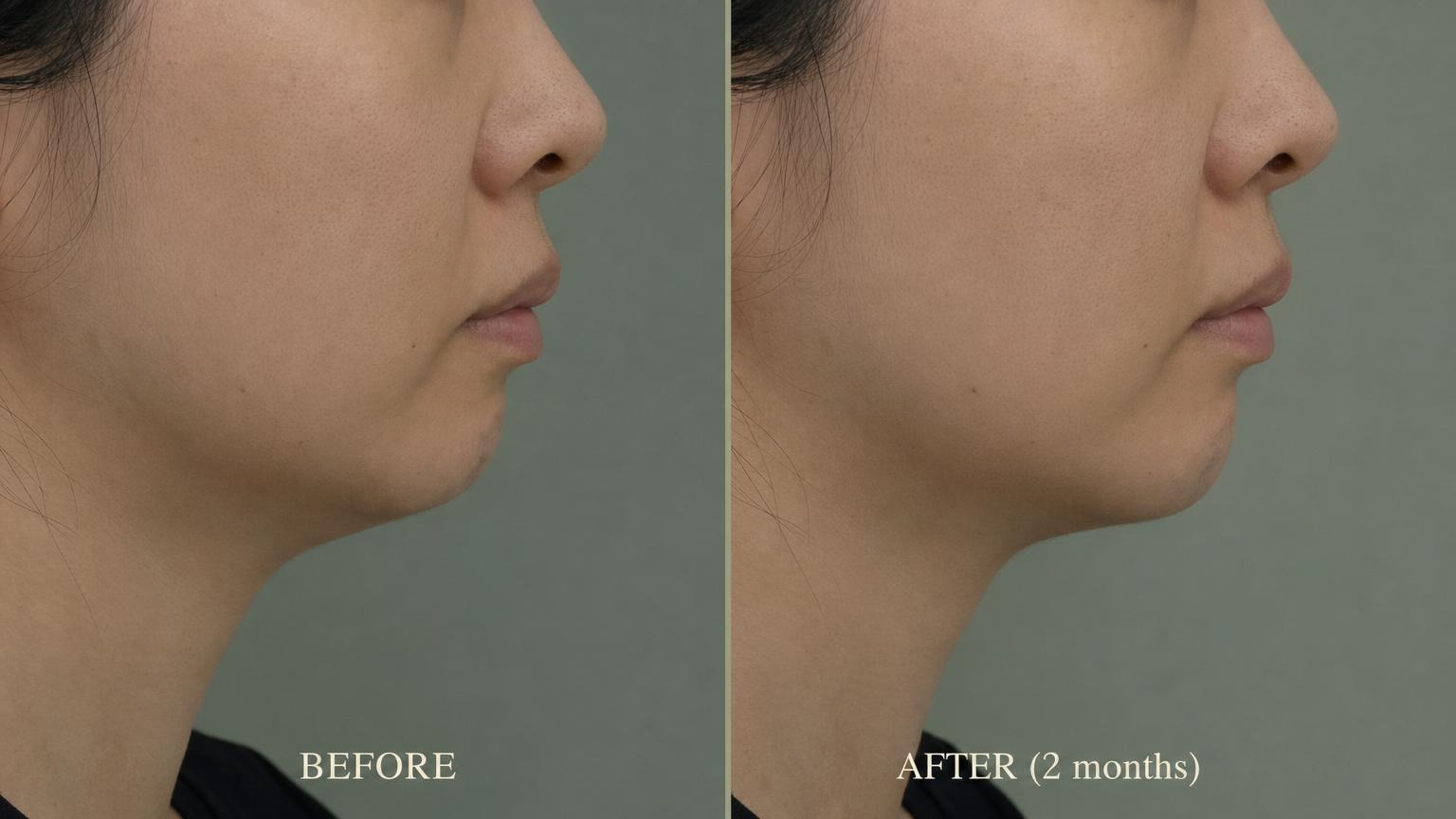
Chin enhancement is one of the most quietly transformative procedures, because the chin anchors the entire lower-face profile, yet it is wrapped in two misconceptions: that any chin change means bone surgery, and that a bigger chin is the goal. In reality, most chin concerns are about profile balance and can be addressed without touching bone, using filler, fat, or an implant. Understanding that the goal is harmony of nose, lips, and chin, and that there are three non-bone options, is what makes this one of the most rewarding small changes in facial aesthetics.
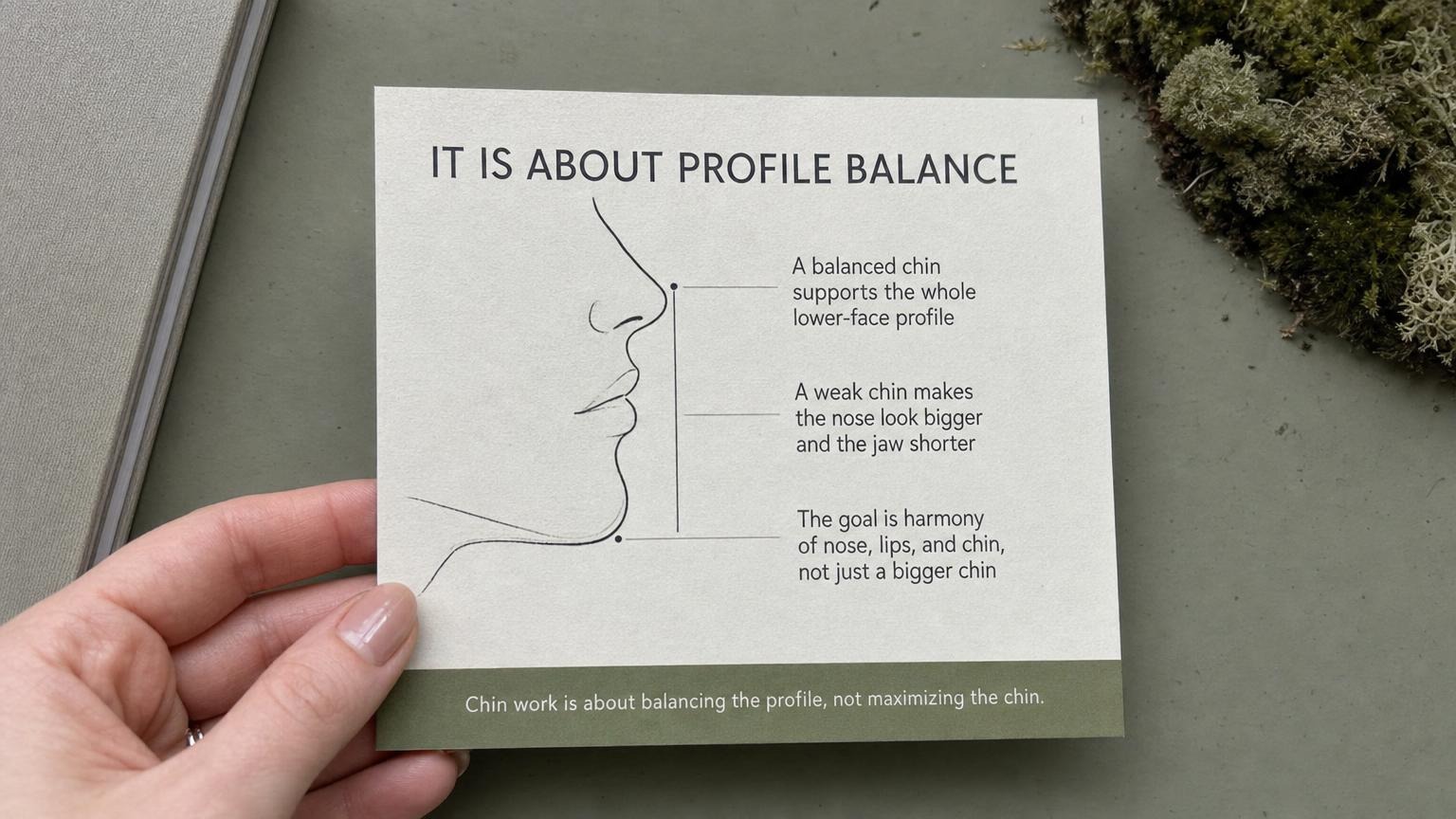
It Is About Profile Balance
The first thing to understand is that the chin is not evaluated in isolation; it is read as part of the whole profile. A balanced chin supports the entire lower face, and its relationship to the nose and lips is what matters. A common aesthetic reference is a line touching the nose tip and the chin, against which the lips sit in balance, and a chin that sits too far back disrupts that harmony. A weak or receded chin makes the nose look bigger and the jaw look shorter, which is why so many people who think they have a nose problem actually have a chin one.
So the goal of chin work is harmony of the nose, lips, and chin, not simply a bigger or sharper chin. This is the same proportion-first thinking that guides facial procedures generally, including facial fat grafting and the broader range of Korean facial procedures. Reading the profile as a whole, rather than fixating on the chin alone, is what produces a natural result.
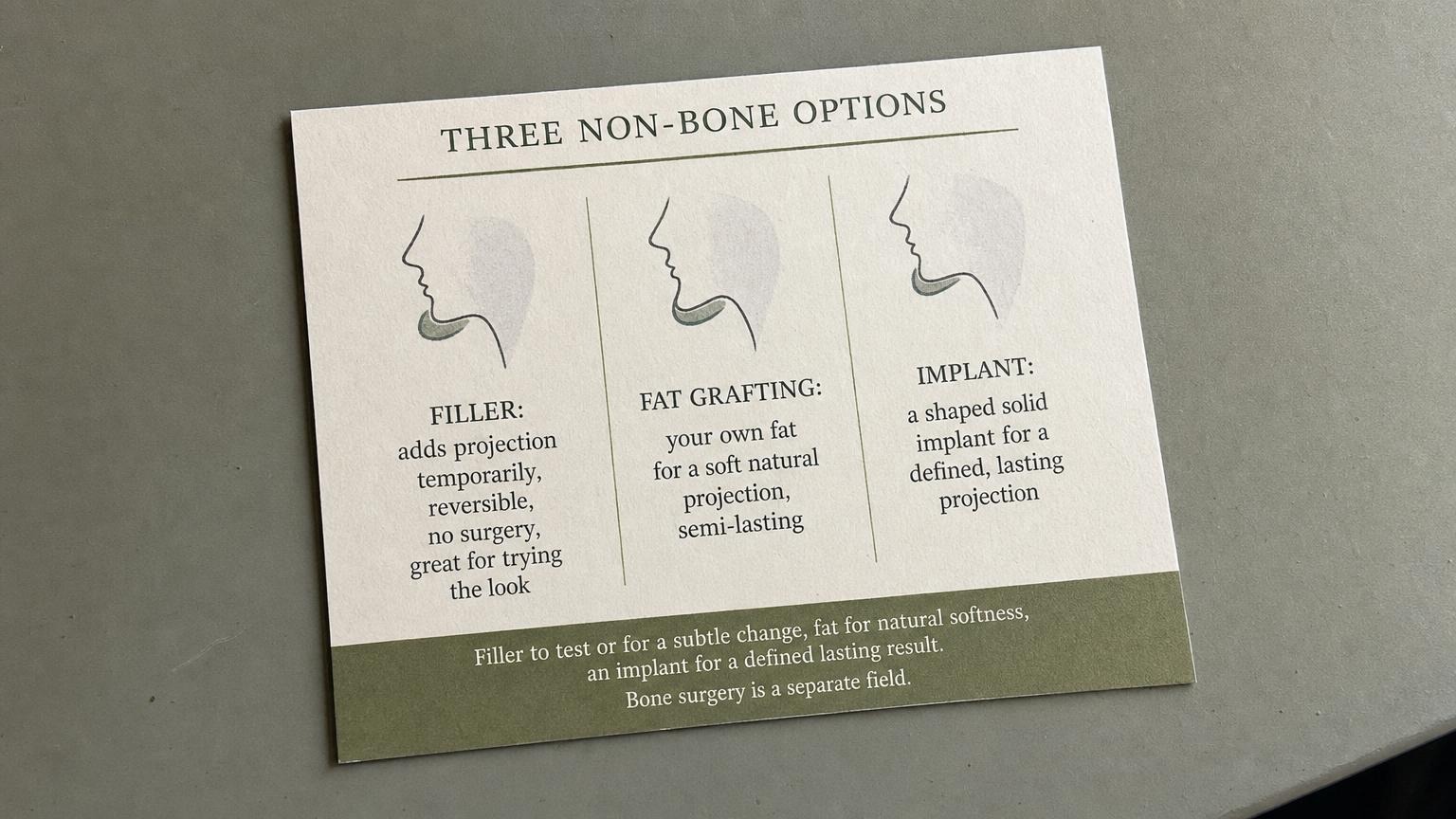
Three Non-Bone Options
For most chin concerns, there are three options that do not involve bone surgery, each suiting a different goal. Filler adds projection temporarily and is reversible, which makes it ideal for trying the look before anything permanent or for a subtle change; it is the lowest-commitment way to bring a chin forward. Fat grafting uses your own fat for a soft, natural projection that is semi-lasting, suiting someone who wants a natural feel. And a chin implant, a shaped solid piece placed over the bone, gives a defined, lasting projection for someone who wants a permanent result.
The beauty of this range is that you can start with the least invasive option that achieves your goal. Filler lets you preview the change with no commitment; if you like it, fat or an implant can make it lasting. Filler connects to the broader world of Korean petit treatments, where reversibility is a real advantage. Bone surgery, by contrast, is a separate and far more specialized field reserved for genuine structural or bite problems, not for ordinary chin projection.
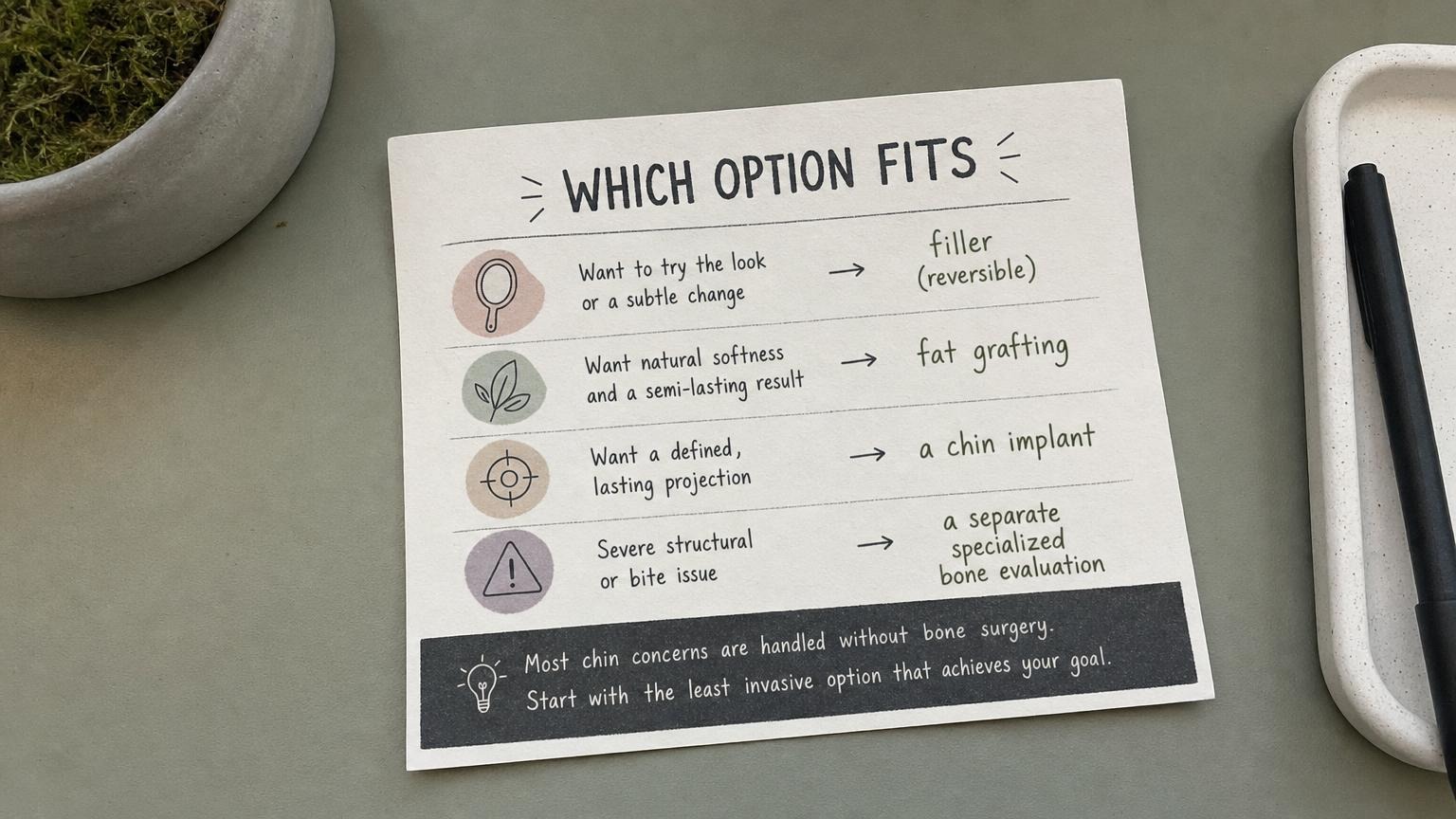
Which Option Fits
Choosing among the three follows from your goal and your appetite for commitment. If you want to try the look or make a subtle change, filler is the reversible starting point. If you want natural softness and a semi-lasting result, fat grafting suits. If you want a defined, lasting projection and are sure of the look, a chin implant is the durable choice. And in the uncommon case of a severe structural or bite issue, that is a separate, specialized bone evaluation, distinct from cosmetic chin projection.
Recommended for Your Recovery
Products commonly used before and after Korean chin augmentation implant vs filler vs fat — same items routinely recommended in the recovery instructions Seoul clinics hand out at discharge.
- Arnica Montana Tablets — start 3 days before facial surgery to reduce bruising in the treated area. Check price on Amazon
- Silicone Scar Sheets — for procedures with visible incisions, apply from week 3 onward to support scar maturation. Check price on Amazon
- Beauty of Joseon Relief Sun SPF 50+ — daily Korean SPF 50+ to protect freshly treated facial skin. Check price on Amazon
- COSRX Advanced Snail 96 Mucin Power Essence — Korean snail mucin essence to support the post-procedure skin barrier. Check price on Amazon
As an Amazon Associate, GlobalBeautySpot earns from qualifying purchases at no extra cost to you.
The principle running through all of this is to start with the least invasive option that achieves your goal. Most chin concerns are comfortably handled without bone surgery, and many people are relieved to learn that the profile balance they want can come from a reversible filler or a soft fat graft rather than an operation. A surgeon who reads your profile, explains the three options, and lets you preview with filler is offering a far more thoughtful path than one who jumps to a permanent solution.
A Natural, Balanced Profile
Whatever the method, the aim is profile harmony, not a sharp pointed chin. The projection is matched to your nose and lips rather than maximized, because a chin pushed too far forward looks as unbalanced as one that sits too far back. The Korean aesthetic standard here, as elsewhere, favours a result that balances your face over one that announces itself. A good chin enhancement is subtle enough that people notice you look better without being able to say why.
This is where filler’s reversibility is such an advantage: it lets you and the surgeon find the right amount of projection before committing to anything lasting, ensuring the result balances your specific profile. Overdone chin work, like overdone surgery anywhere, comes from chasing a dramatic shape rather than balance. A careful clinic aims for the projection that harmonizes your nose, lips, and chin, which is almost always more modest, and more flattering, than patients first imagine.

Cost and How to Verify the Plan
Pricing follows the method. Filler is the lowest cost but temporary, requiring repetition to maintain; fat grafting and an implant cost more but last longer. The realistic figure depends on which option suits your goal, and the reversibility of filler means you can test the look before investing in something lasting. These costs are generally below the equivalent abroad. Starting with filler can also be a cost-effective way to confirm the change is right for you.

Before committing, five questions tell you whether a surgeon is balancing your profile or just enlarging your chin. Did the surgeon assess your whole profile, the relationship of nose, lips, and chin, not just the chin? Can I preview the change with filler before anything permanent? Which of filler, fat, or an implant suits my goal and commitment level? Is the projection matched to my nose and lips rather than maximized? And is bone surgery genuinely necessary, or is a non-bone option sufficient? A surgeon who reads the profile, offers a filler preview, and matches the projection to your face is the one to trust. For trip-planning details, visit Link Plastic Surgery’s official website.
Frequently Asked Questions
1. Do I need bone surgery to improve my chin?
Usually not. Most chin concerns are about profile projection and balance, which can be addressed without bone surgery using filler, fat grafting, or a chin implant placed over the bone. Bone surgery is a separate, specialized field reserved for genuine structural or bite problems, not for ordinary chin projection that the non-bone options handle well.
2. Why does my nose look big when the problem might be my chin?
Because the profile is read as a whole. A weak or receded chin makes the nose look bigger and the jaw shorter by comparison, so many people who think they need a nose job actually have a chin that sits too far back. Bringing the chin into balance can improve the whole profile and make the nose look proportionate.
3. What is the difference between chin filler, fat, and an implant?
Filler adds projection temporarily and is reversible, ideal for trying the look or a subtle change. Fat grafting uses your own fat for a soft, natural, semi-lasting result. An implant is a shaped solid piece for a defined, lasting projection. They differ in permanence and feel, and the right one depends on your goal and commitment.
4. Can I try the look before committing?
Yes, and this is one of the best reasons to start with filler. Because filler is reversible, it lets you and the surgeon preview the projection and confirm it balances your profile before choosing anything lasting like fat or an implant. Previewing with filler removes much of the risk of committing to a change you are unsure about.
5. Is a chin implant safe and lasting?
A chin implant is a shaped solid piece placed over the bone for a defined, lasting projection, and it is a well-established procedure. As with any implant, the choice of size and shape to balance your profile matters, and it should be matched to your nose and lips rather than maximized. A surgeon assesses whether an implant or a softer option suits you.
6. Will chin filler look natural?
It can, when the amount is matched to your profile rather than overdone. The aim is balance of nose, lips, and chin, not a sharp or pushed-forward chin. Filler’s advantage is that the amount can be adjusted and previewed, helping find the projection that harmonizes your face. Overdone filler, like any overdone work, comes from chasing a dramatic shape.
7. How long does chin filler last?
Chin filler is temporary and typically lasts several months to over a year depending on the product, after which it is repeated to maintain the projection. Its temporary nature is part of its appeal for trying the look, but if you want a lasting result, fat grafting or an implant is more durable. The choice depends on whether you want reversibility or permanence.
8. What is the ideal chin projection?
There is no single ideal; the goal is harmony with your specific nose and lips, often referenced against a line touching the nose tip and chin. A balanced chin supports the lower-face profile without being pushed too far forward. The right projection is the one that balances your face, which is usually more modest than patients first expect.
9. Can chin work be combined with other procedures?
Yes. Because the chin affects the whole profile, it is often considered alongside the nose or jawline for overall balance, and filler or fat can be combined with other facial treatments. A surgeon who reads the whole profile may suggest that balancing the chin improves the result of, or even substitutes for, what you assumed you needed elsewhere.
10. How do I plan chin enhancement as an international patient?
Have a consultation that assesses your whole profile and offers a filler preview before anything permanent, then decide between filler, fat, or an implant based on your goal. Filler can often be done in a single visit, while fat or an implant involves more planning. For scheduling details, visit Link Plastic Surgery’s official website.