She had tried everything to shrink her pores: pore strips, toners, a clinic series of one laser, and a long list of products that promised glass skin. Nothing held. When she finally consulted a dermatologist in Seoul, the explanation reframed the whole problem. Her enlarged pores were not one issue but a mix: oil stretching the openings on her nose, and early laxity letting the pores on her cheeks sag and elongate. Two different causes needed two different treatments, and neither would ever make her pores vanish, only refine and manage them. The consultation at Link Plastic Surgery often starts by identifying why the pores look large, because the cause decides the treatment.
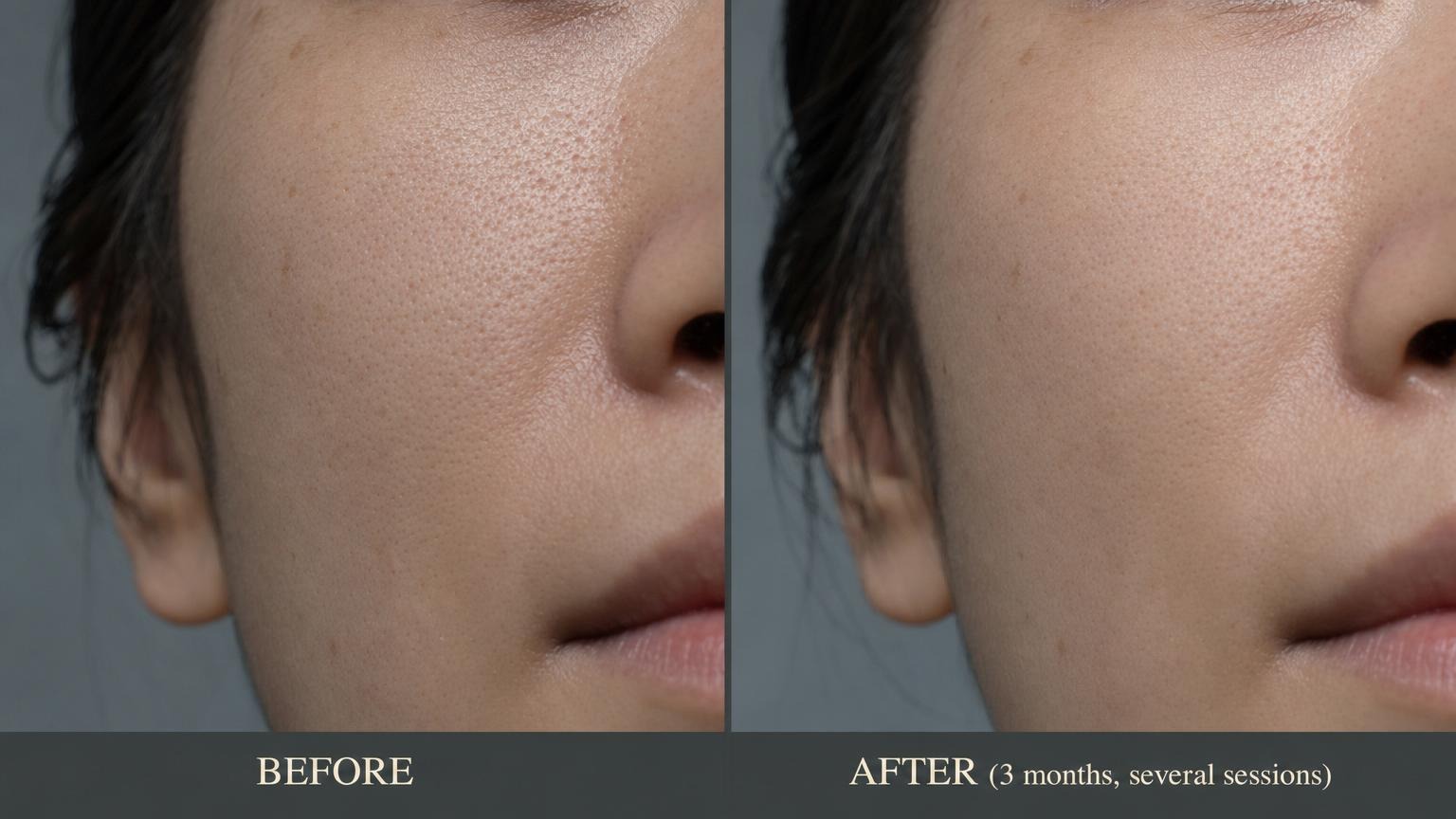
Enlarged pores and rough texture are among the most common skin concerns foreign patients bring to Korean clinics, and they are wrapped in two misconceptions: that pores can be permanently shrunk to nothing, and that one treatment fixes them all. In reality, pores look large for different reasons, each needing a different tool, and the honest goal is to refine and manage them, not erase them. Understanding the cause of your enlarged pores, and that improvement comes over a maintained series, is what turns frustration into real, lasting refinement.
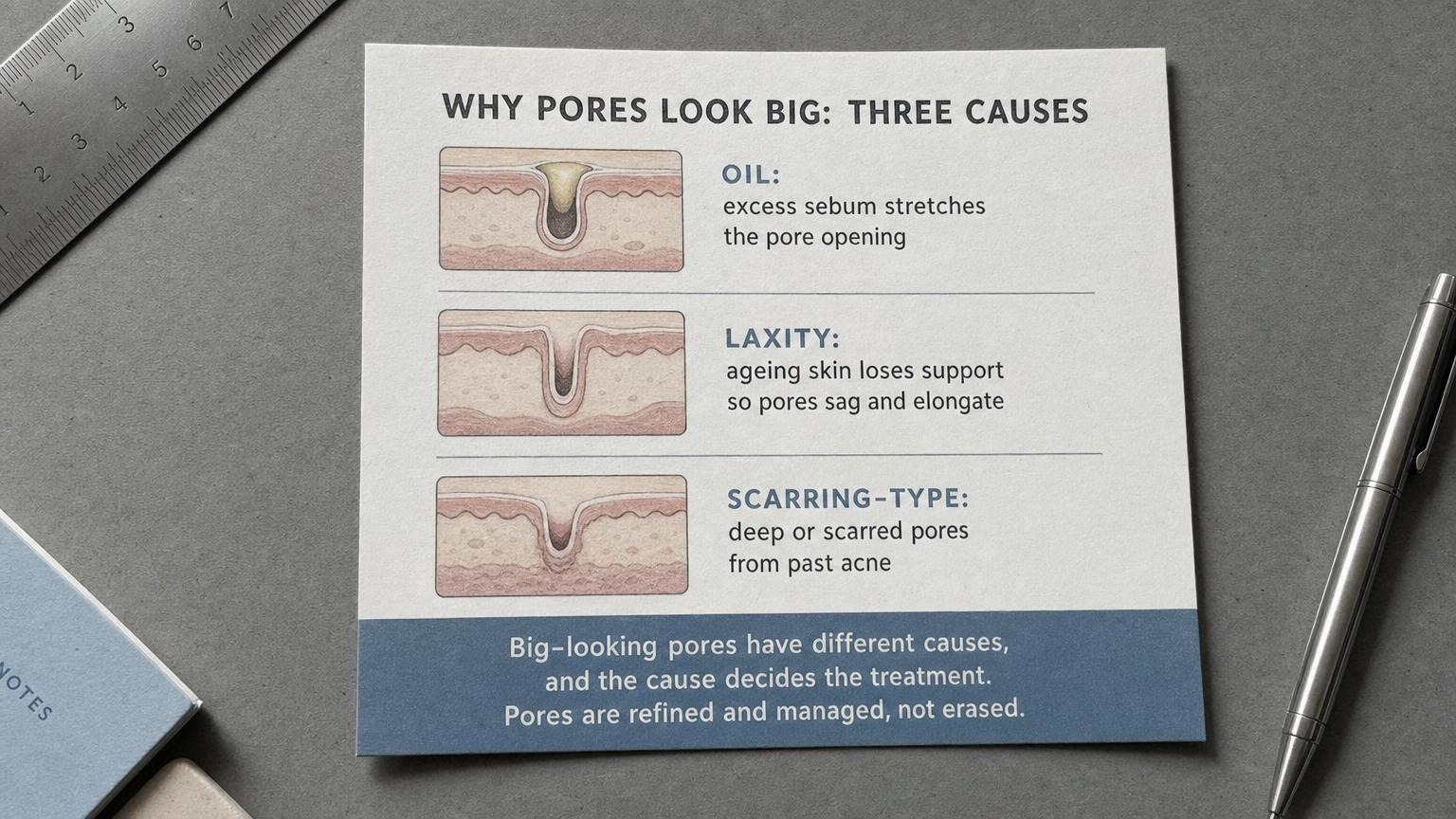
Why Pores Look Big: Three Causes
The first step is recognizing that large-looking pores have different causes, and the cause determines the treatment. The most common is oil: excess sebum stretches the pore opening, making it appear larger, typical of oily skin and the nose and cheeks. The second is laxity: as skin ages and loses collagen support, pores sag and elongate into a teardrop shape, common on the cheeks with age. The third is a scarring type, where past acne has left deep or scarred pores that are really small textural scars.
These are genuinely different problems, and a treatment aimed at one will not address another; oil-driven pores need a different approach from laxity-driven ones. Just as importantly, pores are refined and managed, not erased, because pore size is partly genetic and structural. This cause-first thinking is the same that runs through the broader range of Korean laser and energy treatments, where matching the tool to the cause is the whole point.
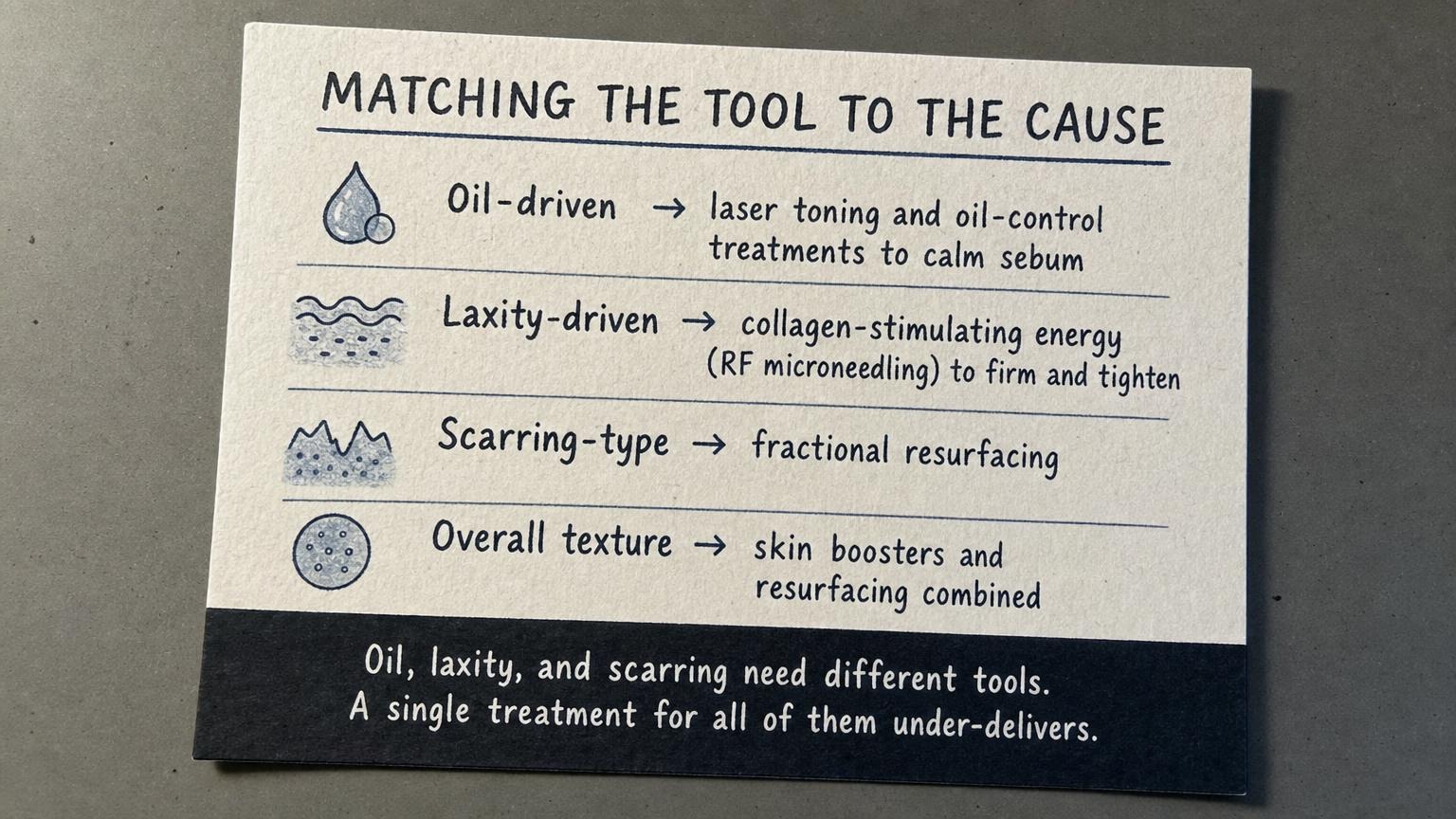
Matching the Tool to the Cause
Once the cause is identified, each is matched to the right tool, and a real plan often combines a few. Oil-driven pores respond to laser toning and oil-control treatments that calm sebum production. Laxity-driven pores respond to collagen-stimulating energy, such as RF microneedling, which firms and tightens the skin so the pores look smaller and less elongated. Scarring-type pores respond to fractional resurfacing, the same family of treatment covered in our guide to fractional laser. And overall texture is improved by combining skin boosters with resurfacing.
The key point is that oil, laxity, and scarring need different tools, and a single treatment applied to all of them under-delivers, which is exactly why the one-laser approach so often disappoints. A plan matched to your particular mix, often combining a sebum-calming treatment with a firming one and skin boosters, is what produces refinement that a single repeated treatment cannot. Skin boosters connect to the regenerative logic of Korean skin-booster treatments that improve overall skin quality alongside pore-specific work.
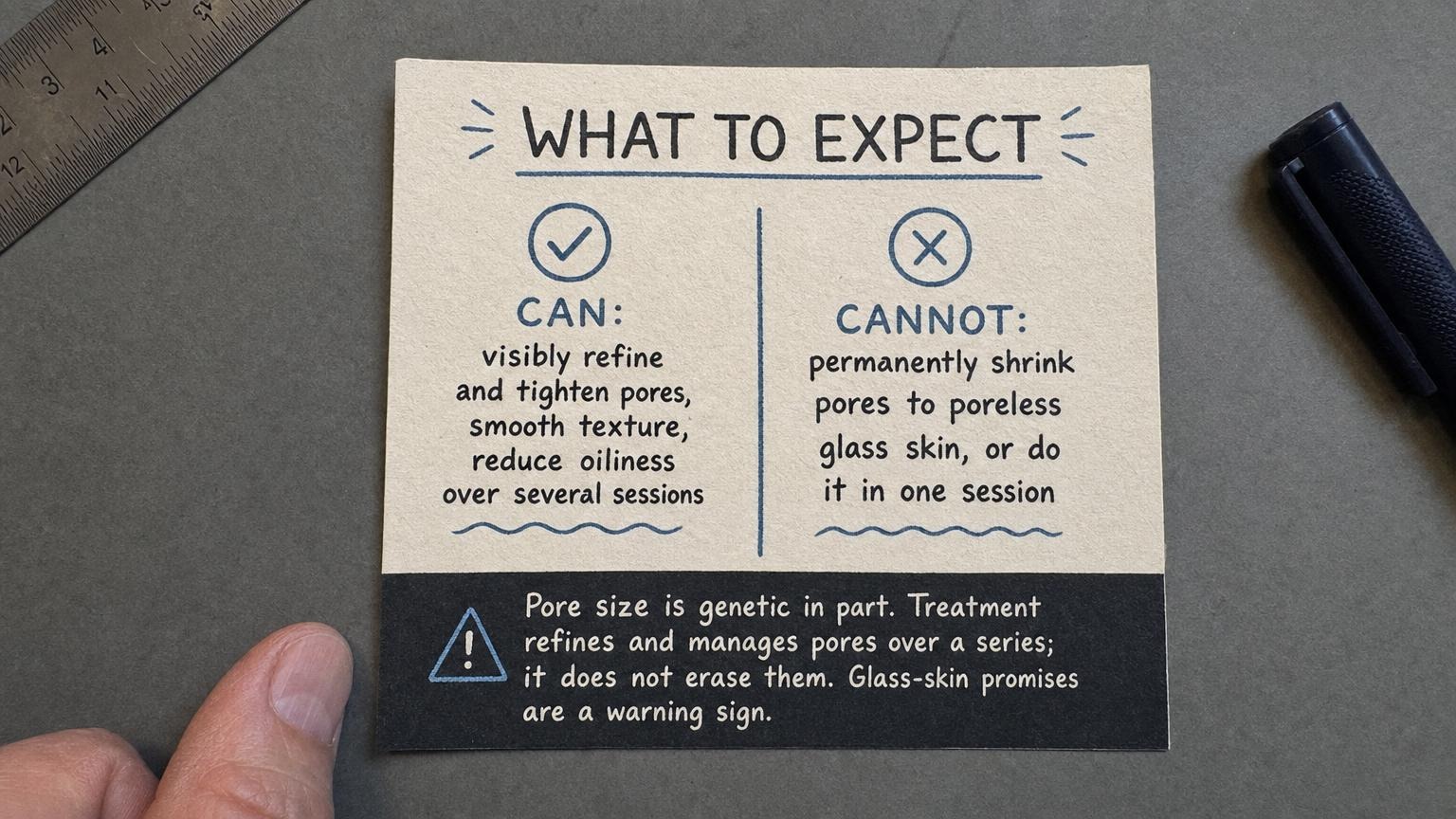
What to Expect
Honest expectations are essential, because pore treatment is effective but bounded. A matched plan can visibly refine and tighten pores, smooth texture, and reduce oiliness over several sessions, often making a real difference to how the skin looks and feels. What it cannot do is permanently shrink pores to poreless glass skin, or achieve that in a single session. Pore size is partly genetic, so the realistic goal is meaningful refinement and management, not erasure.
Recommended for Your Recovery
Products commonly used before and after Korean pore texture refinement treatments — same items routinely recommended in the recovery instructions Seoul clinics hand out at discharge.
- Arnica Montana Tablets — start 3 days before facial surgery to reduce bruising in the treated area. Check price on Amazon
- Silicone Scar Sheets — for procedures with visible incisions, apply from week 3 onward to support scar maturation. Check price on Amazon
- Beauty of Joseon Relief Sun SPF 50+ — daily Korean SPF 50+ to protect freshly treated facial skin. Check price on Amazon
- COSRX Advanced Snail 96 Mucin Power Essence — Korean snail mucin essence to support the post-procedure skin barrier. Check price on Amazon
As an Amazon Associate, GlobalBeautySpot earns from qualifying purchases at no extra cost to you.
This is why the glass-skin promise is a warning sign. The flawless, poreless look in heavily edited images is not a realistic permanent outcome of any treatment, and a clinic guaranteeing it is overselling. The genuine result, refined and tighter-looking pores with smoother texture over a series, is well worth having, and far more achievable and lasting than chasing an impossible poreless ideal. A clinic that frames the goal as refinement rather than erasure is being honest with you.
Results Need Maintenance
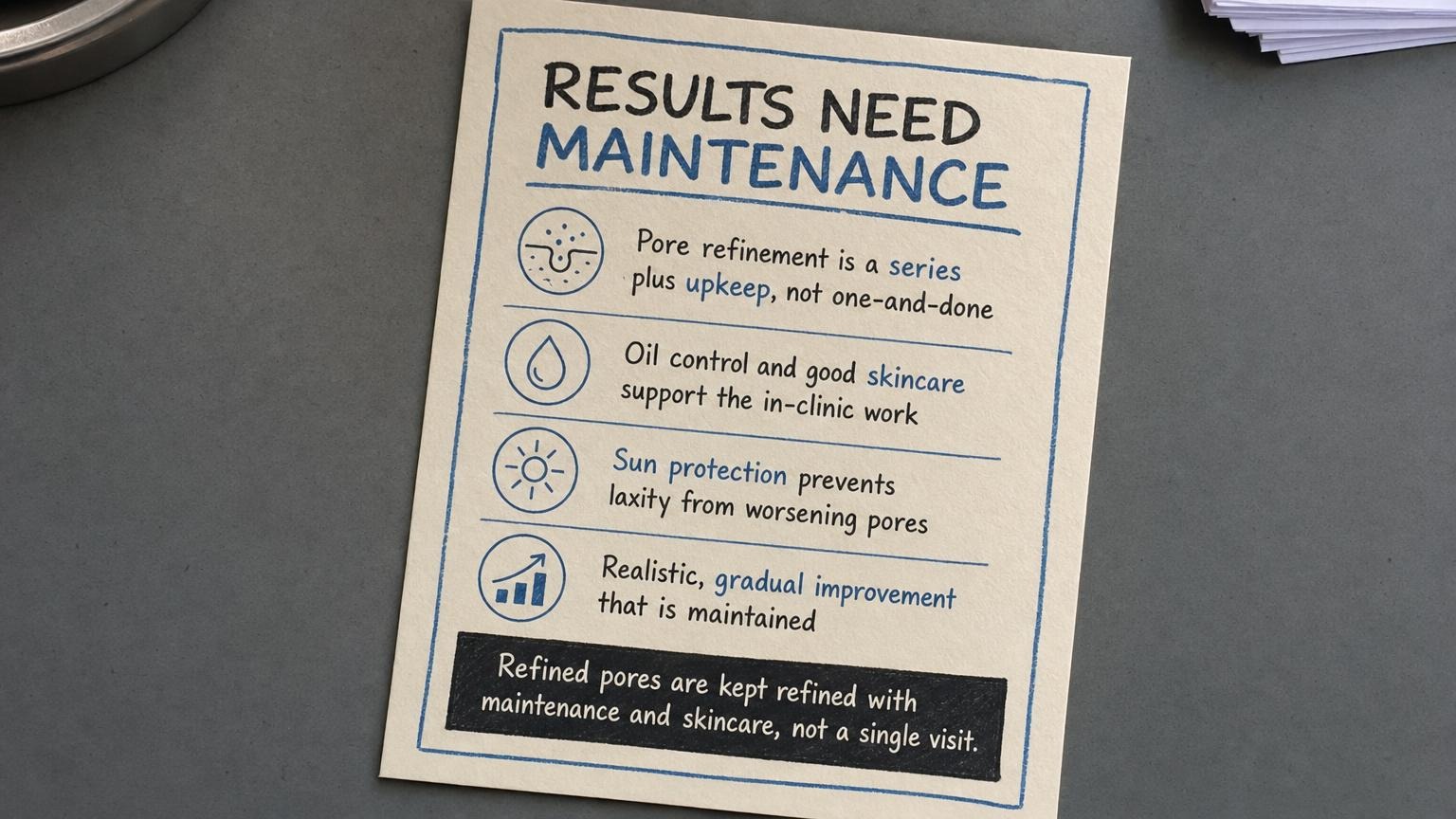
The final reality is that pore refinement is maintained, not one-and-done. The in-clinic series builds the improvement, but it is sustained by upkeep treatments and supported by good skincare, including oil control for oil-driven pores and sun protection to prevent the laxity that worsens pores over time. Refined pores stay refined with maintenance and a sensible routine, not a single visit.
This maintenance framing is part of an honest plan: realistic, gradual improvement that is then kept up, rather than a one-time fix. The in-clinic treatments and your home routine work together, and the role of sun protection in particular is often underestimated, since sun-driven laxity directly enlarges pores over the years. A clinic that explains the maintenance and the skincare partnership, rather than promising a permanent one-session cure, is giving you the realistic path to lasting refinement.
Cost and How to Verify the Plan
Pricing reflects the combination and the number of sessions, since a matched plan involves several treatments and ongoing maintenance rather than one. Laser toning, RF microneedling, fractional resurfacing, and skin boosters each carry their own cost, and the realistic figure is the planned series plus upkeep. These costs are generally below the equivalent abroad. Paying for a proper cause-matched plan is more economical than years of products and single treatments that do not address the actual cause.

Before committing, five questions tell you whether a clinic is diagnosing the cause or selling a single fix. Did the clinic identify whether your pores are oil-driven, laxity-driven, or scarring-type? Is the plan matched to that cause, and does it combine the right tools? Is the goal framed as refinement and management rather than poreless erasure? What realistic improvement and maintenance are expected? And is anyone promising permanent glass skin, which is a warning sign? A clinic that diagnoses the cause, sets realistic refinement goals, and explains maintenance is the one to trust. For trip-planning details, visit Link Plastic Surgery’s official website.
Frequently Asked Questions
1. Can enlarged pores be permanently shrunk?
Not to poreless skin. Pore size is partly genetic and structural, so treatment refines and manages pores, making them look visibly tighter and smaller, rather than erasing them. A matched plan over several sessions makes a real difference, but anyone promising permanently poreless glass skin is overselling. Realistic refinement is the honest goal.
2. Why do my pores look large?
For one of three reasons, or a mix: oil (excess sebum stretching the opening), laxity (ageing skin losing support so pores sag and elongate), or a scarring type (deep or scarred pores from past acne). The cause determines the treatment, which is why identifying yours matters more than picking a single popular treatment.
3. What treats oil-driven pores?
Oil-driven pores, common on the nose and oily areas, respond to laser toning and oil-control treatments that calm sebum production, often combined with good skincare. Reducing the oil that stretches the openings is what refines these pores. A firming treatment may be added if there is also some laxity, since many people have a mix of causes.
4. What treats pores that sag with age?
Laxity-driven pores, which sag and elongate as the skin loses collagen, respond to collagen-stimulating energy such as RF microneedling, which firms and tightens the skin so the pores look smaller and less elongated. Sun protection is also important here, since sun damage accelerates the laxity that worsens these pores over time.
5. Does one laser fix all pore problems?
Rarely, because oil, laxity, and scarring are different causes needing different tools, and a single treatment applied to all under-delivers. This is why the one-laser approach so often disappoints. A plan matched to your particular mix, often combining a sebum-calming treatment, a firming one, and skin boosters, is what works.
6. What is glass skin and is it achievable?
Glass skin refers to a flawless, poreless, luminous look often seen in heavily edited images. Treatment can genuinely smooth texture and refine pores toward a healthier, clearer complexion, but a permanently poreless result is not a realistic outcome of any treatment. Pursuing refinement is achievable; chasing literal poreless perfection is not.
7. How many sessions will I need?
Pore refinement is a series rather than a single treatment, typically several sessions over months matched to your cause, followed by maintenance. The exact number depends on the cause, severity, and the combination of tools used. The clinic should set out a realistic plan, since pore improvement builds gradually and is then maintained over time.
8. Do I need to keep up treatments?
Yes. Pore refinement is maintained, not one-and-done. The in-clinic series builds the improvement, and it is sustained with periodic upkeep plus good skincare, oil control for oily skin, and sun protection to prevent laxity. Refined pores stay refined with maintenance and a sensible routine, which is part of a realistic plan.
9. Can skincare alone fix my pores?
Skincare, especially oil control and sun protection, genuinely supports pore refinement and is part of any plan, but it usually cannot achieve the same refinement as matched in-clinic treatments for moderate to significant concerns. The best results come from combining in-clinic work with a good home routine, each supporting the other.
10. How do I plan pore treatment as an international patient?
Have a consultation that identifies whether your pores are oil-driven, laxity-driven, or scarring-type, and proposes a matched combination over a realistic number of sessions, with a maintenance plan. Some treatment can be done in a visit with upkeep later. For scheduling details, visit Link Plastic Surgery’s official website.