The word that worried her most about her trip was not surgery, it was anesthesia. She had imagined being fully put under, the deep general anesthesia she associated with major operations, and the idea frightened her enough to nearly cancel. In the consultation she learned that her eyelid procedure would not use general anesthesia at all; it would use sedation, a sleep-style state in which she would be relaxed, drowsy, and feel no pain, while not being fully unconscious the way general anesthesia involves. The reality was far gentler than the fear. The consultation at Link Plastic Surgery often spends time explaining the level of anesthesia, because most cosmetic procedures do not require being fully put under.
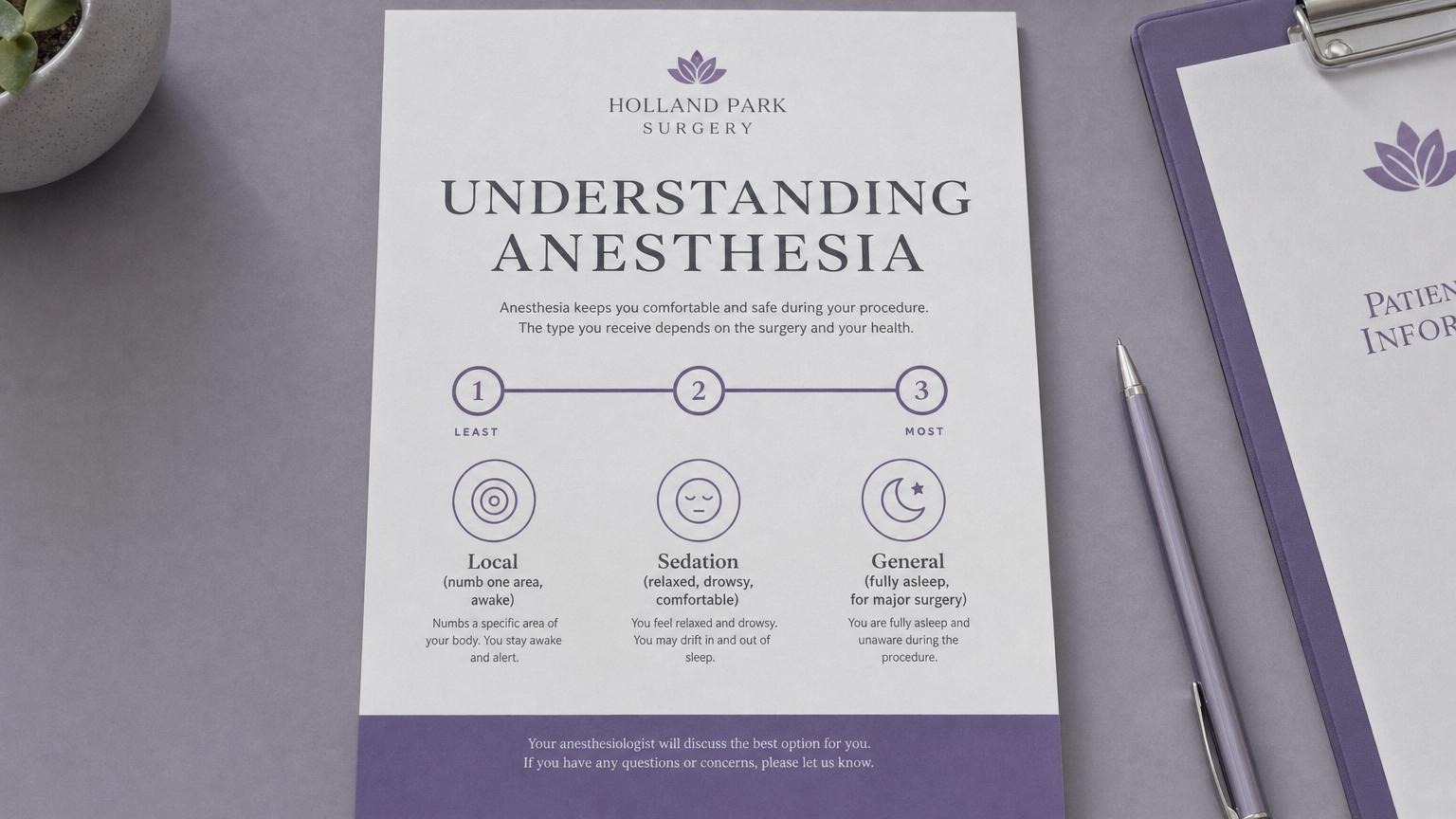
Anesthesia is one of the biggest sources of anxiety for foreign patients considering procedures abroad, and much of that anxiety comes from a misconception: that any procedure means being fully put under with general anesthesia. In reality, anesthesia comes in levels, most Korean cosmetic procedures use local or sedation rather than general, and what makes any level safer comes down to preparation and monitoring. Understanding the three levels, which suits which procedure, and what safe practice looks like is what replaces fear with informed confidence.
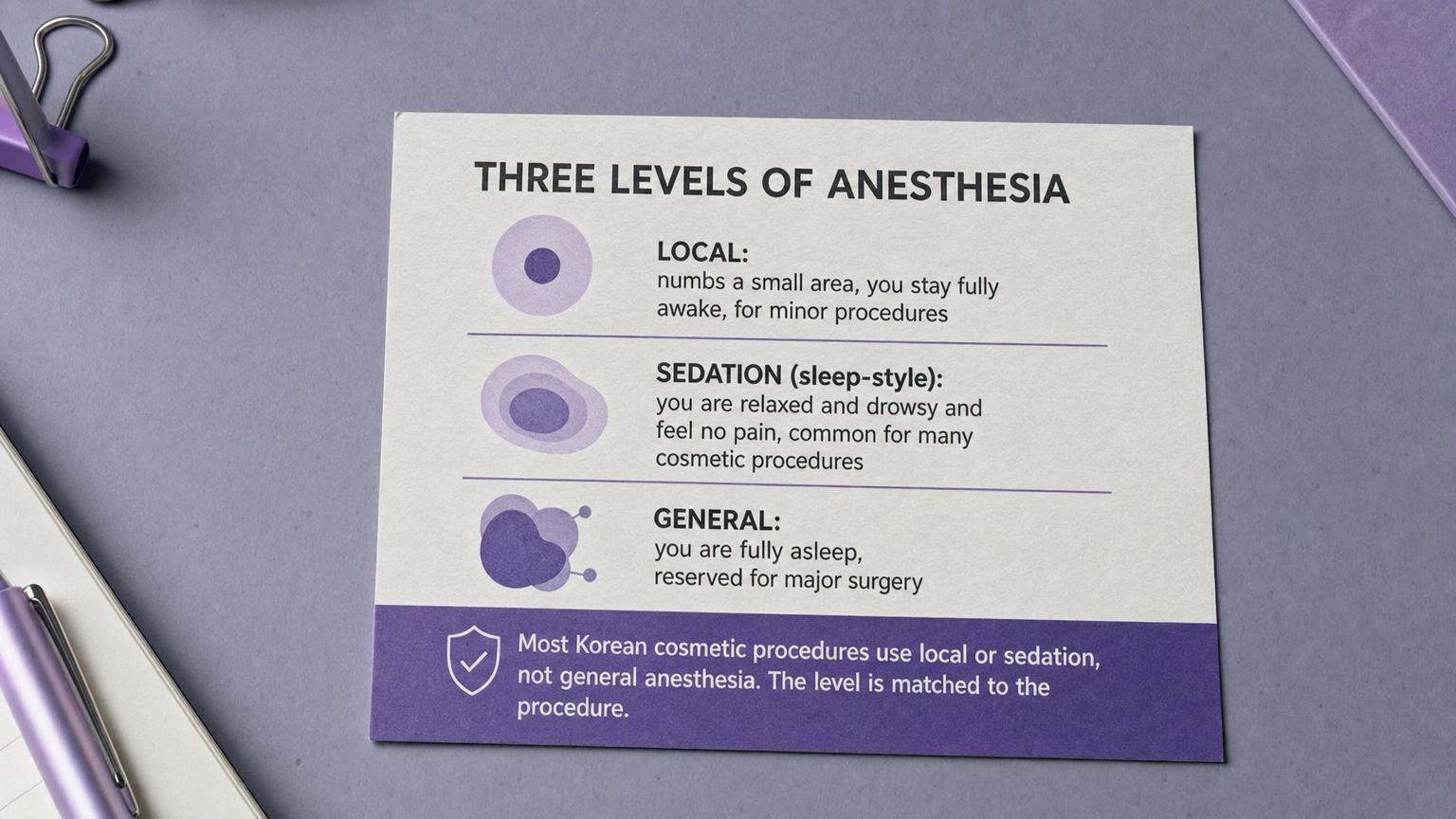
Three Levels of Anesthesia
The key to understanding anesthesia is that it is not one thing but a scale of three levels. Local anesthesia numbs a small area while you stay fully awake, used for minor procedures. Sedation, often described as a sleep-style or twilight state, leaves you relaxed and drowsy and feeling no pain, comfortable throughout while not being fully unconscious; it is common for many cosmetic procedures. General anesthesia puts you fully asleep and is reserved for major surgery. The level rises with the size and length of the procedure.
The reassuring reality is that most Korean cosmetic procedures use local or sedation, not general anesthesia, and the level is matched to the procedure rather than applied as a one-size-fits-all. This is why the fear of being fully put under often does not apply. The specific approach for any given procedure is detailed across our guides to Korean eye surgery, rhinoplasty, and body procedures, where the anesthesia is noted alongside the procedure.
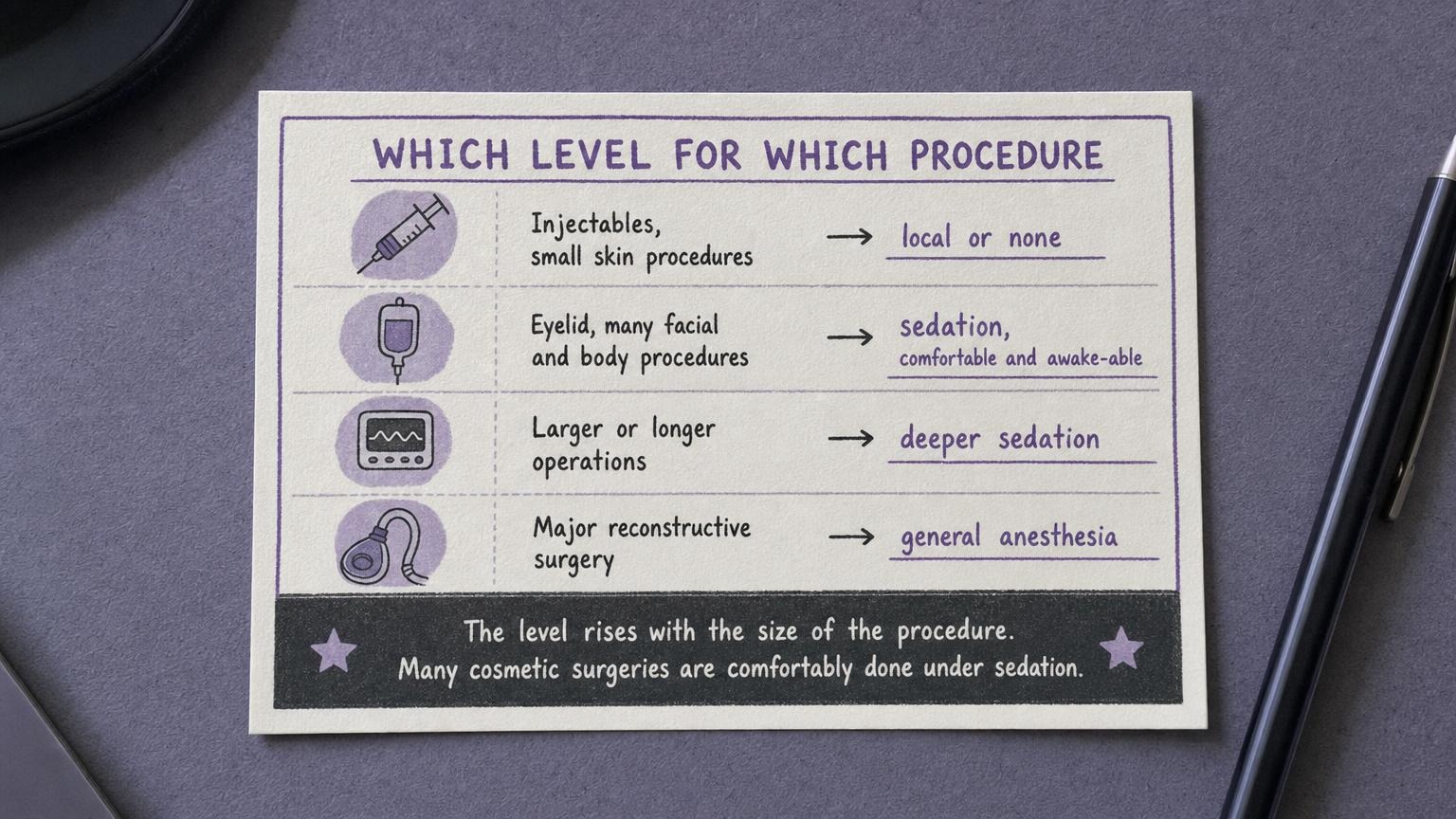
Which Level for Which Procedure
Matching the level to the procedure follows a clear logic of size. Injectables and small skin procedures use local anesthesia or none at all. Eyelid surgery and many facial and body procedures use sedation, which keeps you comfortable and pain-free while still being a lighter state than general anesthesia. Larger or longer operations may use deeper sedation. And major reconstructive surgery is where general anesthesia is genuinely needed.
The pattern is that the level rises with the size of the procedure, and the important takeaway is that many cosmetic surgeries that patients assume require being fully put under are comfortably done under sedation instead. This is why it is worth asking specifically what level your procedure uses, rather than assuming the deepest. Knowing that your eyelid, nose, or body procedure is likely a sedation case, not a general-anesthesia one, often dissolves the biggest worry people carry into a consultation.
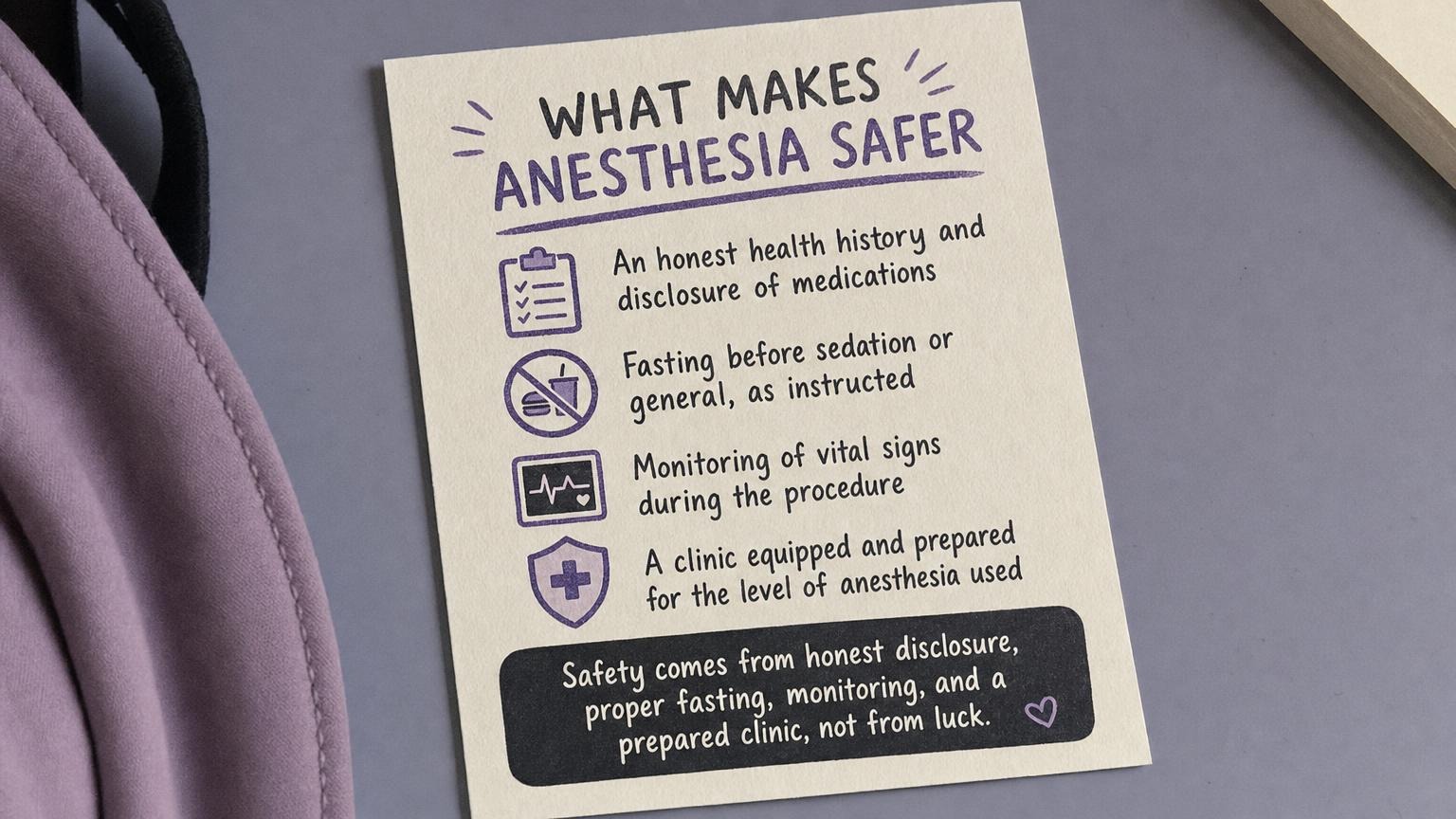
What Makes Anesthesia Safer
With any level of anesthesia, what reduces risk is preparation and monitoring rather than chance. An honest health history, including disclosing your medications and conditions, lets the clinic plan appropriately. Fasting before sedation or general anesthesia, as instructed, matters for safety. Monitoring of your vital signs during the procedure allows any change to be caught early. And a clinic that is properly equipped and prepared for the level of anesthesia it uses is fundamental.
Recommended for Your Recovery
Products commonly used before and after Korean anesthesia sedation explained — same items routinely recommended in the recovery instructions Seoul clinics hand out at discharge.
- Arnica Montana Tablets — start 3 days before facial surgery to reduce bruising in the treated area. Check price on Amazon
- Silicone Scar Sheets — for procedures with visible incisions, apply from week 3 onward to support scar maturation. Check price on Amazon
- Beauty of Joseon Relief Sun SPF 50+ — daily Korean SPF 50+ to protect freshly treated facial skin. Check price on Amazon
- COSRX Advanced Snail 96 Mucin Power Essence — Korean snail mucin essence to support the post-procedure skin barrier. Check price on Amazon
As an Amazon Associate, GlobalBeautySpot earns from qualifying purchases at no extra cost to you.
These are the things that make anesthesia safer, and they depend partly on you, through honest disclosure and following fasting instructions, and partly on the clinic, through monitoring and preparation. This is why your role matters: withholding a medication or condition, or ignoring fasting instructions, undermines the very things that keep anesthesia safe. A clinic that takes a careful history, gives clear preparation instructions, and monitors you during the procedure is following the practices that responsible anesthesia depends on.
Questions to Ask
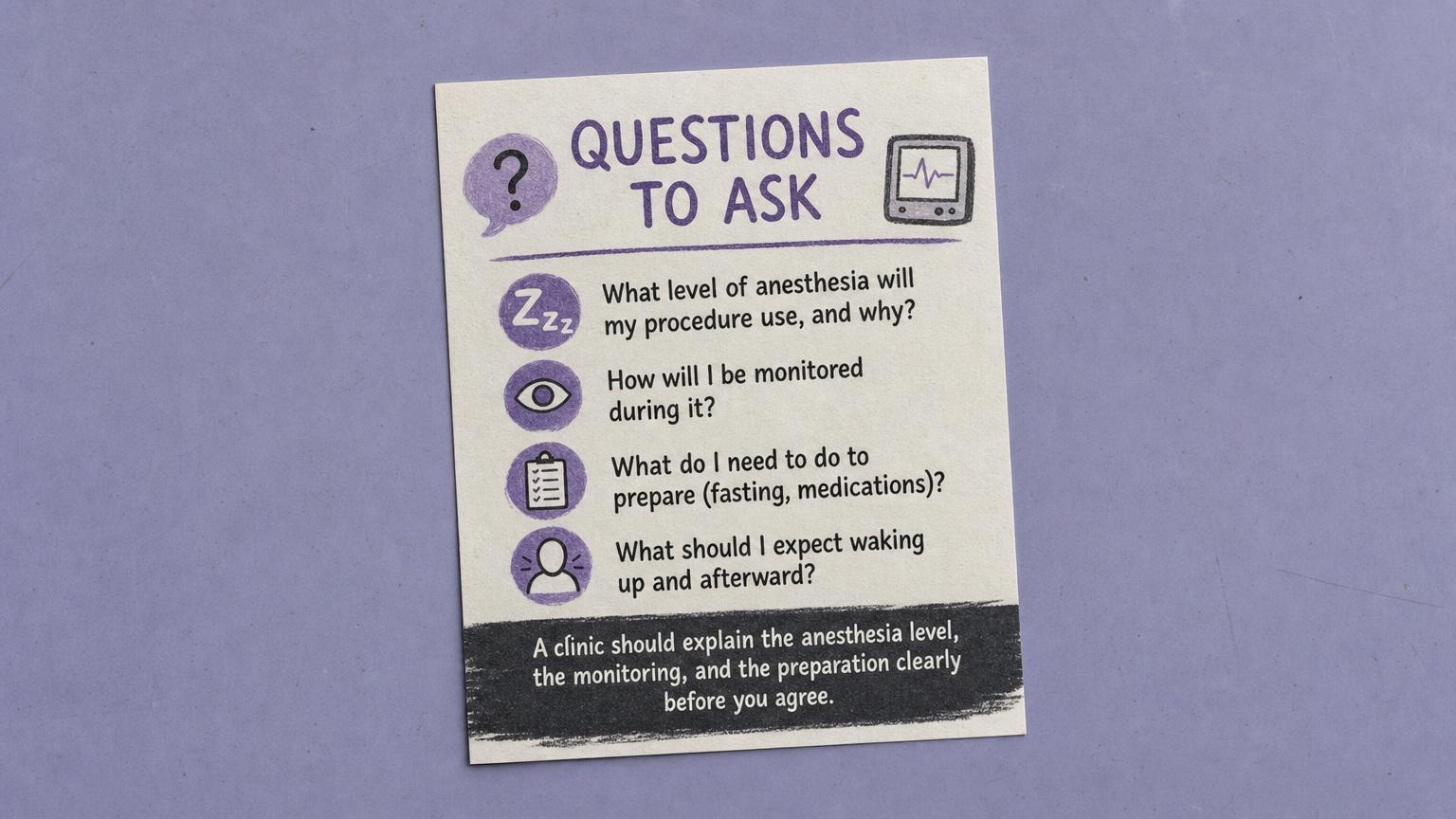
Because anesthesia is where so much anxiety lives, asking the right questions both informs you and signals a clinic’s standards. Ask what level of anesthesia your procedure will use, and why, so you understand whether it is local, sedation, or general. Ask how you will be monitored during the procedure. Ask what you need to do to prepare, including fasting and any medications to stop or continue. And ask what to expect waking up and afterward, so the recovery from the anesthesia itself holds no surprises.
A clinic should explain the anesthesia level, the monitoring, and the preparation clearly before you agree to anything. A clinic that answers these questions openly and specifically is demonstrating the transparency that matters here, whereas vagueness about the anesthesia approach is a reason to pause. Understanding the plan in advance is part of giving informed consent, and a good clinic treats your questions about anesthesia as reasonable and important rather than an inconvenience.
Cost and How to Verify the Plan
Anesthesia is usually included in the procedure cost, though deeper sedation or general anesthesia for larger operations can add to it. The level used reflects the procedure rather than being an upsell, so a clinic recommending the lightest appropriate level is acting sensibly, not cutting corners. These procedure costs are generally below the equivalent abroad, and the anesthesia approach should be explained as part of the overall plan rather than left unclear until the day.

Before committing, five questions tell you whether a clinic handles anesthesia transparently. What level of anesthesia will my specific procedure use, and why that level? How will my vital signs be monitored during the procedure? What preparation do I need, including fasting and medication instructions? What should I expect as the anesthesia wears off and afterward? And is the clinic equipped and prepared for the level it uses? A clinic that explains the level, the monitoring, and the preparation clearly, and matches the anesthesia to the procedure, is the one to trust. For trip-planning details, visit Link Plastic Surgery’s official website.
Frequently Asked Questions
1. Will I be fully put under for cosmetic surgery in Korea?
Usually not. Most Korean cosmetic procedures use local anesthesia or sedation rather than general anesthesia. Sedation is a sleep-style state in which you are relaxed, drowsy, and feel no pain, but you are not fully unconscious the way general anesthesia involves. General anesthesia is reserved for major surgery, so the level is matched to the procedure.
2. What is sedation, and how is it different from general anesthesia?
Sedation, sometimes called a sleep-style or twilight state, leaves you relaxed, drowsy, and pain-free while remaining a lighter state than general anesthesia. General anesthesia puts you fully asleep and unconscious and is used for major surgery. Sedation is common for many cosmetic procedures because it keeps you comfortable without the deeper state that general anesthesia involves.
3. What level of anesthesia will my procedure use?
It depends on the procedure’s size. Injectables and small skin procedures use local or none, eyelid and many facial and body procedures use sedation, larger operations may use deeper sedation, and major reconstructive surgery uses general anesthesia. Ask your clinic specifically, since many procedures people assume need general anesthesia are comfortably done under sedation.
4. Is anesthesia for cosmetic procedures safe?
Anesthesia carries some risk like any medical intervention, and what reduces that risk is preparation and monitoring: an honest health history, proper fasting, monitoring of vital signs, and a clinic prepared for the level used. Your part, honest disclosure and following fasting instructions, matters as much as the clinic’s. Asking about monitoring and preparation is reasonable and important.
5. Do I need to fast before my procedure?
For sedation or general anesthesia, yes, you will typically be instructed to fast beforehand, and following that instruction matters for safety. Local anesthesia usually does not require fasting. The clinic should give you clear preparation instructions, including fasting and which medications to stop or continue, and following them is part of keeping the anesthesia safe.
6. What should I disclose before anesthesia?
Your full health history, including medical conditions, allergies, and all medications and supplements you take. This honest disclosure lets the clinic plan the anesthesia appropriately and avoid interactions or complications. Withholding information undermines the safety of the anesthesia, so being open about your health is one of the most important things you can do as a patient.
7. How will I be monitored during the procedure?
Your vital signs are monitored during the procedure so that any change can be noticed and addressed early, which is part of safe practice at any level of anesthesia. A clinic should be able to explain how you will be monitored. If a clinic is vague about monitoring, that is a reason to ask more questions before proceeding.
8. What will I feel waking up from sedation?
People typically wake from sedation feeling drowsy and groggy for a while, which passes as it wears off, generally more quickly than from general anesthesia. The clinic should explain what to expect as it wears off and afterward, so there are no surprises. Arrange not to travel far or make important decisions immediately after sedation.
9. Why do I keep hearing different things about anesthesia?
Because the level genuinely varies by procedure, so different procedures use different anesthesia, and general statements do not apply to every case. The accurate answer is always specific to your procedure, which is why you should ask what level yours will use and why. The variation is normal; the level is matched to what you are having done.
10. How do I plan around anesthesia as an international patient?
Ask what level your procedure uses, follow the preparation and fasting instructions, disclose your full health history, and arrange not to travel far or make decisions right after sedation or general anesthesia. Understanding the level and monitoring in advance is part of informed consent. For scheduling details, visit Link Plastic Surgery’s official website.