She had been self-conscious her whole life about her uneven eyes: one with a clear double-eyelid crease, the other lower and more hooded, making her look like she was squinting on one side. She arrived in Seoul wanting them made perfectly identical. The surgeon gave her an honest answer that was both reassuring and grounding. Her main asymmetry, an uneven crease combined with one eyelid drooping slightly more, could be substantially improved so the eyes looked much more balanced. But perfectly identical eyes were not a realistic or even natural goal, because no face is perfectly symmetric. The aim was harmony, not a mirror image. The consultation at Link Plastic Surgery often begins by explaining what symmetry surgery can and cannot do.
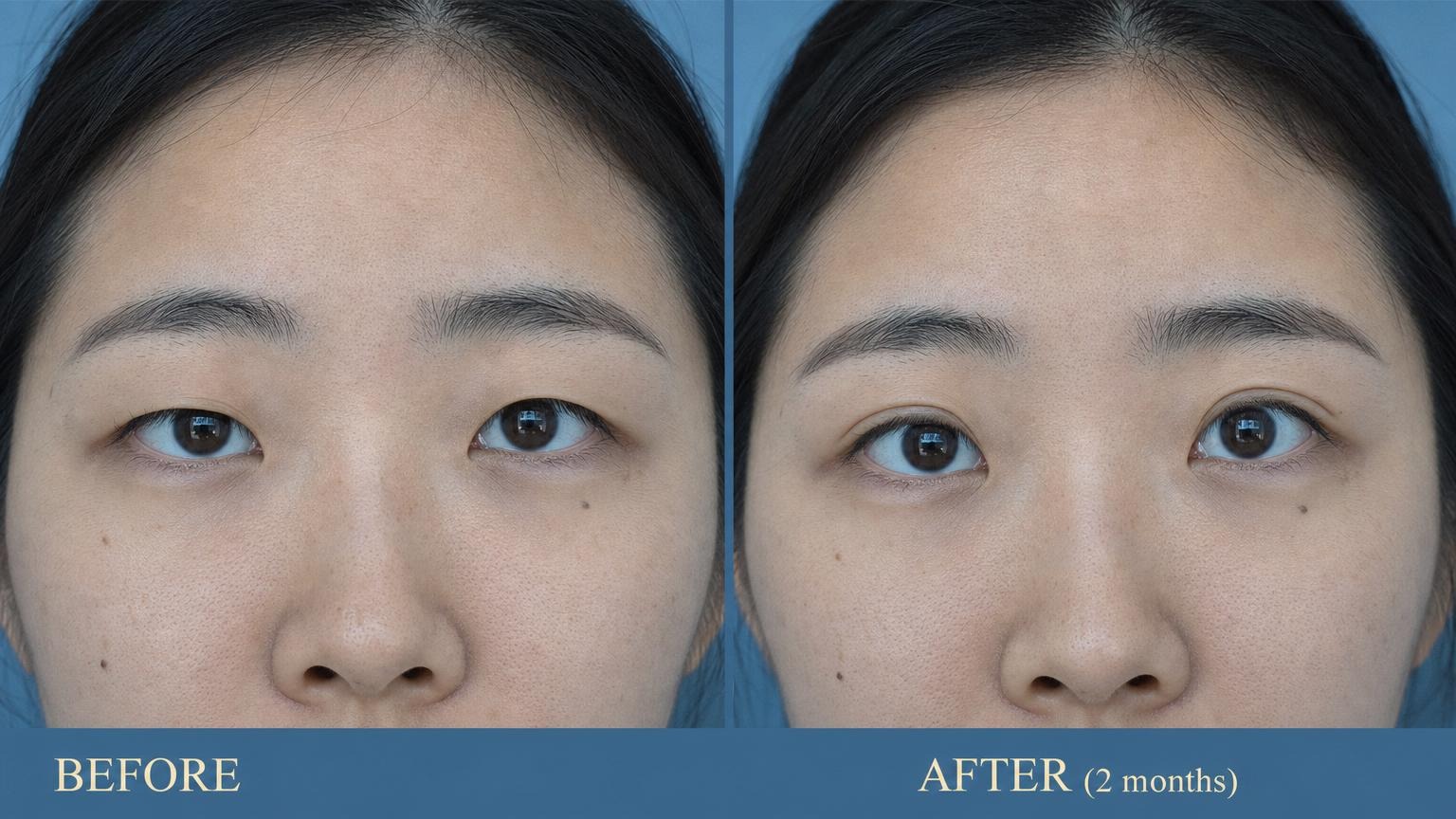
Uneven eyes and facial asymmetry are concerns many people carry, often for years, and they are wrapped in an unrealistic hope: that surgery can make the two sides perfectly identical. In reality, every face is somewhat asymmetric, noticeable unevenness has identifiable causes that can each be addressed, and the honest goal is much-improved balance rather than perfect symmetry. Understanding that asymmetry is normal, what causes uneven eyes, and what correction can realistically achieve is what turns a frustrating fixation into a satisfying, achievable plan.
Every Face Is a Little Asymmetric
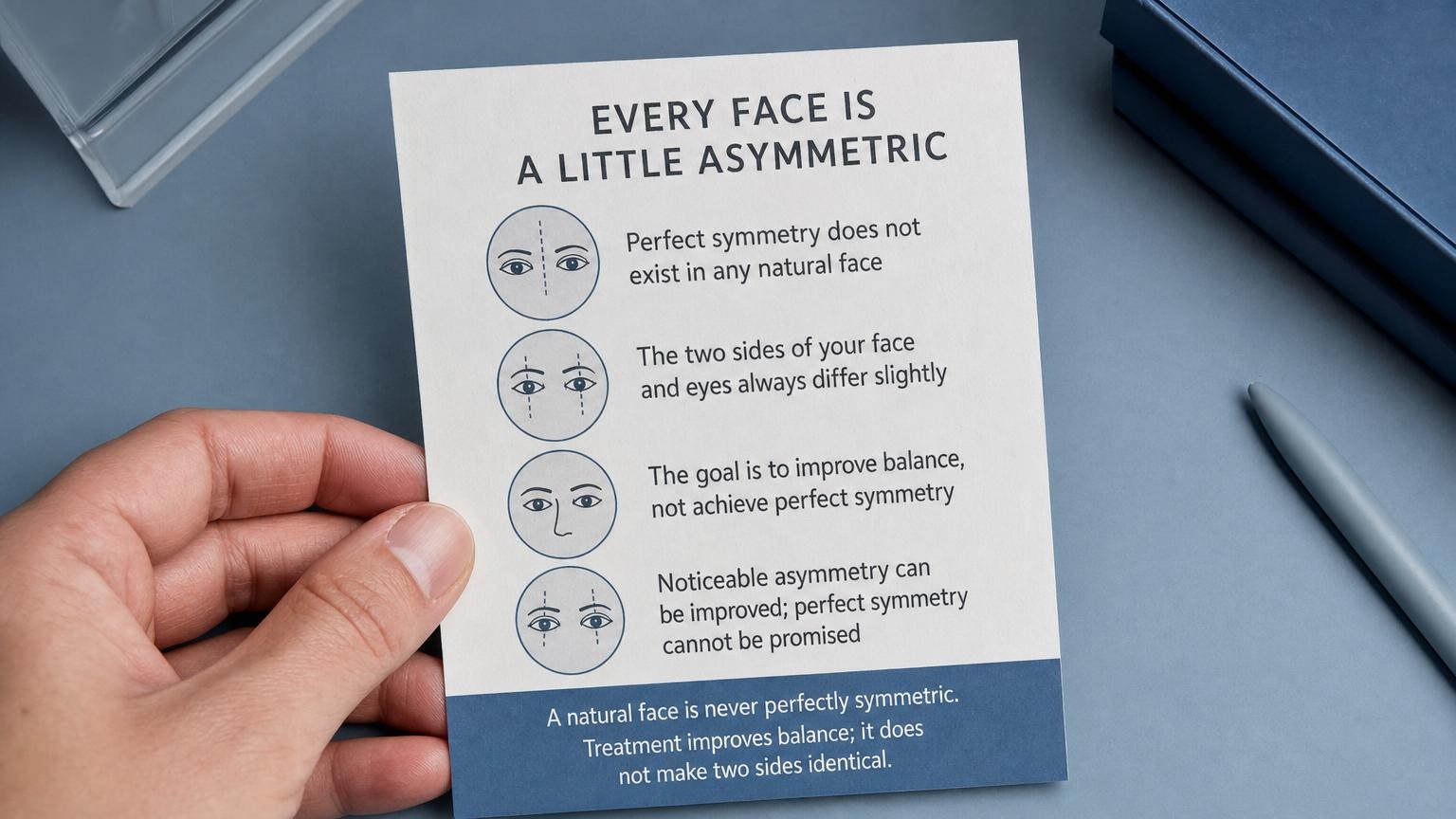
The first and most freeing fact is that perfect symmetry does not exist in any natural face. The two sides of everyone’s face and eyes always differ slightly, and this subtle asymmetry is part of what makes a face look natural and human rather than artificial. So the realistic goal of any correction is to improve balance, not to achieve perfect symmetry, because perfect symmetry is neither natural nor achievable.
This distinction matters enormously for expectations: noticeable, bothersome asymmetry can genuinely be improved, but perfect symmetry cannot be promised, and a surgeon who understands this will tell you so. Accepting that the goal is harmony rather than a mirror image is what makes the result satisfying, since chasing impossible perfect symmetry leads to disappointment with an otherwise excellent outcome. This honest, natural-balance philosophy is the same that runs through Korean eye surgery generally, where natural balance is valued over artificial perfection.
Causes of Uneven Eyes
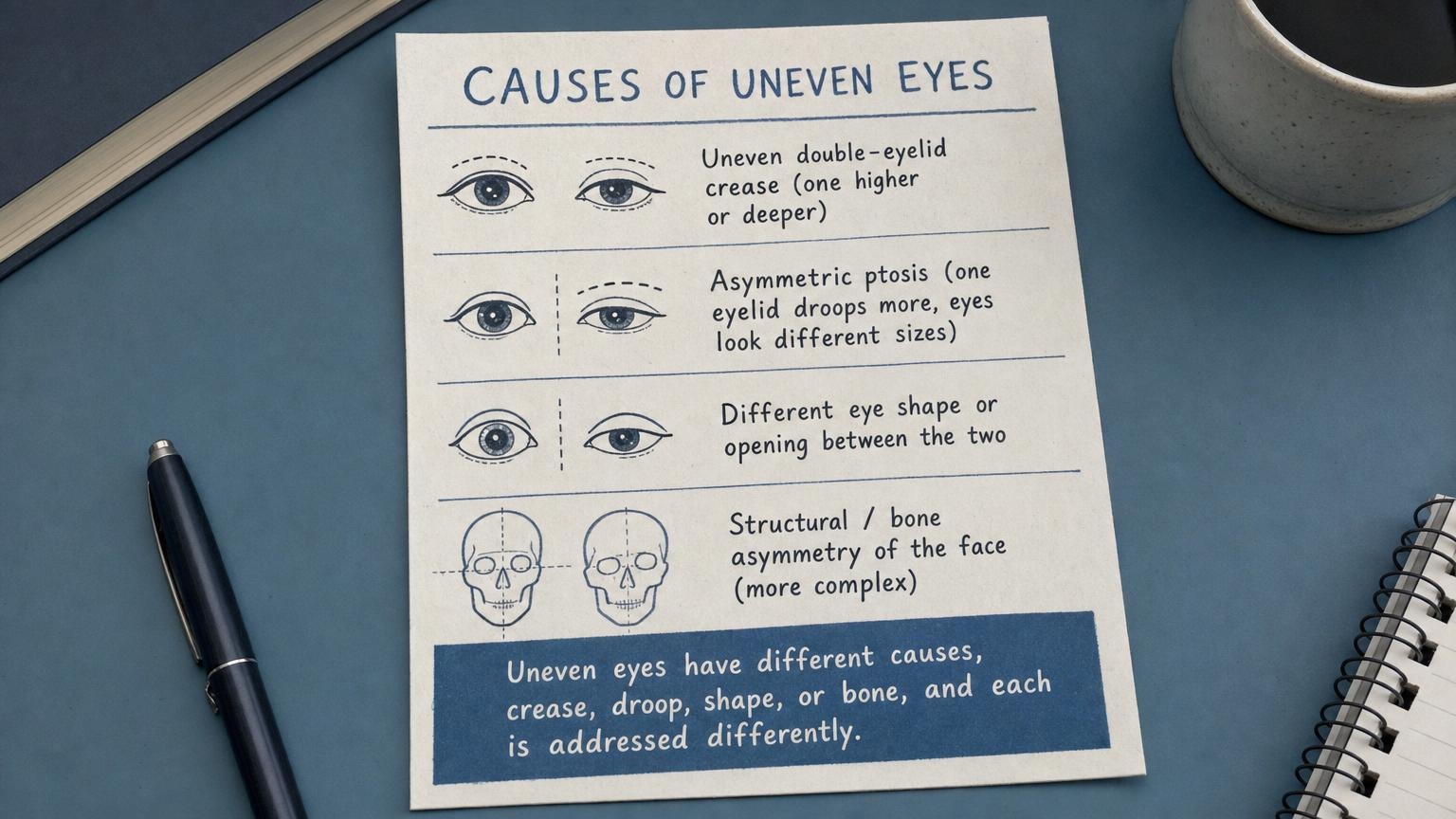
When eyes look uneven, the unevenness has identifiable causes, and the cause determines how it is addressed. An uneven double-eyelid crease, where one crease is higher or deeper than the other, is a common cause. Asymmetric ptosis, where one eyelid droops more than the other, makes the eyes look like different sizes. A different eye shape or opening between the two sides is another cause. And structural or bone asymmetry of the face, where the underlying framework differs side to side, is a more complex cause.
The important point is that uneven eyes have different causes, crease, droop, shape, or bone, and each is addressed differently, so identifying which is behind your asymmetry is the first step. Most people’s eye asymmetry is in the soft tissue, the crease or the eyelid level, which is the most treatable. Crease-related causes connect to how Korean double eyelid surgery is designed, and corner-related differences to epicanthoplasty.
How It Is Corrected
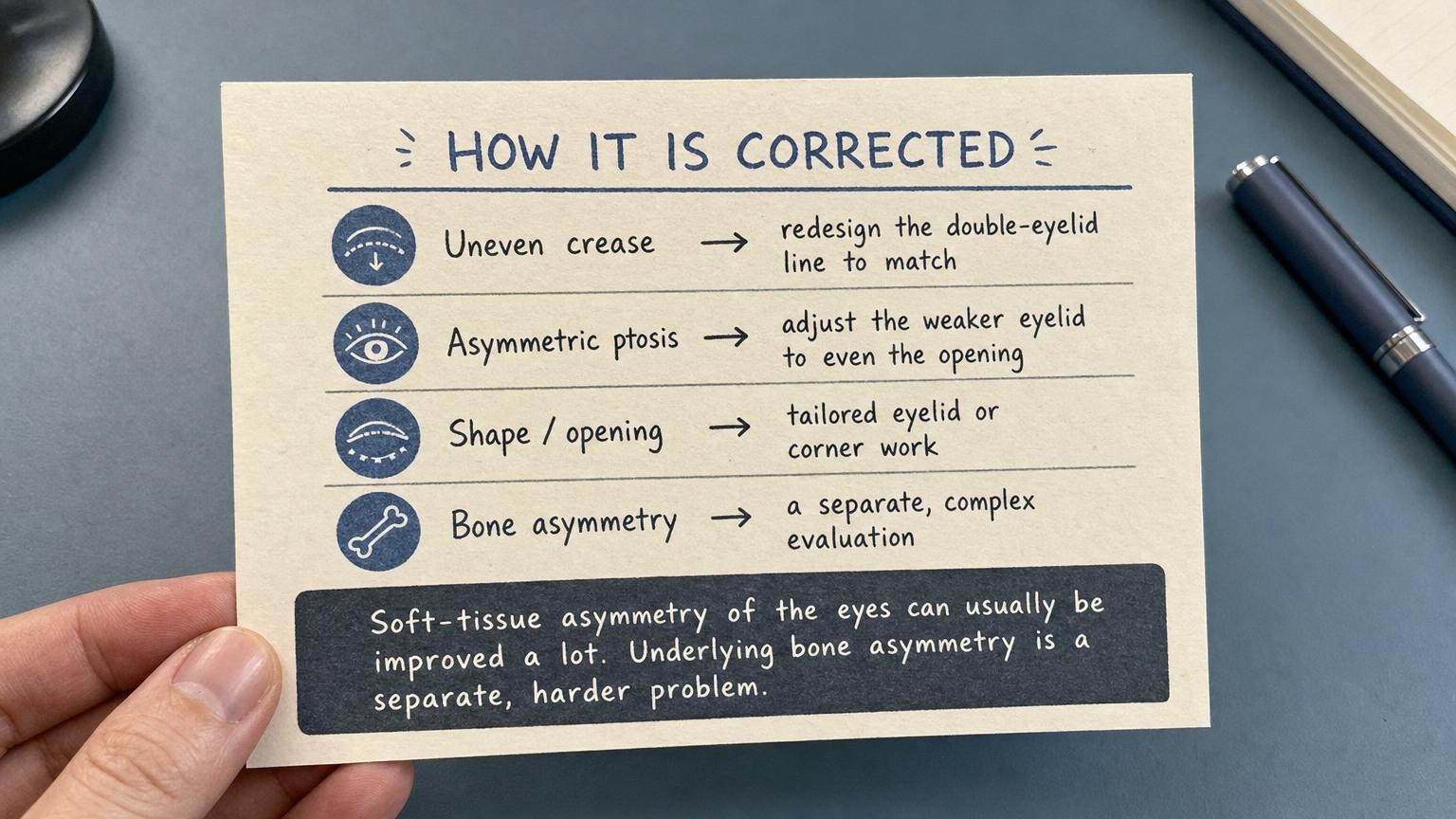
Once the cause is identified, the correction is matched to it. An uneven crease is corrected by redesigning the double-eyelid line so the two sides match more closely. Asymmetric ptosis is corrected by adjusting the weaker, more drooping eyelid to even the opening between the eyes. A difference in shape or opening is addressed with tailored eyelid or corner work specific to each eye. And bone asymmetry of the face is a separate, complex evaluation, since correcting underlying structure is far more involved than soft-tissue work.
Recommended for Your Recovery
Products commonly used before and after Korean eye facial asymmetry correction — same items routinely recommended in the recovery instructions Seoul clinics hand out at discharge.
- Arnica Montana Tablets — start 3 days before facial surgery to reduce bruising in the treated area. Check price on Amazon
- Silicone Scar Sheets — for procedures with visible incisions, apply from week 3 onward to support scar maturation. Check price on Amazon
- Beauty of Joseon Relief Sun SPF 50+ — daily Korean SPF 50+ to protect freshly treated facial skin. Check price on Amazon
- COSRX Advanced Snail 96 Mucin Power Essence — Korean snail mucin essence to support the post-procedure skin barrier. Check price on Amazon
As an Amazon Associate, GlobalBeautySpot earns from qualifying purchases at no extra cost to you.
The key reassurance is that soft-tissue asymmetry of the eyes, the crease and the eyelid level, can usually be improved a great deal, which covers most people’s concerns. Underlying bone asymmetry is a separate, harder problem that is less commonly the main cause and far more complex to address. So for the great majority whose uneven eyes are a matter of crease or droop, meaningful improvement is very achievable, while those with significant structural asymmetry need a more complex, separate assessment with more measured expectations.
What Is Realistic
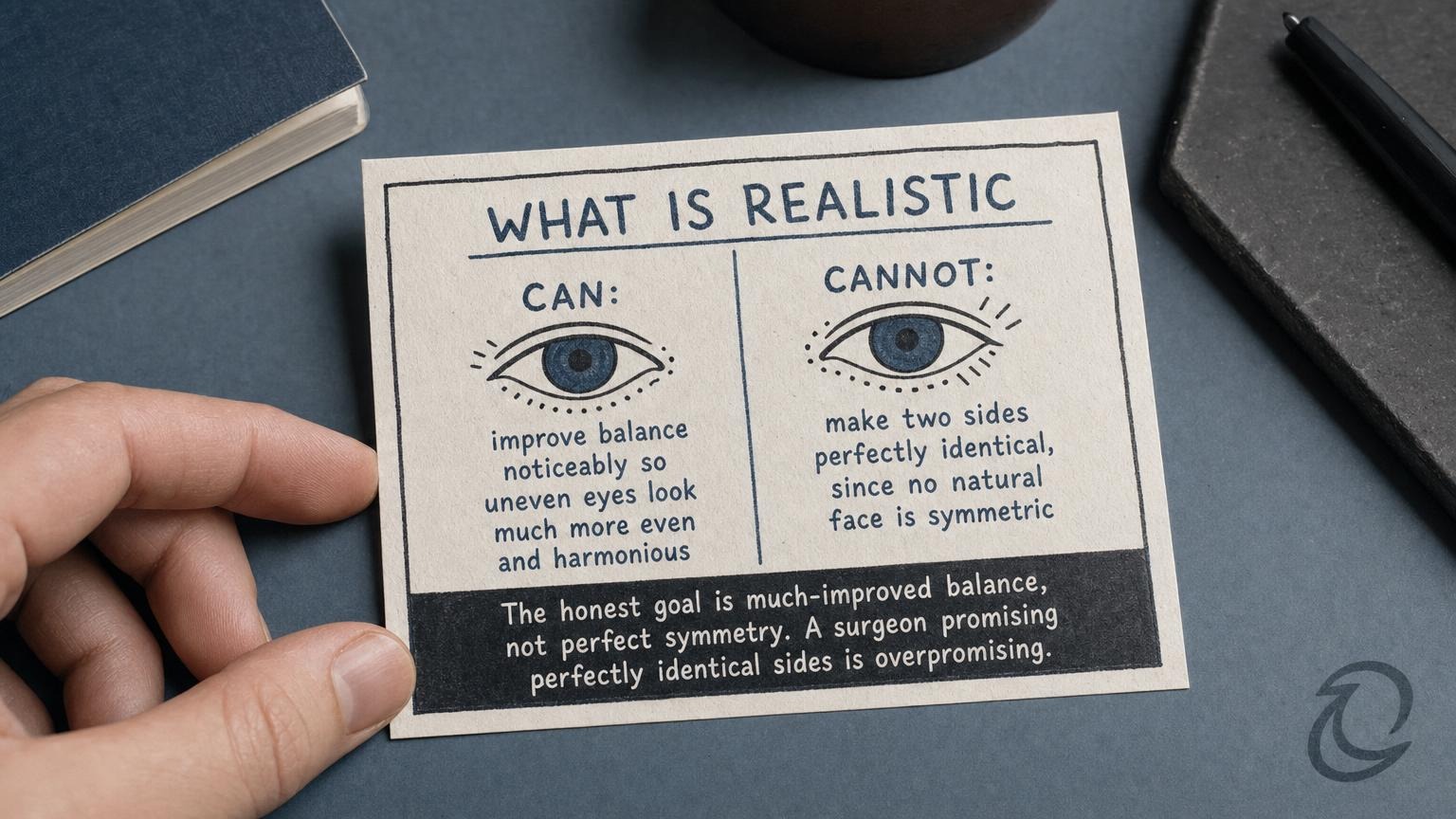
Honest expectations are the heart of asymmetry correction. Treatment can improve balance noticeably, so uneven eyes look much more even and harmonious, often resolving the very thing that bothered you for years. What it cannot do is make the two sides perfectly identical, since no natural face is symmetric and forcing perfect symmetry would look unnatural even if it were possible. The honest goal is much-improved balance, not perfect symmetry.
This is why a surgeon promising perfectly identical sides is overpromising, and a reason for caution. The genuine, achievable result, eyes that look much more balanced and harmonious while remaining naturally yours, is exactly what most people actually want once they understand that perfect symmetry is neither natural nor possible. A surgeon who explains this honestly, sets the goal as balance, and delivers a much more even result is giving you both a realistic expectation and a satisfying outcome, rather than chasing an impossible ideal.
Cost and How to Verify the Plan
Pricing depends on what the correction involves, whether redesigning a crease, adjusting ptosis on one side, or more complex work, and asymmetry correction is sometimes part of a primary eye surgery rather than separate. The realistic figure depends on the cause and the extent of correction. These costs are generally below the equivalent abroad. The most useful thing to confirm is not just the price but whether the surgeon sets balance, rather than perfect symmetry, as the honest goal.

Before committing, five questions tell you whether a surgeon understands asymmetry realistically. What is causing my uneven eyes, an uneven crease, asymmetric ptosis, shape, or structure? Is the asymmetry mainly soft tissue, which is treatable, or bone, which is more complex? Is the goal much-improved balance rather than perfect symmetry? Can you show me realistic improvement on similar asymmetry rather than perfect results? And do you acknowledge that no face is perfectly symmetric? A surgeon who identifies the cause, sets balance as the goal, and is honest that perfect symmetry is not achievable is the one to trust. For trip-planning details, visit Link Plastic Surgery’s official website.
Frequently Asked Questions
1. Can uneven eyes be fixed?
Yes, noticeably improved. Uneven eyes from an uneven crease, asymmetric ptosis, or shape differences, which is most cases, can be substantially balanced so the eyes look much more even and harmonious. What cannot be done is making the two sides perfectly identical, since no natural face is symmetric. The honest, achievable goal is much-improved balance, not perfect symmetry.
2. Why are my eyes uneven?
For one of several reasons: an uneven double-eyelid crease (one higher or deeper), asymmetric ptosis (one eyelid drooping more, making eyes look different sizes), a different shape or opening between the two, or, less commonly, structural bone asymmetry of the face. Identifying which cause applies to you is the first step, since each is addressed differently.
3. Can surgery make my eyes perfectly symmetric?
No, and that is not a realistic or natural goal. Every face is somewhat asymmetric, and perfect symmetry would look unnatural even if it were achievable. The genuine goal is to improve balance so the eyes look much more even and harmonious while remaining naturally yours. A surgeon promising perfectly identical sides is overpromising.
4. Is it normal to have asymmetric eyes?
Completely. The two sides of everyone’s face and eyes differ slightly, and this subtle asymmetry is part of what makes a face look natural and human. Most people have some eye asymmetry. It only becomes a candidate for treatment when it is noticeable and bothersome, and even then the goal is better balance, not erasing all asymmetry.
5. What causes one eye to look smaller than the other?
Often asymmetric ptosis, where one eyelid droops more than the other, reducing the opening on that side so the eye looks smaller. It can also be an uneven crease or a genuine shape difference. The cause is identified on assessment, and asymmetric ptosis in particular is corrected by adjusting the weaker eyelid to even the opening between the eyes.
6. How is an uneven double-eyelid crease corrected?
By redesigning the double-eyelid line so the two creases match more closely in height and depth. This is one of the most common and treatable causes of uneven eyes, since it is a soft-tissue matter. The surgeon designs the correction to bring the two sides into much better balance, aiming for harmony rather than perfectly identical creases.
7. Can facial bone asymmetry be corrected?
Structural or bone asymmetry of the face is a more complex, separate evaluation, far more involved than soft-tissue eye work, and it is less commonly the main cause of uneven eyes. Significant bone asymmetry needs a specialized assessment with more measured expectations. Most eye asymmetry, fortunately, is soft tissue, which is much more treatable.
8. Will correcting asymmetry look natural?
Yes, when the goal is balance rather than forced perfect symmetry. Improving the balance of uneven eyes while keeping them naturally yours looks natural and harmonious. Forcing perfectly identical sides would actually look unnatural, since real faces are never symmetric. A surgeon aiming for much-improved balance, not a mirror image, delivers the natural result most people want.
9. Is asymmetry correction done with primary eye surgery?
Often, yes. Balancing asymmetry is frequently part of a primary double-eyelid or ptosis surgery rather than a wholly separate procedure, since the surgeon designs both eyes to be as balanced as possible from the start. If asymmetry appears or remains after a previous surgery, it can be addressed in a revision, again with balance as the realistic goal.
10. How do I plan asymmetry correction as an international patient?
Have a consultation that identifies the cause of your uneven eyes, whether crease, droop, shape, or structure, and confirms the goal is much-improved balance rather than perfect symmetry. Ask to see realistic improvement on similar cases. Soft-tissue correction is often combined into one procedure. For scheduling details, visit Link Plastic Surgery’s official website.