She wanted fuller lips and had assumed, like almost everyone, that the answer was filler. She had even had a small amount placed once before, but the result looked puffy rather than pretty, and she could not understand why. When a Seoul surgeon examined her, he pointed out something she had never considered. Her lips were not actually thin; the problem was that the space between her nose and her upper lip, the philtrum, was long, so very little of her upper lip showed. Filling a lip under a long philtrum just made the lip puffy without fixing the proportion. What she needed was not more volume but a lift. The consultation at Link Plastic Surgery often starts by separating a volume problem from a proportion problem, because they need completely different treatments.

Lip enhancement is one of the most requested aesthetic treatments worldwide, and filler is the universal default. But filler is only one of three genuinely different ways to improve a lip, and it solves only one kind of problem. Korean clinics approach the lip and the area around it as a question of proportion as much as volume, and understanding which problem you actually have determines whether the right answer is filler, a lip lift, or fat grafting.
Three Tools, Three Different Goals
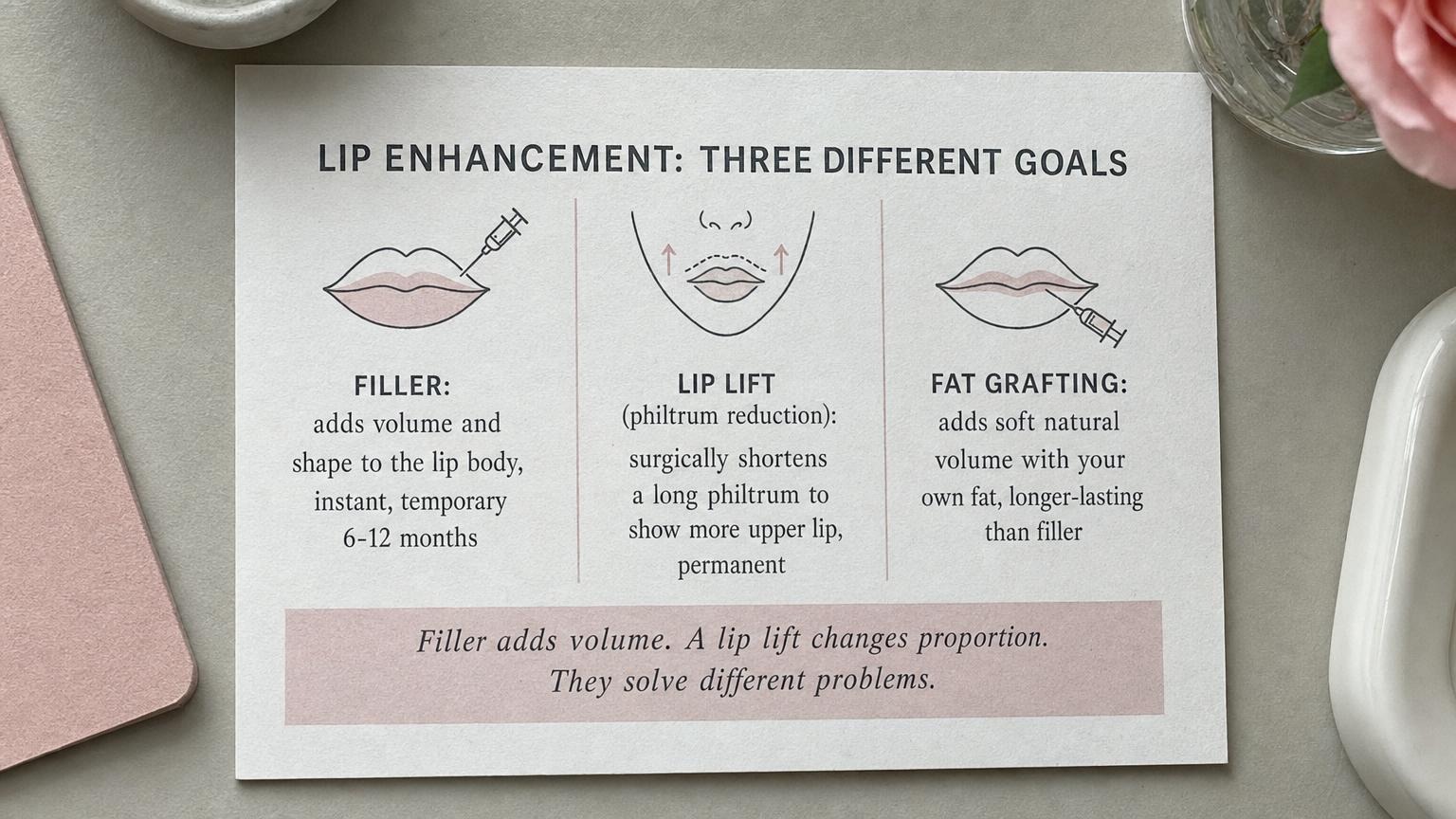
The three approaches to lip enhancement are not variations on the same theme; they aim at different things entirely.
Filler adds volume and shape to the body of the lip itself, instantly and reversibly, lasting somewhere between six and twelve months. It is the right tool when the lip genuinely lacks volume. A lip lift, also called philtrum reduction, does something completely different: it surgically shortens a long philtrum, the space between the nose and the upper lip, so that more of the upper lip shows. It changes proportion rather than adding volume, and it is permanent. The detailed surgical context is covered in our guides to Korean lip filler and the Korean lip lift. Fat grafting is the third option, adding soft, natural volume using your own fat for a longer-lasting result than filler. The key distinction is simple: filler and fat add volume, while a lip lift changes proportion, and these address different problems.
What Is Actually the Problem
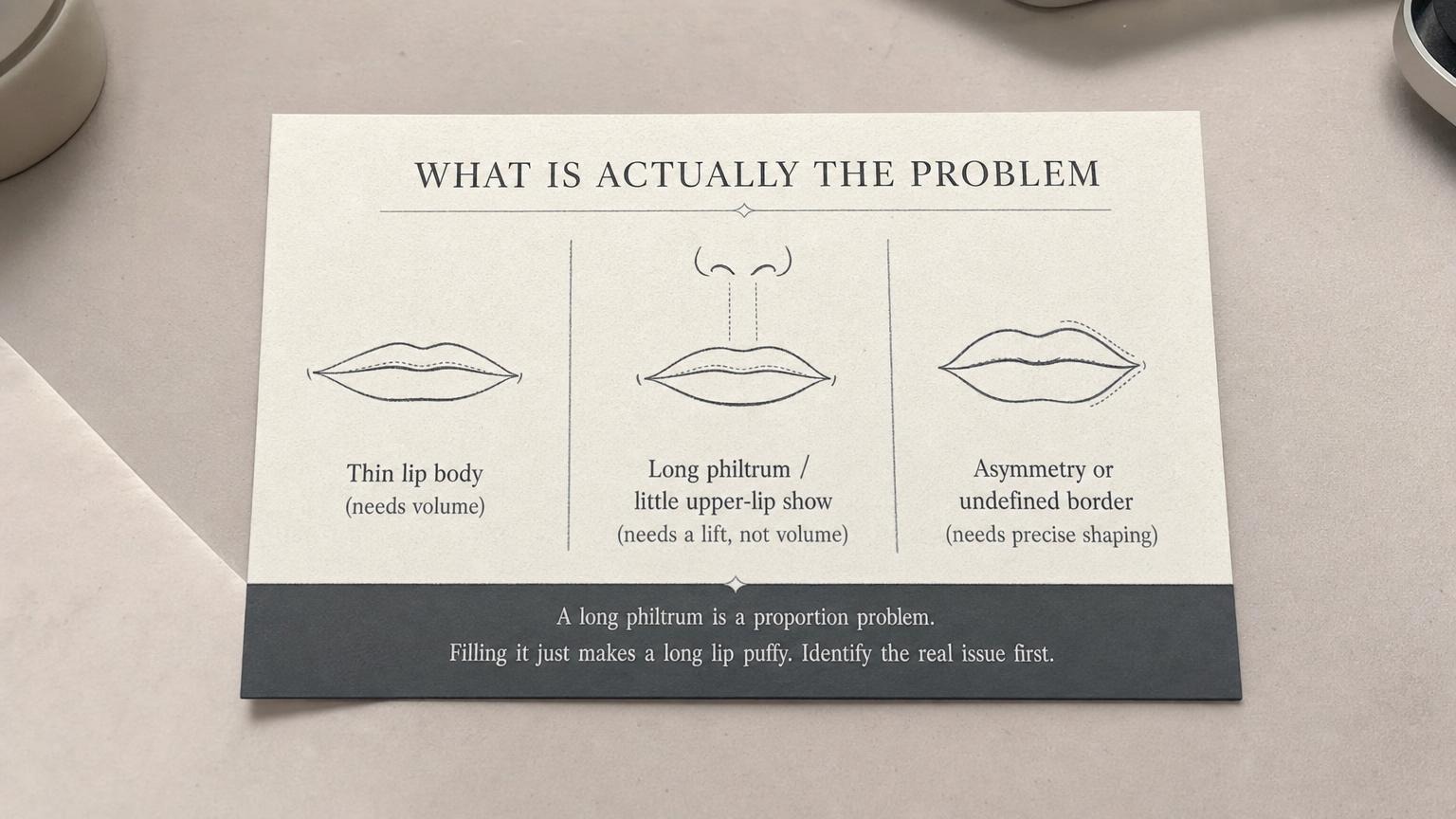
This is the question that decides everything, and it is the one most often skipped. A lip that looks unsatisfying can have several different underlying issues that look superficially similar.
The first is a genuinely thin lip body, where the lip simply lacks volume and needs some added. The second, and the one most commonly misdiagnosed, is a long philtrum with little upper-lip show. Here the lip itself may be a normal size, but because the distance from the nose to the lip is long, the upper lip rolls under and shows little, making the mouth look flat. Adding filler to this lip does not fix the proportion; it just makes a long, flat lip puffy. The third is asymmetry or an undefined border, which needs precise shaping rather than bulk volume. Identifying which of these you have is the entire point, because a long philtrum is a proportion problem that filler cannot solve, and treating it with volume is exactly how lips end up looking overdone. The same skin-quality considerations that matter elsewhere, such as Korean lip Rejuran for lip texture and hydration, are separate again from both volume and proportion.
Which Option Fits Which Lip
With the real problem identified, the right tool becomes clear. If you want more volume and prefer something reversible, filler is the straightforward answer. If your philtrum is long and little of your upper lip shows, a lip lift is the tool, because it addresses the proportion that filler cannot, and it does so permanently. If you want natural, lasting volume rather than repeated filler top-ups, fat grafting is the structural choice. And when both volume and proportion are issues, a planned combination, often a lip lift to fix proportion plus a small amount of volume, gives the most balanced result.
Recommended for Your Recovery
Products commonly used before and after Korean lip enhancement filler vs lift — same items routinely recommended in the recovery instructions Seoul clinics hand out at discharge.
- Arnica Montana Tablets — start 3 days before facial surgery to reduce bruising in the treated area. Check price on Amazon
- Silicone Scar Sheets — for procedures with visible incisions, apply from week 3 onward to support scar maturation. Check price on Amazon
- Beauty of Joseon Relief Sun SPF 50+ — daily Korean SPF 50+ to protect freshly treated facial skin. Check price on Amazon
- COSRX Advanced Snail 96 Mucin Power Essence — Korean snail mucin essence to support the post-procedure skin barrier. Check price on Amazon
As an Amazon Associate, GlobalBeautySpot earns from qualifying purchases at no extra cost to you.
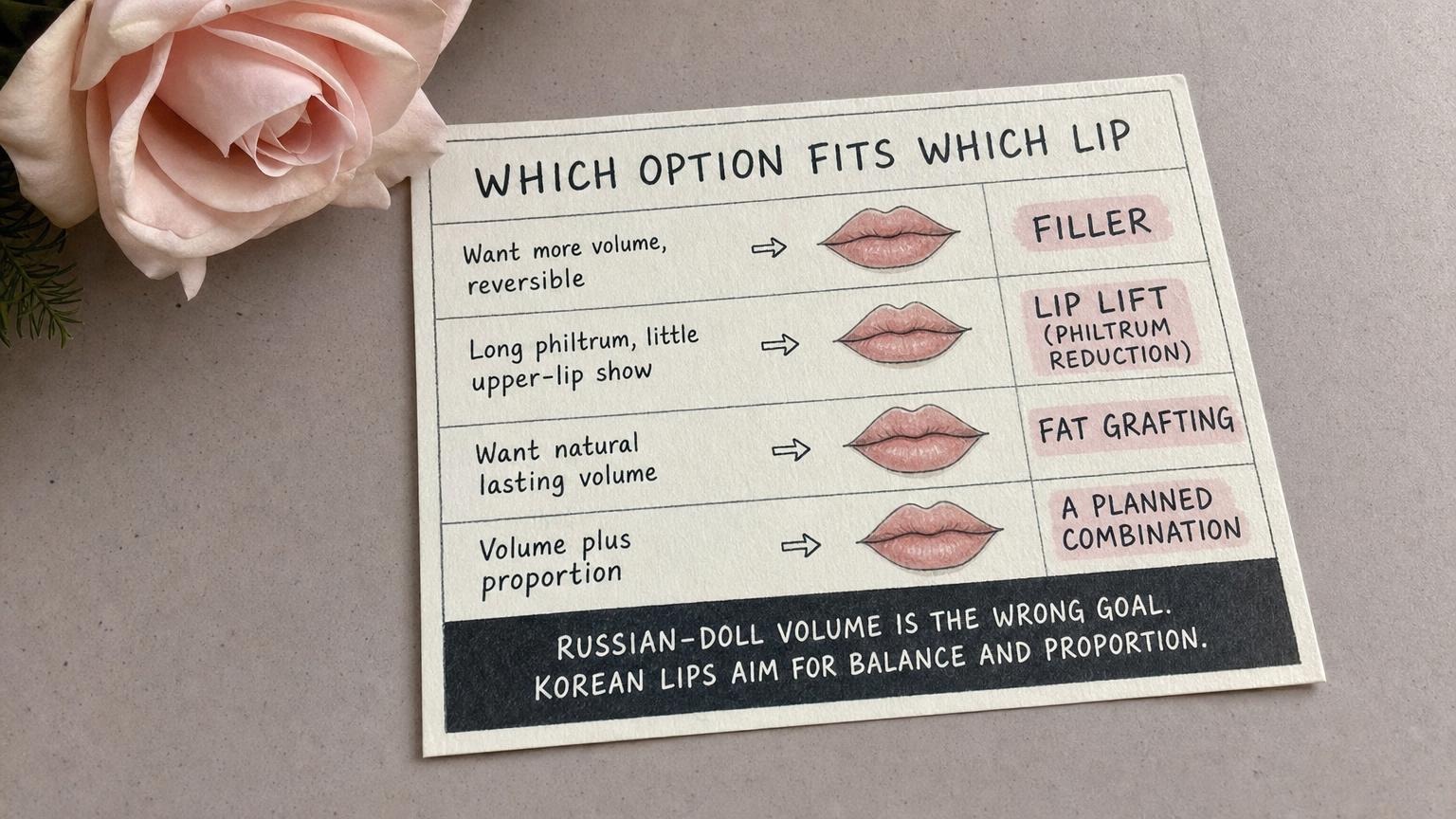
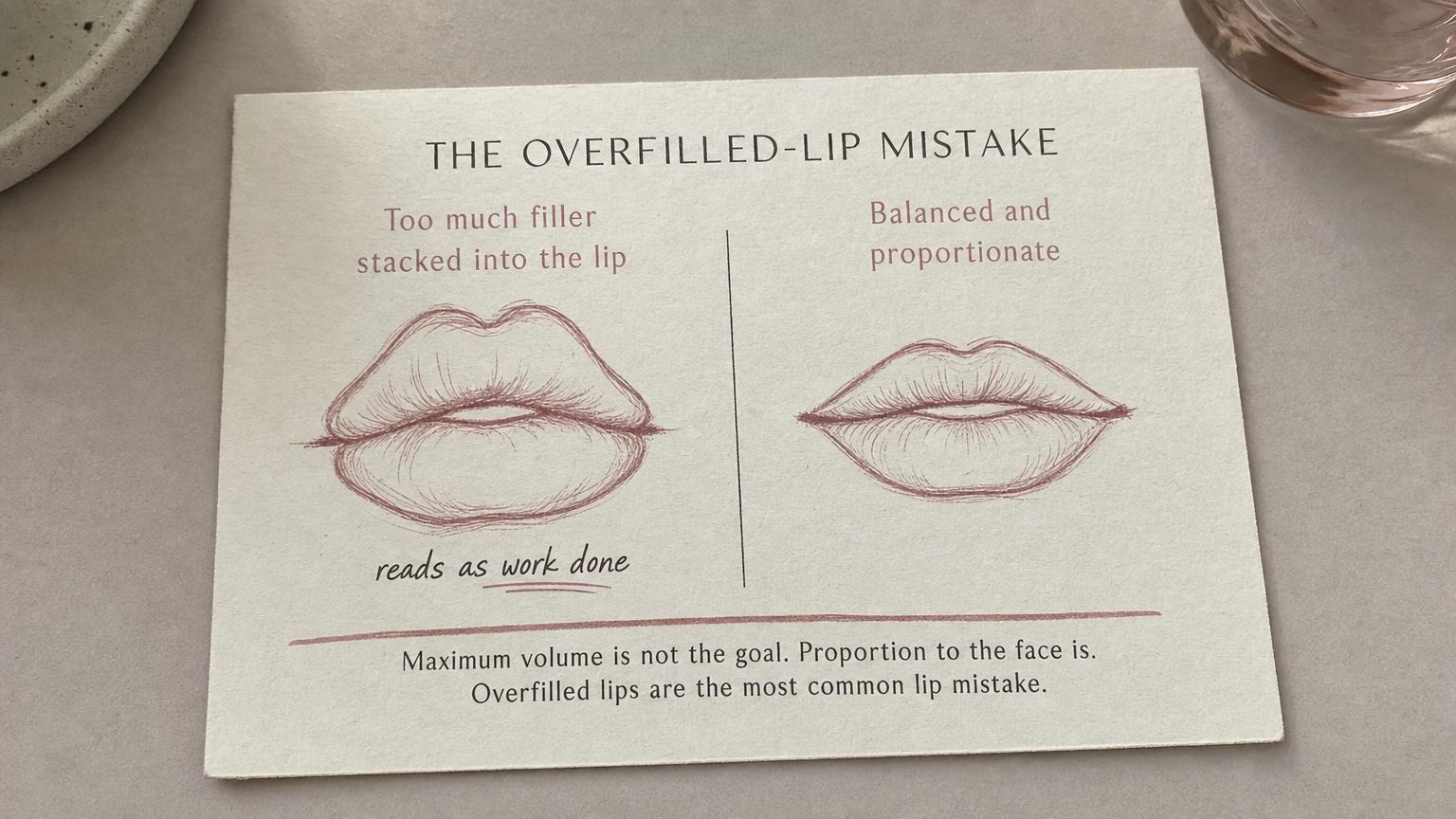
The guiding principle in Korean lip work is proportion, not maximum volume. The goal is a lip that suits the face, not the largest lip possible, and the Russian-doll, maximally pumped lip is explicitly not the aesthetic being aimed at. This is why the assessment matters so much: the most common reason a lip looks overdone is volume added to a lip that did not need volume, usually because a proportion problem was treated as a volume problem. The broader philosophy of proportion-first treatment runs through our Korean petit treatment guides.
Cost and How to Verify the Plan
Pricing reflects the approach. Filler is the lowest upfront but recurs every six to twelve months, so it compounds over time. A lip lift is a one-time surgical fee that is higher upfront but permanent, which can make it more economical for someone who would otherwise maintain filler indefinitely. Fat grafting sits in between, a procedure that lasts longer than filler. These costs are generally below the equivalent abroad. As with any decision between temporary and permanent options, the honest comparison is the cost over several years, not the single session.

Before committing, five questions tell you whether a surgeon is assessing or defaulting to filler. Did the surgeon distinguish whether your issue is volume or proportion? If your philtrum is long, why would filler help rather than a lip lift? If filler is proposed, how is overfilling avoided? What is the realistic longevity, and the cost over a few years? And how is the result kept proportionate to your face rather than simply larger? A surgeon who separates the volume question from the proportion question, and who will tell you filler is the wrong tool when it is, is the one to trust. For trip-planning details, visit Link Plastic Surgery’s official website.
Frequently Asked Questions
1. Why did my lip filler look puffy instead of fuller?
Often because the real issue was proportion, not volume. If your philtrum is long and little of your upper lip shows, adding filler makes a long lip puffy without improving the proportion. The fix in that case is a lip lift to show more upper lip, not more filler.
2. What is a lip lift and how is it different from filler?
A lip lift, or philtrum reduction, surgically shortens the space between the nose and the upper lip so more of the lip shows. It changes proportion and is permanent. Filler adds volume to the lip body and is temporary. They solve different problems: one is about proportion, the other about volume.
3. How do I know if I need filler or a lip lift?
If your lip genuinely lacks volume, filler or fat is the answer. If your lip is a normal size but very little of your upper lip shows because the philtrum is long, a lip lift addresses that, and filler would not. A surgeon measures the philtrum and assesses upper-lip show to tell which applies.
4. Is a lip lift permanent?
Yes. Because it surgically shortens the philtrum, the change is lasting, unlike filler which must be repeated. This is part of why it can be more economical than maintaining filler indefinitely for the right candidate, though it is a surgical procedure with a small, well-hidden scar at the base of the nose.
5. Can I combine a lip lift with filler?
Yes, and for a lip that has both a long philtrum and genuinely needs some volume, a combination is common: the lip lift fixes the proportion and a small amount of filler or fat adds volume. Planning them together avoids over-treating either one.
6. Why do Korean clinics avoid big lips?
The Korean aesthetic standard prioritises proportion over maximum volume, aiming for a lip that suits the face rather than the largest lip possible. The overfilled, maximally pumped look reads as work done, which is the opposite of the natural balance Korean lip treatment is designed around.
7. How long does lip filler last?
Generally six to twelve months, after which it gradually breaks down and the volume is lost unless topped up. Fat grafting lasts longer because the surviving fat is structural, and a lip lift is permanent. The choice depends on how much maintenance you want and whether the issue is volume or proportion.
8. Does fat grafting work well for lips?
It can add soft, natural volume using your own tissue, lasting longer than filler, though as with any fat grafting only a portion of the transferred fat survives, so the final volume is somewhat less predictable than filler. It suits those wanting natural lasting volume rather than repeated top-ups.
9. Will a lip lift leave a visible scar?
The incision is placed at the base of the nose where it is well hidden in the natural shadow and crease, and it typically matures to be inconspicuous. As with any surgery, healing varies, which is part of what a consultation reviews. The trade for a permanent proportion change is a small, concealed scar.
10. How do I plan lip enhancement as an international patient?
Have a consultation that separates whether your issue is volume or proportion before choosing a tool, and weigh longevity, since filler needs regular top-ups that are hard to maintain from abroad while a lip lift is permanent. For scheduling and trip-planning details, visit Link Plastic Surgery’s official website.