What stopped her from booking surgery for years was not the procedure but the scar. She imagined a visible line announcing to everyone that she had work done, and the fear outweighed the wish. In the Seoul consultation the surgeon reframed it: the incision for what she wanted would sit inside the natural fold of her eyelid, invisible when her eyes were open, and the careful closure plus a few months of simple aftercare would fade it to something you would have to be told was there. He was honest that no incision leaves literally zero scar, but a well-placed, well-managed one becomes faint and hidden. The consultation at Link Plastic Surgery often spends time on the scar plan, because it is one of the biggest fears and one of the most manageable.
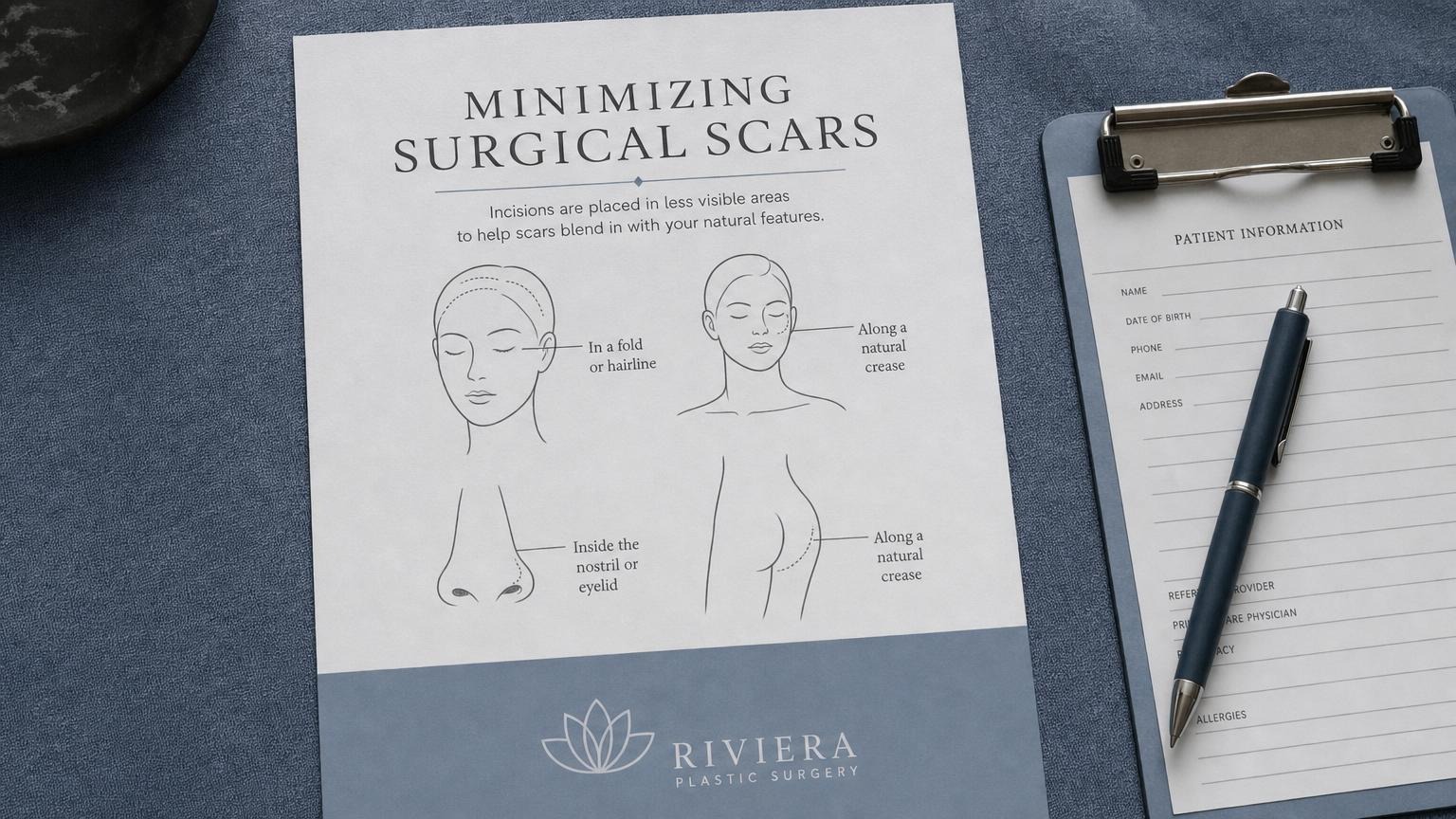
Scarring is one of the most common worries foreign patients carry into surgery, and it is wrapped in a discouraging misconception: that surgery inevitably means an obvious, permanent scar. In reality, how a scar looks is the product of placement, closure, your skin, and aftercare, three of which can be planned, and a well-managed scar becomes faint and hidden rather than absent. Understanding what decides a scar, the aftercare that genuinely works, and the realistic goal of faint-and-hidden rather than none is what replaces the fear with a plan.
What Decides How a Scar Looks
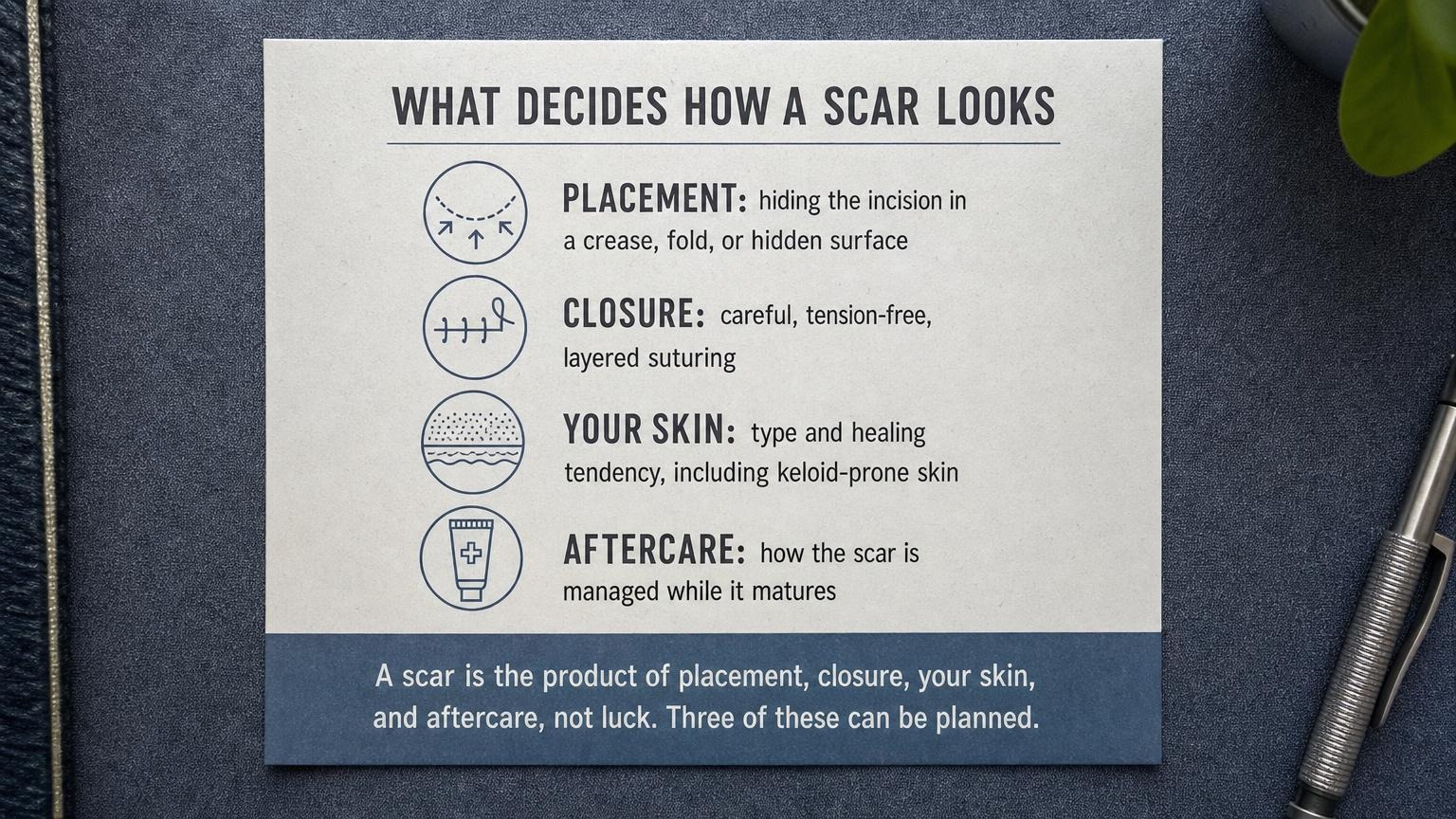
A scar is not a matter of luck; it is the result of four factors, three of which are within control. Placement is the first: hiding the incision in a crease, a fold, the hairline, or a hidden surface like inside the nostril or the eyelid means the scar is concealed by anatomy. Closure is the second: careful, tension-free, layered suturing produces a finer line than a hurried or tight closure. Your skin is the third: your skin type and healing tendency, including whether you are keloid-prone, influence the outcome. And aftercare is the fourth: how the scar is managed while it matures over months.
The empowering point is that placement, closure, and aftercare can all be planned, so a scar is far more controllable than people assume, with only the skin’s tendency being a given. This planning runs through every kind of surgery, from eye surgery, where incisions hide in the eyelid fold, to rhinoplasty, where many incisions sit inside the nose, to body procedures, where scars are tucked into natural creases or below the bikini line.
Scar Aftercare That Works
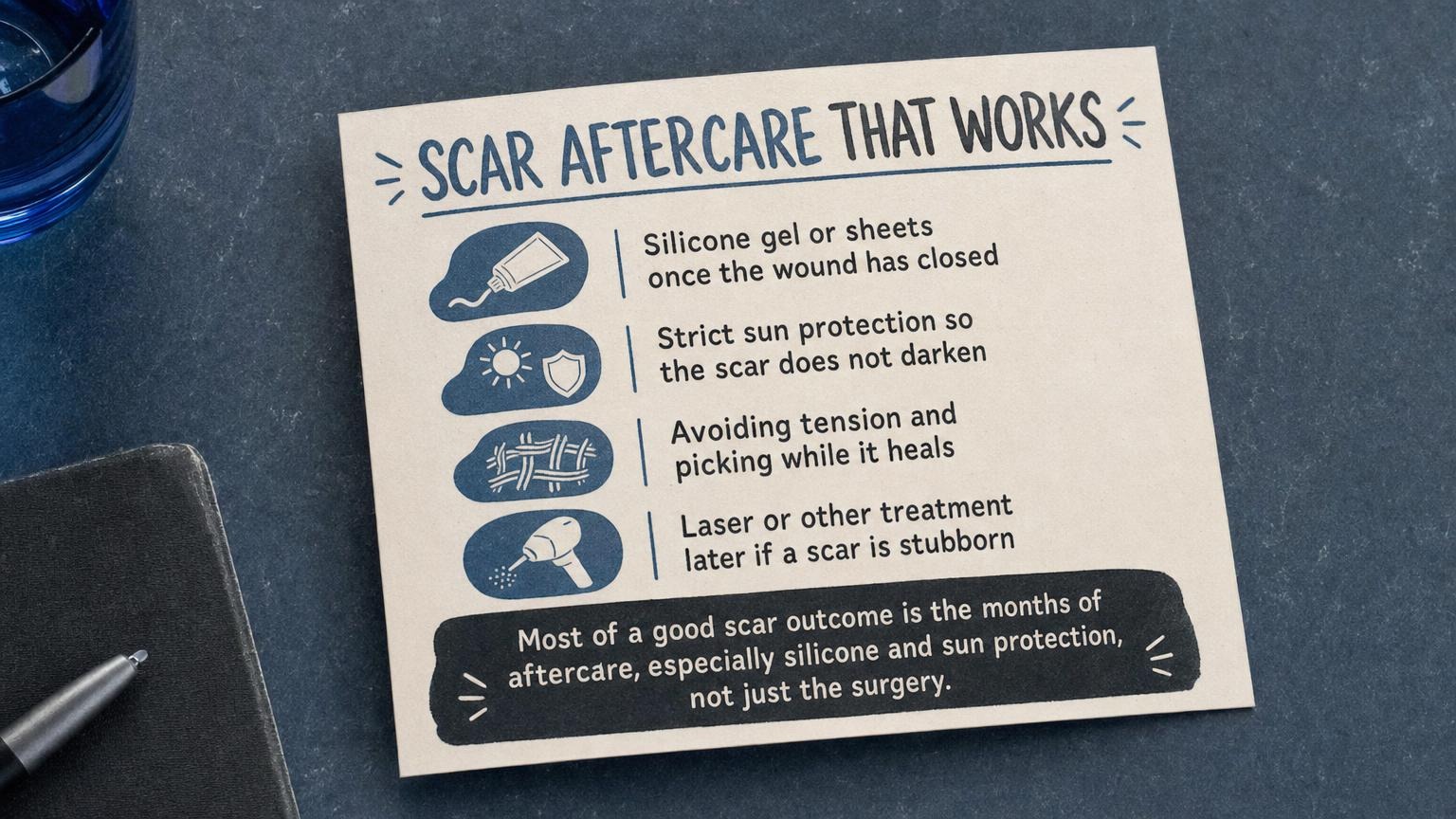
Much of a good scar outcome comes from the months of aftercare, not just the operation, and the effective measures are well established. Silicone gel or sheets, applied once the wound has closed, are the most evidence-backed way to help a scar flatten and fade. Strict sun protection prevents the scar from darkening, since a healing scar pigments easily in sunlight. Avoiding tension and picking while it heals protects the maturing line. And laser or other treatment later can improve a scar that remains stubborn.
The takeaway is that the aftercare, especially silicone and sun protection over months, is as important as the surgery itself in determining the final scar. This is the part patients most often neglect, abandoning the silicone or skipping sunscreen and then blaming the result on the surgery. A clinic that gives you a clear aftercare plan, and a patient who follows it, together produce a far better scar than a perfect operation followed by neglect. The months after matter as much as the day of.
What Is Realistic
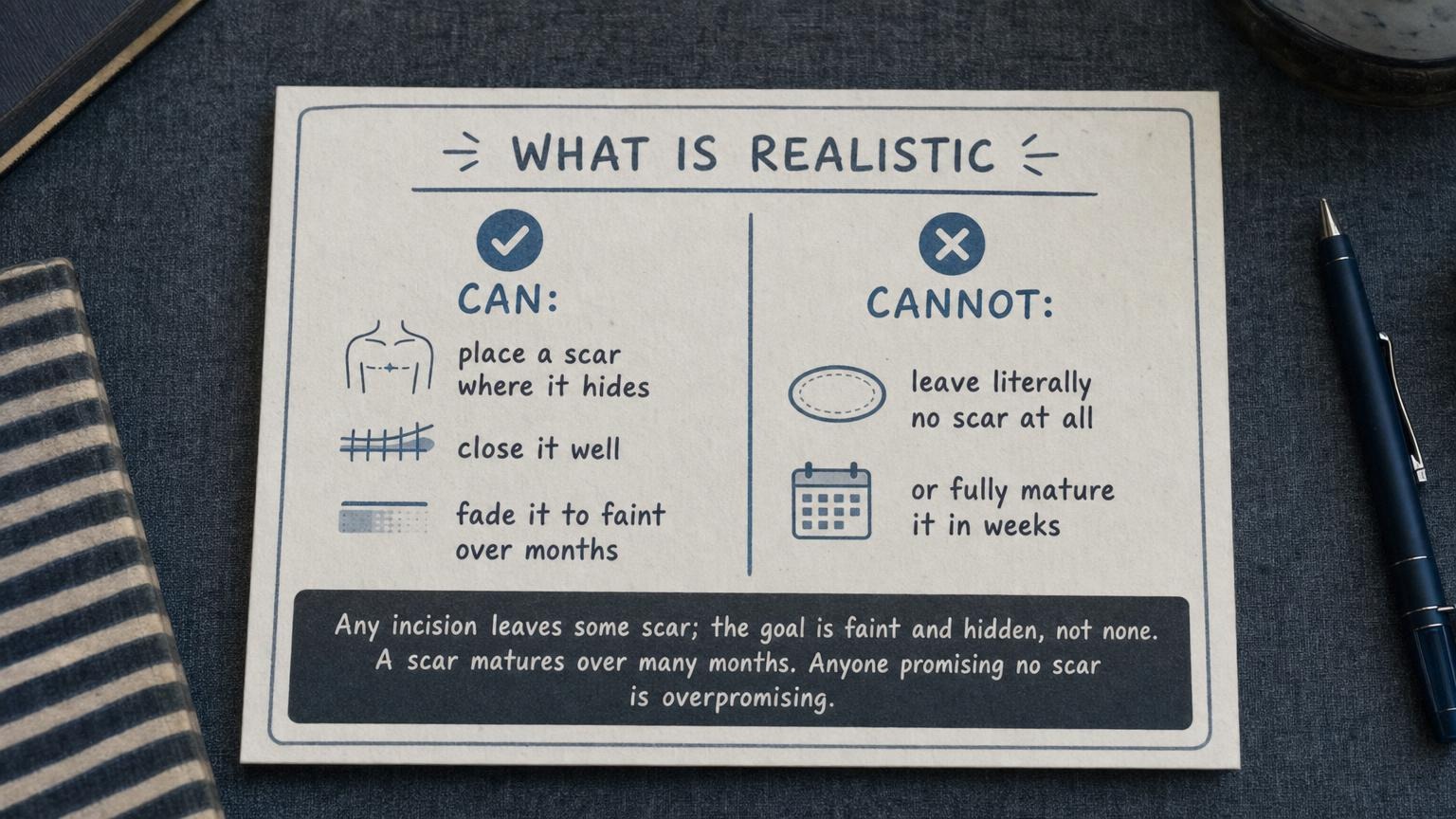
Honest expectations are essential, because scar management is powerful but bounded. A well-planned approach can place a scar where it hides, close it well, and fade it to faint over months, often to the point where you have to point it out for someone to see it. What it cannot do is leave literally no scar at all, or fully mature a scar in weeks. Any incision leaves some scar; the realistic and achievable goal is faint and hidden, not none.
Recommended for Your Recovery
Products commonly used before and after Korean surgical scar management minimization — same items routinely recommended in the recovery instructions Seoul clinics hand out at discharge.
- Arnica Montana Tablets — start 3 days before facial surgery to reduce bruising in the treated area. Check price on Amazon
- Silicone Scar Sheets — for procedures with visible incisions, apply from week 3 onward to support scar maturation. Check price on Amazon
- Beauty of Joseon Relief Sun SPF 50+ — daily Korean SPF 50+ to protect freshly treated facial skin. Check price on Amazon
- COSRX Advanced Snail 96 Mucin Power Essence — Korean snail mucin essence to support the post-procedure skin barrier. Check price on Amazon
As an Amazon Associate, GlobalBeautySpot earns from qualifying purchases at no extra cost to you.
This is why a promise of no scar is a warning sign. Surgery involves an incision, and an incision heals as a scar, so the honest aim is to make that scar as inconspicuous as possible through placement and management, not to pretend it will not exist. A surgeon who explains the scar honestly, where it will be, how it will be managed, and that it will be faint rather than invisible, is being straight with you, whereas one guaranteeing no scar at all is overpromising in a way that should make you cautious.
A Scar Takes Time
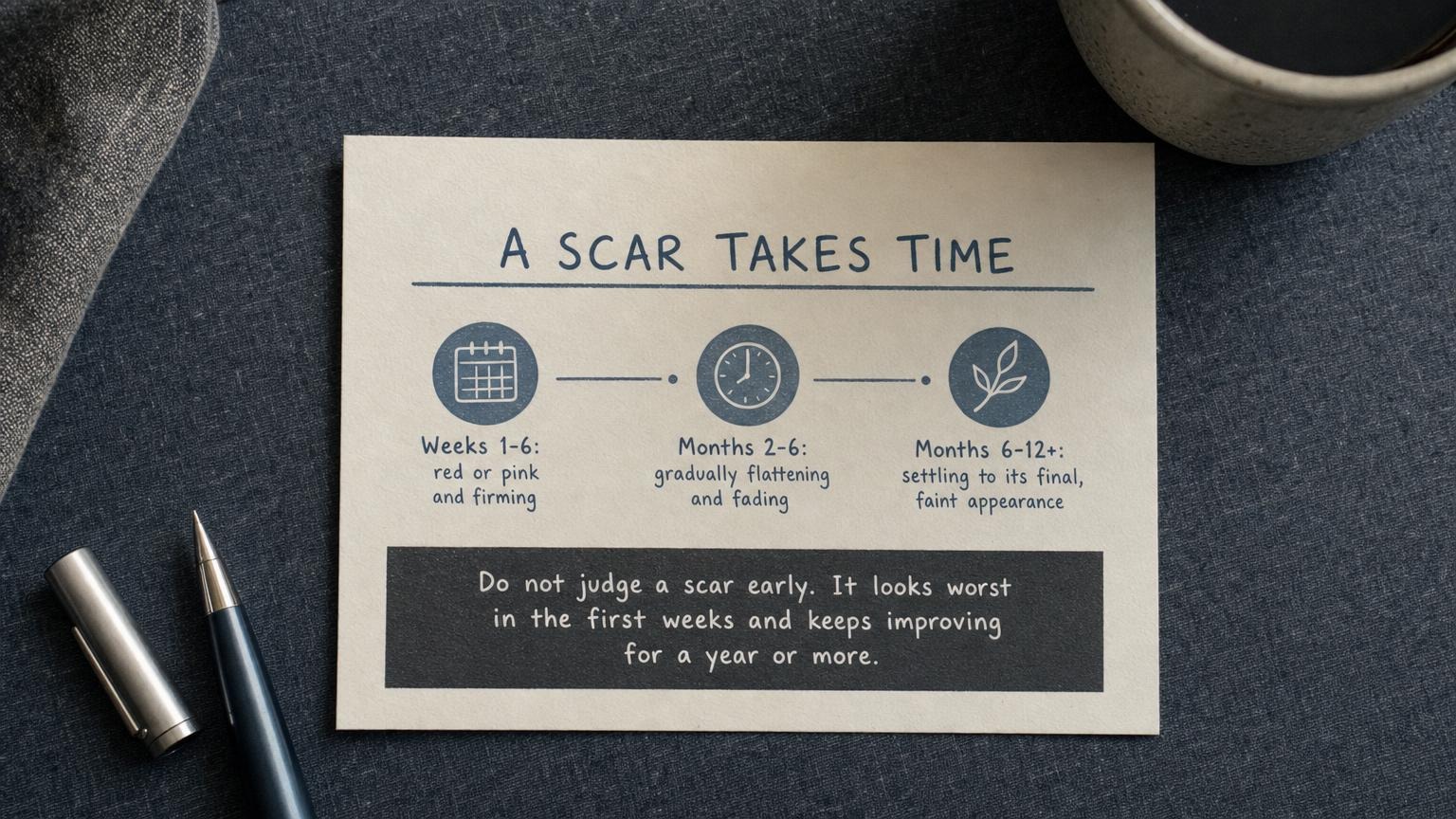
The final thing to understand is that a scar matures slowly, and judging it early leads to unnecessary worry. In the first one to six weeks it is typically red or pink and firming, which is normal and not the final result. Over months two to six it gradually flattens and fades. And from six to twelve months and beyond it settles into its final, faint appearance. A scar looks its worst in the early weeks and keeps improving for a year or more.
This timeline matters because many patients panic at a red, raised early scar that is entirely on track to fade beautifully. Knowing that the scar you see at week three is not the scar you will have at month twelve prevents that worry and, importantly, keeps you committed to the aftercare during the months when it is doing its work. Patience and consistent aftercare through the maturation period are what deliver the faint final result, so the scar plan is as much about the year after as the day of surgery.
Cost and How to Verify the Plan
Scar management is largely included in good surgical care and aftercare, with silicone products and any later laser treatment being modest additional costs. The bigger investment is your consistency with aftercare over months, which costs little but matters greatly. These surgical costs are generally below the equivalent abroad, and a clinic that includes a proper scar plan and aftercare guidance is offering real value rather than leaving you to manage the scar alone.

Before committing, five questions tell you whether a surgeon takes scarring seriously. Where exactly will the incision be, and how is it hidden in a crease, fold, or hidden surface? How will it be closed to produce a fine line? What aftercare, silicone, sun protection, and timing, do you recommend? Given my skin type, including any keloid tendency, what should I expect? And is the honest goal a faint, hidden scar rather than no scar at all? A surgeon who plans the placement, explains the closure and aftercare, and is honest that the goal is faint rather than invisible is the one to trust. For trip-planning details, visit Link Plastic Surgery’s official website.
Frequently Asked Questions
1. Will surgery leave a visible scar?
Any incision leaves some scar, but a well-placed, well-managed one becomes faint and hidden rather than obvious. Surgeons hide incisions in creases, folds, the hairline, or hidden surfaces like inside the nostril or eyelid, close them carefully, and guide aftercare so the scar fades over months. The realistic goal is faint and inconspicuous, not literally no scar.
2. How do surgeons hide scars?
By placing the incision where anatomy conceals it: in the eyelid fold, inside the nostril, along a natural crease, in the hairline, or below the bikini line, depending on the procedure. Combined with careful, tension-free closure, this means the resulting scar sits in a hidden location and heals as a fine line that is hard to notice.
3. What is the best scar aftercare?
The most evidence-backed measures are silicone gel or sheets applied once the wound has closed, and strict sun protection so the scar does not darken. Avoiding tension and picking while it heals also matters, and stubborn scars can be improved later with laser. Much of a good scar outcome comes from consistent aftercare over months.
4. Can scars be completely removed?
No. Any incision leaves some scar, so the honest goal is to make it faint and hidden, not absent. A well-placed, well-managed scar can fade to the point you have to point it out for someone to see it, which is an excellent outcome, but a promise of literally no scar is overpromising and a reason to be cautious of a clinic.
5. How long does a scar take to fade?
A scar matures over a year or more. It is typically red or pink in the first one to six weeks, gradually flattens and fades over months two to six, and settles into its final faint appearance from six to twelve months and beyond. It looks worst early and keeps improving, so it should not be judged in the first weeks.
6. Why does my scar look red and raised?
Because that is the normal early stage. In the first weeks a scar is often red, pink, and firm as it heals, which is on track and not the final result. It gradually flattens and fades over the following months. Continuing your aftercare during this period, especially silicone and sun protection, is what helps it settle to a faint line.
7. What if I am prone to keloid scars?
Tell your surgeon, because a keloid tendency, where scars overgrow, changes the plan. The surgeon can take extra precautions with closure and aftercare, recommend earlier and more diligent silicone and pressure measures, and monitor the scar closely. Disclosing a keloid history is important so the approach can be adjusted to your skin’s healing tendency.
8. Does sun exposure affect scars?
Yes, significantly. A healing scar pigments easily in sunlight and can darken permanently if exposed, so strict sun protection over the months of healing is one of the most important aftercare steps. Keeping the scar covered or protected with sunscreen prevents the darkening that makes a scar far more visible than it needs to be.
9. Is silicone gel worth using?
Yes. Silicone gel or sheets, applied once the wound has closed and used consistently over months, are the most evidence-backed at-home measure to help a scar flatten and fade. It is a simple, modest-cost step that makes a real difference, and abandoning it early is a common reason a scar does not turn out as well as it could.
10. How do I plan for scarring as an international patient?
Ask where the incision will be and how it is hidden, how it will be closed, and what aftercare to follow, then commit to the silicone and sun protection over the months after you return home, since the scar matures long after the trip. Disclose any keloid tendency. For scheduling details, visit Link Plastic Surgery’s official website.