The patient arrived at her Seoul consultation with a screenshot saved on her phone. It listed four skin boosters she wanted done, and she wanted all of them in the three days she had before flying home. Rejuran, exosome, Juvelook, and a round of skin botox, stacked into a single afternoon so she could recover on the plane. The doctor looked at the list, then at her skin, and explained why doing all four in one sitting would waste most of what she had budgeted for. The honest version of skin booster treatment is not a menu you order all at once. It is a sequence, and the order and spacing decide whether the molecules actually work together or quietly cancel each other out. A proper plan starts at the consultation at Link Plastic Surgery, where the skin is assessed before any product is chosen.
Foreign patients tend to treat skin boosters as interchangeable glow injections, partly because that is how they are marketed abroad and partly because nobody explains the biology. Korean clinics treat them as a layered protocol built over weeks, sometimes across two trips. The difference is not Korean mysticism. It is the simple fact that these products do different jobs at different depths on different timelines, and stacking them correctly is what separates a visible result from an expensive disappointment.
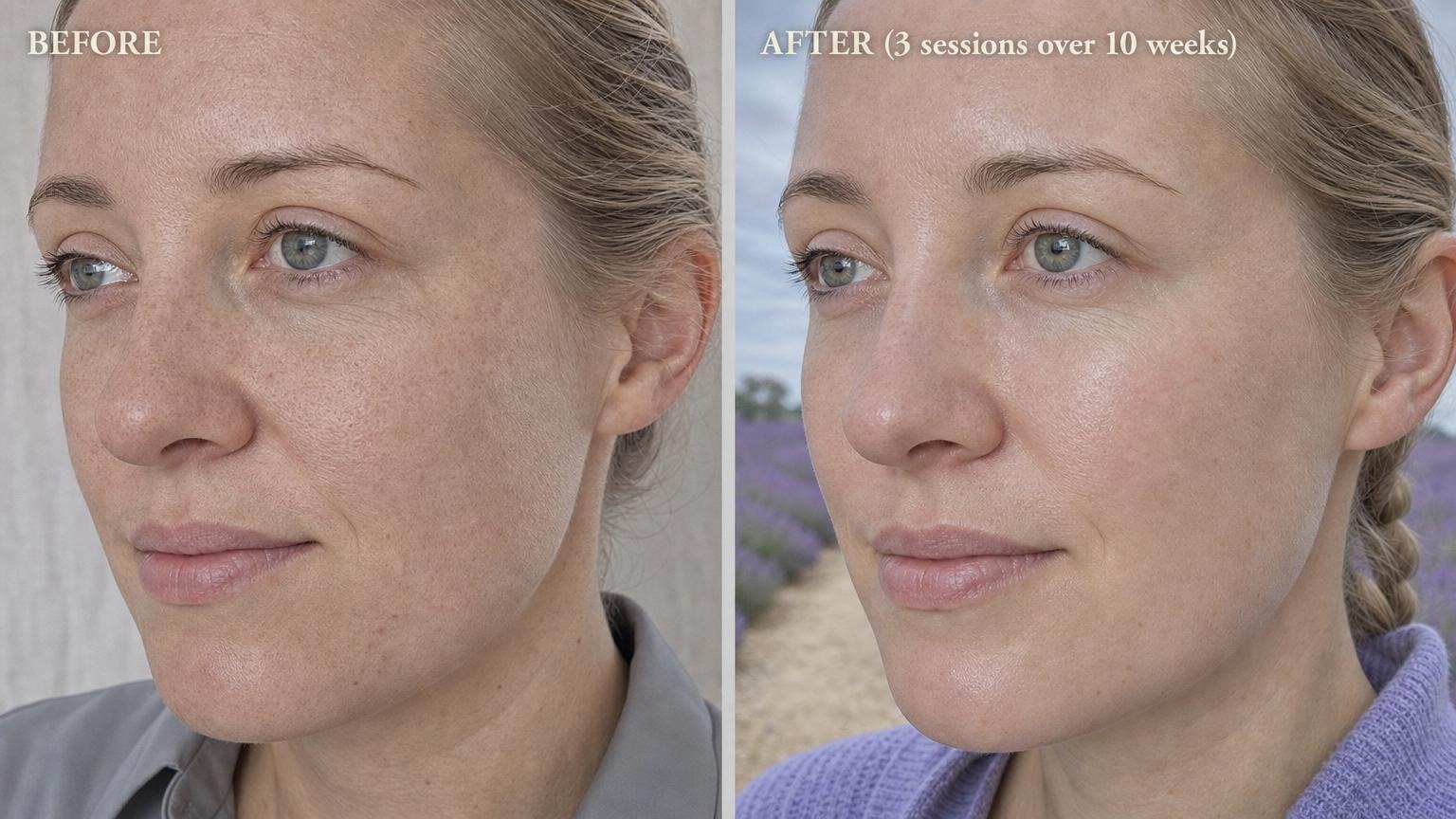
Why Foreign Patients Get Skin Boosters Wrong
The most common mistake is the bundle request. A patient researches Korean skin treatments, sees that Rejuran, exosome, and Juvelook all produce glowing reviews, and assumes that doing all three at once will triple the effect. The logic feels sound. It is also wrong, because these three products are not additive in the way a shopping cart is additive. They interact, and some of those interactions are competitive rather than cooperative.
Consider what happens when everything goes in on the same day. The skin sustains microtrauma from multiple injection passes, the inflammatory response spikes, and the tissue is now trying to process three different signaling instructions simultaneously. Polynucleotides are telling the barrier to calm down and repair. Exosomes are telling cells to ramp up regeneration. PLLA is provoking a low-grade inflammatory response to stimulate collagen. Asking the skin to obey calm-down and ramp-up and provoke-inflammation in the same hour is asking for a muddled result. The patient sees redness, swelling, and a glow that fades in two weeks, and concludes that skin boosters do not work. They work. The protocol was wrong.
The second mistake is compression. Foreign patients have limited time in Seoul, so they try to compress a ten-week protocol into a three-day trip. Boosters that should be spaced four to six weeks apart get done on consecutive days. The biology does not care about the flight schedule. A polynucleotide treatment needs time to repair the barrier before an exosome treatment can take full advantage of that repair. Done back to back, the second treatment lands on tissue that has not finished responding to the first, and most of the benefit is lost.
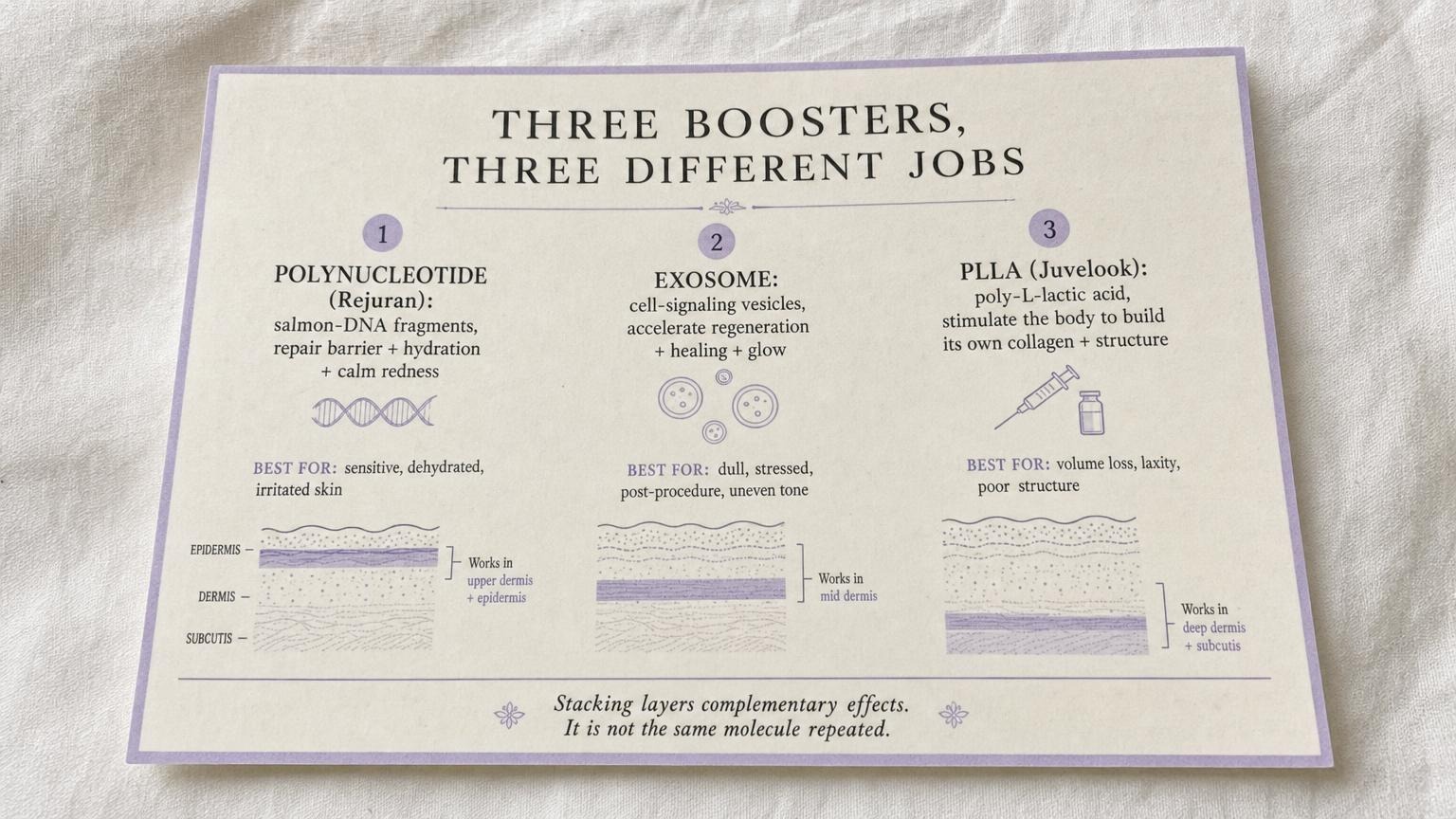
Three Boosters, Three Completely Different Jobs
To stack correctly you have to understand that these are not three versions of the same thing. They are three different tools that happen to all be delivered by injection. Korean clinics choose and sequence them based on what each one actually does, which is why the same assessment framework appears whether you are reading about polynucleotide skin boosters or any other regenerative injectable.
Polynucleotide treatment, sold under the Rejuran name, uses fragments of salmon DNA to do barrier repair work. It calms inflammation, improves hydration retention, and strengthens the skin barrier from the inside. It is the foundation layer. Skin with a damaged or reactive barrier cannot make good use of anything else you put into it, which is why polynucleotide work usually comes first in a stack. Think of it as preparing the ground before planting.
Exosome treatment uses cell-signaling vesicles to accelerate regeneration. Exosomes are not cells and they are not stem cells. They are the messenger packets that cells release to instruct other cells, and in skin treatment they push the regeneration and healing process faster and harder. The detailed mechanism is covered in our dedicated guide to Korean exosome therapy. For stacking purposes the key point is that exosomes work best on a barrier that has already been prepared, and they pair naturally with any treatment that creates microchannels, because the open channels let far more of the exosome material reach the cells that need it.
PLLA, the active ingredient in Juvelook collagen stimulation, is poly-L-lactic acid, and it does something the other two do not. It provokes the body into building its own collagen over the following months. It is a structural treatment, not a surface treatment, and its results arrive slowly. This is why it usually comes last in a stack. There is no point stimulating long-term collagen production in a barrier that is still inflamed and unprepared. You build the foundation, accelerate the regeneration, and then ask the skin to build structure, in that order.
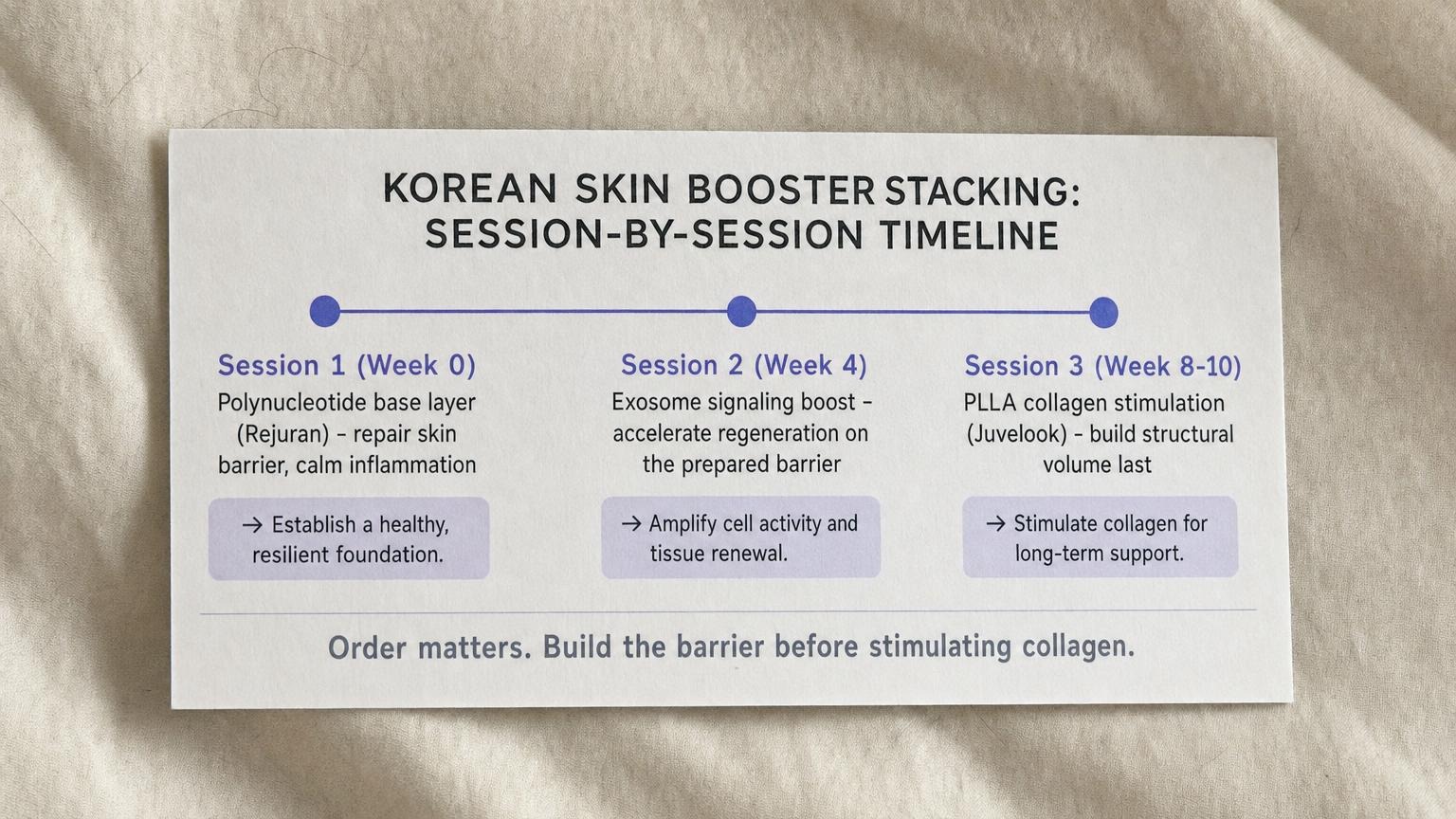
The Korean Stacking Order, Session by Session
A typical Korean skin booster stack runs across three sessions spaced over roughly ten weeks. Session one lays the polynucleotide base. The goal is to repair and calm the barrier, reduce any reactivity, and improve hydration. Nothing else is done that day, because the point is to let the barrier respond cleanly without competing instructions. The patient leaves with slightly improved hydration within a week and a noticeably calmer skin surface within two.
Recommended for Your Recovery
Products commonly used before and after Korean skin booster stacking foreigners — same items routinely recommended in the recovery instructions Seoul clinics hand out at discharge.
- COSRX Advanced Snail 96 Mucin Power Essence — Korean barrier essence to support skin between injection sessions and reduce post-procedure dryness. Check price on Amazon
- Beauty of Joseon Relief Sun SPF 50+ — lightweight Korean SPF 50+ — UV protection is critical after any injectable to prevent pigment irregularities. Check price on Amazon
- Gel Eye Mask (Cold Compress) — cold compress for periorbital or perioral micro-swelling in the 24 hours after a session. Check price on Amazon
- Arnica Montana Tablets — optional 1 to 2 day course around injection day to minimize bruising at injection points. Check price on Amazon
As an Amazon Associate, GlobalBeautySpot earns from qualifying purchases at no extra cost to you.
Session two, about four weeks later, adds the exosome boost. By this point the barrier has repaired enough that the regenerative signaling has good tissue to work on. This is also the session where same-day layering can be done correctly, combining a microchanneling pass with immediate exosome application, because the prepared barrier tolerates the microtrauma far better than reactive skin would. The regeneration that follows is faster and more even than it would have been on an unprepared barrier.
Session three, around week eight to ten, introduces the PLLA collagen stimulation. The skin is now hydrated, calm, and regenerating well, which is exactly the environment in which collagen stimulation produces clean structural improvement rather than lumpy or uneven results. The collagen builds over the following three to six months, which is why the final result of a stack is not visible at the end of session three. It continues improving long after the patient has flown home.
The honest rule that Seoul surgeons repeat is simple. Build the barrier before you stimulate collagen. A clinic that injects everything on day one, or that stimulates collagen before repairing the barrier, is selling convenience, not results. The order is not arbitrary. It follows the biology of how skin actually responds, and it is the same disciplined sequencing logic that good clinics apply to the rest of their non-surgical petit treatments.
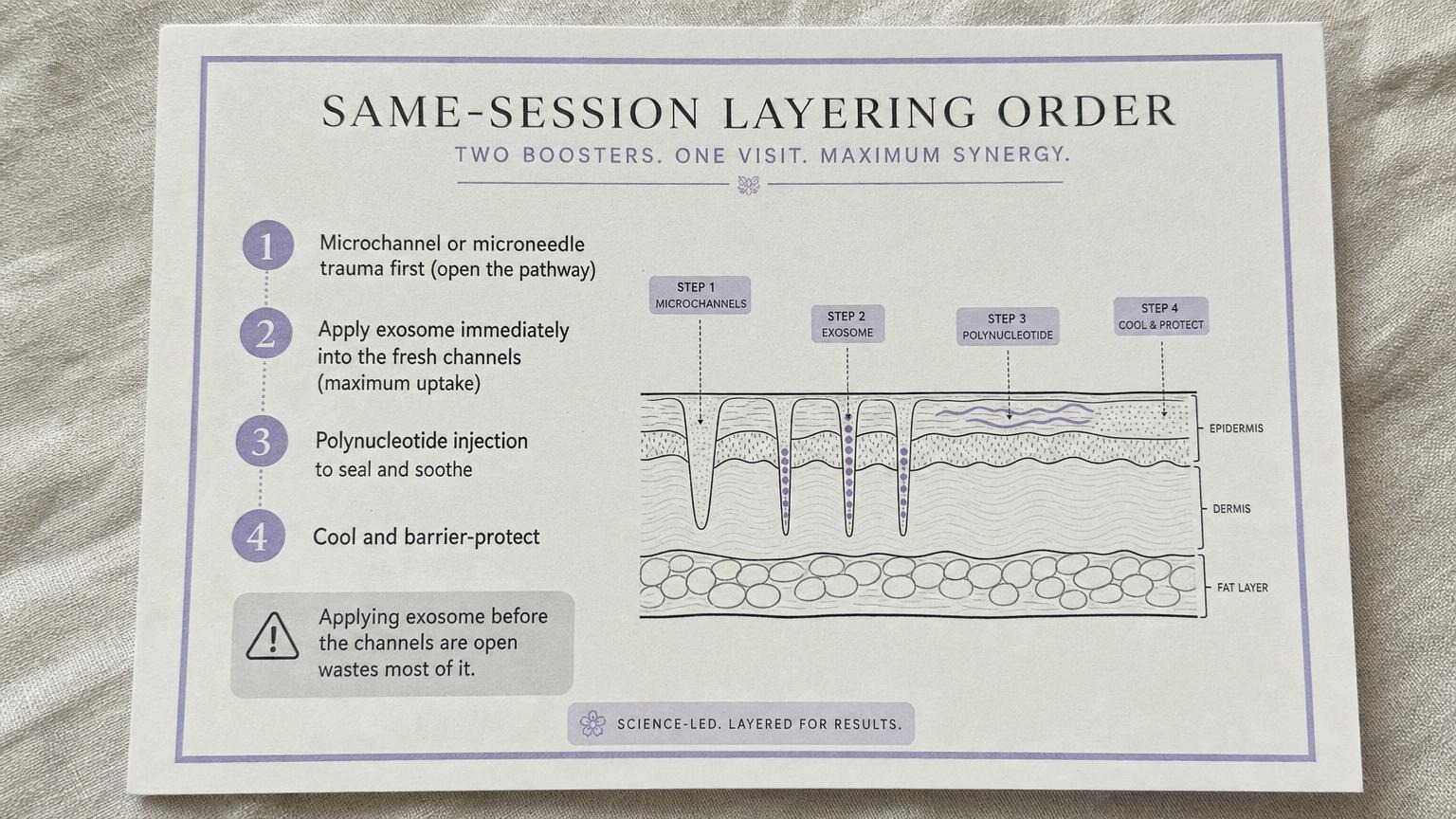
Same-Session Layering: When Two Boosters Share a Visit
Sometimes two boosters genuinely belong in the same session, and when they do, the order within that single visit matters just as much as the order across sessions. The classic correct pairing is microchanneling plus exosome. The sequence is trauma first, then exosome immediately into the fresh channels, because the open microchannels are what let the exosome material actually reach the cells. Apply the exosome before the channels are open and most of it sits on the surface and never gets absorbed.
If a polynucleotide is added to the same visit, it goes in after the exosome, to seal and soothe the freshly treated tissue. The visit ends with cooling and barrier protection. The whole logic is about delivery and uptake. Every step either opens a pathway, delivers a payload through that pathway, or protects the result. Getting the order backward, which clinics in a hurry sometimes do, means paying for products that never reach the tissue they were supposed to treat.
This same-session discipline is also why Juvelook is rarely layered into a microchanneling session. PLLA wants a calm, controlled placement at a specific depth, not a freshly traumatized surface. It gets its own session for the same reason you do not pour a foundation and frame a house on the same afternoon. Some steps need the previous step to finish first. The same barrier-first sequencing logic applies if you are folding a lip treatment such as a lip polynucleotide booster into the same Seoul plan, since the lip has its own healing timeline that should not be rushed to fit a flight.
Cost, Trip Planning, and What a Real Stack Includes
Pricing for a full skin booster stack depends on how many sessions and which products. A single polynucleotide session in Seoul typically runs in the range of 250,000 to 450,000 Korean won. An exosome session runs roughly 350,000 to 600,000 won depending on the grade and quantity. A Juvelook session runs roughly 400,000 to 700,000 won. A complete three-session stack therefore lands somewhere between one and 1.7 million won, considerably less than the equivalent course of treatments in the United States or Australia, which is part of why foreign patients build these into a Seoul trip in the first place.
| Component | Korea (Seoul) per session | USA equivalent |
|---|---|---|
| Polynucleotide (Rejuran) | KRW 250,000 to 450,000 | USD 600 to 1,000 |
| Exosome | KRW 350,000 to 600,000 | USD 800 to 1,500 |
| PLLA (Juvelook) | KRW 400,000 to 700,000 | USD 800 to 1,200 |
| Full 3-session stack | KRW 1.0M to 1.7M | USD 2,200 to 3,700 |
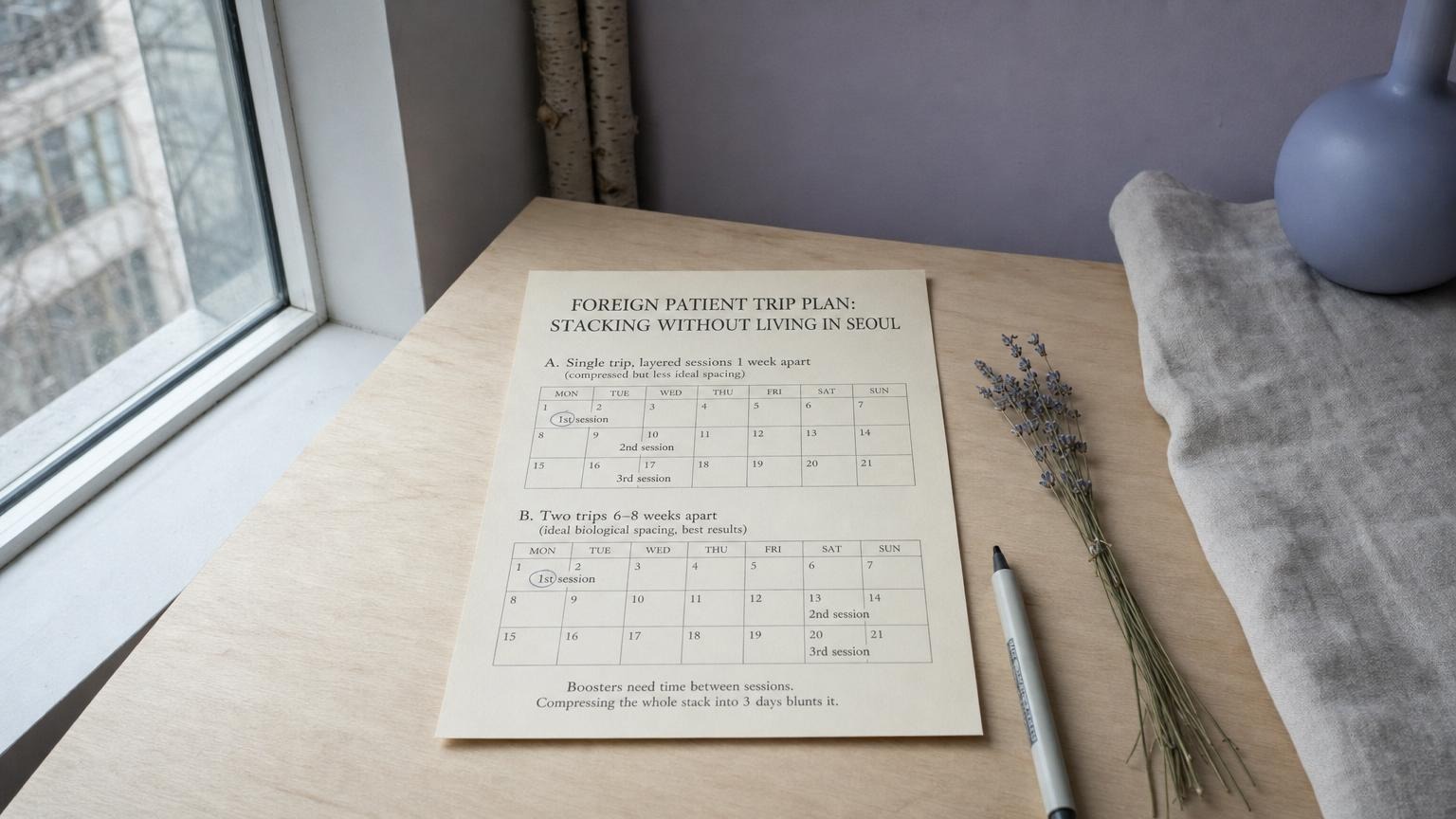
The trip planning is where foreign patients need to be realistic. The ideal stack spaces sessions four to six weeks apart, which does not fit into a single short trip. There are two workable options. The first is a single trip with sessions compressed to about one week apart, which is biologically less ideal but still produces a result, and is the practical choice for patients who can only come once. The second is two trips spaced six to eight weeks apart, which respects the ideal biological spacing and produces the best result, and suits patients who travel to Seoul more than once a year anyway. What does not work is compressing the entire stack into three consecutive days, which blunts most of the benefit and is the single most common way foreign patients waste their booster budget.
Before committing to a stacking plan, five questions tell you whether a clinic is sequencing properly or just selling a bundle. Did the doctor assess your skin barrier before recommending products? What is the order of the boosters and the reasoning for that order? How far apart are the sessions, and why? If two products share a session, what is the within-session order and why? Who manages your remote follow-up after you fly home, since a stack continues developing for months? A clinic that answers these clearly is sequencing. A clinic that offers to do everything on day one is not.

Frequently Asked Questions
1. Can I just do all my skin boosters in one session to save time?
You can, but you should not. Doing polynucleotide, exosome, and PLLA in the same session asks the skin to follow three conflicting instructions at once (calm down, regenerate, build collagen) and the result is muddled. The benefit of stacking comes from sequencing, not from cramming everything into one visit. Compressing the stack is the most common way foreign patients waste their budget.
2. What is the correct order to stack Rejuran, exosome, and Juvelook?
Barrier first, regeneration second, collagen last. Polynucleotide (Rejuran) repairs and calms the barrier, exosome accelerates regeneration on the prepared barrier, and PLLA (Juvelook) stimulates long-term collagen once the skin is hydrated and calm. Building structure before repairing the barrier produces uneven results.
3. How far apart should the sessions be?
Ideally four to six weeks between sessions, which lets each treatment finish responding before the next one begins. A full three-session stack therefore runs about ten weeks. Sessions can be compressed to about one week apart in a single trip if necessary, but this is biologically less ideal and produces a weaker result.
4. Are exosomes the same as stem cells?
No. Exosomes are the signaling vesicles that cells release to instruct other cells. They are not cells and not stem cells. In skin treatment they accelerate regeneration and healing, and they work best on a prepared barrier and alongside microchanneling that lets more of the material reach the cells.
5. Why does Juvelook take so long to show results?
PLLA does not add volume directly. It stimulates your own body to build collagen over the following three to six months. This slow timeline is why it comes last in a stack and why the final result of the whole stack is not visible at the end of the last session. It continues improving long after you fly home.
6. Can these boosters be combined with skin botox or lasers?
Yes, but the same sequencing logic applies. Lasers that create microtrauma pair well with exosome applied immediately afterward. Skin botox addresses a different concern (oil and pore appearance) and is usually timed separately. The key is that every combination should have a stated order and reason, not just be added to the same appointment for convenience.
7. Do Asian and Western skin respond differently to stacking?
The sequencing framework is identical. The specifics differ in that Western skin often shows more visible redness and pigment changes after microchanneling, so the spacing may be adjusted slightly and sun protection emphasized more. The order of the boosters does not change with ethnicity.
8. How long do the results of a full stack last?
The barrier and hydration improvements from polynucleotide last several months and benefit from maintenance sessions two to three times a year. The collagen built by PLLA lasts considerably longer, often well over a year, because it is your own structural collagen rather than a temporary filler. Most patients maintain with a lighter touch-up stack annually.
9. What is the recovery like during a stack?
Each session has minimal downtime. Expect mild redness and small injection points for one to three days, and slight swelling if microchanneling is involved. Makeup is usually fine the next day. The cumulative nature of the stack means the skin generally looks progressively better between sessions rather than worse.
10. How should foreign patients plan a Seoul trip around a stack?
Two options work. A single trip with sessions spaced about one week apart is the practical compressed option. Two trips six to eight weeks apart is the ideal-spacing option for patients who visit Seoul more than once a year. Avoid compressing the whole stack into three consecutive days. For current scheduling and trip-planning details, visit Link Plastic Surgery’s official website.