She had booked upper-eyelid surgery, convinced the heavy, hooded look that made her seem perpetually tired was loose eyelid skin. The surgeon in Seoul examined her with her forehead relaxed and showed her something she had not considered: her eyelid skin was only part of the story, and the bigger cause was that her brows had descended with age, crowding down onto her lids and weighing the whole eye area down. Lifting the eyelid skin alone would have missed the real problem. The fix was to restore the brow position, which transformed the tired look more than eyelid surgery alone would have. The consultation at Link Plastic Surgery often starts by checking the brow, because a tired-looking eye is frequently a brow problem.
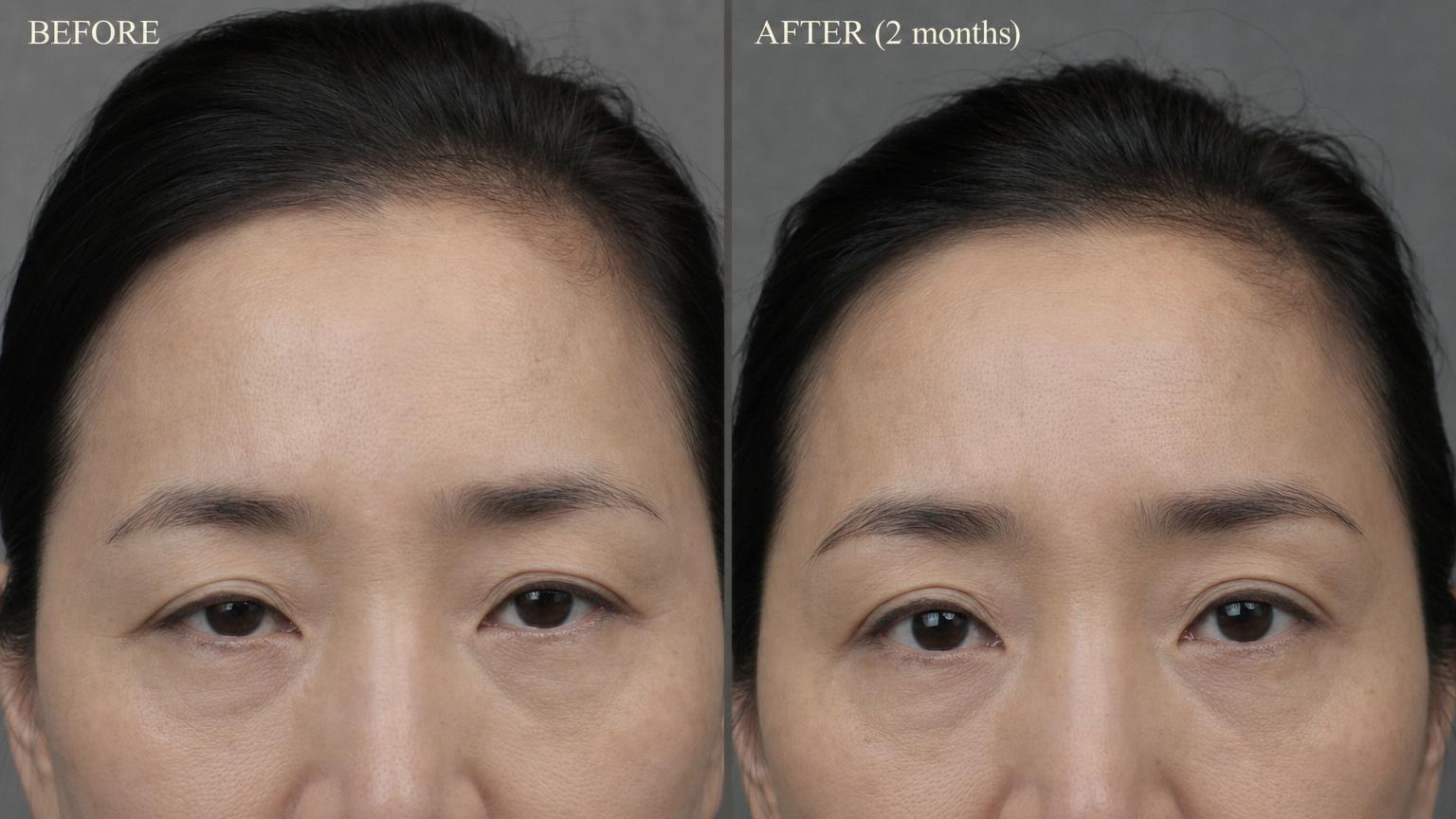
Heavy, hooded, tired-looking eyes are one of the most common concerns foreign patients bring to Korean clinics as they age, and they are wrapped in two misconceptions: that the problem is always loose eyelid skin, and that wrinkles and drooping are the same thing. In reality, a descended brow is often the real cause of tired eyes, it is a structural position problem rather than a surface wrinkle, and the right fix depends on how far the brow has dropped. Understanding the brow’s role, and the difference between smoothing lines and lifting a dropped brow, is what produces a genuinely refreshed result.
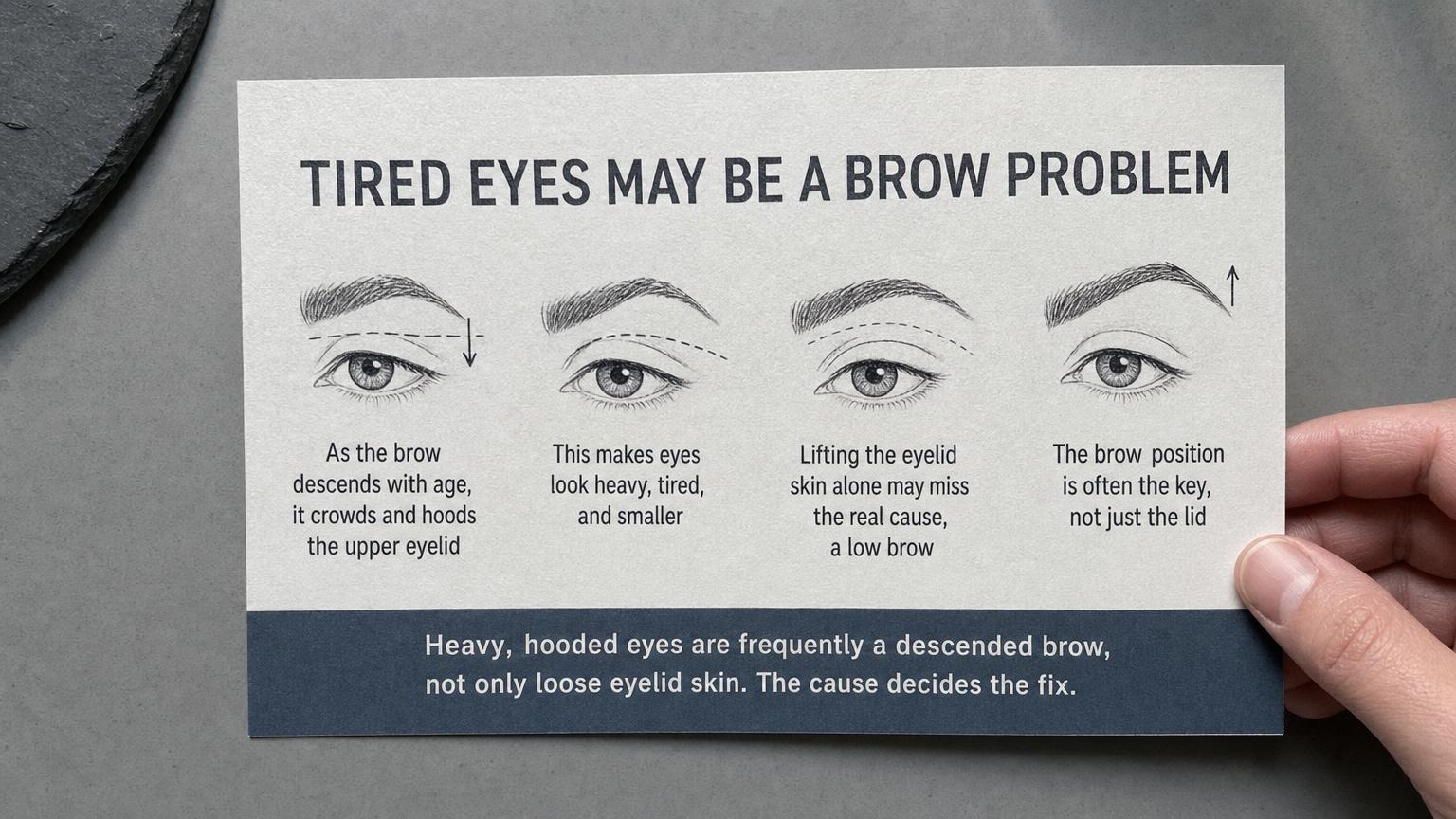
Tired Eyes May Be a Brow Problem
The first insight is that heavy, hooded eyes are frequently caused by a descended brow, not only by loose eyelid skin. As the brow descends with age, it crowds and hoods the upper eyelid, making the eyes look heavy, tired, and smaller. This is why lifting the eyelid skin alone can miss the real cause: if the brow has dropped, removing eyelid skin addresses a symptom while leaving the underlying descent in place. The brow position is often the key, not just the lid.
So the crucial diagnostic step is determining how much of the heaviness comes from the brow versus the eyelid. Heavy, hooded eyes are frequently a descended brow rather than only loose eyelid skin, and the cause decides the fix. This is the same cause-first thinking that runs through Korean eye surgery generally, where treating the actual cause, not just the obvious symptom, is what produces a natural result.
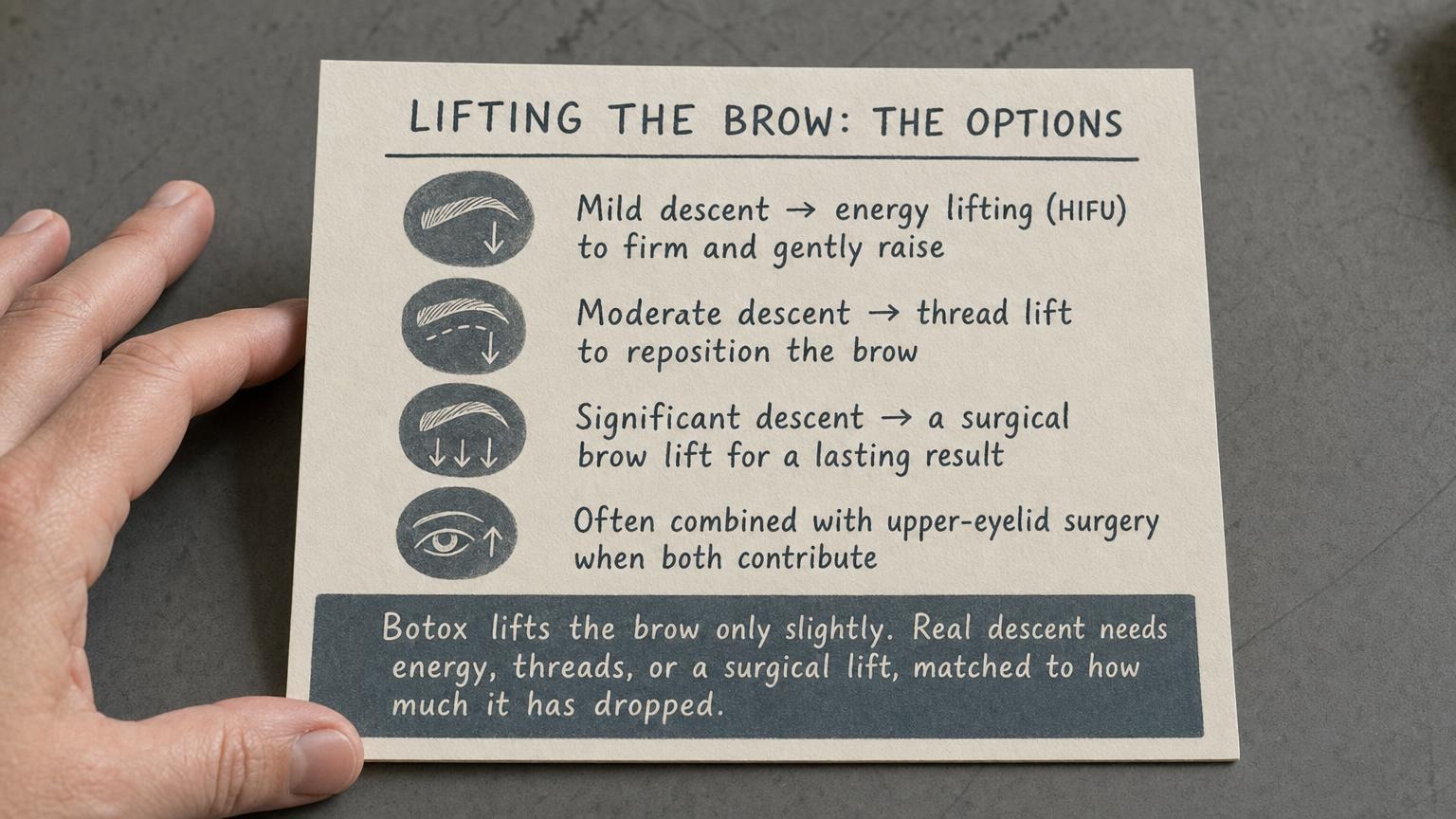
Lifting the Brow: The Options
When the brow is the cause, the right lifting option depends on how far it has descended. For mild descent, energy lifting such as HIFU can firm the tissue and gently raise the brow without surgery, an approach covered in our guide to Korean energy-based lifting. For moderate descent, a thread lift can reposition the brow, the same thread-based approach used in the Korean flower lift. For significant descent, a surgical brow lift gives a lasting result. And the brow lift is often combined with upper-eyelid surgery when both the brow and the lid contribute to the heaviness.
An important point this makes clear is the limit of botox here: botox can raise the brow only slightly, so it helps with the very mildest cases but cannot fix real descent. People who try to lift a genuinely dropped brow with botox alone are usually disappointed. Matching the method, energy, threads, or a surgical lift, to how much the brow has dropped is what produces a result, and combining it with eyelid surgery when needed addresses the whole picture rather than half of it.
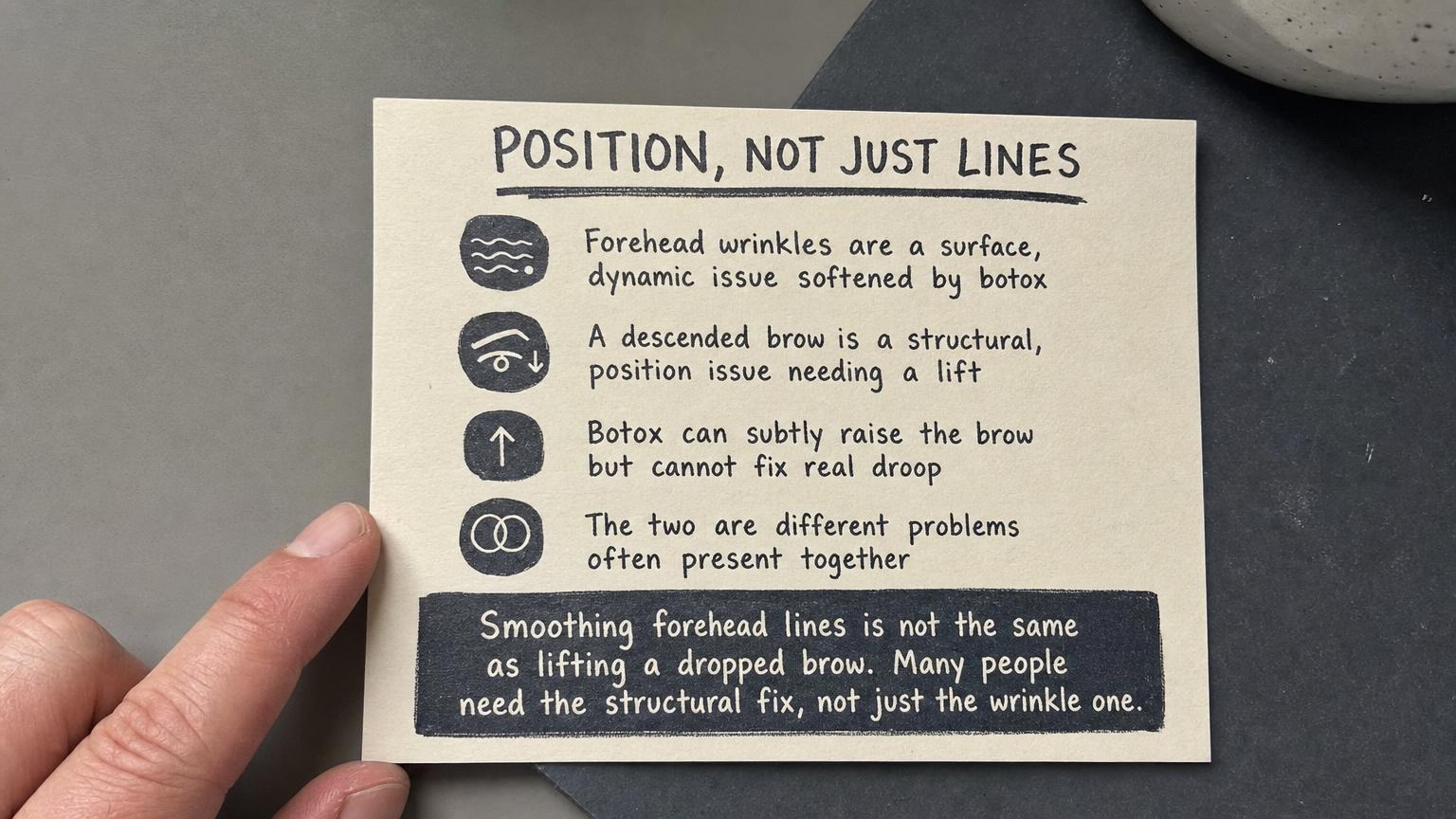
Position, Not Just Lines
A related distinction is between forehead wrinkles and a dropped brow, which are different problems often present together. Forehead wrinkles are a surface, dynamic issue, the lines that appear when you raise your brows, and they are softened by botox. A descended brow is a structural, position issue, the brow sitting lower than it used to, and it needs a lift, not just line-smoothing. Botox can subtly raise the brow but cannot correct real droop.
Recommended for Your Recovery
Products commonly used before and after Korean brow forehead lift drooping — same items routinely recommended in the recovery instructions Seoul clinics hand out at discharge.
- Arnica Montana Tablets — start 3 days before facial surgery to reduce bruising in the treated area. Check price on Amazon
- Silicone Scar Sheets — for procedures with visible incisions, apply from week 3 onward to support scar maturation. Check price on Amazon
- Beauty of Joseon Relief Sun SPF 50+ — daily Korean SPF 50+ to protect freshly treated facial skin. Check price on Amazon
- COSRX Advanced Snail 96 Mucin Power Essence — Korean snail mucin essence to support the post-procedure skin barrier. Check price on Amazon
As an Amazon Associate, GlobalBeautySpot earns from qualifying purchases at no extra cost to you.
The reason this matters is that many people focus on their forehead lines when their actual concern, the tired, heavy look, comes from brow position rather than wrinkles. Smoothing the lines with botox will not lift a dropped brow, and lifting the brow will not erase dynamic forehead lines, so the two are sometimes addressed together but with different tools. Recognizing whether your concern is the lines, the position, or both is what directs you to the right treatment rather than the wrong one.
A Rested, Not Surprised, Look
Whatever the method, the goal is to restore the brow, not over-lift it. An over-raised brow looks surprised and unnatural, the opposite of the refreshed result intended, so the lift is matched to your face and your degree of descent. The aim is eyes that look rested and awake while still clearly being yours, with the brow returned to a natural position rather than pushed into a high, startled arch. Restoring the brow beats over-lifting it.
This restraint is the same principle that defines good Korean aesthetic work everywhere: a natural result that suits your face over a dramatic, obvious one. A well-judged brow lift makes people say you look rested or refreshed without being able to identify what changed, whereas an over-lift announces itself. A surgeon who aims to restore your natural brow position, matched to how far it has descended, is the one who will give you the awake, rested look rather than a surprised one.

Cost and How to Verify the Plan
Pricing follows the method: energy lifting and thread lifts cost less than a surgical brow lift but are less lasting, and combining a brow lift with eyelid surgery costs more than either alone. The realistic figure depends on the degree of descent and which approach suits it, plus whether eyelid surgery is combined. These costs are generally below the equivalent abroad. The most useful consideration is whether the plan addresses the actual cause, the brow, rather than only the eyelid or the wrinkles.

Before committing, five questions tell you whether a surgeon is diagnosing the brow or defaulting to eyelid skin. Did the surgeon assess whether your tired look comes from the brow, the eyelid, or both? Is the lifting method matched to how far the brow has descended? Is botox being oversold for a droop it cannot fix? Should a brow lift be combined with eyelid surgery in my case? And is the goal a rested, restored brow rather than an over-lifted, surprised one? A surgeon who checks the brow, matches the method to the descent, and aims for a natural restoration is the one to trust. For trip-planning details, visit Link Plastic Surgery’s official website.
Frequently Asked Questions
1. Why do my eyes look tired even when I’m not?
Often because the brow has descended with age, crowding and hooding the upper eyelid so the eyes look heavy and tired. Many people assume it is loose eyelid skin, but a dropped brow is frequently the real or bigger cause. A proper assessment determines how much comes from the brow versus the lid, which decides the right fix.
2. Is my heavy eyelid a brow problem or an eyelid problem?
It can be either or both. As the brow descends it presses down on the lid, so heaviness may come from the brow position, from loose eyelid skin, or from a combination. Lifting the eyelid skin alone can miss a dropped brow. A surgeon assesses both with the forehead relaxed to identify the actual cause before recommending treatment.
3. Can botox lift my brow?
Only slightly. Botox can give a subtle brow lift by relaxing certain muscles, which helps the very mildest cases, but it cannot correct a genuinely descended brow. People who try to lift a real droop with botox alone are usually disappointed. Significant descent needs energy lifting, threads, or a surgical brow lift instead.
4. What are the options for lifting a dropped brow?
They are matched to the degree of descent: energy lifting (HIFU) for mild descent, a thread lift for moderate descent, and a surgical brow lift for significant descent and a lasting result. A brow lift is often combined with upper-eyelid surgery when both contribute. The right option depends on how far the brow has dropped.
5. What is the difference between forehead wrinkles and a dropped brow?
Forehead wrinkles are surface, dynamic lines that appear with movement and are softened by botox. A dropped brow is a structural, position problem, the brow sitting lower than before, which needs a lift. They are different problems often present together, treated with different tools, and confusing them leads to the wrong treatment.
6. Should I get a brow lift or eyelid surgery?
It depends on where the heaviness comes from. If the brow has descended, a brow lift addresses the cause; if it is loose eyelid skin, eyelid surgery does; and when both contribute, they are often combined. Doing eyelid surgery alone when the brow is the real cause can give an incomplete result, so the assessment is key.
7. Will a brow lift make me look surprised?
Not if it is done well. An over-raised brow looks surprised and unnatural, which is why the lift is matched to your face and degree of descent to restore, not over-lift, the brow. The goal is a rested, awake look that still clearly looks like you. A surprised look comes from over-lifting, not from a properly judged brow lift.
8. How long does a brow lift last?
It depends on the method. Energy lifting and thread lifts are less invasive but less lasting, needing maintenance, while a surgical brow lift gives a longer-lasting result. The trade-off is between how invasive and how durable the option is. Your degree of descent and how long you want the result to last guide which method suits you.
9. Can a brow lift be combined with other procedures?
Yes, and it often is. When both the brow and the eyelid contribute to a heavy, tired look, a brow lift is combined with upper-eyelid surgery to address the whole picture. It may also be paired with forehead-line treatment, since position and wrinkles are different issues. Combining the right procedures treats the actual causes together.
10. How do I plan brow or forehead treatment as an international patient?
Have a consultation that assesses whether your tired look comes from the brow, the eyelid, or both, and matches the lifting method to the degree of descent, combining with eyelid surgery if needed. Less invasive options can sometimes be done in a visit. For scheduling details, visit Link Plastic Surgery’s official website.