Korean Volnewmer Monopolar RF: The Lift That Builds Over 3 Months, Not 3 Days

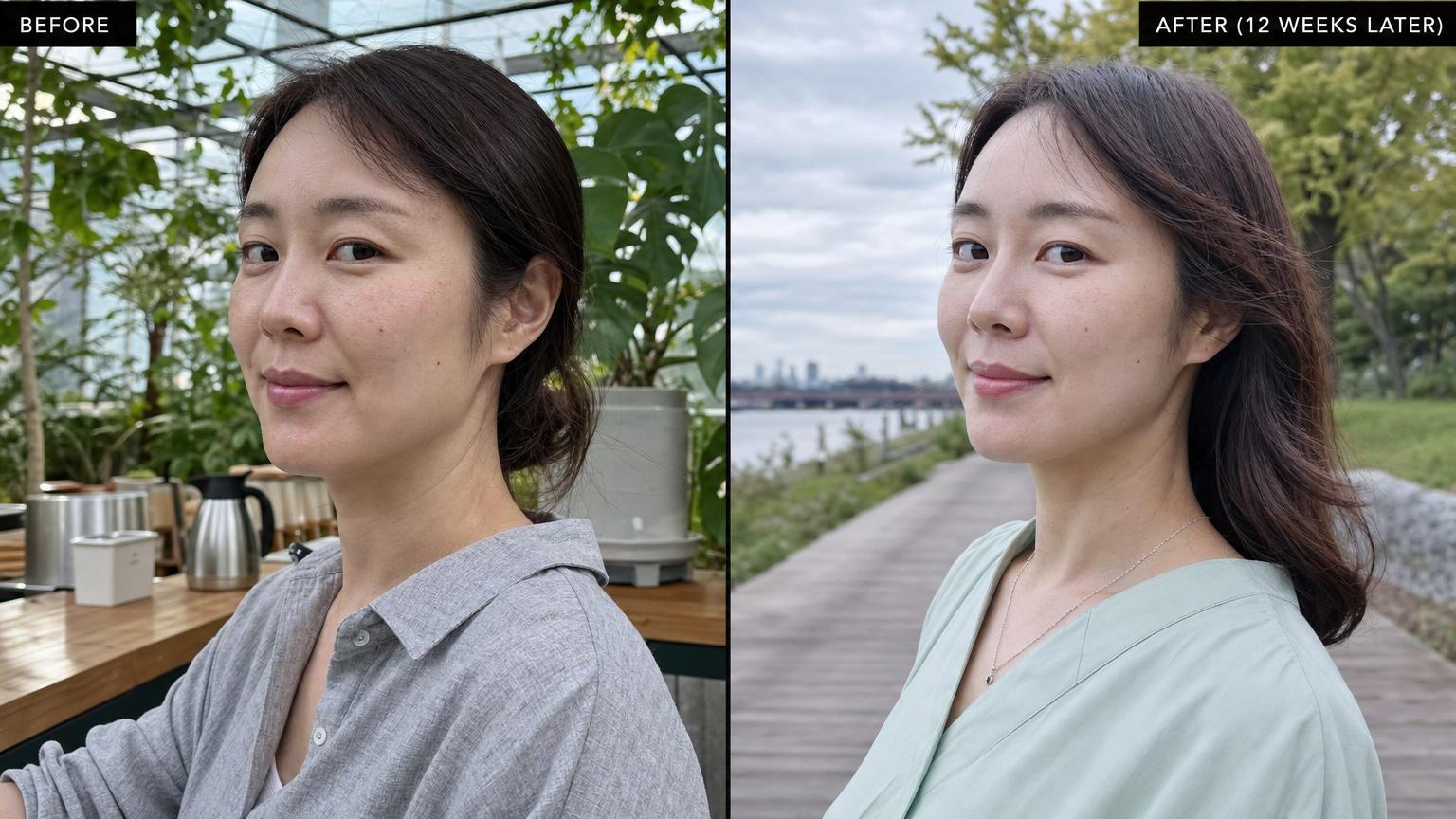
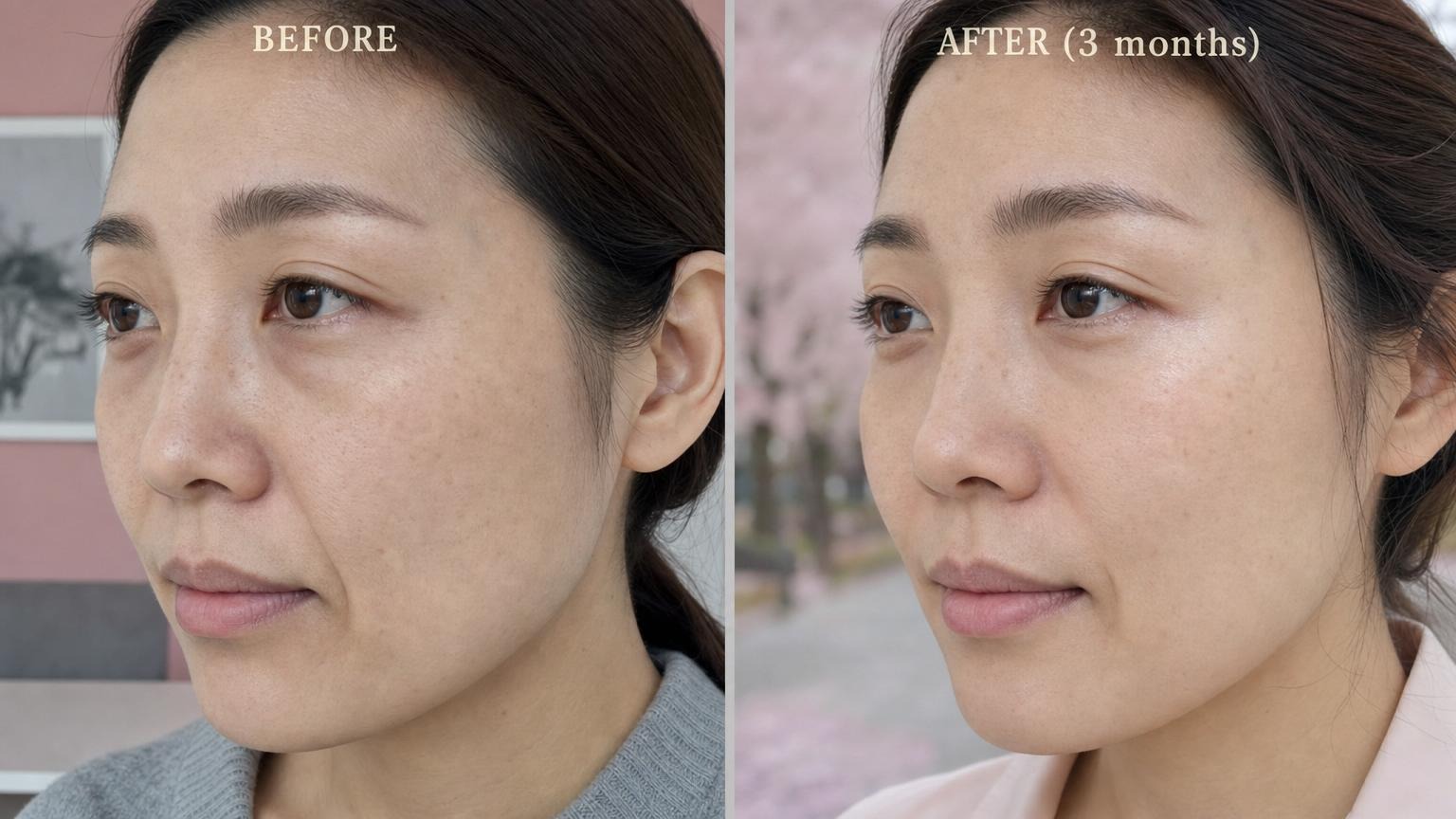
Before-and-after selfies of a Korean woman in her early thirties twelve weeks after a single Korean Volnewmer monopolar RF mid-face lift session — BEFORE indoor greenhouse cafe selfie in a loose cool gray linen oversized shirt with subtle early jowl softening / AFTER outdoor selfie on a Han River park walking path in a soft mint green blouse and delicate silver chain showing visibly more defined jawline and elevated mid-face from 12-week collagen contraction, same 3/4 left face angle and closed-mouth natural smile in both panels, different real environments on different days

Korean Volnewmer is monopolar RF that heats dermal collagen at 2-3mm depth over a 60-90 minute hand-mapped Korean operator protocol, with peak visible result at month 3 from a single session. Foreign patients who book expecting Thermage same-day tightening or Ultherapy SMAS structural change are working from the wrong mental model. This guide explains what Volnewmer actually is, why Korean clinics deliver it differently, the 12-week false plateau that triggers premature panic, and the five-question clinic verification checklist.

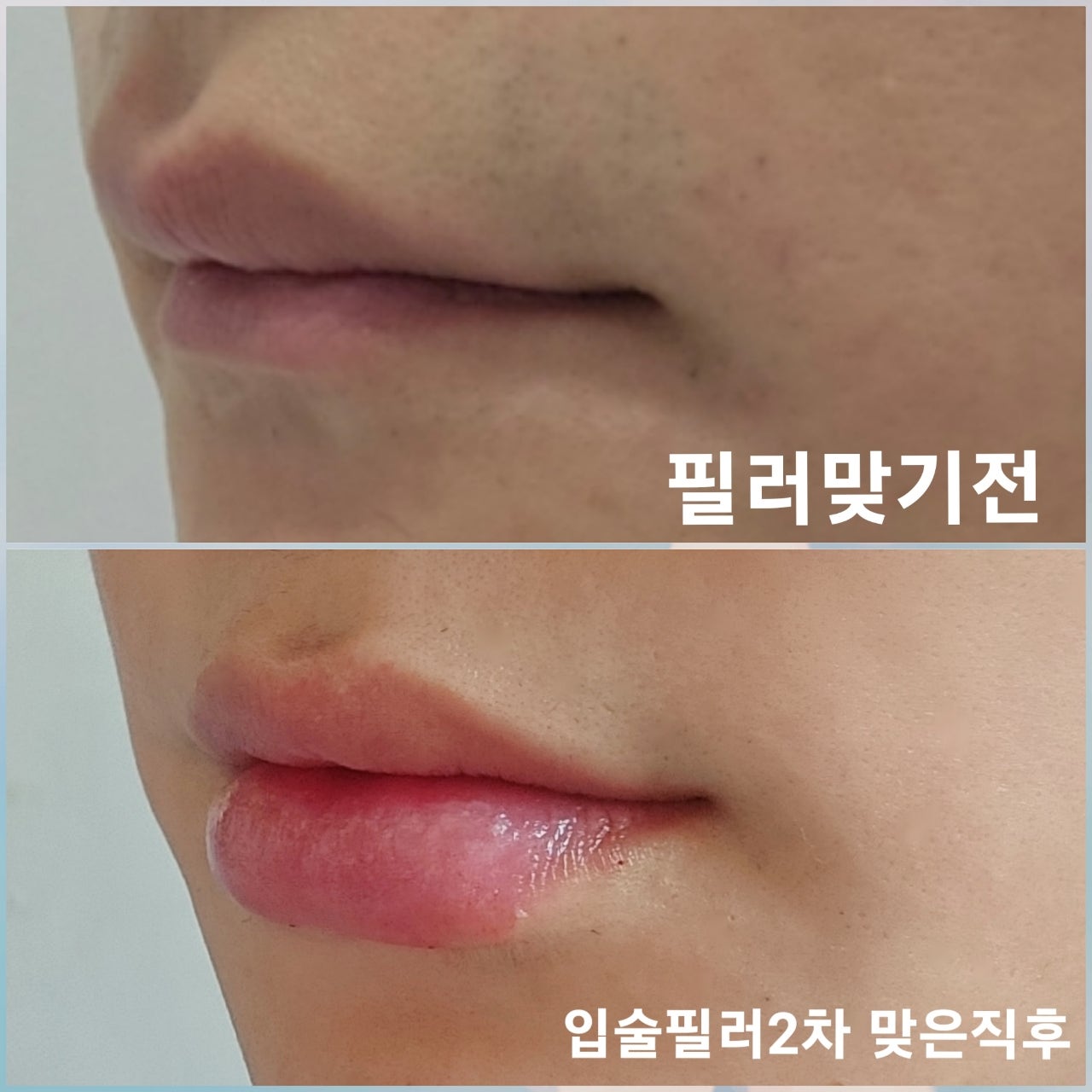
Korean Lip Rejuran (PN Lip Skin Regeneration): Why It Is Not Lip Filler

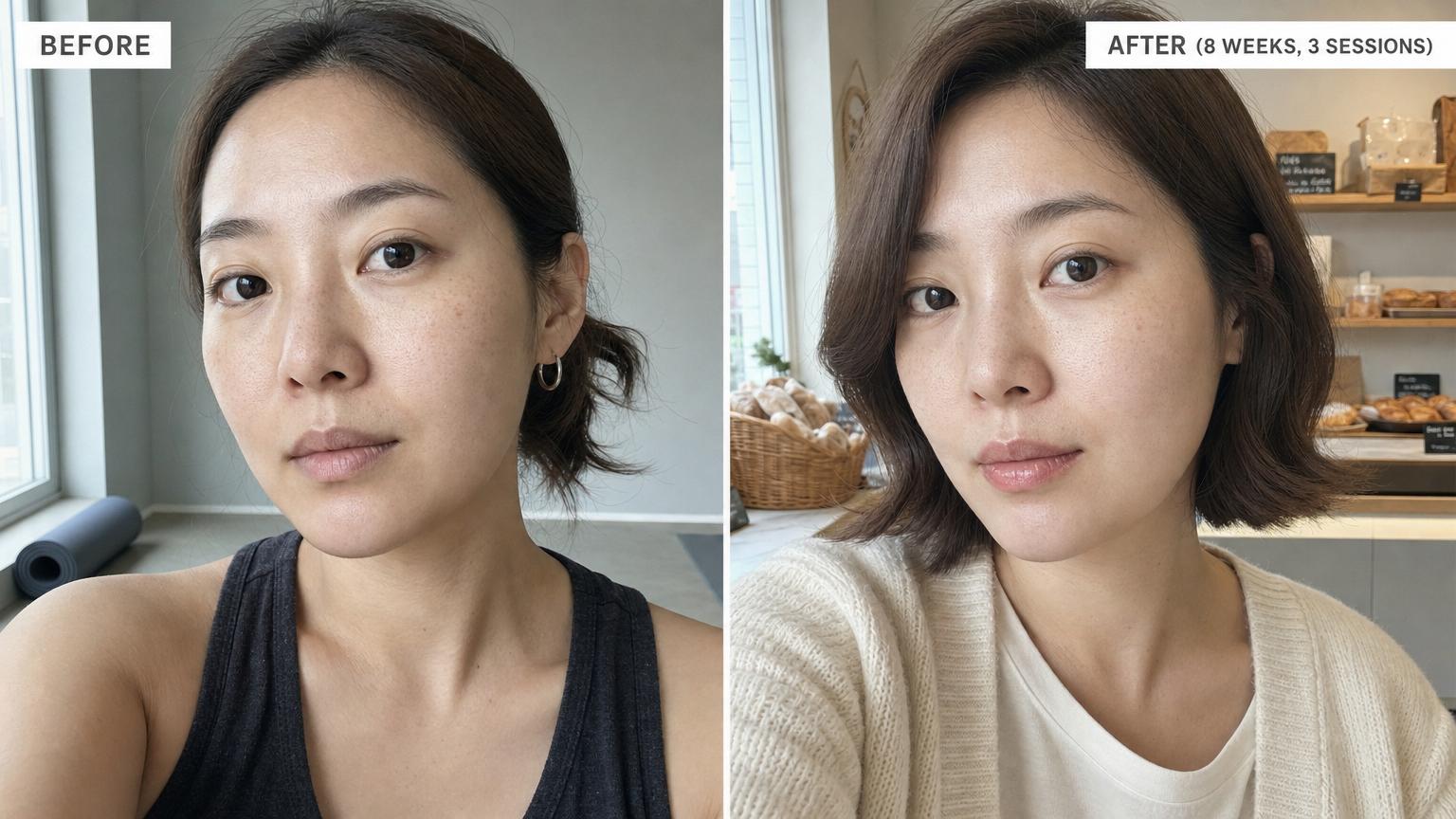
Korean Lip Rejuran before and after 8 weeks, 3 sessions. Lip skin regeneration with PN polynucleotides — texture, color, hydration improvement without injected volume.

Lip Rejuran is not lip filler. It is lip skin regeneration. Korean clinics treat lip texture, color, and hydration with polynucleotides (PN) over a 3-session protocol — different molecule, different goal, different result than HA filler.

Korean Epicanthoplasty (Inner Corner): What Foreign Patients Should Know Before Adding It

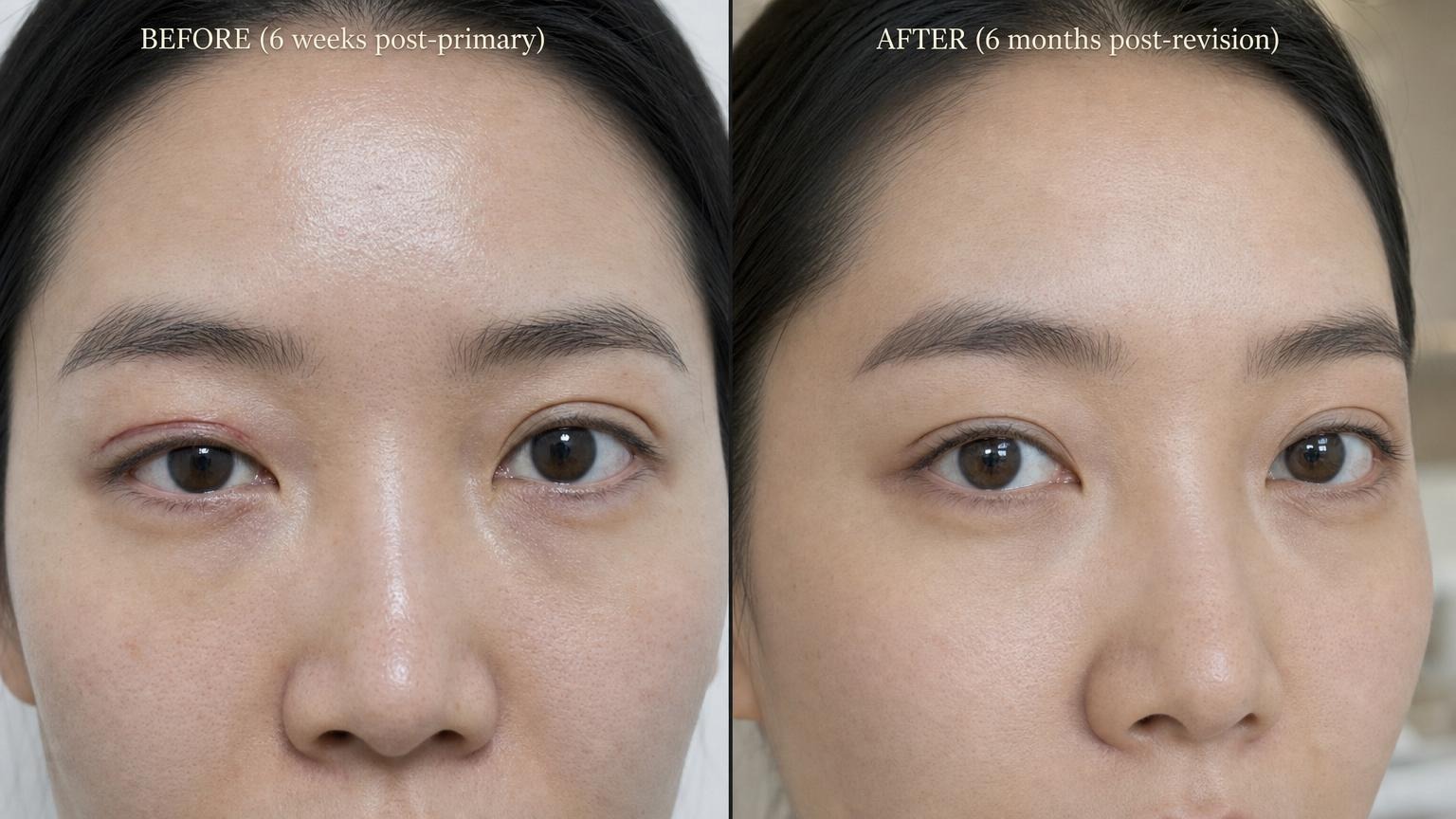
Before-and-after editorial portrait diptych for Korean epicanthoplasty showing Patient A Korean-Chinese woman mid-30s with prominent Mongolian epicanthal fold covering the lacrimal caruncle in BEFORE panel and at 12 weeks post-op with the fold released, caruncle exposed, wider inner intercanthal distance, and the double eyelid line flowing naturally into the inner corner

Foreign patients arriving in Seoul for double eyelid surgery often discover the surgeon is recommending epicanthoplasty, the structural release of the Mongolian epicanthal fold that covers the inner corner of the eye. In approximately 60 to 75 percent of Korean double eyelid consultations the surgeon assesses whether the fold will compete with the new crease, and the recommendation is anatomical rather than commercial. The four standard techniques (Park Z-plasty, root Z-plasty, V-W plasty, and modified skin redraping) are selected by reading the patient’s specific fold anatomy, and the scar matters more than the release itself because the procedure is judged on the 12-week matured appearance.

Korean Exosome Therapy for Foreigners: The Treatment That Most Patients Misunderstand Before They Walk In

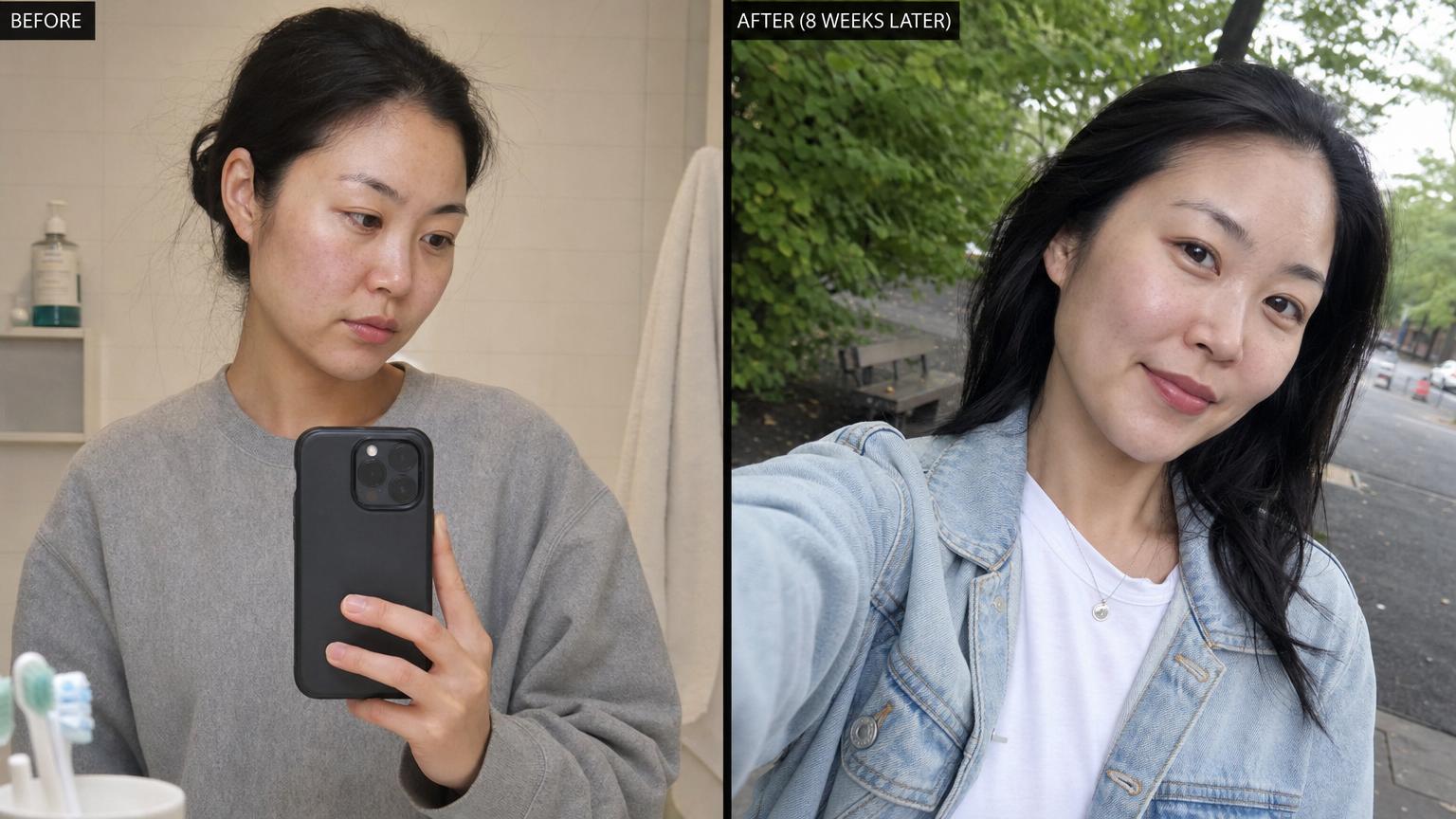
Before-and-after selfies of a Korean-American woman 8 weeks after Korean exosome therapy series — BEFORE indoor bathroom mirror selfie / AFTER outdoor walking selfie, completely different settings, natural calmed skin baseline

The most common question foreign patients ask Korean clinics about exosome is ‘is this stem cell injection?’. The answer matters. Exosomes are not stem cells — they are signaling vesicles released by stem cells. Korean clinics almost never use them standalone. The combination IS the treatment.

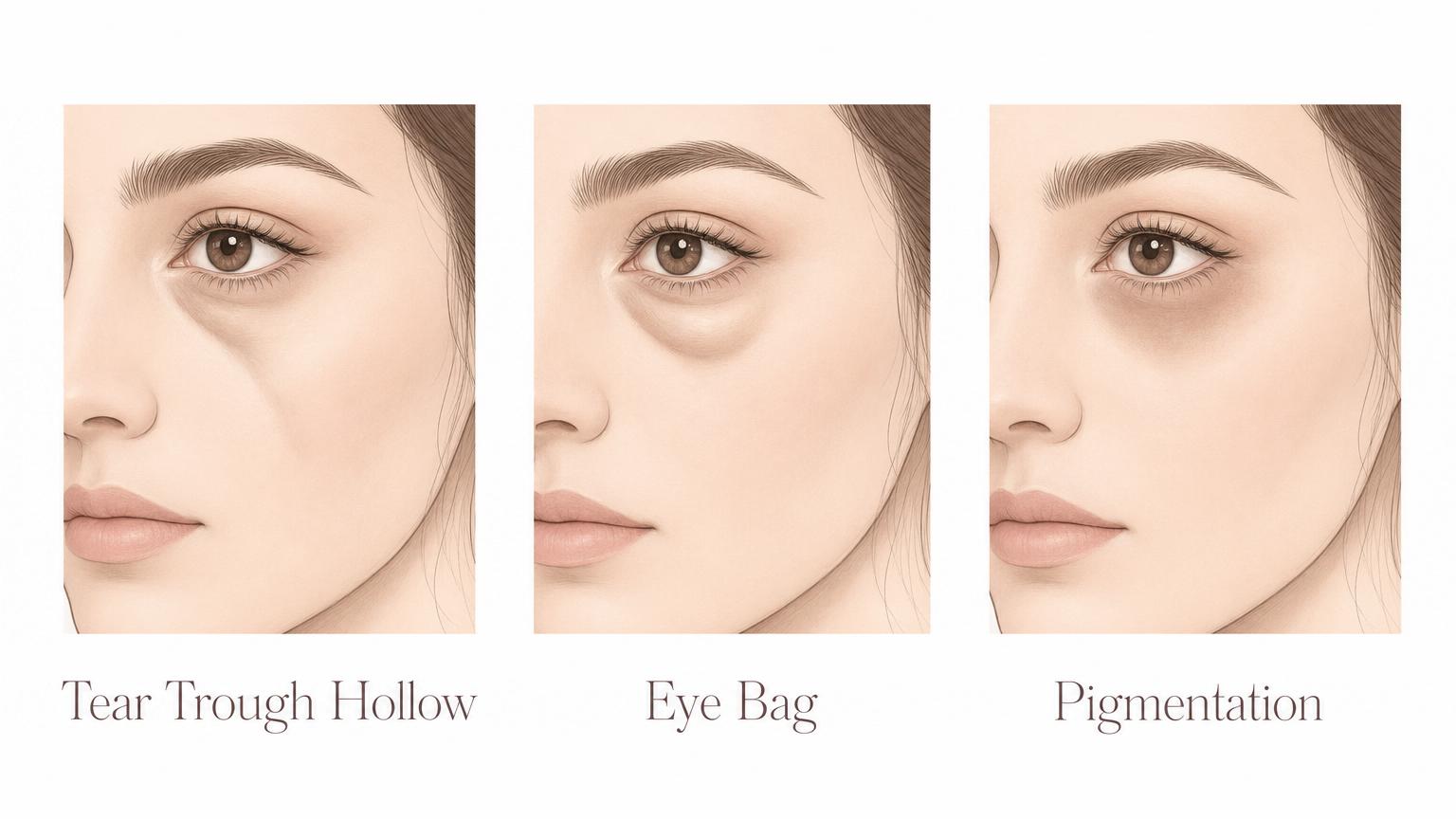
Tear Trough Hollow vs Eye Bag: Which Korean Surgery Do You Actually Need?

Editorial diagram comparing three under-eye conditions side by side — tear trough hollow, herniated eye bag, and skin pigmentation

Half the patients who fly to Seoul asking for ‘dark circle surgery’ don’t have a dark circle problem. They have a shadow problem — and the source of the shadow decides which surgery actually fixes it. Three conditions, three different procedures.